Indoor vs outdoor pools
 By the Find My Swimming Pool team·
Updated ·
5 min read
Swimming lengths under a roof and swimming them under the sky are two different experiences, even in the same size of pool. Here is how indoor and outdoor pools compare on temperature, water, cost and comfort, and how to choose.
The short answer
Indoor pools are warmer, open all year whatever the weather, and have more steady water and air temperatures. They can feel stuffy and smell more of chlorine. Outdoor pools give you daylight, fresh air and often more space, but the water temperature follows the weather unless the pool is heated, and many open only in summer. Heated outdoor pools and lidos sit in between. For year-round lane training indoor is easier; for enjoyment, many swimmers prefer outdoors.
Indoor and outdoor at a glance
| Indoor pool | Outdoor pool | |
|---|---|---|
| Open | All year | All year if heated or a hardy lido; many only in summer |
| Water temperature | Steady, usually warm | Follows the weather unless heated |
| Air | Warm and humid, can smell of chlorine | Fresh air, wind and sun |
| Light | Artificial, sometimes big windows | Daylight, glare on bright days |
| Weather risk | None | Closures for thunder and lightning |
| Sun protection | Not needed | Sunscreen and a hat on the deck |
| Typical setting | Leisure centres, gyms, hotels | Lidos, parks, beaches, holiday resorts |
Water and air temperature
Indoor pools keep the water at a set temperature all year, with the air in the hall kept a little warmer than the water so you do not feel cold when you get out. Leisure and teaching pools are warmer than lane pools. Competition pools are cooler: World Aquatics sets 25 °C to 28 °C for racing.
Outdoor pools come in three kinds:
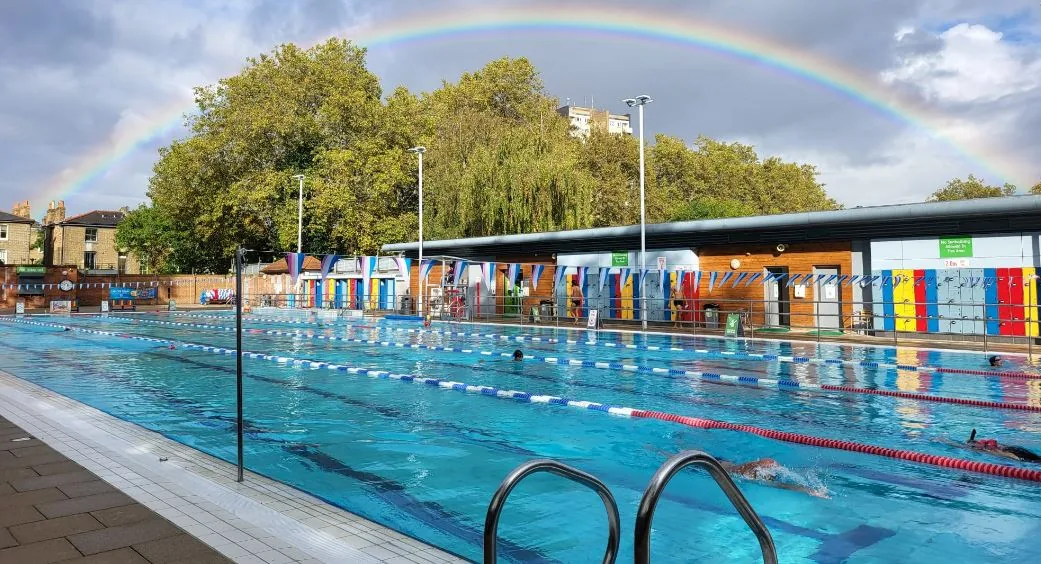
- Heated all year. The water is kept at a comfortable lane-swimming temperature even in winter. Getting in is easy; getting out into cold air is the hard part. London Fields Lido and Charlton Lido in London both run heated 50 m pools all year.
- Heated in season. Warmed from late spring to early autumn and closed or left cold in winter. Albert Avenue in Hull heats its outdoor lido from May to September.
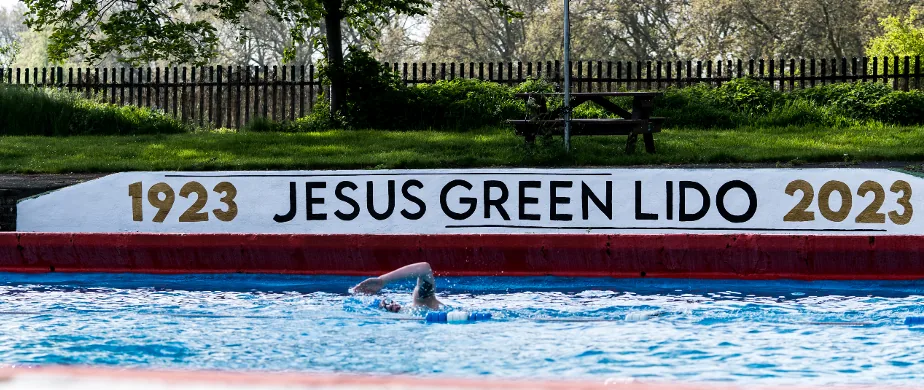
- Unheated. The water temperature is whatever the weather makes it. In the UK that can mean single figures in winter. Parliament Hill Lido on Hampstead Heath is unheated and open every day of the year, so it draws a hardy winter crowd.
For what counts as warm or cold, see pool water temperature. If you plan to swim outdoors through the winter, read cold water swimming first.
Water quality and chlorine smell
The strong "chlorine" smell in some indoor pools is mostly not chlorine itself. It comes from chloramines, made when chlorine reacts with sweat, urine and skin products. Indoors they build up in the air above the water. Good ventilation and swimmers who shower first keep it low, but a busy, poorly ventilated hall can sting your eyes and throat. Outdoors the wind carries them away, which is one reason many people find outdoor pools more pleasant.
Outdoor pools have their own problems. Sunlight breaks down chlorine quickly, so staff have to dose and test more often. Leaves, insects, pollen and rain get into the water. Pools with grass around them can pick up more debris on windy days.
Our guide on why pools smell of chlorine explains the chemistry.
Seasons, weather and crowds
Indoor pools are steady. Session times change a little in school holidays, but the pool is open in any weather and the timetable is the same in January as in July.
Outdoor pools are seasonal. On the first hot weekend of the summer, a lido can sell out by mid-morning; on a cold, wet weekday in March you may have a lane to yourself. Many outdoor pools close when there is thunder or lightning, and some close in very high winds or heavy rain that makes the water too cloudy to supervise.
Prices are similar. In the UK in 2026, a casual adult swim at an outdoor pool in our directory usually costs about £5 to £9, with summer peak sessions at the top of that range.
Pools that are both
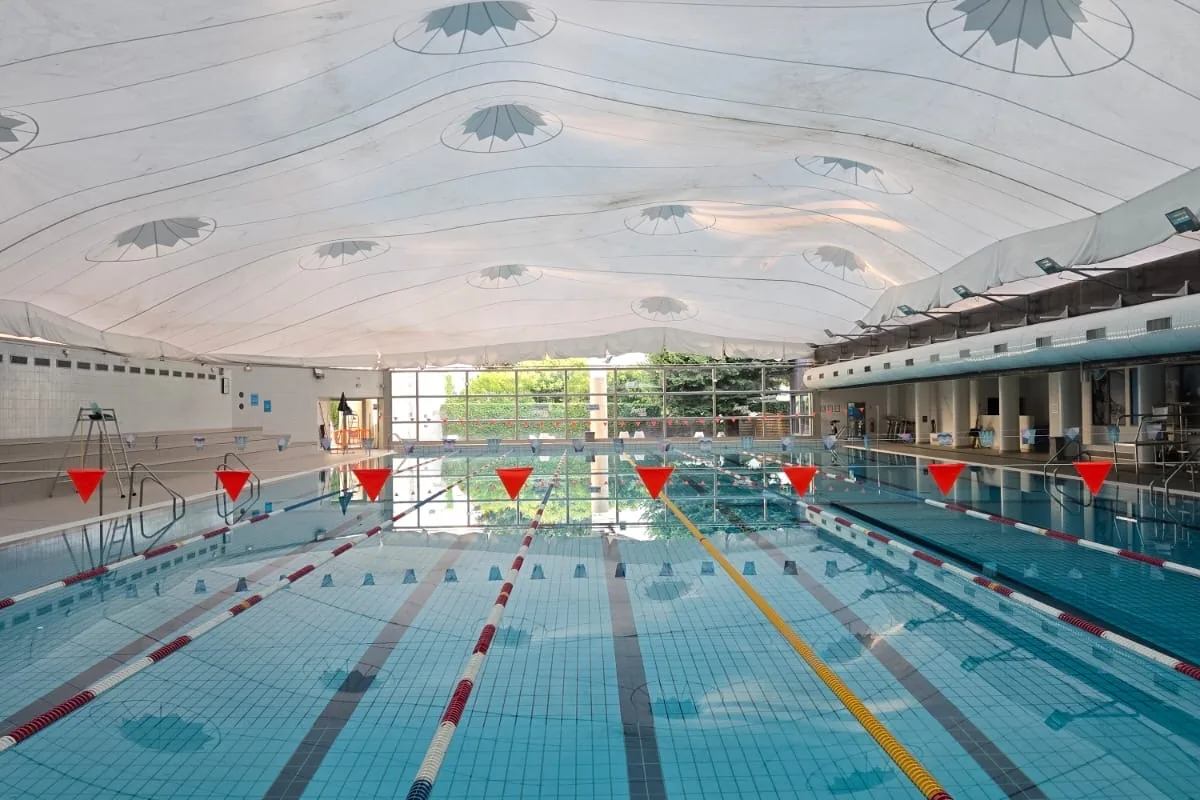
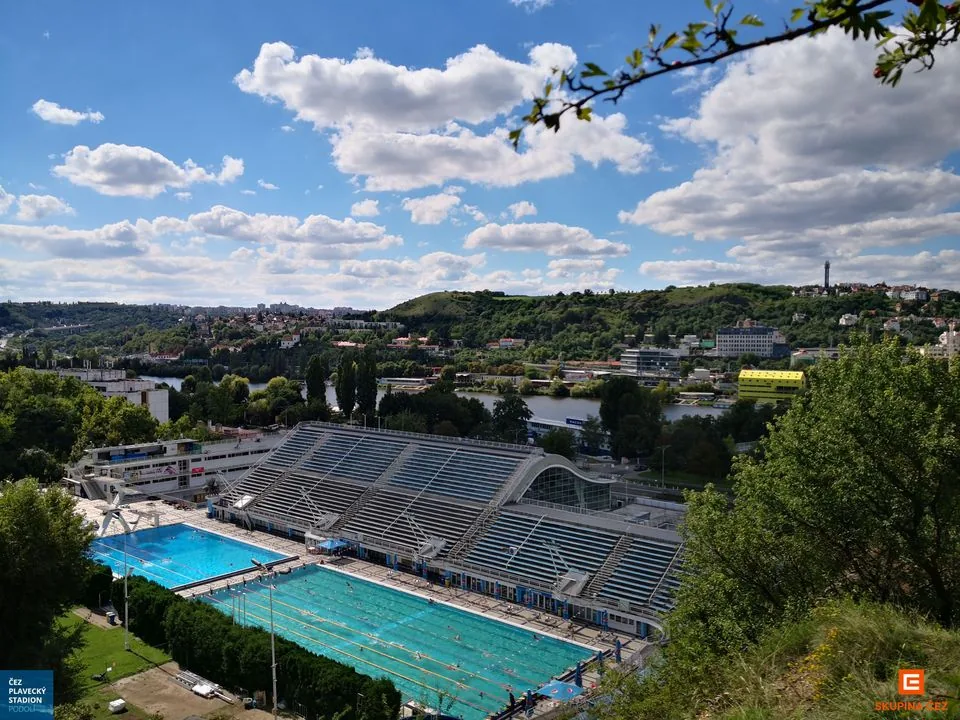
Plenty of pools give you the choice. Some have a roof that opens or is removed in summer, as at Piscine Georges Hermant in Paris. Others have an indoor and outdoor pool on the same site: Gosford Olympic Pool on the Central Coast in New South Wales has a heated outdoor 50 m pool and a heated indoor 25 m pool. Prague's Podolí and many Vienna pools work the same way. Thermal baths in Budapest let you swim outdoors in winter in naturally warm water.

How to choose
- Training for fitness all year: indoor, or a heated outdoor pool.
- Swimming with young children: indoor or a heated outdoor pool in summer, with a warm teaching or leisure pool.
- Sensitive to chlorine fumes: outdoor, or a well-ventilated indoor pool at a quiet time.
- Want the swim to be the day out: a lido with a terrace and café on a sunny day is hard to beat.
- Cold water curious: an unheated lido in autumn, with a sauna if it has one.
Cities with the most outdoor pools in our directory:
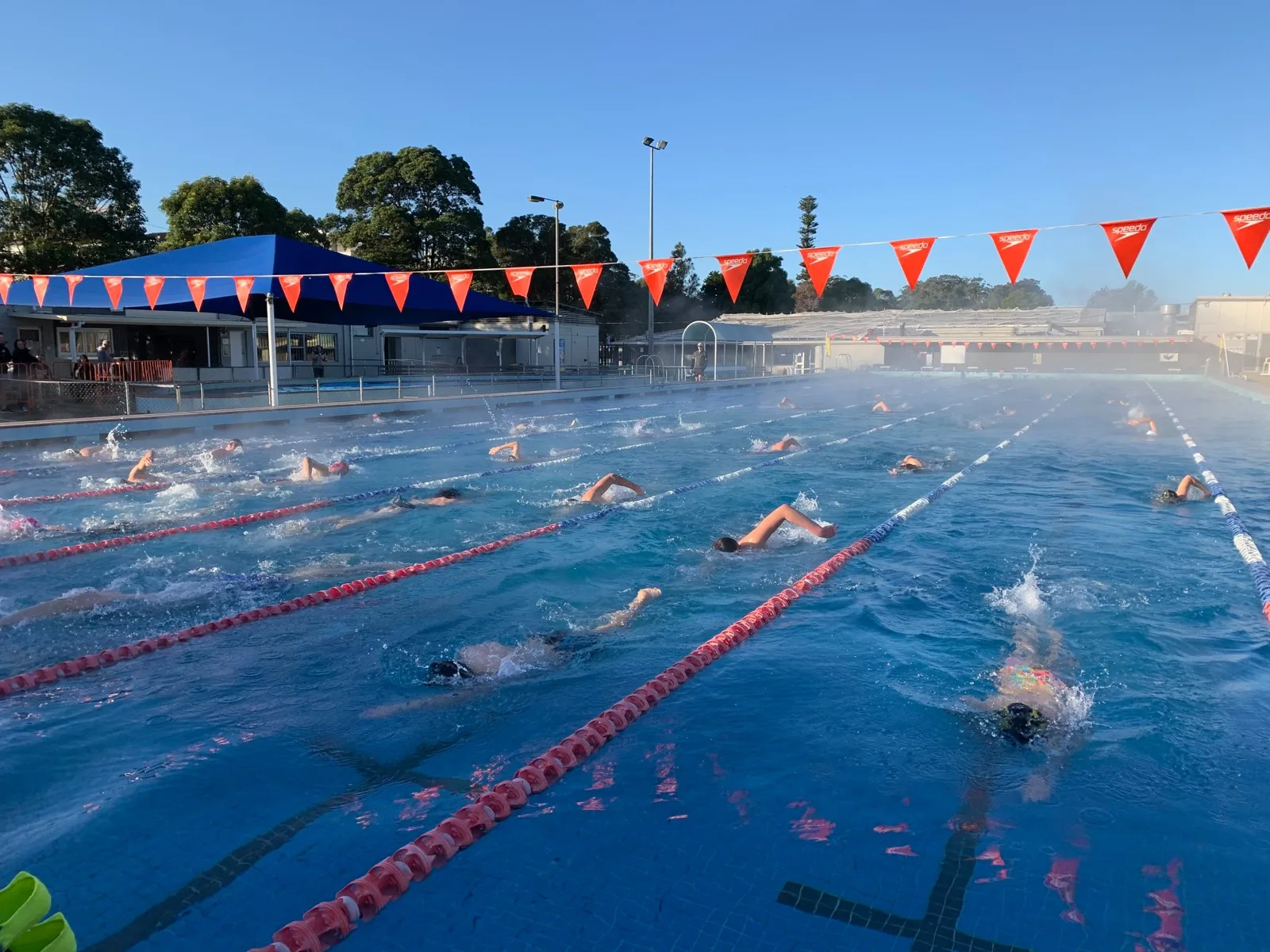
Gosford Olympic Pool
Central Coast · Heated outdoor 50m pool
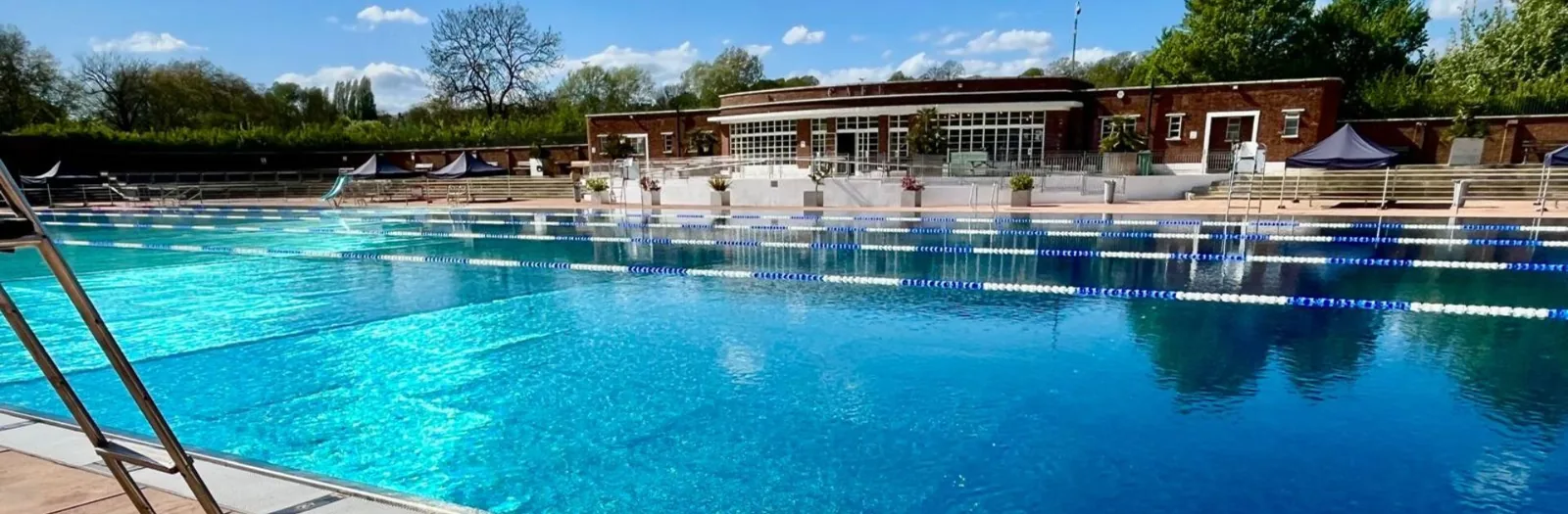
Parliament Hill Lido
London · Unheated, open all year
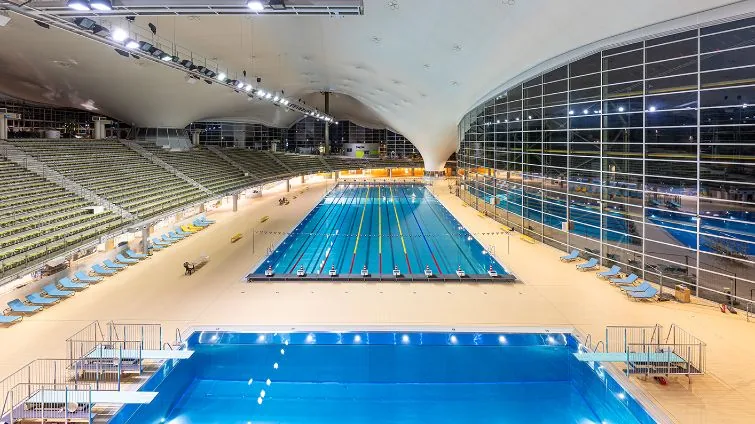
Olympia-Schwimmhalle
Munich · Indoor 50m pool
Curious about the British outdoor pool tradition? Read what is a lido.
FAQ
Are outdoor pools colder than indoor pools?
Unheated ones usually are, often by a lot. Heated outdoor pools can match indoor pools for water temperature, but the air around you is colder.
Do outdoor pools use more chlorine?
Sunlight breaks chlorine down, so outdoor pools usually need dosing more often. The air smells less of it because chloramines blow away.
Can you swim in an outdoor pool in the rain?
Yes, most stay open in rain. They close for thunder and lightning, and sometimes if heavy rain makes the water too cloudy for lifeguards to see the bottom.
Do I need sunscreen at an outdoor pool?
Yes on a sunny day, even in the UK. Use a water-resistant one and put it on well before you swim so it does not wash straight off.