Ocean pools and rock pools
 By the Find My Swimming Pool team·
Updated ·
6 min read
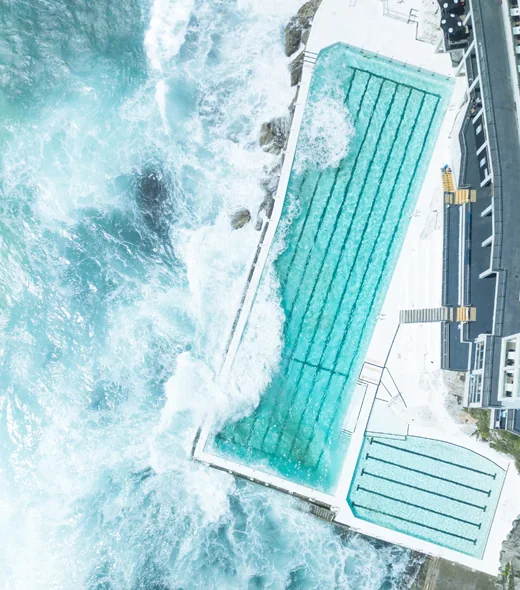
An ocean pool is a swimming pool built into the rocks at the edge of the sea and filled by the tide. You get sea water, sea views and sometimes a wave over the wall, without the rips and currents of the open beach.
The short answer
Ocean pools, also called ocean baths, sea pools or tidal pools, are concrete or rock-walled pools on the shoreline that the sea refills at high tide or with waves breaking over the wall. They are most common in New South Wales, Australia, where researchers count about 70 depending on the definition, many between Newcastle and Wollongong. Most are council-run, many are free, and they are open all year apart from weekly cleaning days. The water is the same temperature as the sea, unheated and untreated by chlorine.
What an ocean pool is
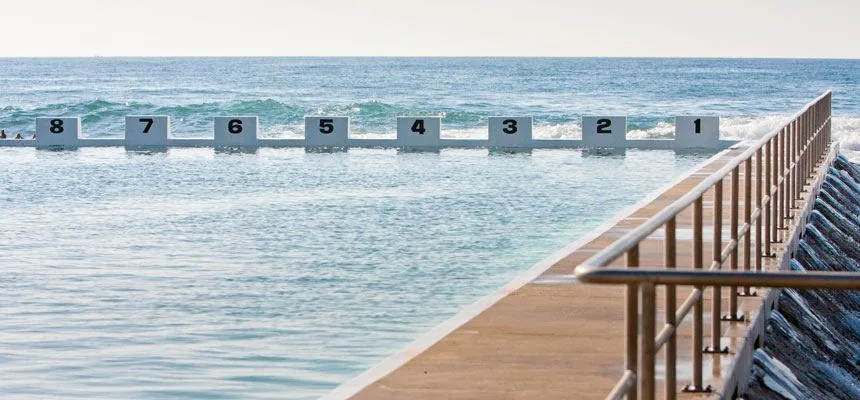
Most ocean pools are a rectangle of concrete walls built onto a rock shelf just above the low tide line. At high tide, or when the swell is up, sea water pours over the wall and flushes the pool through. Some have pumps or sluice gates as well. Many have marked lanes and are 25 or 50 metres long, so you can swim lengths in sea water with a wall to turn at.
Because the sea does the filling, the water is not chlorinated. Councils empty them on a regular cycle, scrub the algae off the floor and walls, and let the tide refill them. That is why most ocean baths close one day a week: Newcastle Ocean Baths shuts for cleaning on Wednesdays, and Merewether Ocean Baths on Thursdays during the season.
In Australia the name is usually ocean pool, ocean baths or rock pool. In the UK and Ireland you will hear tidal pool, sea pool or sea-water lido, and most are on the Cornish, Devon, Welsh and Scottish coasts. In Spain natural sea pools in the volcanic rock of the Canary Islands are called piscinas naturales or charcos.
Where to find them
New South Wales has the largest group anywhere: about 70 along its coast, depending on how you count them, most between Newcastle and Wollongong (UNSW). Sydney's northern beaches alone have 15. The earliest in Sydney's eastern suburbs date from the 1880s, and many on the northern beaches were built or upgraded as job-creation schemes in the 1930s Depression. Newcastle's Bogey Hole, cut by convicts in 1819, is usually called the first. The Central Coast, Wollongong and the South Coast all have their own.
Queensland, Victoria, Western Australia and New Zealand have smaller numbers, along with heritage tidal pools around the British and Irish coast. A few you can find in our directory:
Grant McBride Ocean Baths
Central Coast · Free, 50 m ocean pool
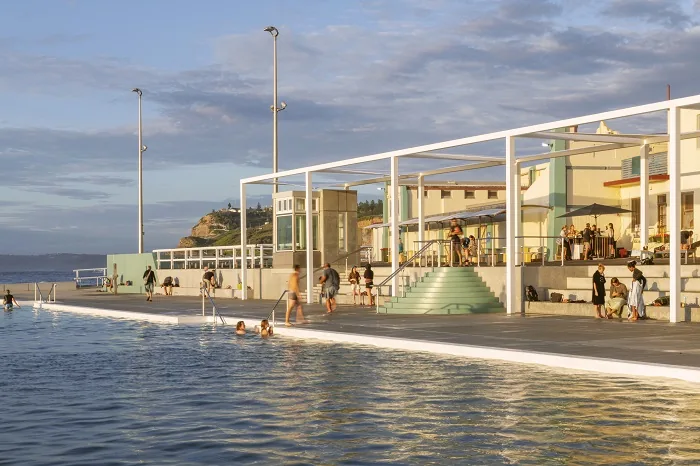
Newcastle Ocean Baths
Newcastle · Heritage ocean baths
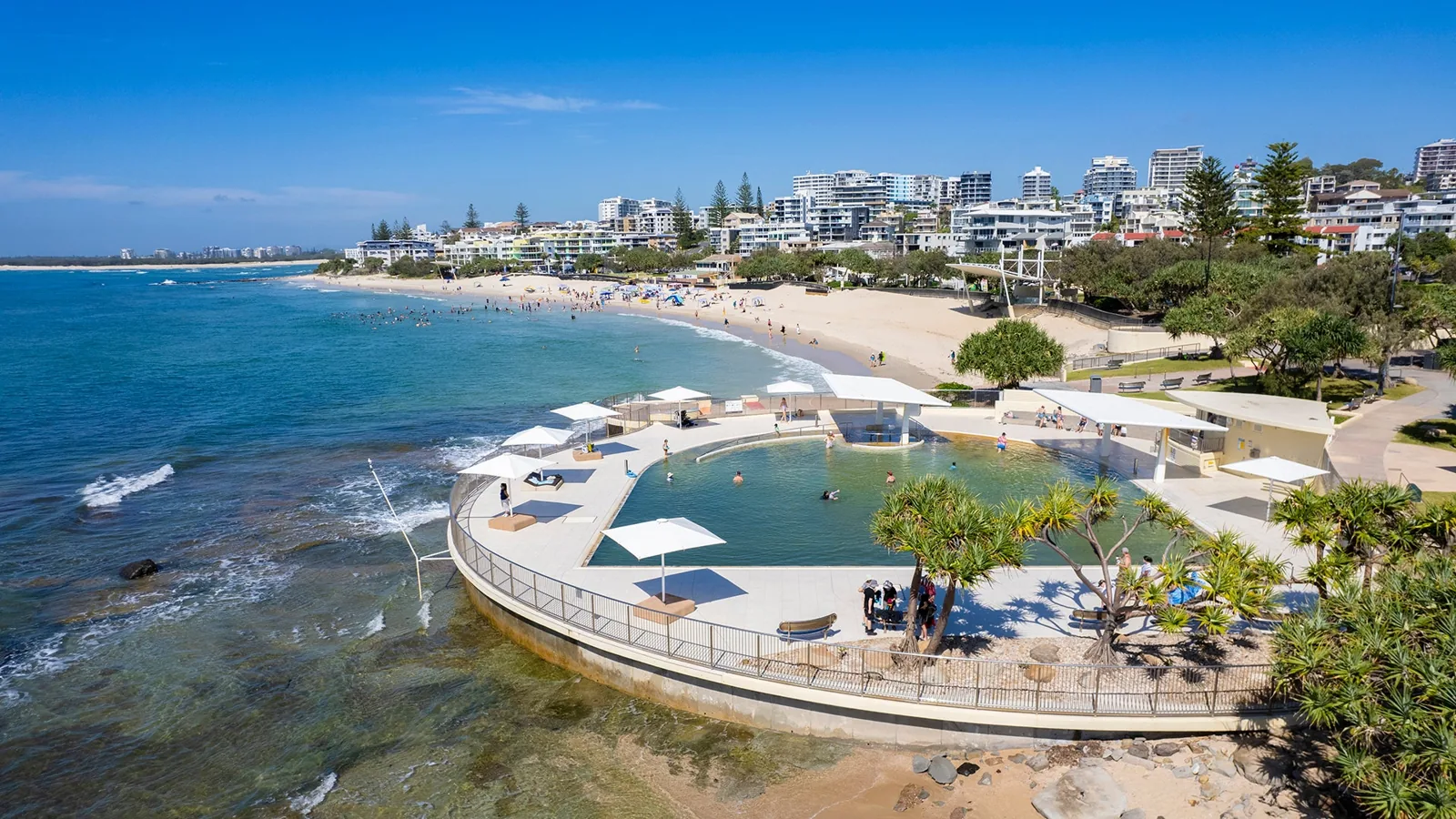
Kings Beach Ocean Pool
Sunshine Coast · 25 m sea water pool
Grant McBride Ocean Baths at The Entrance is heritage-listed and was built in stages between 1938 and 1965. It has a 50-metre pool, a 22-metre lap pool and a wading pool, and Central Coast Council states it is free to use. Bondi Icebergs, at the south end of Bondi Beach, charges for entry: A$10 for a single adult swim in 2026, with a sauna on the deck.
Swimming in an ocean pool
Swimming in one feels different from a chlorinated pool in a few ways.
- Temperature. The water is whatever the sea is. In Sydney that means warm in late summer and cold in July and August. Regular winter swimmers use ocean pools all year; newcomers often wear a wetsuit or a thicker cap.
- Salt. Sea water makes you float higher and your eyes sting less than you might expect, but goggles help. Our guide to swimming in the sea versus a pool goes into the differences.
- Life in the pool. Small fish, seaweed and the odd crab arrive with the tide. The floor can be slippery with algae, especially in the days before cleaning.
- Waves. On a big swell, waves crash over the seaward wall. This is part of the fun for strong swimmers but can push you against the wall or the steps.
Most ocean pools have change rooms and showers. Newcastle's two ocean baths open their change rooms from 5.30am, which suits the early swimmers who use them most.
Safety and conditions
An ocean pool is safer than the open surf, but it is still the sea.
- Check if it is open. Councils close ocean pools in heavy seas, for cleaning and after storms. Bondi Icebergs notes that entry depends on tides and races. Check the council page or social media before a long drive.
- Watch the waves. Stay away from the seaward wall when big sets are breaking. People have been washed off ocean pool walls and rock platforms.
- Know when lifeguards are on. Many ocean pools are supervised only in summer, or at set hours. Merewether, for example, has a lifeguard from 9am to 5.30pm in the season. Outside those times you swim at your own risk.
- Mind the water quality after rain. Heavy rain washes stormwater into the sea, and beach water quality drops for a day or so. The NSW Beachwatch programme issues daily pollution forecasts and monitors many ocean baths (NSW State of the Beaches).
- Wear something on your feet. Rock platforms and the pool floor can be sharp and slippery. Our guide to pool shoes covers the options.
High tide or low tide? Many regulars prefer to swim just after a high tide has refreshed the water, when it is clearest. At very high tides with a swell running, the pool can be rough and closed. Low tide is calmer, but the water has had longer to warm and gather sand.
Ocean pools and natural rock pools
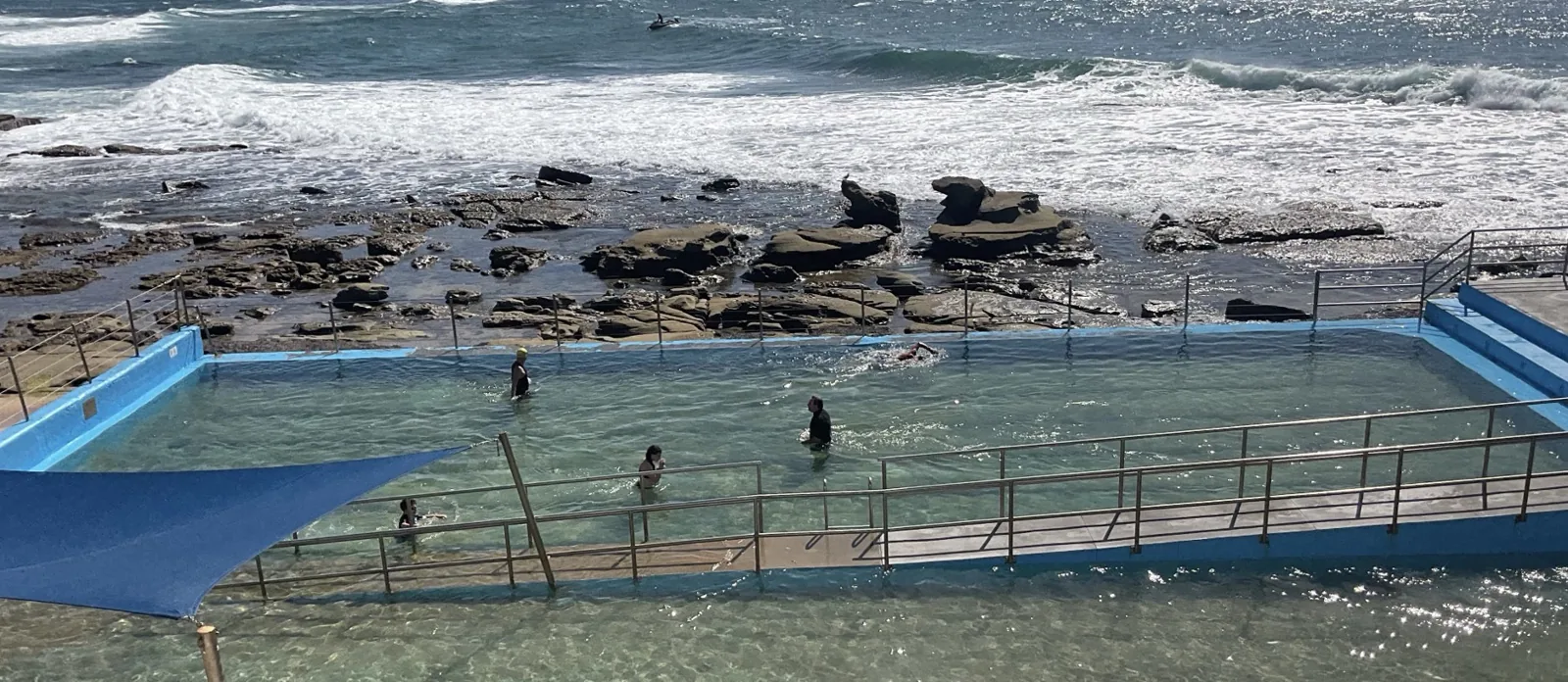
"Rock pool" can mean two things. In Australia it often means a built ocean pool on a rock platform, like the ones above. It can also mean a natural hollow in the rock that fills at high tide. Natural rock pools have no walls, no lanes, no cleaning and no lifeguard. They are lovely for a dip on a calm day, but the edges are sharp and waves can reach them without warning.
A sea-water lido is a third type: a larger built pool by the sea, sometimes filled by pumps rather than the tide. Our guide to what a lido is covers those, and natural swimming pools covers freshwater pools cleaned by plants.
Cities with the most outdoor pools in our directory:
FAQ
Are ocean pools free?
Many are. Most council-run ocean baths in New South Wales charge nothing, while a few run by clubs or private operators, such as Bondi Icebergs, charge an entry fee.
Are ocean pools chlorinated?
No. They are filled and flushed by the sea, and councils empty and scrub them on a regular cleaning cycle instead.
Why are ocean pools closed some days?
Most close one day a week for cleaning, and all of them close in big seas or when water quality is poor after heavy rain.
Can you swim in ocean pools in winter?
Yes. Most are open all year, and winter swimming clubs use them through the cold months. The water is as cold as the sea, so build up gradually.