What to bring to the swimming pool
 By the Find My Swimming Pool team·
Updated ·
5 min read
Forgetting your towel turns a good swim into a damp walk home. This is the list regular swimmers pack, split into the things you need, the things that make it easier and the extras for children or trips abroad.
The short answer
For a swim at a public pool, bring a swimsuit, a towel, goggles, a coin or card for the locker, a plastic bag for wet kit, and shampoo and shower gel for afterwards. A swim cap is useful everywhere and compulsory at many pools in France, Italy and Spain. Flip-flops or pool shoes, a water bottle, a padlock and moisturiser make the visit more comfortable. Leave jewellery and valuables at home.
The essentials
- Swimwear. A swimming costume, bikini, trunks, briefs or jammers. Some pools turn away long board shorts, cotton shorts or ordinary T-shirts, especially in Europe. See what to wear to a swimming pool.
- Towel. A normal bath towel, or a microfibre travel towel if you want something light. Hotel and spa pools usually provide towels; public pools rarely do.
- Goggles. Not compulsory, but they make swimming with your face in the water far more comfortable. See why wear goggles.
- Something for the locker. Many lockers take a coin you get back, a token or a small charge. York's Energise centre, for example, uses a 25p token bought by card. Others are free or use a wristband. A pound coin or a euro in your bag saves a trip back to reception.
- A bag for wet things. A plastic bag, dry bag or mesh bag keeps your wet swimsuit and towel away from everything else.
- Shower gel and shampoo. To wash the chlorine off afterwards. Some pools ask you to keep products out of the poolside showers, so use them in the changing room showers.
- Payment or membership card. And your booking reference if the pool asks you to book.
Useful extras
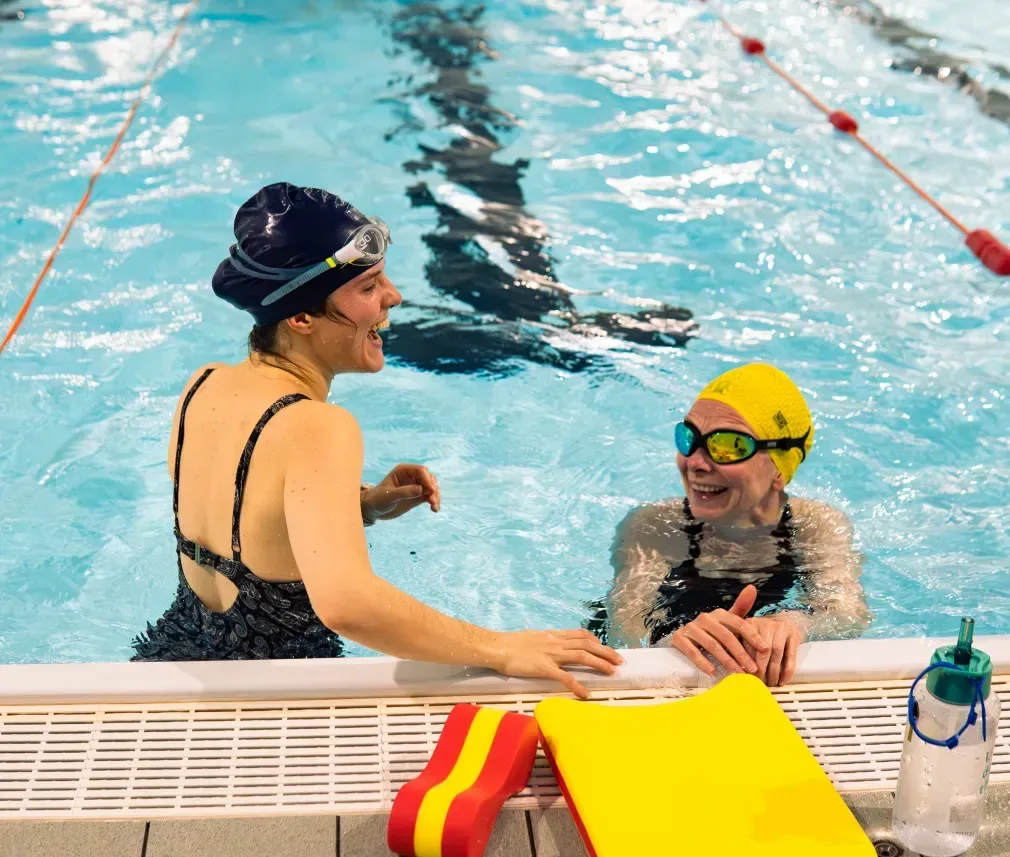
- Swim cap. Keeps hair out of your face and holds goggles in place. Optional in most of the UK, Ireland, Australia and Canada. See why wear a swim cap.
- Flip-flops or pool shoes. For the walk between changing room, showers and pool. Useful if you worry about verrucas or cold floors. See pool shoes.
- Water bottle. You sweat in the pool without noticing. Most pools allow plastic bottles at the end of the lane; glass is banned on the poolside.
- Padlock. Some older pools and many European ones have lockers that need your own padlock.
- Moisturiser and conditioner. Chlorine dries skin and hair. Our guides to chlorine and skin and chlorine and hair have more.
- Hairbrush and hairband. Hair dryers are often provided, sometimes coin-operated.
- A snack. Swimming makes most people hungry. Something in the bag for afterwards stops a vending machine raid.
- Earplugs or a nose clip. If water in your ears or nose bothers you. See swimming earplugs.
Pack the night before. Keep a swim bag ready with towel, goggles, cap, locker coin and toiletries, and put your swimsuit in after it dries. Many early-morning swimmers wear their costume under their clothes to save time in the changing room. Just remember to pack underwear.
For lane swimming
If you swim lengths, a few extras help. A kickboard and pull buoy are usually provided free at the end of the pool, as in most council pools, but some swimmers bring their own. Fins (flippers) are allowed in some lane sessions, often only in the fast lane, so check first. A waterproof watch or lap counter keeps count of lengths. See our guide to lane swimming etiquette before your first session.
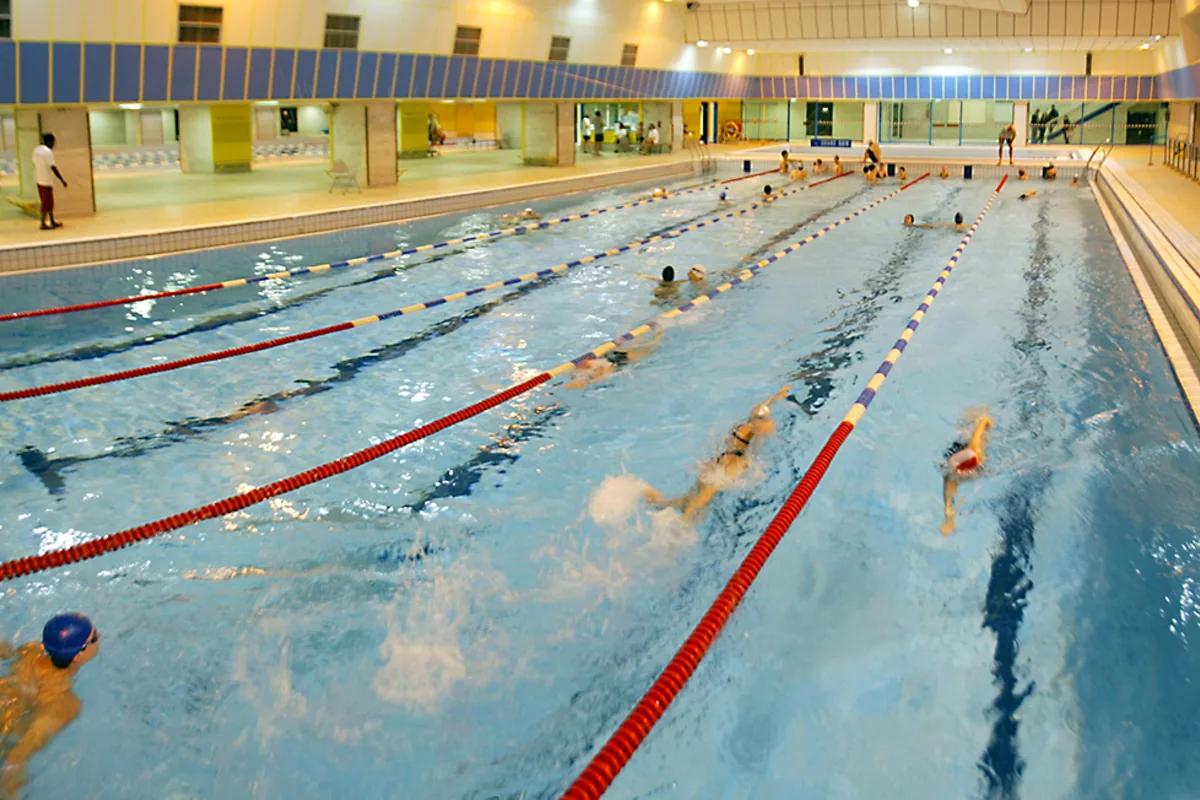
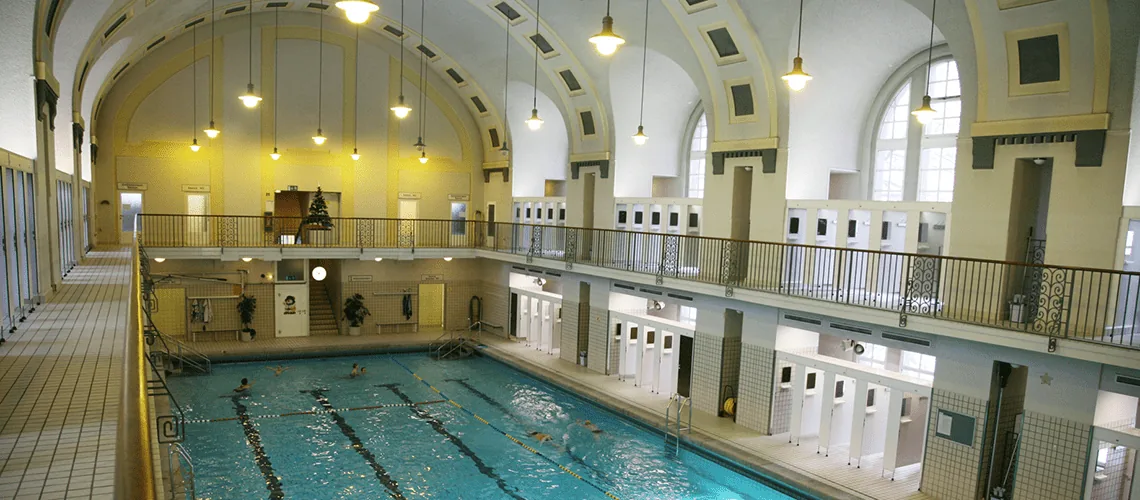
Piscine Armand Massard
Paris · Cap required
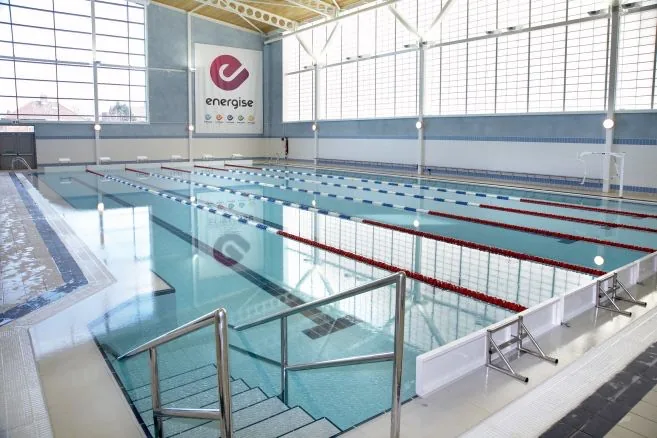
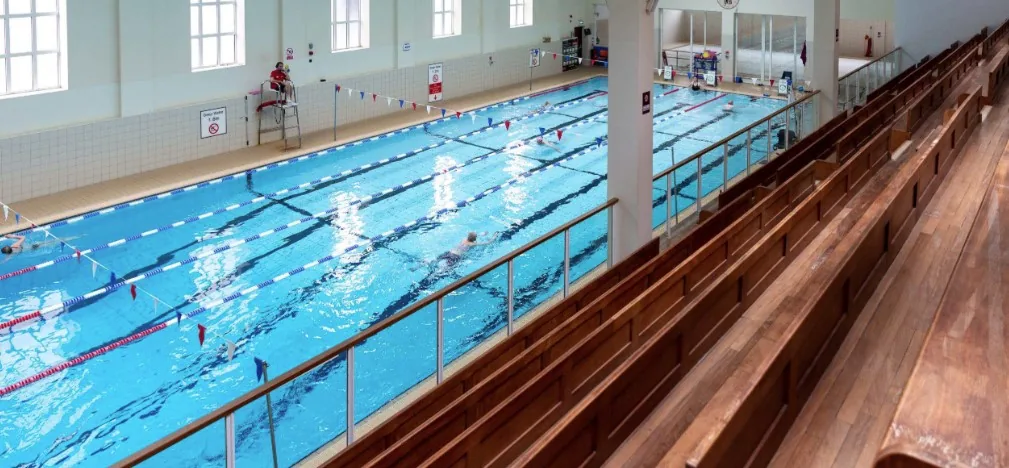
Energise Leisure Centre
York · 25p locker token

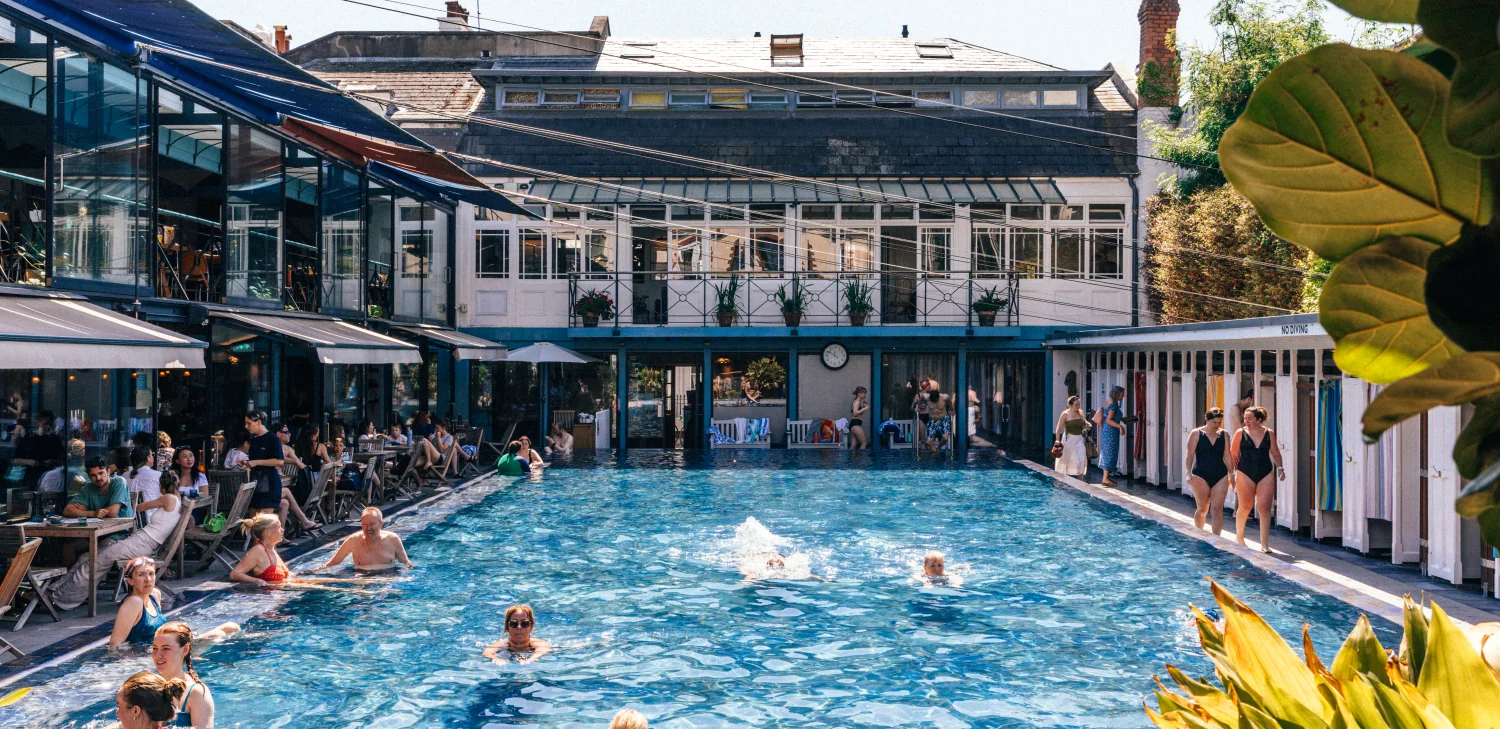
Therme București
Bucharest · Towel hire if needed
For babies and children
- Swim nappies. A reusable neoprene swim nappy over a disposable one is what most pools ask for. In North America they are called swim diapers. See swim nappies.
- Armbands or a float suit. Many pools lend floats but not armbands.
- A hooded towel or poncho. Children get cold fast once out of the water.
- A changing mat and spare clothes. Baby changing tables are usually in the changing area, but bring your own mat.
- Snacks and a drink. For after, not in the pool.
Swimming abroad
Rules change once you cross the Channel. In France and Italy, caps are compulsory at most public pools, and men are often expected to wear tight swim briefs or jammers, not loose shorts. Italian pools often ask for pool slippers too. In Spain, many municipal indoor pools require a cap, and the public summer pools in Spanish towns usually do not. Pools in Budapest's thermal baths require a cap in the swimming pool but not in the thermal pools.
Spa pools and water parks often charge for towel hire. At Therme București, towel hire is compulsory if you do not bring your own.
What to leave at home
- Jewellery, which can fall off in the water or tarnish in chlorine
- Glass bottles and jars
- Large amounts of cash and anything you could not bear to lose
- Your phone, if the pool bans phones in the changing area, which many do for privacy
- Inflatables, unless it is a session where they are allowed
FAQ
Do swimming pools provide towels?
Public pools rarely do, though some hire them out. Hotel, spa and some gym pools usually provide towels. Bring your own unless you know otherwise.
Do I need a swim cap?
It depends on the country and the pool. Caps are optional at most pools in the UK, Ireland, Australia, New Zealand and Canada, and compulsory at many in France, Italy and Spain.
Can I bring a water bottle to the pool?
Usually yes, as long as it is plastic or metal, not glass. Leave it at the end of your lane or on the poolside.
Do I need a coin for the locker?
Often. Many lockers take a refundable coin or a token, so carry a pound or a euro in your bag. Some pools use free or card-operated lockers.