Lane swimming etiquette
 By the Find My Swimming Pool team·
Updated ·
5 min read
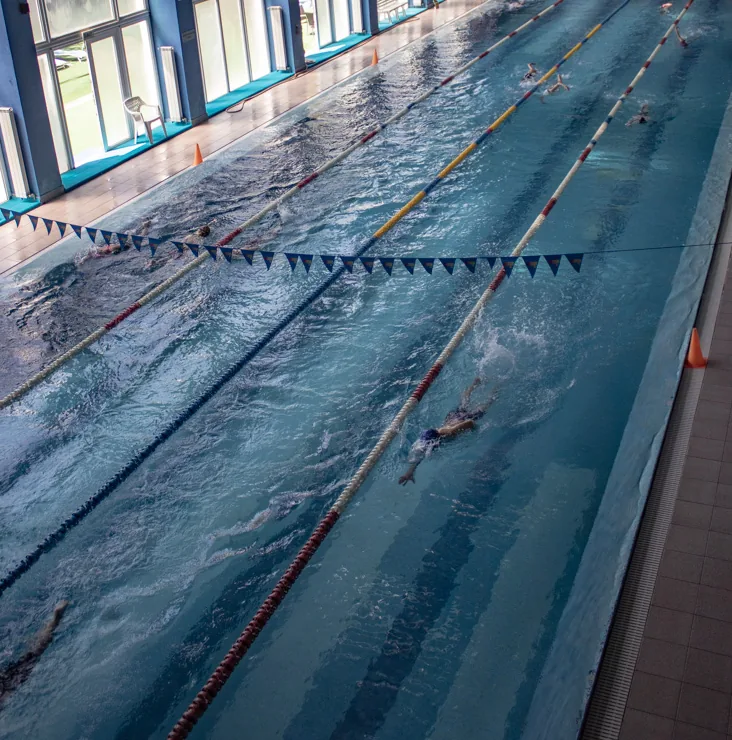
Lane swimming works when everyone follows the same few unwritten rules. Most friction in the pool comes from someone not knowing them, not from bad manners, so here they are written down.
The short answer
Pick the lane that matches your speed, not the one you wish matched it. Swim in the direction shown at the end of the lane, usually clockwise (keeping left) in the UK, Ireland, Australia and New Zealand. Rest at the end of the lane in a corner, out of the way of people turning. To overtake, wait for a clear stretch or tap the feet of the swimmer ahead once, and let a faster swimmer past at the wall. Don't push off right in front of someone, and don't stop mid-length.
Choosing your lane
Most pools label lanes slow, medium and fast, sometimes with a sign on the end wall or on stands at the side. The labels describe the speed of the swimmers in that lane, not the stroke. A strong breaststroker can be faster than a slow front crawler.
Watch for a length before you get in. If you would be catching everyone, go up a lane. If you would be overtaken every few lengths, go down. Your first visit to a new pool is the time to pick the slower option, and move up if you were waiting for others.
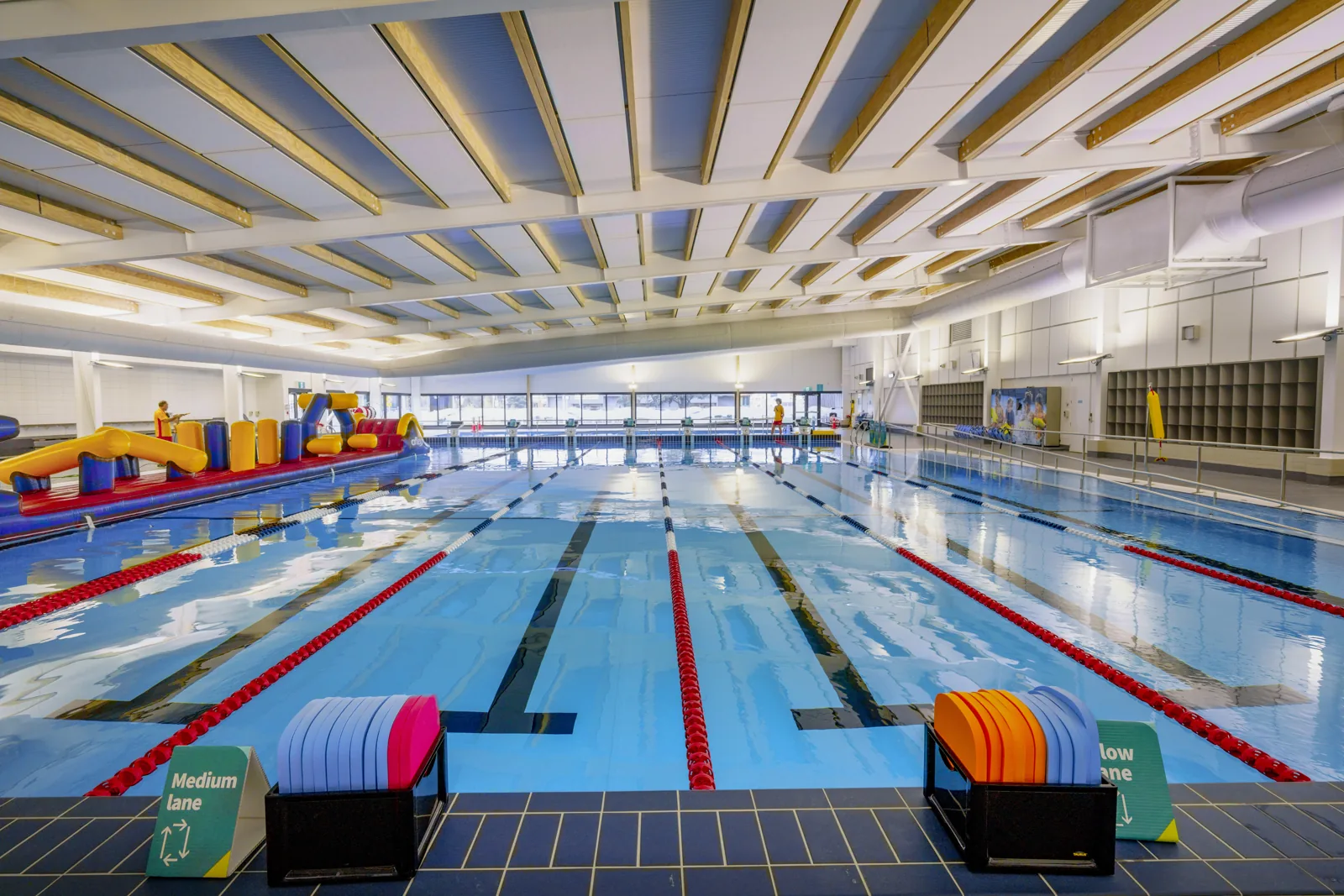
Some sessions also mark a lane for a particular use: an aqua-jogging lane, a lane for kicking drills or a "lengths only, no stopping" lane. Read the signs before you get in.
Which way to swim
With more than two people in a lane, everyone swims in a circle: up one side, down the other. The direction depends on the country and the pool:
- UK, Ireland, Australia and New Zealand: usually clockwise, keeping to the left side of the lane, just as on the road.
- Canada and much of mainland Europe: often anticlockwise, keeping right, though plenty of pools alternate direction from one lane to the next.
Look for an arrow on the sign at the end of the lane, or watch which side swimmers use. Some pools alternate direction between neighbouring lanes so that swimmers next to the same rope go the same way.
With only two people, some swimmers split the lane, each taking one side and staying there. Ask the other swimmer first. As soon as a third person joins, switch to circle swimming.
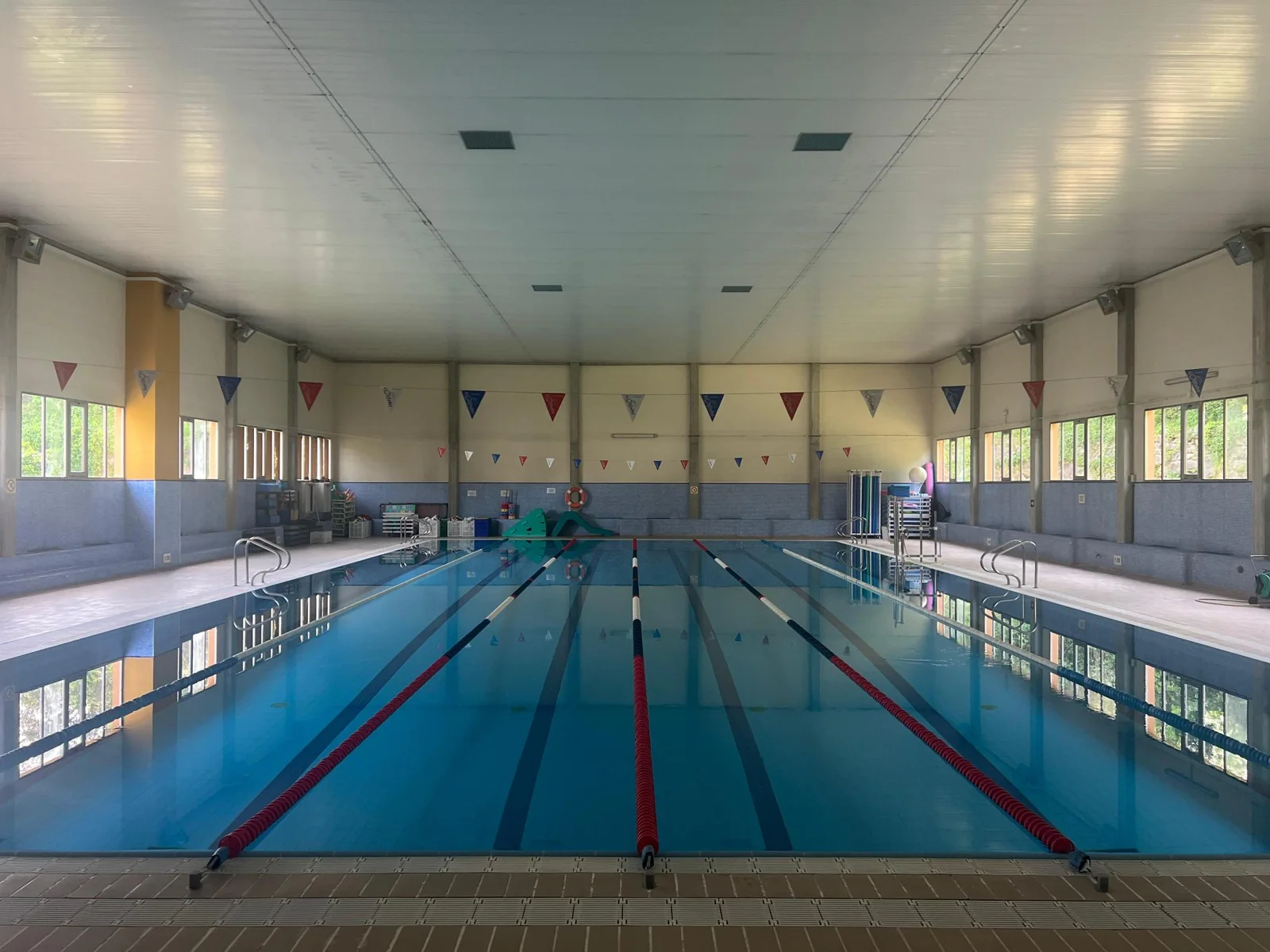
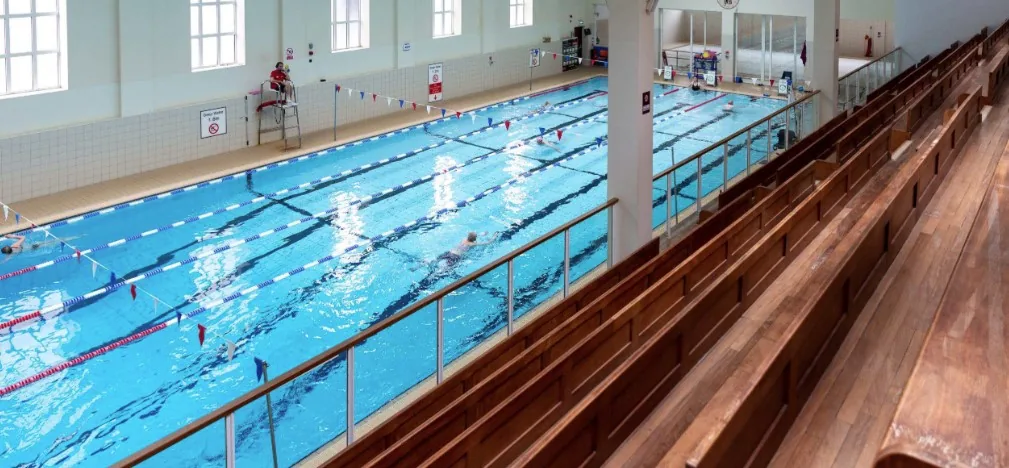
Piscina Municipal de Palau
Girona · Indoor lanes
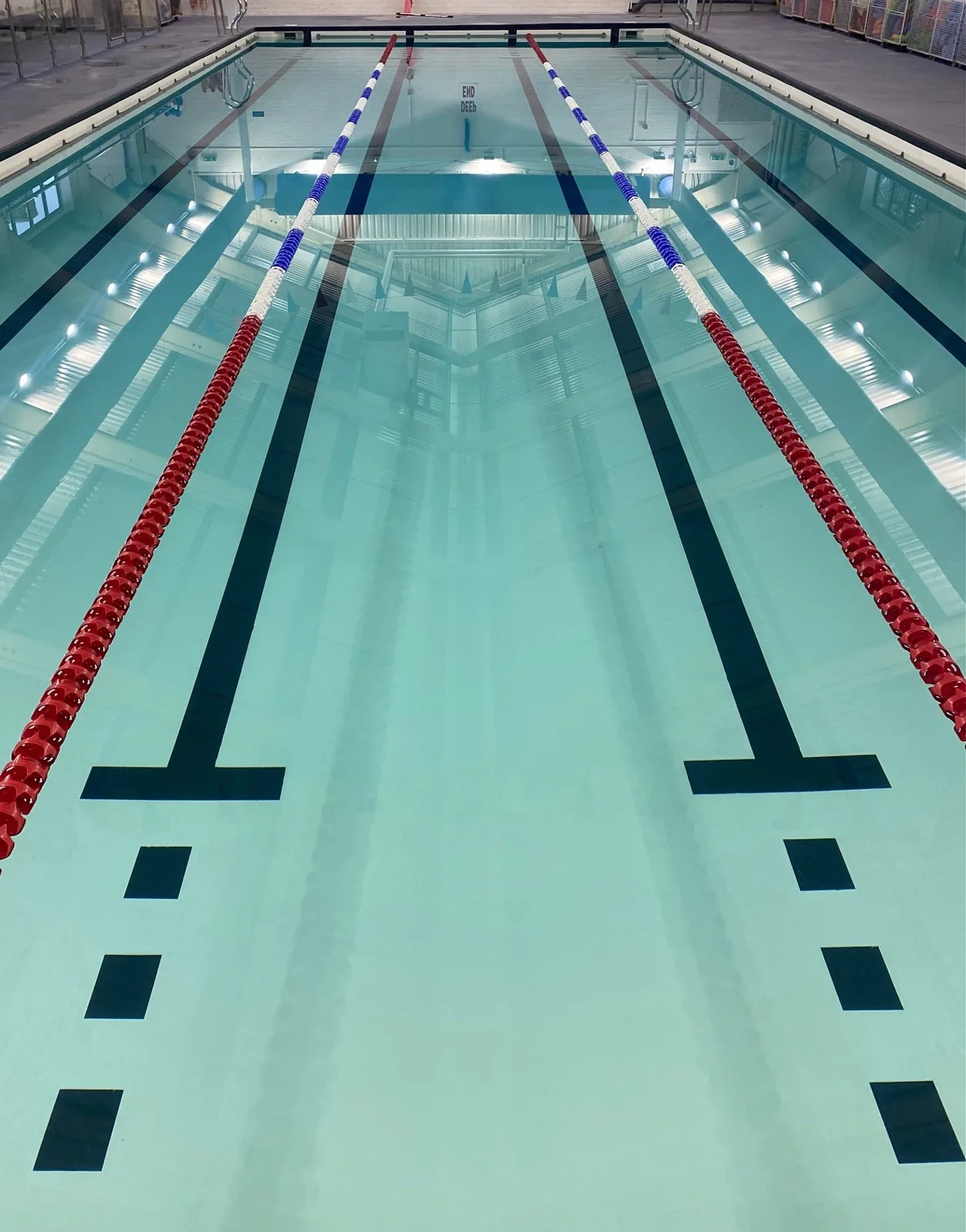
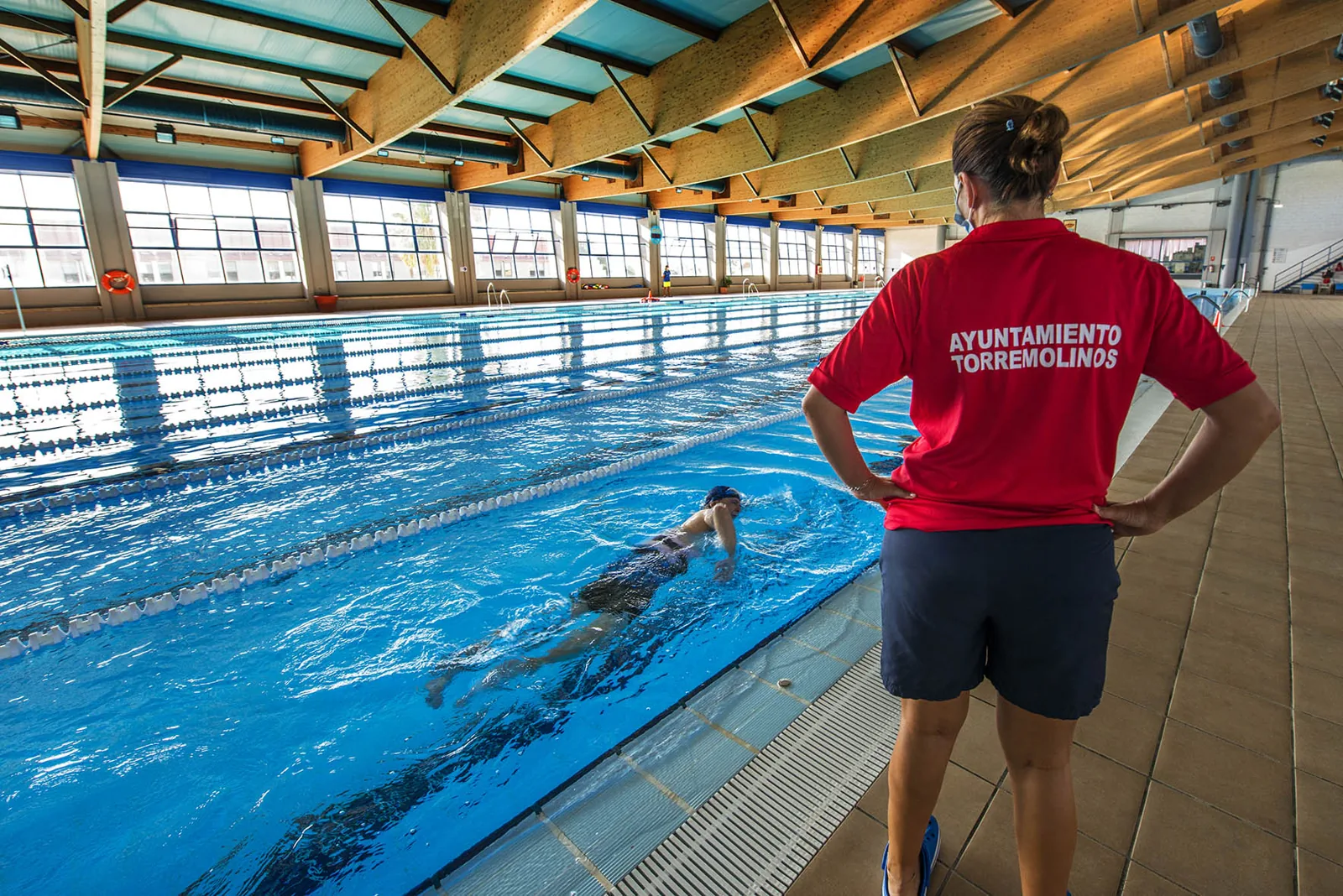
QM Sports Centre
Basingstoke · Pool lanes
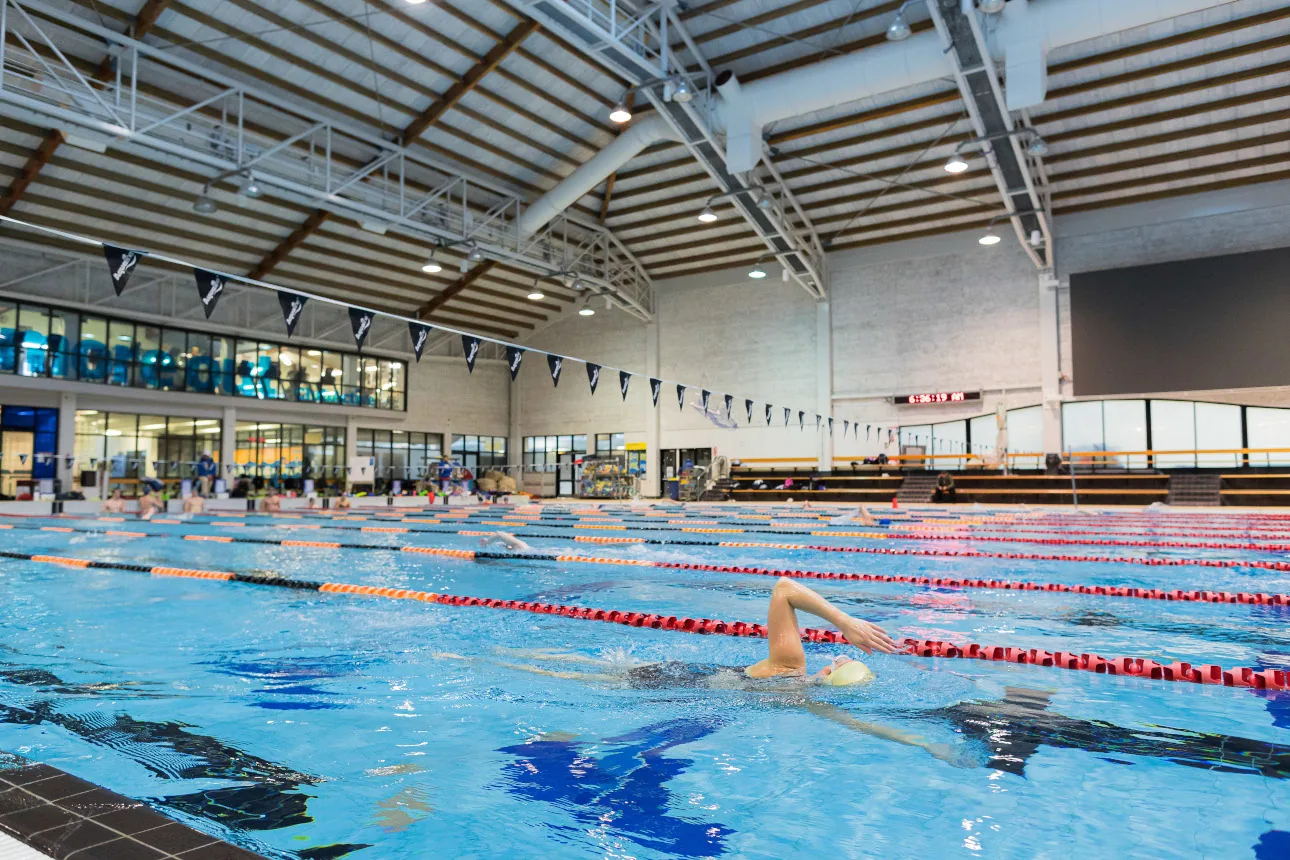
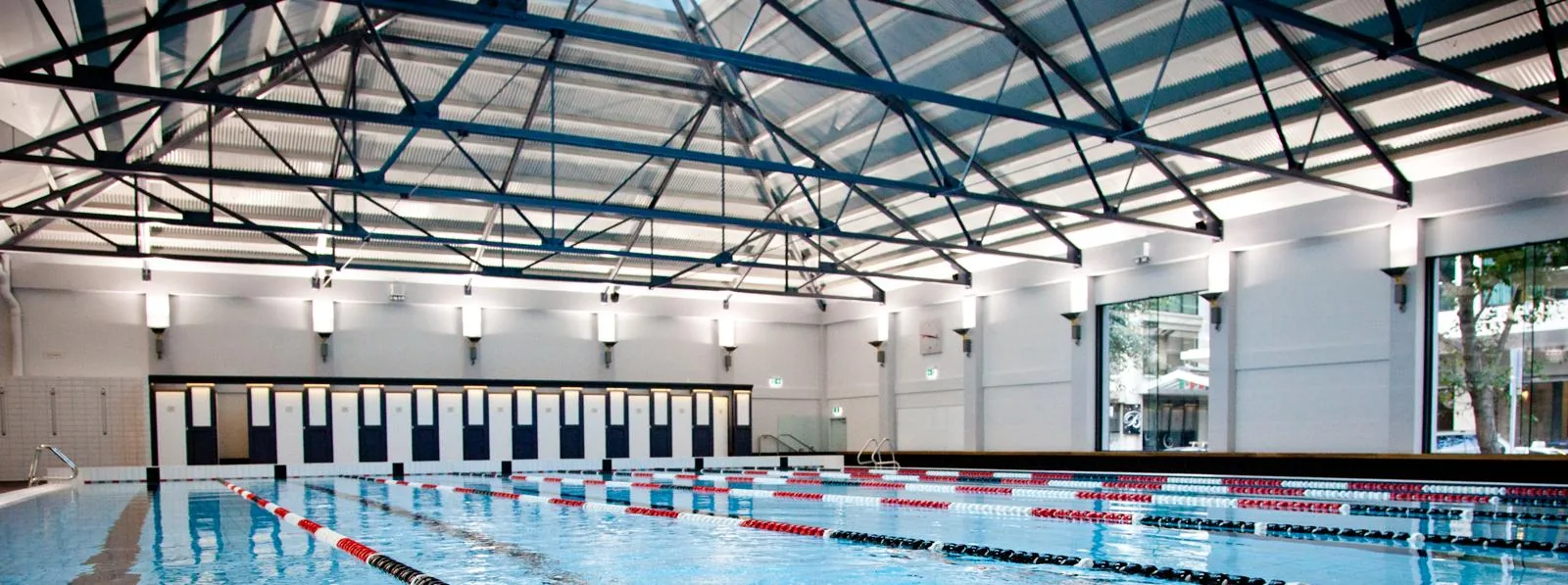
Wellington Regional Aquatic Centre
Wellington · 50 m pool
Overtaking and being overtaken
This is where most lane arguments start. The usual rules:
- Overtake only when it is clear. Pass in the middle of the lane when nobody is coming the other way, and do it quickly. If you can't pass safely, wait.
- Tap once to ask. If you keep catching someone, touch their feet lightly once. That means "I'd like to pass at the next wall". It is normal, not rude.
- Let faster swimmers through at the wall. If someone taps your feet, or you see them waiting behind you, stop at the end, move into the corner and let them go before you push off.
- Don't speed up when someone is passing. Keep your pace steady and let them get by.
- Don't overtake on the turn. Two people turning at the wall at once is how heads and feet collide.
If you are overtaken more than a few times in a session, the lane is probably too fast for you that day. Moving down a lane is not an admission of anything; it makes the swim better for everyone.
Breaststroke in a busy lane. Breaststroke kicks out sideways and takes up more room. In a busy lane, keep your kick narrow and watch for people coming the other way. Some pools ask breaststrokers to use the slow or medium lane at peak times.
Resting and starting
- Rest in a corner. Stand or hang on the wall at the side of the lane, not in the middle where people turn. Tuck in close to the rope so the turning space stays open.
- Don't stop mid-length. If you need to stop, move close to the rope and let others pass, then carry on or get to the end.
- Leave a gap before you push off. Wait until the swimmer ahead is a few metres away, or let a faster swimmer coming in to the wall turn first. Pushing off right in front of someone forces them to stop.
- Get in and out at the end. Use the ladder or slide in at the end of the lane, watching for anyone about to turn. No jumping in, and no diving unless the session and the depth allow it.
- Don't chat in the lane end. A quick word is fine. A long chat across both corners blocks everyone's turns.
Kickboards, fins and drills
Kickboards and pull buoys are fine in most lane sessions, but kick sets are slow, so do them in a lane that matches your kicking speed, not your swimming speed. Fins (flippers) make you much faster and their kick takes room, so many pools allow them only in the fast lane or at set times. Hand paddles are often banned in public lane sessions because of the risk of hitting someone. If in doubt, ask the lifeguard.
Count your lengths quietly and keep moving. If you want to know how far you have swum, see how many lengths make a mile, and for the bigger picture before your first lane session, read your first visit to a public pool.
Cities with the most pools offering lane swimming in our directory:
FAQ
Which way do you swim in a lane in the UK?
Usually clockwise, keeping to the left side of the lane. Check the arrow on the sign at the end of the lane, as some pools alternate direction between lanes.
Is it rude to tap someone’s feet in the pool?
No. A single light tap is the accepted way to ask to overtake at the next wall. Repeated tapping or grabbing is rude.
Can I swim breaststroke in the fast lane?
Yes, if your breaststroke keeps pace with the lane. Lanes are about speed, not stroke, but keep your kick narrow when it is busy.
Where should I rest during lane swimming?
At the end of the lane, to one side, leaving the middle of the wall free for swimmers turning.