Can you swim with contact lenses?
 By the Find My Swimming Pool team·
Updated ·
5 min read
If you cannot see the clock or the end of the lane without your lenses, it is tempting to keep them in and go. Plenty of people do. Eye doctors and health agencies still advise against it, and the reason is a rare but serious eye infection.
The short answer
You should not swim in contact lenses. The US Centers for Disease Control and Prevention (CDC) advises taking lenses out before swimming or showering, because water can carry germs, including the amoeba that causes Acanthamoeba keratitis, a rare but sight-threatening infection. Soft lenses soak up water and hold it against your eye. The better options are prescription swimming goggles or swimming without lenses. If you do wear lenses, use daily disposables under tight goggles and throw them away straight after.
Why water and lenses do not mix
The CDC's contact lens advice is to keep lenses away from all water and to take them out before swimming or showering. Lenses should only ever be stored in fresh solution, never water.
The main worry is Acanthamoeba, a tiny organism that lives in tap water, swimming pools, hot tubs, lakes and the sea. In most people it does no harm. On a contact lens it can be held against the surface of the eye, where it can cause Acanthamoeba keratitis, an infection of the cornea. It is rare, but it is hard to treat, very painful and can damage sight for good.
Soft lenses make it worse because they absorb water, and anything in that water, a little like a sponge. Other germs in pool and open water can cause infections too. Chlorine helps but does not make pool water sterile, and lakes, rivers and the sea are not treated at all.
There are practical problems as well. A lens can float out when you push off, turn or get splashed, and you will not find it again. Pool water can also make lenses feel tight or gritty.
Better ways to see in the pool
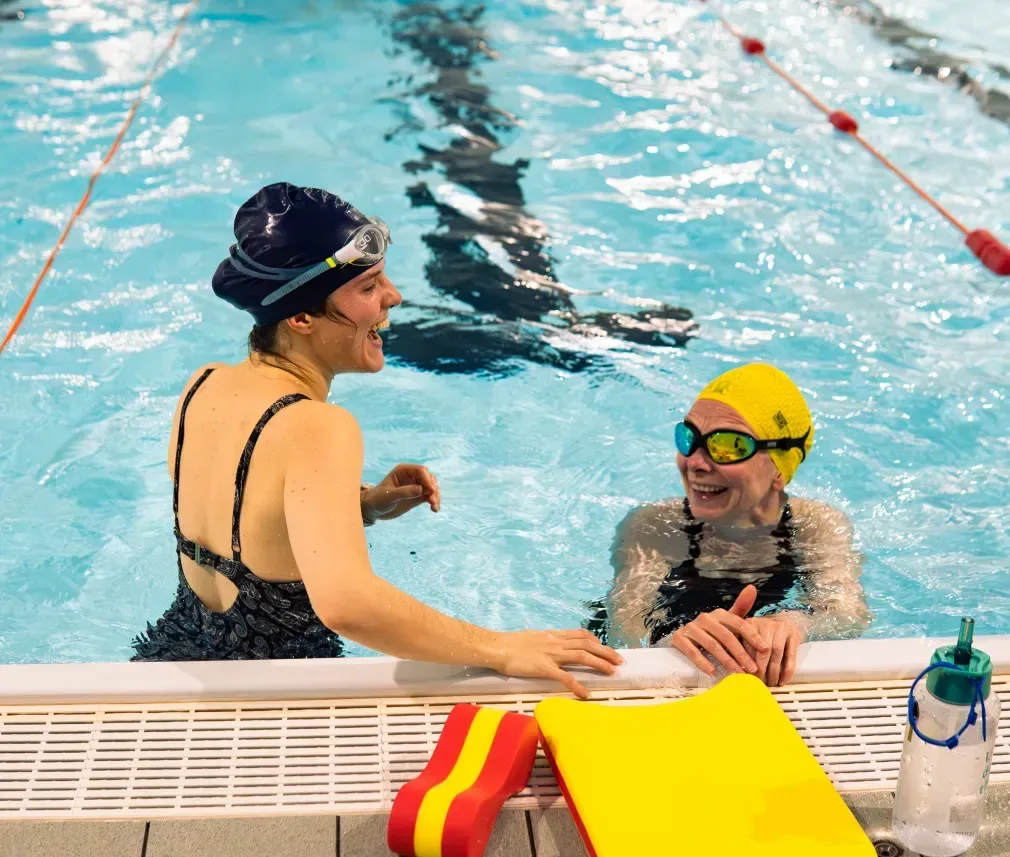
Prescription goggles
The simplest fix for most people. Off-the-shelf goggles come with lenses in set steps for short sight, and you can choose a different strength for each eye. They suit people with similar prescriptions in both eyes and little astigmatism. Opticians can also make fully made-to-measure prescription goggles, which cost more but match your prescription exactly. Ask your optician what strength to choose; it is not always the same number as your glasses.
Swim without correction
In a pool you mostly need to see the black line, the wall and the other swimmers. Many short-sighted people manage fine without lenses, especially in a lane where everyone swims the same way. Pick a pool with clear lane markings and a lane that suits your speed.
Longer-term options
Some regular swimmers end up choosing laser eye surgery or other options partly for this reason. That is a decision for you and your eye specialist, not a pool decision.
Do not rinse lenses with tap water or keep them in water. The same organisms that live in pools also live in tap water. Use fresh solution every time, and never top up old solution in the case.
If you swim in lenses anyway
If you decide the risk is worth it, for example for a race or an open-water event, lower it as far as you can.
- Use daily disposable lenses so you can throw them away straight after.
- Wear well-fitting goggles that seal properly. Check them in the shallow end first. Our guide to why wear goggles covers fit.
- Keep your eyes closed if water gets into your goggles, and fix them at the wall rather than in the middle of the lane.
- Avoid hot tubs and open water in lenses, even with goggles. Warm water and untreated water carry the highest risk.
Goggles reduce the risk but do not remove it. Water gets in at turns, dives and when someone kicks you by accident.
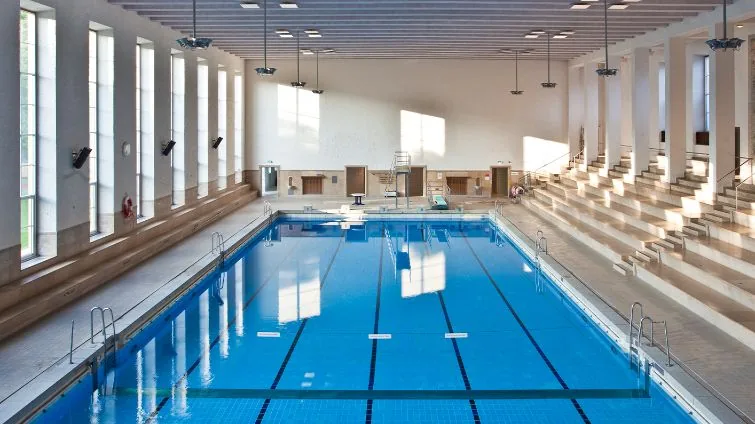
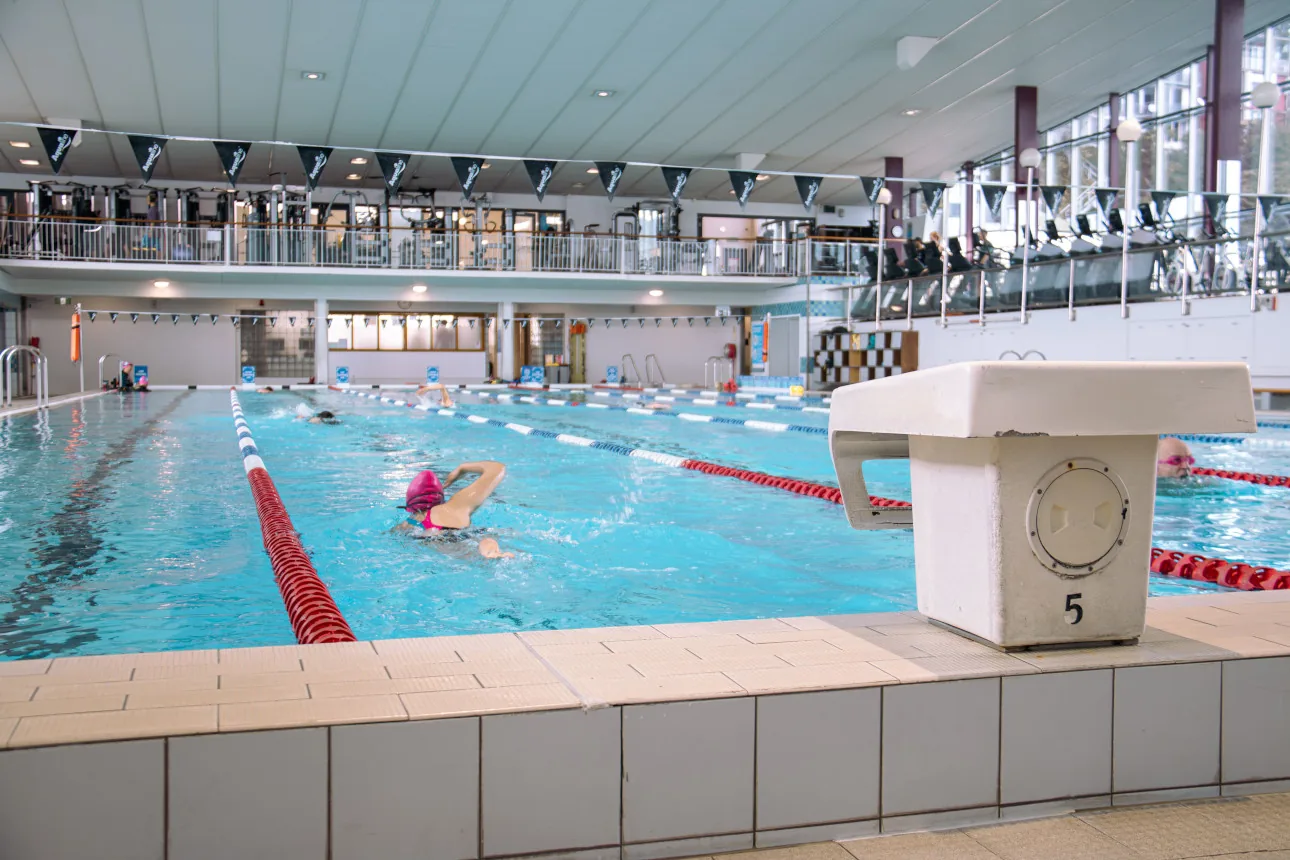
Nordbad
Munich · 33 m sports pool
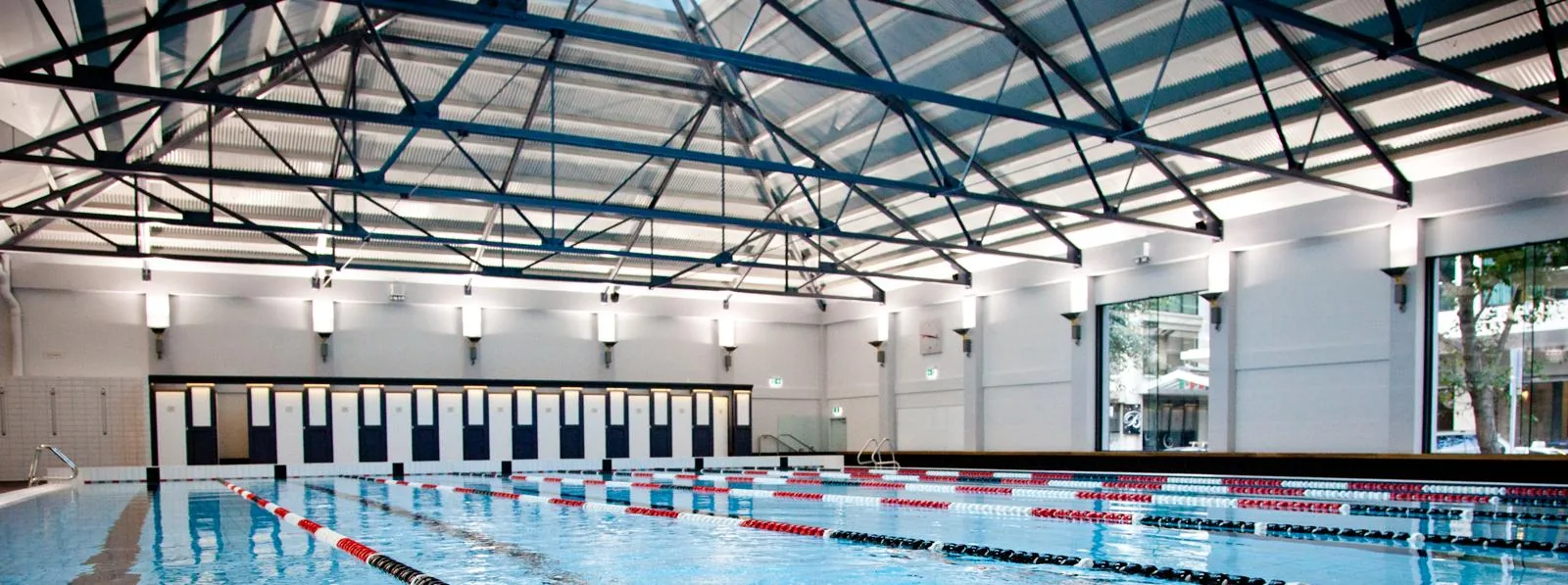
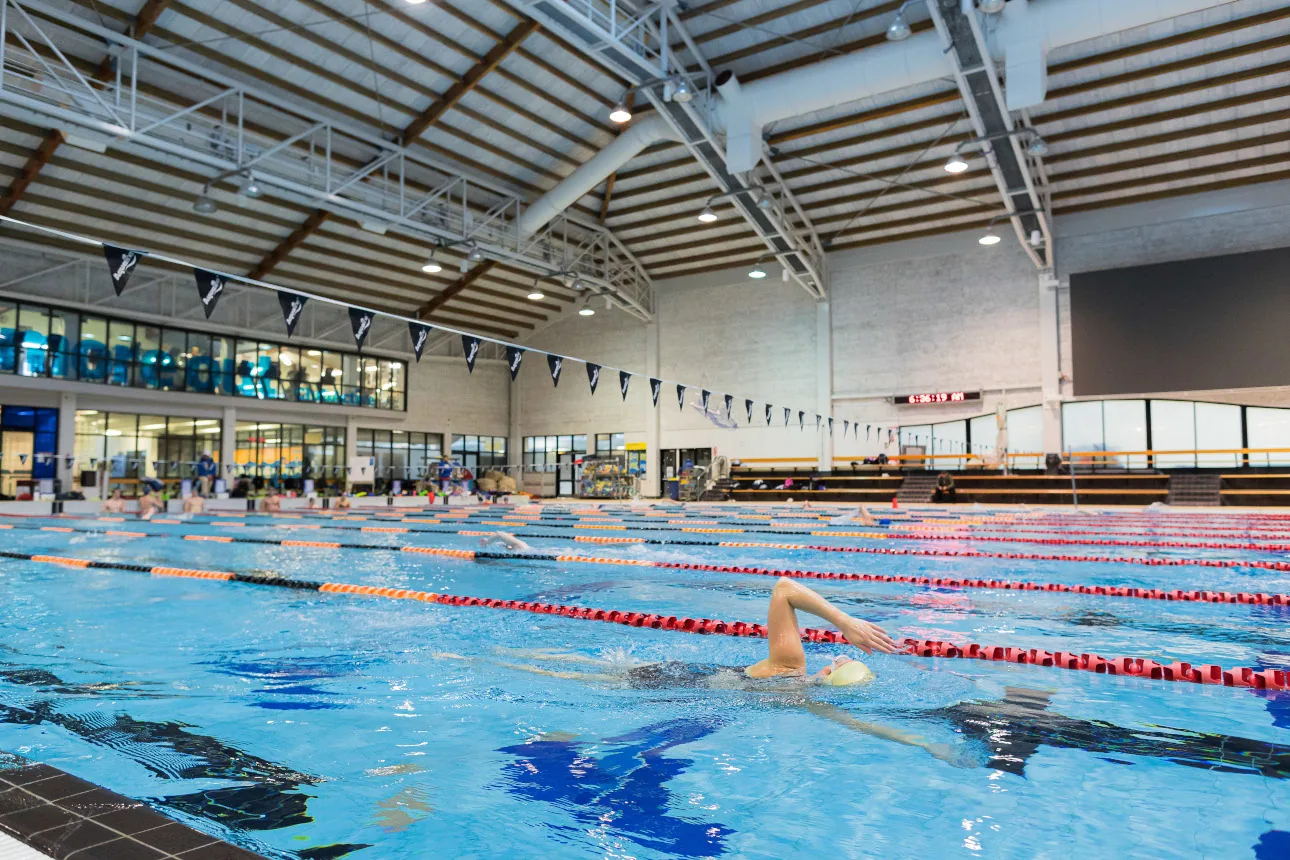
Tepid Baths
Auckland · Heritage 25 m pool
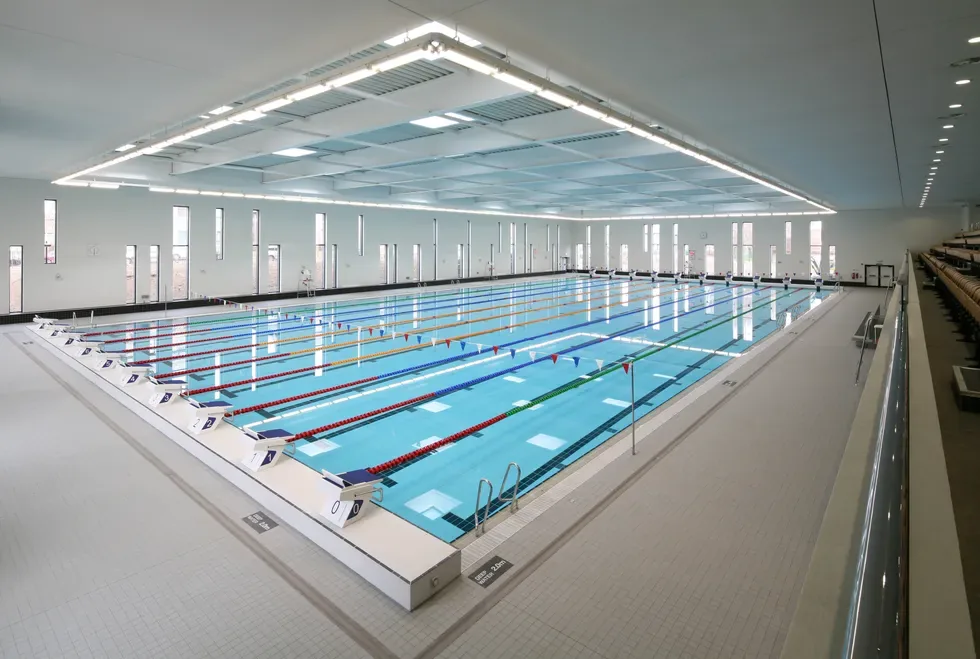
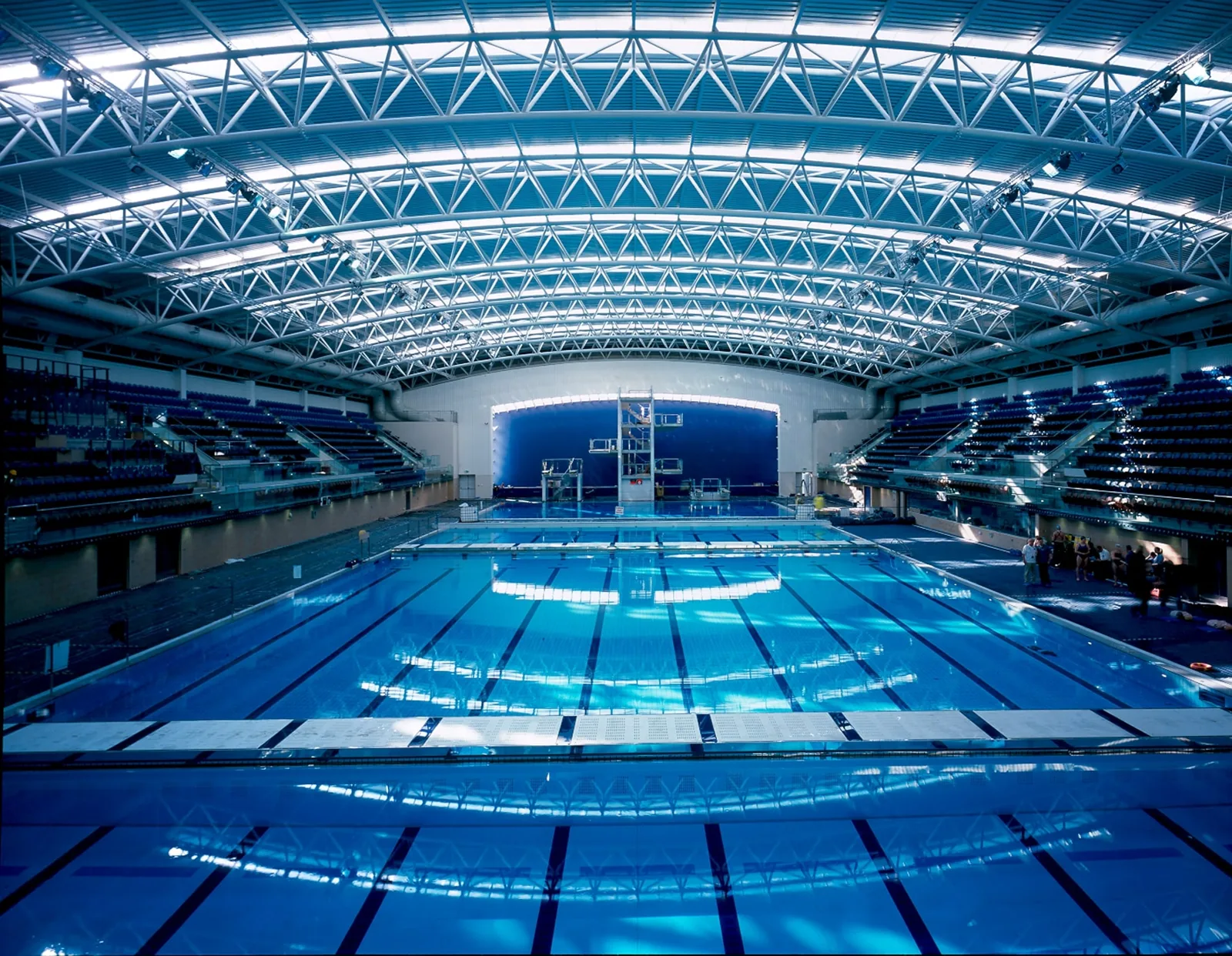
Aberdeen Aquatics Centre
Aberdeen · 50 m, ten lanes
After the swim
- Take the lenses out as soon as you are out of the water, with clean, dry hands.
- Throw away daily lenses. If you only have reusable lenses with you, clean and disinfect them as your optician told you, for the full soaking time, before you wear them again. If in doubt, throw them away.
- Wear your glasses home.
- Rinse the lens case with fresh solution, not water, and let it air dry open.
Red or stinging eyes after a swim are usually from chlorine compounds in the water, not an infection. Our guide to red eyes after swimming explains why and what helps.
Symptoms to take seriously
Take your lenses out and see an optician, eye casualty or a doctor the same day if you have any of these after swimming or showering in lenses:
- eye pain that is getting worse, or feels much worse than the redness suggests
- red eye that does not settle once the lenses are out
- blurred vision or sensitivity to light
- a feeling that something is stuck in your eye
- watering or discharge
Tell them you wear contact lenses and that you have been in water. Do not put lenses back in until you have been checked.
FAQ
Can I wear contact lenses in a swimming pool with goggles?
Health agencies still advise against it, because water can get under goggles. If you do, use daily disposables, wear well-sealing goggles and throw the lenses away straight after.
Are hard lenses safer than soft ones for swimming?
Rigid lenses absorb less water, but they come out more easily and can still trap water and germs against the eye. The advice is the same: take them out before swimming.
Can I shower with contact lenses in?
The CDC advises taking lenses out before showering as well as swimming, because the organisms that cause Acanthamoeba keratitis also live in tap water.
Do prescription goggles work for astigmatism?
Ready-made prescription goggles usually only correct short or long sight. If you have significant astigmatism, ask an optician about made-to-measure prescription goggles.