Learning to swim as an adult
 By the Find My Swimming Pool team·
Updated ·
5 min read
Lots of adults never learned to swim, or learned badly and stopped. It is never too late. Adults often learn faster than children because they can follow instructions and practise on purpose. The hard part is usually getting through the door the first time.
The short answer
The fastest way to learn to swim as an adult is a course of adult lessons at a public pool, usually in a small group in a warm, shallow teaching pool. Most leisure centres and swim schools run beginner classes for adults and one-to-one lessons for nervous swimmers. Start by getting comfortable in the water: breathing out under water, floating and standing up again. Then learn a simple stroke. Practise between lessons in quiet sessions. Everyone learns at a different pace, and nervous swimmers simply take longer.
Where to start
Look for "adult beginners", "adult learn to swim" or "adult improvers" on the lessons page of your local leisure centre. Council pools and leisure trusts in the UK, Ireland, Australia, New Zealand and Canada nearly all run them, often in the evening or at the weekend. Private swim schools also teach adults, and some specialise in nervous swimmers.
Before the first lesson you need:
- Swimwear you feel comfortable in. Many pools allow swim leggings, rash vests or modest swimwear; see what to wear to a swimming pool.
- Goggles. Being able to see under water makes a big difference to confidence.
- A swim cap if you have long hair or the pool asks for one.
Tell the teacher what you can and cannot do, and anything that worries you. They will have taught people who could not put their face in the water. You are not unusual.
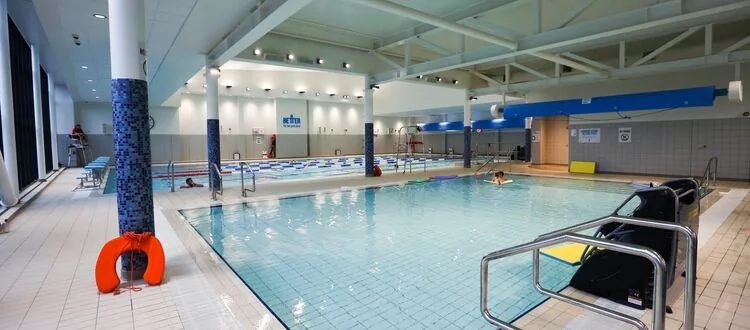
Choosing lessons
| Type | Good for | Things to know |
|---|---|---|
| Adult group lessons | Most beginners | Cheapest per session. Usually a term or block of weeks. Groups are often small. |
| One-to-one lessons | Nervous swimmers, people with specific goals | Faster progress, all attention on you. Costs more per lesson. |
| Intensive courses | People with a deadline, such as a holiday | Several lessons in a week. Tiring but quick. |
| Adult improvers | People who can swim a little | Works on stroke technique and breathing, often in the main pool. |
A good beginner class takes place in a warm, shallow teaching pool where you can stand up anywhere. Ask about the depth and temperature when you book. Being cold makes everything harder.
In the UK, look for teachers qualified through Swim England, Swim Wales, Scottish Swimming or the STA. Elsewhere, pools generally use teachers with the national teaching award for that country.
The skills in order
Teachers break swimming into small steps. Each one builds on the last, so do not rush past the early ones.
- Getting in and moving around. Walk across the shallow end, hold the side, get used to the feeling of water on your body.
- Breathing out under water. Breathe in through your mouth, put your face in and blow bubbles out through your nose and mouth. This one skill removes most of the panic in swimming.
- Floating. On your front and on your back, with a float or noodle first, then without. You find out that the water holds you up.
- Standing up again. From a front float and a back float. Knowing you can always get back to your feet makes everything else possible.
- Gliding and kicking. Push off the wall in a long, flat shape, then add a steady kick.
- A first stroke. Often backstroke or breaststroke first, because breathing is easier, then front crawl.
- Breathing while swimming. Fitting breaths into the stroke rhythm, so you can keep going for a width and then a length.
- Deep water. Treading water, and getting out at the side without steps.
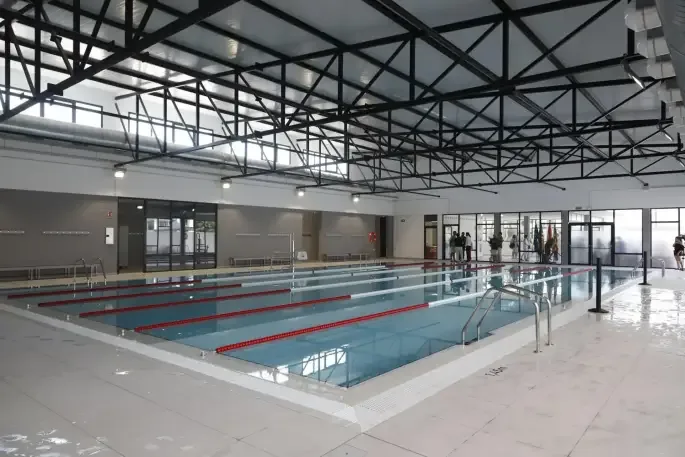
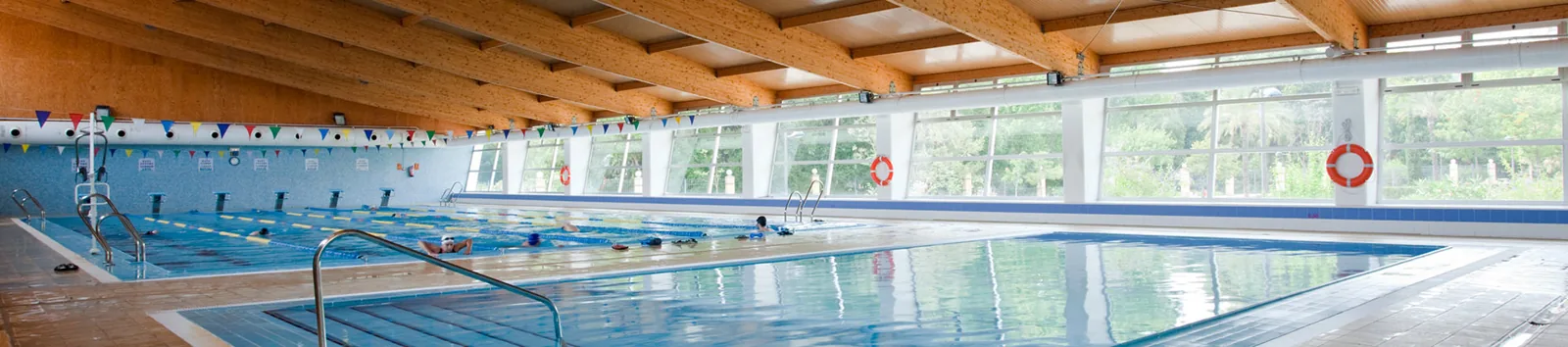
Poliesportiu Municipal de Maó
Mahón · Indoor teaching pool
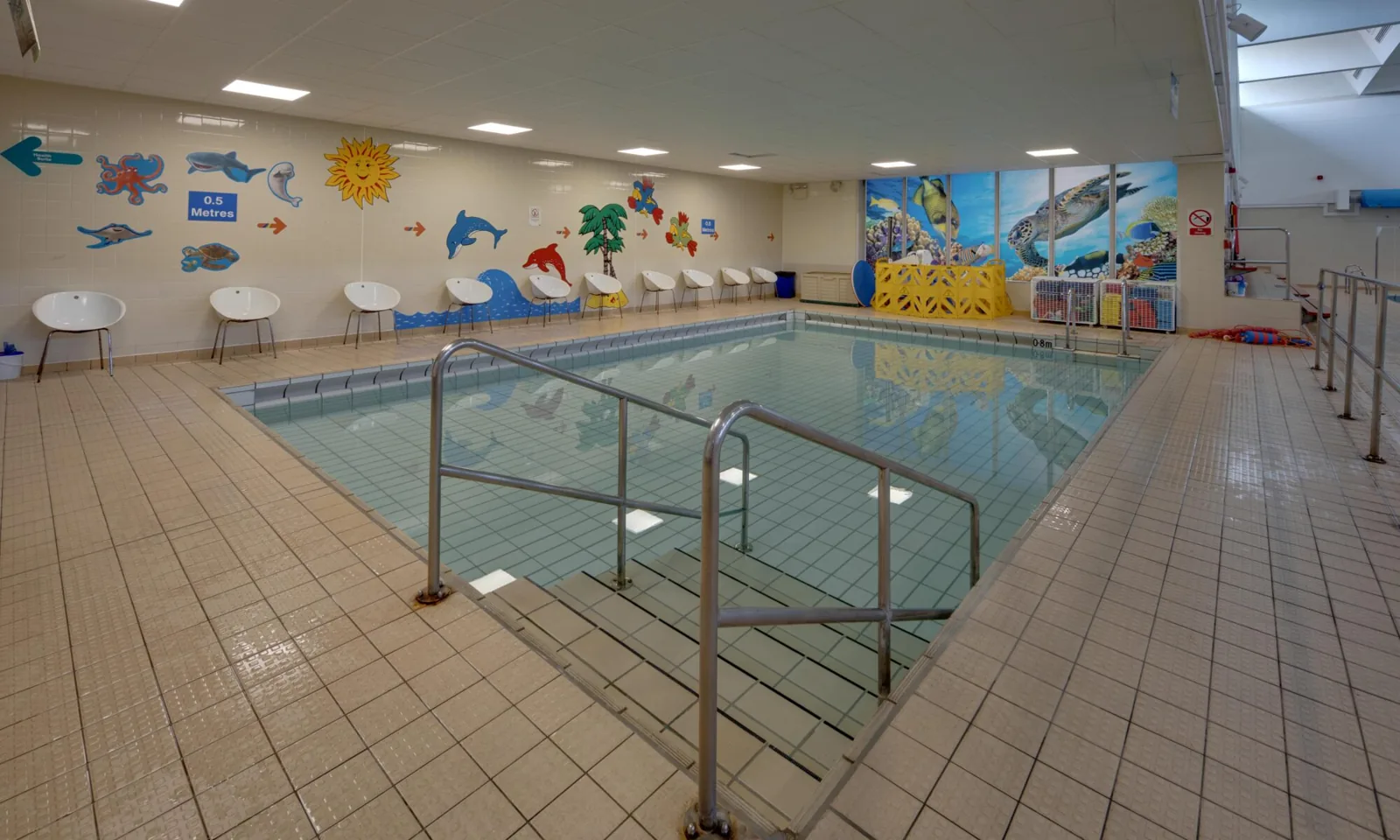
Ken Martin Leisure Centre
Nottingham · Teaching pool
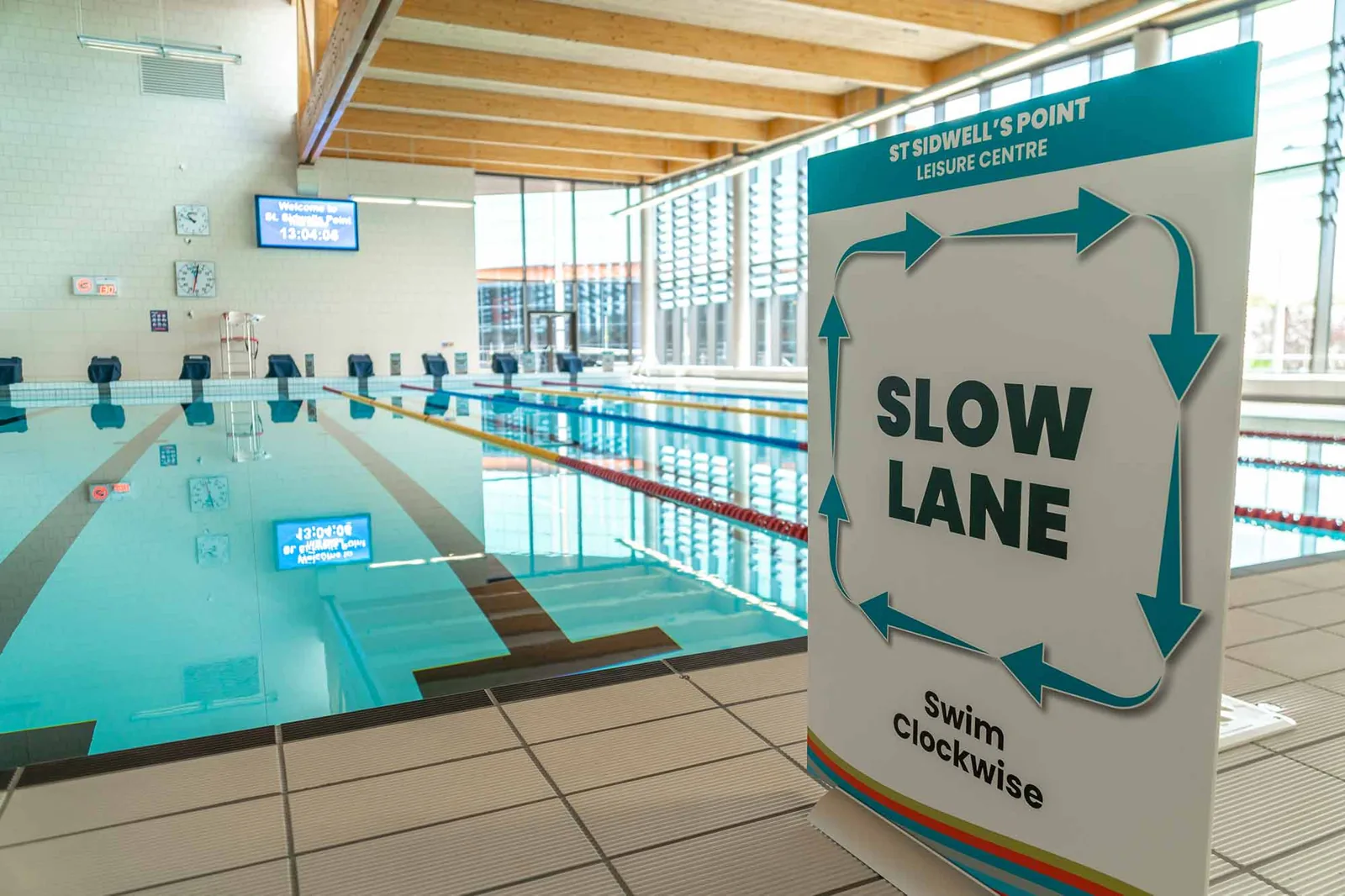
St Sidwell's Point Leisure Centre
Exeter · 20 m learner pool
If you are afraid of water
Fear of water is common in adults who never learned, and often comes from a bad experience as a child. It is a reason to learn slowly, not a reason not to learn.
- Tell the teacher at the start. Ask for one-to-one lessons if a group feels too much.
- Choose a pool where the water is shallow everywhere, so you can always put your feet down.
- Take as long as you need on breathing out under water. Once you can do it calmly, you have done the hardest part.
- Go to the pool between lessons just to stand and walk in the shallow end. Familiarity helps.
- Expect setbacks. A bad day does not undo the progress you made.
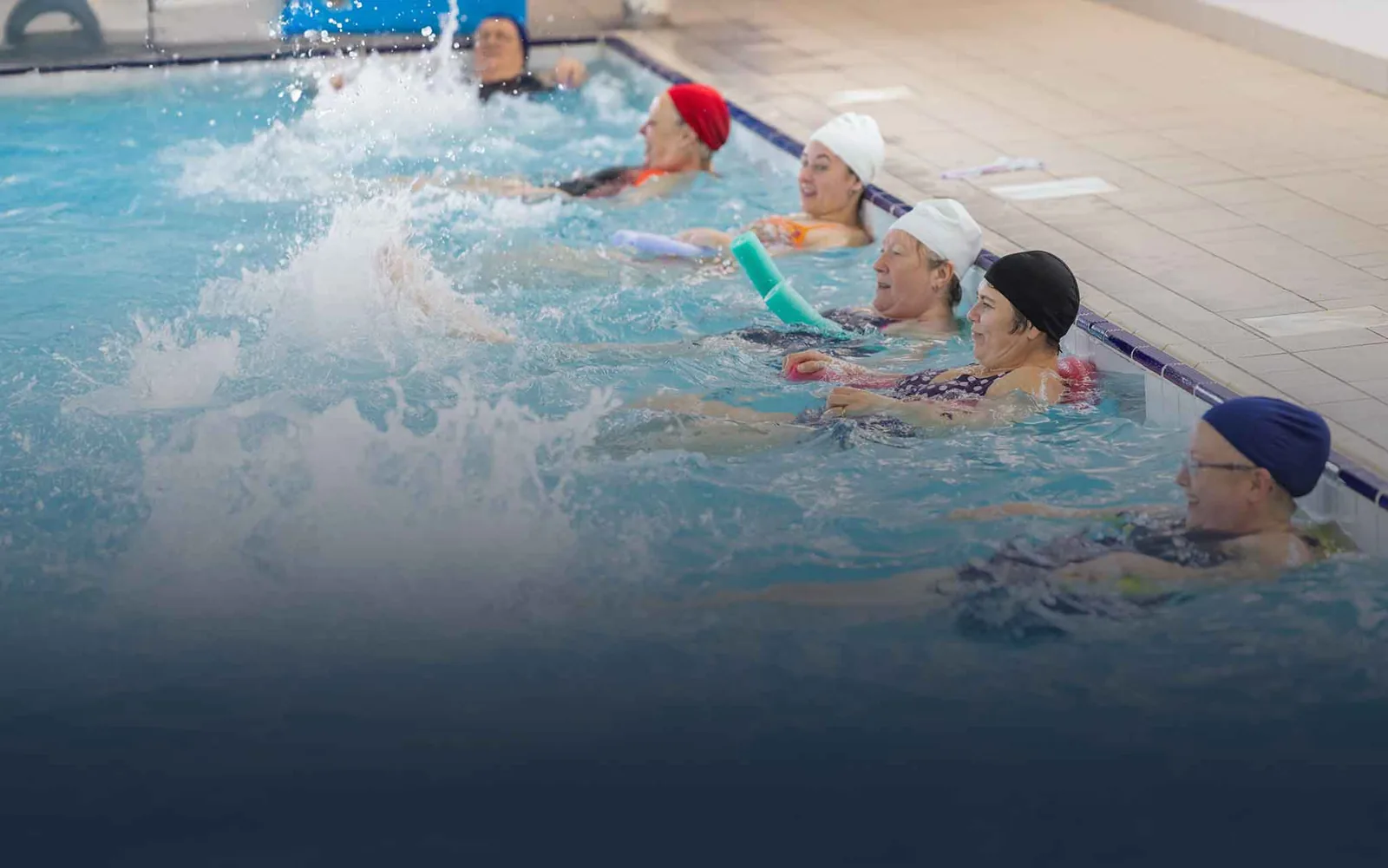
A floatation belt or noodle is fine. Teachers use them to let you practise the movement before you have the confidence to float alone. You will drop them sooner than you think.
Practising on your own
One lesson a week and nothing else is slow. One extra practice swim a week makes a big difference.
- Go at a quiet time, such as a weekday morning or late evening. See when the pool is quietest.
- Use the shallow end or the teaching pool if it is open to the public. Some pools run adult-only sessions, which are often calmer.
- Practise only what you have learned in lessons: bubbles, floats, glides and short swims across the width.
- Stay where you can stand. Do not go into deep water on your own until your teacher says you are ready.
- Keep a note of progress. "Floated on my back without the noodle" is worth writing down.
Once you can swim a length, you can join lane swimming in the slow lane. Our guide to lane swimming etiquette explains how it works, and your first time at a public pool covers changing rooms and lockers.
Cities with the most public pools in our directory, where you can look for adult lessons:
FAQ
Is it too late to learn to swim at 40, 50 or 60?
No. Swimming teachers regularly teach adults of all ages, including people in their 70s and 80s. Older beginners may need more time to build confidence, but the skills are the same.
How long does it take an adult to learn to swim?
It varies a lot. Some adults swim a width after a few lessons, while nervous beginners may need a term or more just to feel comfortable. Regular practice between lessons speeds things up.
Should I learn breaststroke or front crawl first?
Many teachers start adults with breaststroke or backstroke because your face can stay out of the water. Front crawl comes once you are relaxed breathing out under water.
Can I teach myself to swim?
Some people do, but lessons are faster and safer, especially if you are nervous. If you practise alone, stay in water where you can stand and swim when a lifeguard is on duty.