Your first visit to a public swimming pool
 By the Find My Swimming Pool team·
Updated ·
5 min read
Going to a public pool for the first time, or the first time in years, is mostly about knowing the routine. Once you have done it once, the second visit feels like any other errand.
The short answer
Check the timetable online and pick a session that suits you: a general or public swim if you want to splash about, a lane swim if you want to swim lengths, or an adult-only or quiet session if you are nervous. Book ahead if the pool asks you to. Bring a swimsuit, towel, goggles and a coin or token for the locker. Pay at reception, change, lock your things away, shower, then get in. Swim at your own pace, keep to the side of the lane and leave when the session ends.
Before you go
Look up your local pool's timetable on its website or app. Most pools split the day into sessions, and the session type matters more than anything else on your first visit.
- Public, general or casual swim. Open to everyone, no lanes or only a few. Families, children and adults all share the water. Good for getting used to it.
- Lane swim or lap swim. The pool is split into lanes for people swimming lengths, often marked slow, medium and fast.
- Adult-only, quiet or 50+ sessions. Calmer, with no children. A good choice if you are nervous or out of practice.
- Family or fun sessions. Louder, with floats and sometimes inflatables. Lots of children.
- Women-only sessions. Offered at some pools, often with female lifeguards and covered windows.
Many pools now ask you to book online for a timed slot, especially in the UK and Canada. Booking usually means creating a free account. Some pools still let you just turn up and pay.
Weekday mid-mornings and early afternoons are usually the quietest times. Our guide to the best time to go swimming has more on avoiding the busy slots.
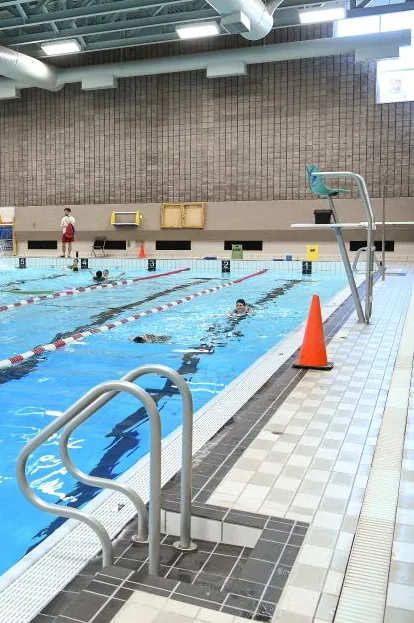
Arriving and paying
Give yourself 10 to 15 minutes before your session for paying and changing. At reception, say you want a swim, or show your booking. Prices vary by country and by council. From the pools in our directory in 2026, a casual adult swim usually costs:
| Country | Typical casual adult swim, 2026 |
|---|---|
| United Kingdom | About £5 to £9.50, most around £5.80 to £7.50 |
| Australia | About A$6 to A$10 |
| New Zealand | About NZ$7 to NZ$10 |
| Canada | About C$4.50 to C$13 |
| Spain and other EU countries | About €3 to €8 at municipal pools |
Concessions for children, students, older people and disabled swimmers are common. If you plan to go regularly, ask about a pay-as-you-go card or a block of tickets. Our guide to how much a swim costs goes into more detail.
Changing and showering
Changing rooms come in two main layouts: separate men's and women's rooms, or "village" changing, a shared area with private lockable cubicles. In village changing you get changed inside a cubicle, not in the open. Our guide to pool changing rooms explains both.
- Get changed and put everything in a locker. Most take a coin or token that you get back, or a small charge.
- Fasten the locker key band to your wrist or ankle.
- Take off outdoor shoes before the wet area, or follow the signs for a shoe line.
- Shower before you get in. It rinses off sweat, deodorant and skin products that use up the chlorine. See why you should shower before swimming.
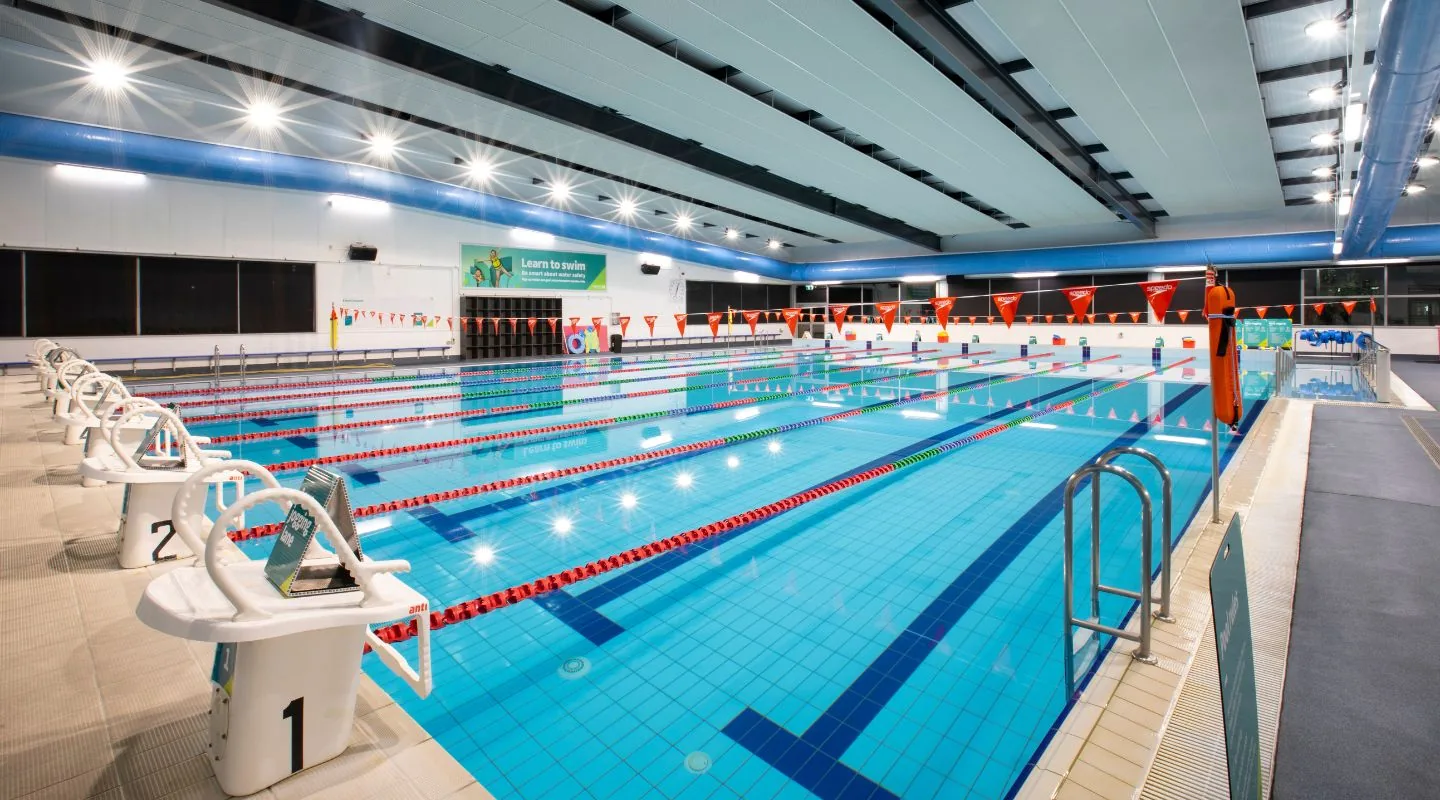
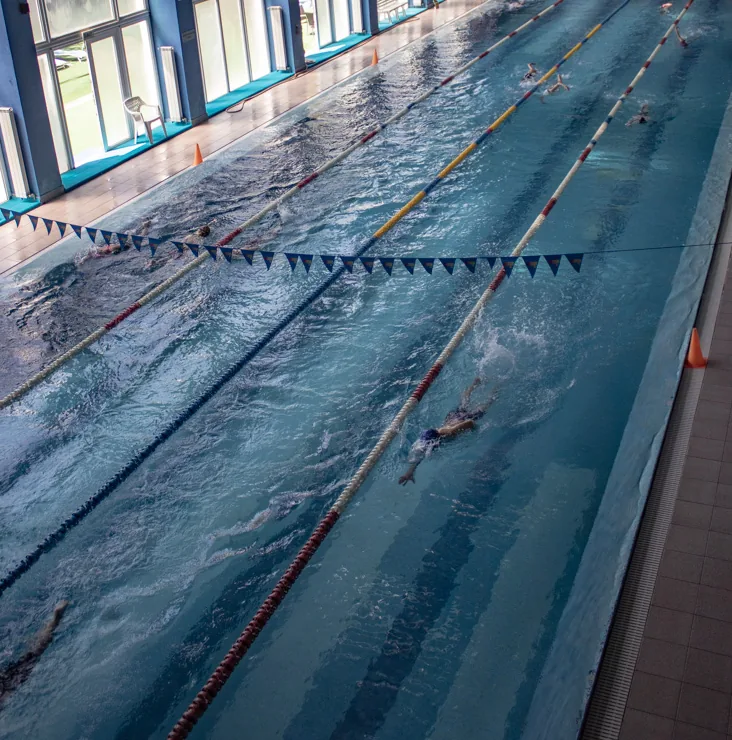
Graham Condon Recreation and Sport Centre
Christchurch · 25 m lane pool
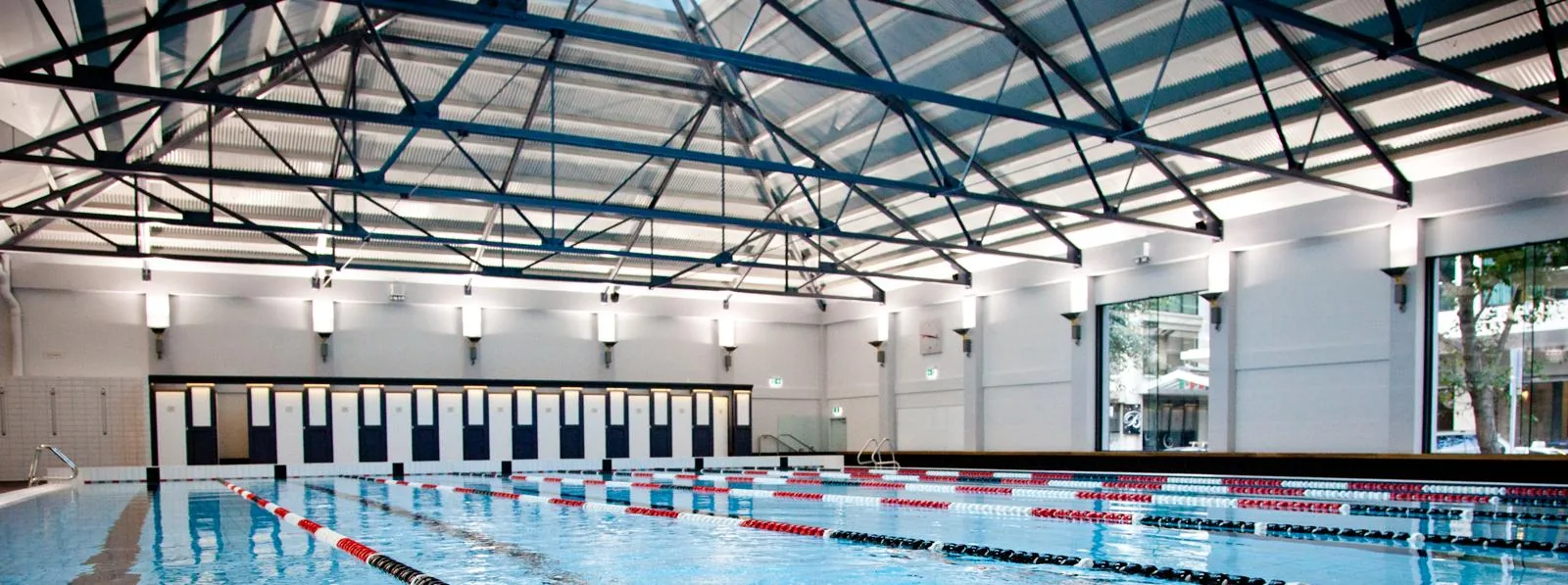
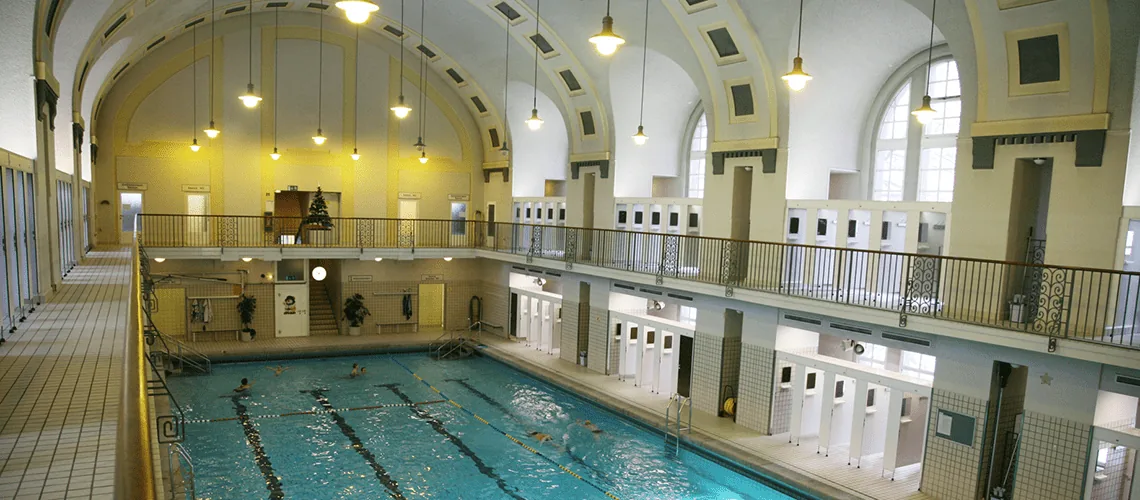
Tepid Baths
Auckland · Heritage lane pool
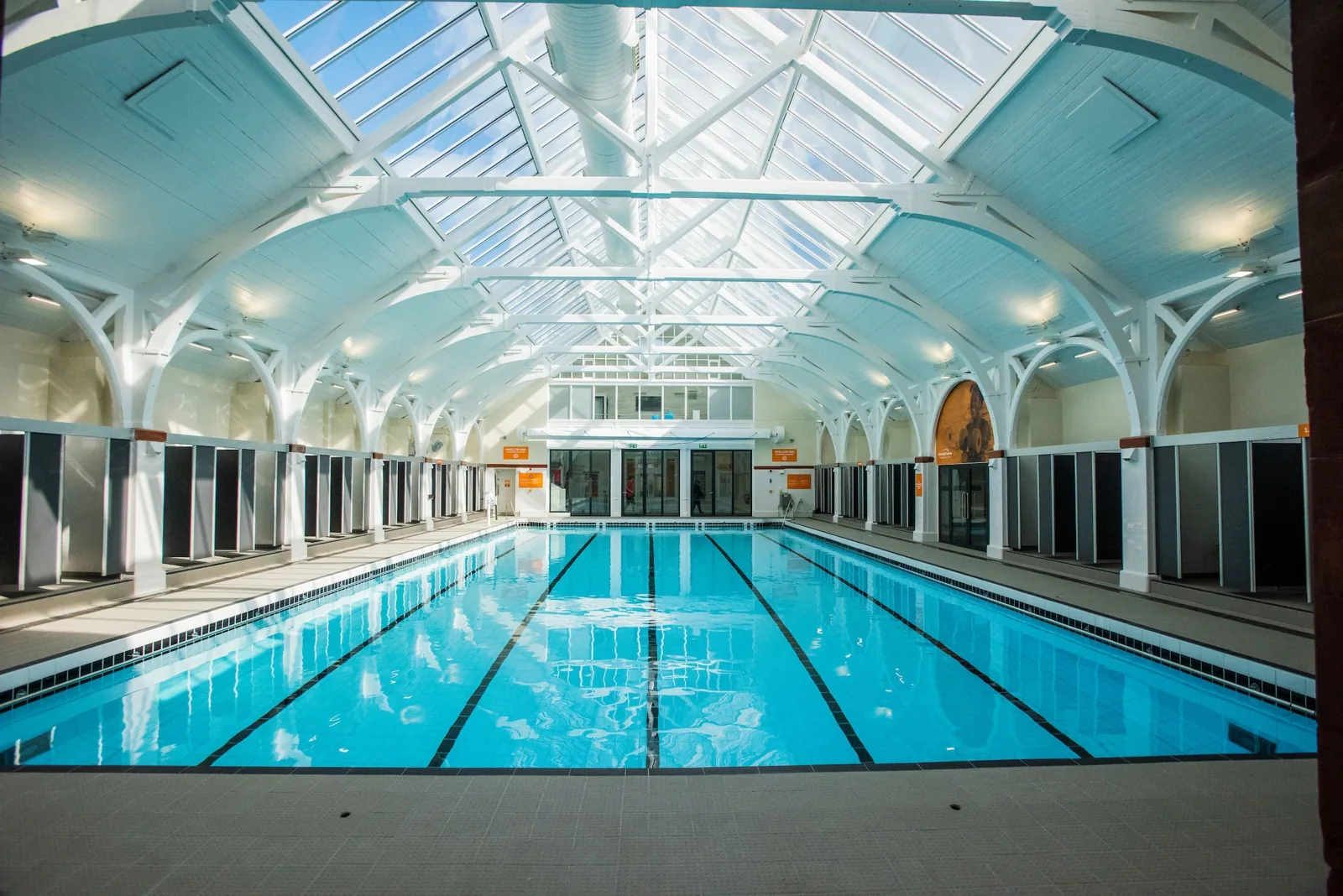
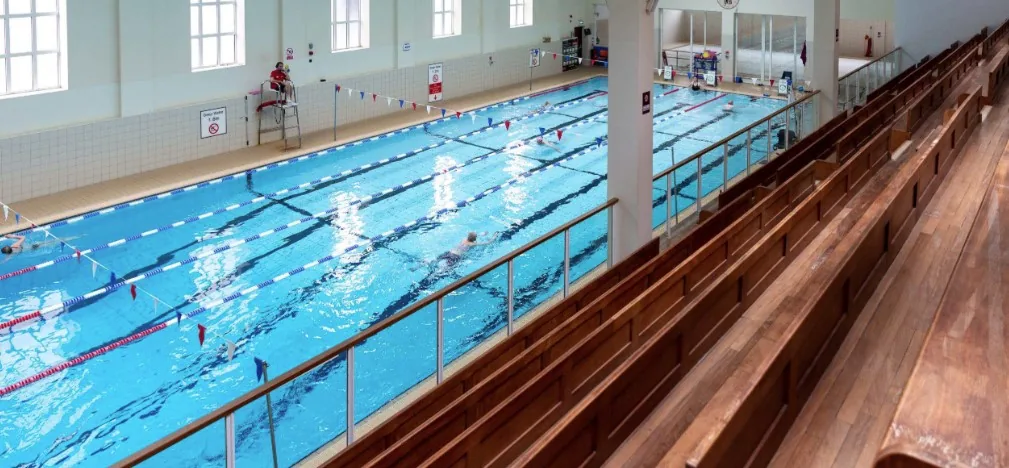
Warrender Swim Centre
Edinburgh · Casual and lane swims
In the water
Use the steps or ladder, or sit on the edge and lower yourself in. Do not jump in unless the session allows it, and never jump or dive where the water is shallow. Depth markings are painted on the side of the pool.
If you are in a lane session, pick the slow lane for your first visit, even if you think you are medium. You can move up next time. Swim on the same side as everyone else in the lane (look at the sign at the end or watch for a length) and rest at the end of the lane against the wall, to one side. Our guide to lane swimming etiquette covers overtaking and resting.
Lifeguards are there to help as well as to watch. If you are unsure which lane to use, where the deep end starts or whether you can use a float, ask them. Floats and kickboards are usually stacked by the pool for anyone to borrow.
If you have not swum for years. Start with 10 or 15 minutes, a few lengths with long rests, and stay in the shallow end or a lane where you can stand. You do not have to swim front crawl. Breaststroke, backstroke or walking in the water all count.
After your swim
Most sessions end with a whistle or an announcement. Get out when asked, as the next group is often waiting. Rinse off in the shower, using soap if you like, and dry off well, especially between your toes. Many pools have hair dryers by the changing area; some charge a few coins.
Pool rules vary a little between places, but the common ones are the same everywhere: no running, no diving in shallow water, no glass on the poolside. Our guide to swimming pool rules explains why each one exists, and what to bring swimming has a full packing list.
Cities with the most public pools in our directory:
FAQ
Do I need to book a swim at a public pool?
Many pools now ask you to book a timed slot online, especially in the UK and Canada. Others still take walk-ins. Check the pool website before you go.
What if I cannot swim well?
Choose a public or adult-only session in the shallow end or a teaching pool, and tell a lifeguard if you are unsure about the depth. Adult swimming lessons are widely available.
Do I have to wear a swim cap?
In the UK, Ireland, Australia, New Zealand and Canada caps are usually optional. In France, Italy and much of Spain they are often compulsory.
How long is a swim session?
Usually 45 minutes to an hour in the water. Some pools run shorter express sessions, and some let you stay as long as you like.