Swimming pool rules and why they exist
 By the Find My Swimming Pool team·
Updated ·
6 min read
Every pool has a list of rules by the entrance, and most of them sound fussy until you know the reason. Nearly all of them come down to three things: stopping injuries, keeping the water clean and letting lifeguards see everyone.
The short answer
The common swimming pool rules are: shower before you swim, no running on the poolside, no diving in shallow water, no glass, no food or chewing gum in the pool, no outdoor shoes in the wet area, swim nappies for babies, stay out of the water if you have diarrhoea, and do what the lifeguard says. Many pools add rules on swim caps, swimwear, phones and how old children must be to swim without an adult. Each one exists to prevent an injury, keep the water clean or keep swimmers visible.
Rules that prevent injuries
- No running. Wet tiles are slippery and the poolside is hard. A slip can mean a cut head or a broken wrist, and a fall near the edge can end in the water.
- No diving in shallow water. Diving into water that is too shallow can cause serious head and spinal injuries. Pools mark "no diving" areas and depths on the side. Only dive where it is signed as allowed, and never in the shallow end.
- No pushing, ducking or rough play. Holding someone under, even as a joke, can cause panic and inhaling water within seconds.
- No glass. Broken glass is almost impossible to see in water or on wet tiles, and a pool may have to be drained to clear it.
- No jumping in during lane sessions. It lands you on top of people turning at the wall.
- Height or ability rules for slides and deep water. Flumes and diving boards have minimum heights or swim tests because the landing water is deep and the speed is high.
Rules that keep the water clean
Pool water is shared by hundreds of people a day. Chlorine kills most germs quickly, but it has limits.
- Shower before you swim. The US Centers for Disease Control and Prevention (CDC) says a one-minute shower removes most of the dirt, sweat and oils on your body. Less of that in the water means the chlorine has more left for germs, and less of the irritating by-products that cause the "chlorine smell". See why shower before swimming.
- Stay out with diarrhoea. The CDC advises staying out of the water if you have diarrhoea, and after a Cryptosporidium diagnosis, not swimming until two weeks after the diarrhoea has completely stopped. The CDC notes that Crypto can survive more than seven days in properly chlorinated water.
- Swim nappies for babies and toddlers. Pools ask for a proper swim nappy (swim diaper) to keep accidents in. The CDC also suggests toilet breaks and nappy checks for children every hour, with changing done away from the water. See swim nappies.
- No peeing in the pool. It reacts with chlorine to make the compounds that sting eyes. Our guide to the "pee dye" myth covers what really happens.
- No outdoor shoes on the poolside. They carry dirt and grit into the wet area. Many pools have a shoe line or blue overshoes for visitors.
- No food or chewing gum in the water. Food attracts germs and gum sticks in filters and drains.
- Plasters and open wounds. Many pools ask you to cover cuts with a waterproof dressing or stay out until healed.
If you are unwell, see a doctor before swimming rather than after. For more on getting ill from pools, see can you get sick from a pool.
Why pools close after an accident. When there is a faecal accident, staff clear the pool and add extra chlorine. Depending on the type of accident and the pool's procedure, it can be closed for anything from a short spell to a full day. Annoying, but it is the rule working.
Rules that help lifeguards
A lifeguard has a few seconds to spot someone in trouble. Several rules exist so they can see you and reach you.
- Follow the lifeguard's instructions. If a lifeguard blows a whistle or asks you to stop doing something, stop. They can see things you cannot.
- Inflatables and floats only in some sessions. Large inflatables block the view of the water below.
- Child supervision ratios. Most UK pools limit how many young children one adult can bring and require the adult in the water with them. Age limits for children swimming alone vary by pool; see what age kids can swim alone.
- No long breath-holding games. Repeated breath-holding underwater can cause someone to black out without warning, and many pools ban it.
- Get out when asked. At the end of a session, or if the pool is cleared for an emergency or a thunderstorm at an outdoor pool.
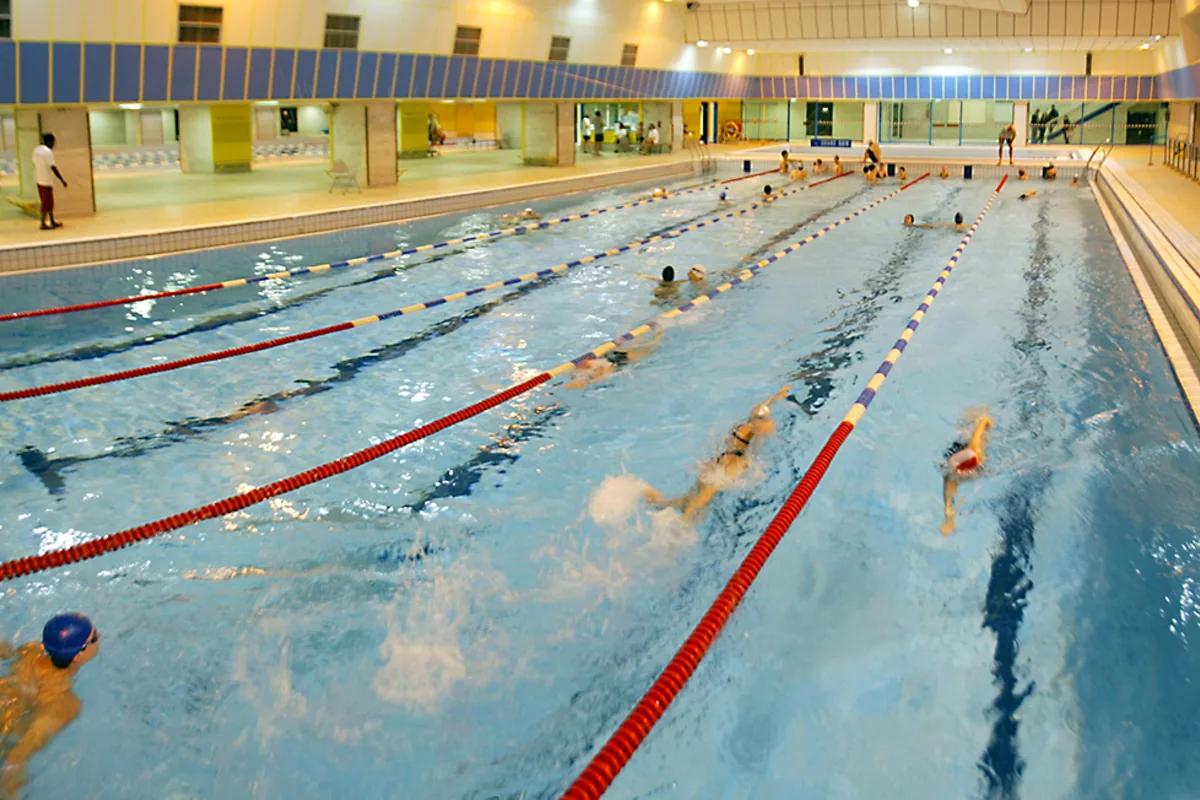
Piscine Armand Massard
Paris · Cap required
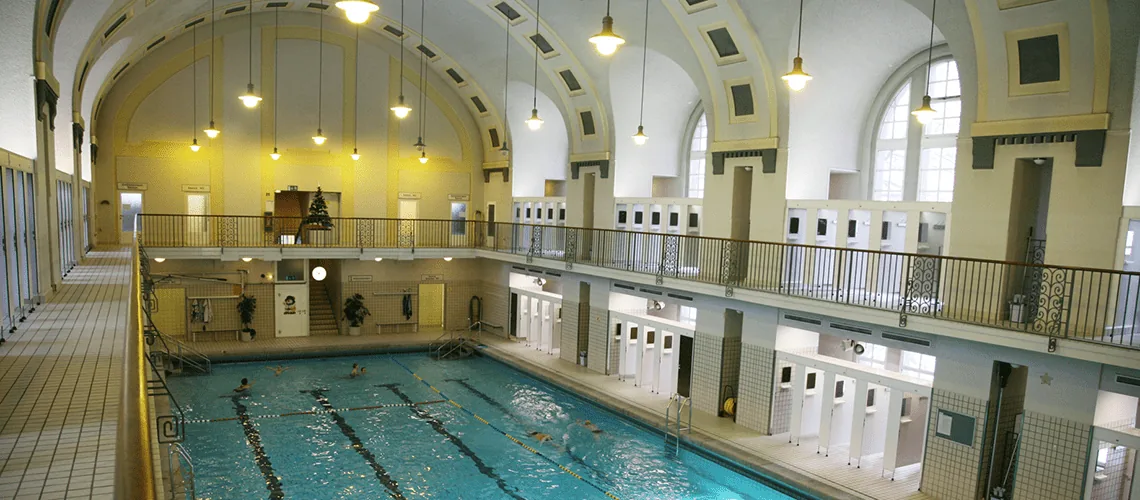
Stadtbad Spandau Nord
Berlin · 90-minute ticket
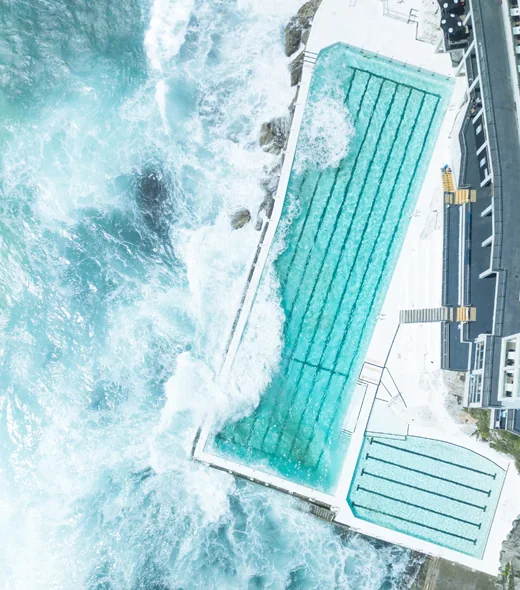
Bondi Icebergs Pool
Sydney · Lifeguards all year
Rules that vary by pool and country
- Swim caps. Compulsory at most public pools in France and Italy and many in Spain. Usually optional in the UK, Ireland, Australia, New Zealand and Canada. See do you have to wear a swim cap.
- Swimwear. French municipal pools usually ban loose board shorts for men and ask for tight trunks or jammers. Some pools ban cotton T-shirts and shorts because they shed fibres into the filters.
- Time limits. Many pools sell timed tickets. Berlin's public pools, for example, sell a 90-minute ticket at some baths and charge more if you overstay.
- Phones and cameras. Usually banned in changing rooms and often on the poolside, to protect other swimmers' privacy.
- Lane rules. Speed lanes, direction and equipment rules. See lane swimming etiquette.
- Outdoor and ocean pools. Extra rules on sunscreen, thunderstorms and swimming when lifeguards are off duty.
What happens if you break a rule
Usually nothing more than a whistle and a word from the lifeguard. Repeated or dangerous behaviour, such as running after warnings, diving into crowded water or ignoring instructions, can get you asked to leave the pool for the rest of the session, and in serious cases banned. Staff are trained to put safety first, so arguing poolside rarely helps. If you think a rule is applied unfairly, raise it at reception after your swim.
FAQ
Why can’t you run at the swimming pool?
Wet poolside tiles are slippery and hard. A slip can cause head injuries or a fall into the water, which is why no running is the first rule at almost every pool.
Why do you have to shower before swimming?
A short shower removes most of the sweat, dirt and skin products on your body, so the chlorine can work on germs instead and the water stays clearer and less irritating.
Can you swim with diarrhoea?
No. Stay out of the water while you have diarrhoea. The CDC advises waiting two weeks after it stops if you were diagnosed with Cryptosporidium.
Why do some pools require swim caps?
To keep hair out of the filters and drains and reduce the amount of hair products and oils in the water. In France and Italy it is a standard rule at public pools.