When can babies go swimming?
 By the Find My Swimming Pool team·
Updated ·
5 min read
Many parents assume they have to wait for the first round of jabs, or until a certain number of months, before a baby can go in a pool. In the UK the NHS says there is no need to wait. What matters more is a warm pool, a short first visit and a baby who is well on the day.
The short answer
Babies can go swimming from a very young age. The NHS says you do not need to wait until your baby has had their vaccinations. Choose a warm teaching or baby pool rather than a cool main pool, keep the first sessions short, and get out as soon as your baby starts to shiver or seems unhappy. Your baby must wear a swim nappy. If your baby was premature, has a health condition or is unwell after a vaccination, check with your health visitor or GP first.
Is there a minimum age?
There is no medical minimum age for swimming with a parent. The NHS page on keeping your baby or toddler active says you can take your baby swimming from a very young age, and that you do not need to wait until they have been vaccinated.
In practice, most parents start somewhere between a few weeks and a few months, once feeding has settled and they feel ready for the trip. There is no benefit in rushing. A mother who has given birth may also need to wait for her own recovery before going in a public pool, particularly after a caesarean or stitches; ask your midwife or GP.
Pools and swim schools set their own rules too. Some parent-and-baby lessons start from birth, others from a few months old. Public pools usually let babies in with a paying adult at any age, often free. Check the session times: baby and toddler sessions are often held in a smaller, warmer pool.
Vaccinations and swimming
The vaccination question comes up more than any other. The NHS position is clear: you can take your baby swimming before or after their jabs, and a course that is not yet finished is no reason to stay away.
The only reason to delay is how your baby feels. Some babies are unsettled, sleepy or have a raised temperature for a day or two after a vaccination. If yours is, wait until they are back to normal. A baby who is unwell for any reason, with a cold, an upset stomach or a temperature, should stay out of the pool until they are better.
Choosing the right pool and session
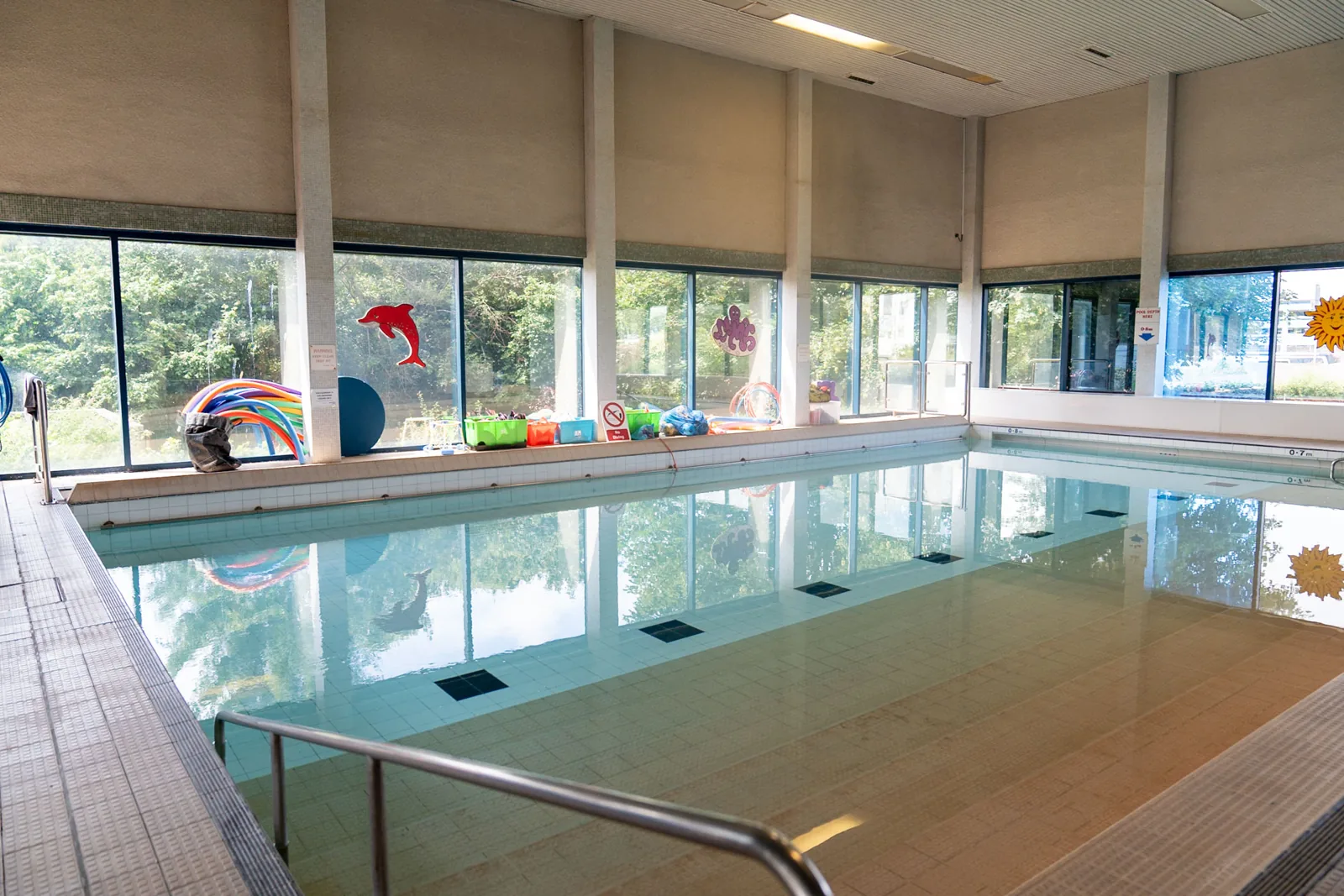
- Warm water. Main pools are kept cool enough for lane swimmers, which is too cold for a small baby. Teaching pools, learner pools and baby pools are usually warmer. Ask the pool which one is warmest, or look for "parent and baby" or "toddler splash" sessions. Our guide to pool water temperature explains how pools set it.
- Shallow water you can stand in. You need both hands free for your baby, and you should be able to stand with your shoulders out of the water.
- A quiet session. A busy family swim with slides and splashing is a lot for a baby. Quieter weekday sessions are easier for both of you.
- Changing rooms. Look for baby change tables, family cubicles and somewhere safe to put your baby down while you get dressed.
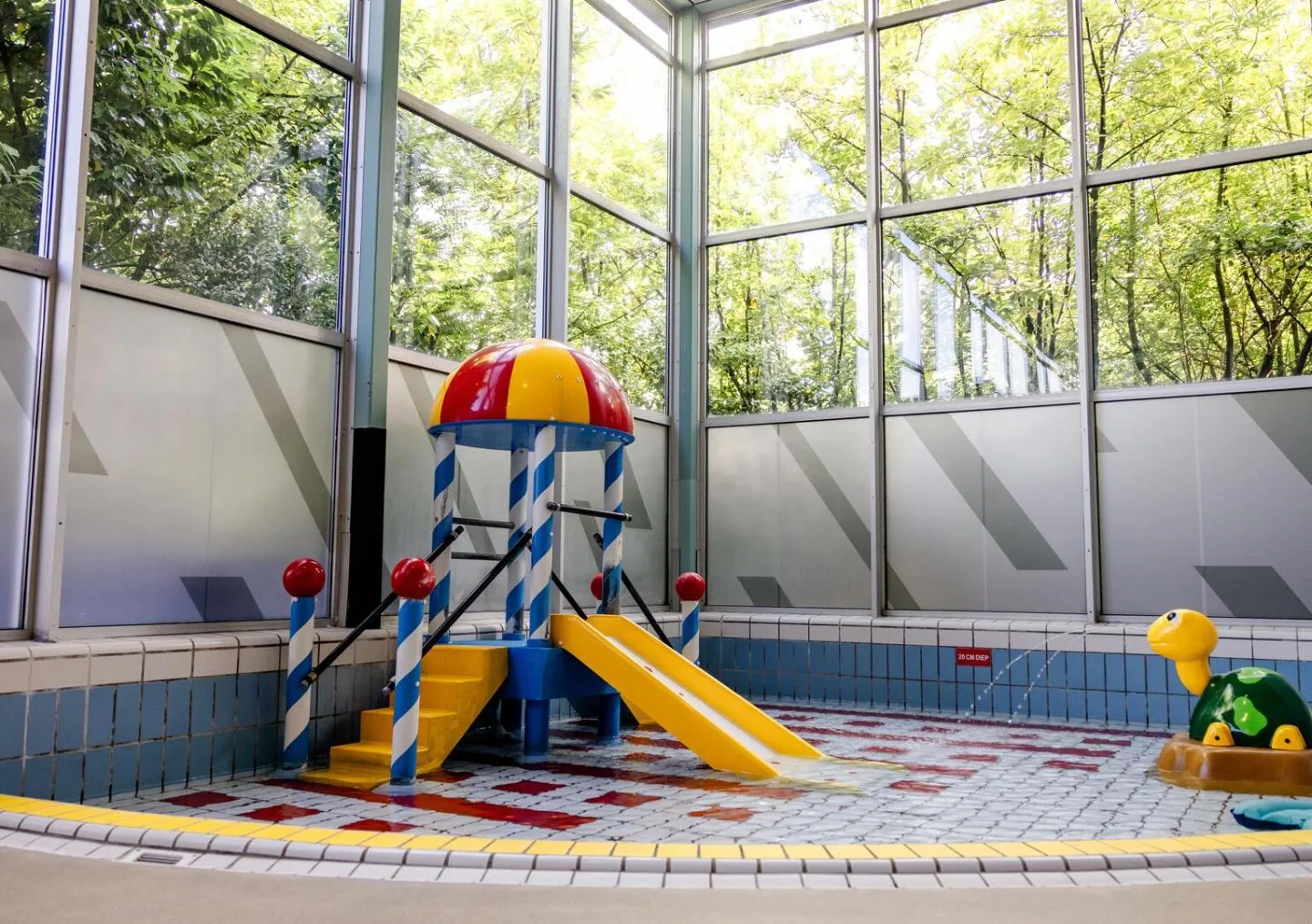
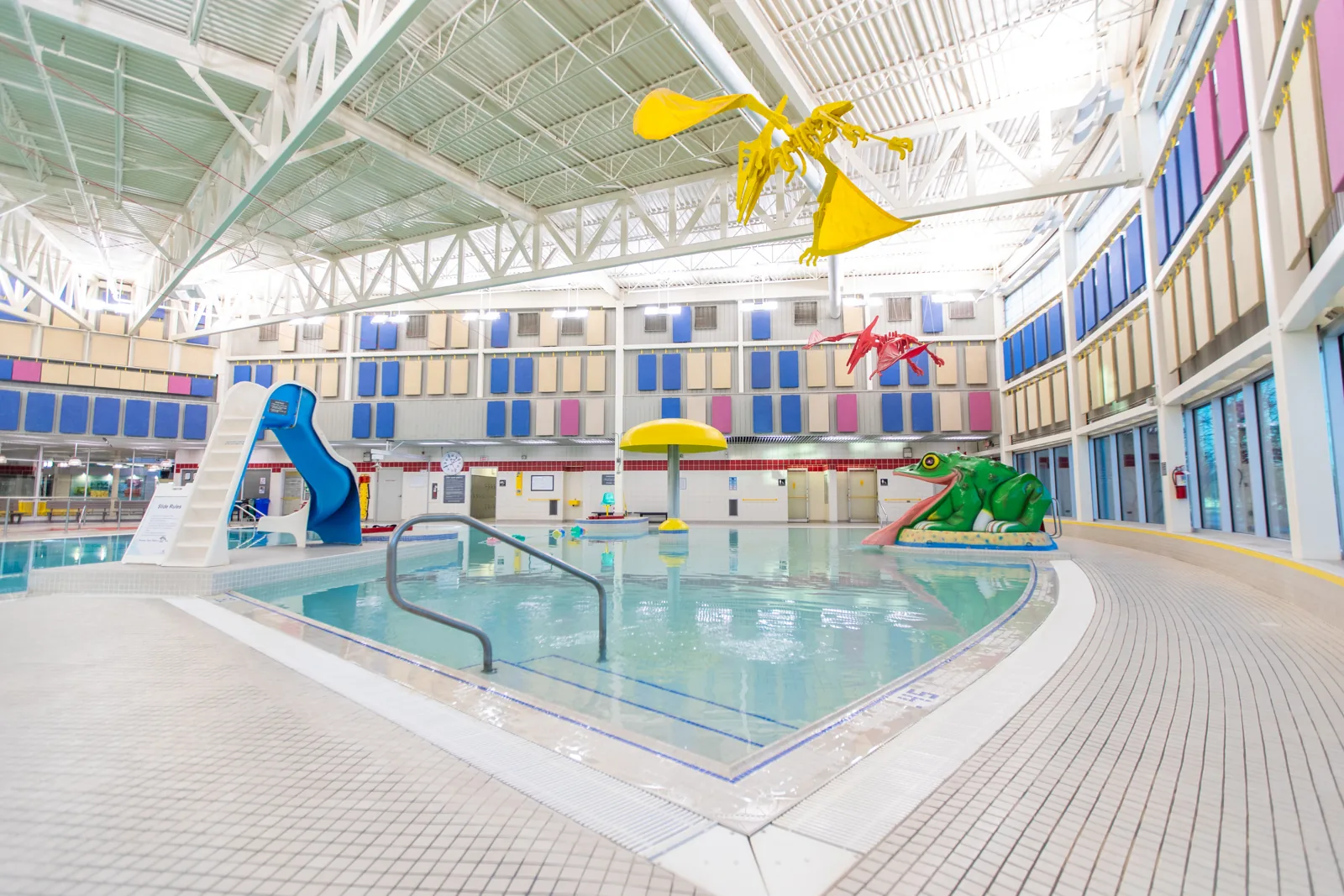
Sportcentrum de Wilgenring
Rotterdam · Toddler pool
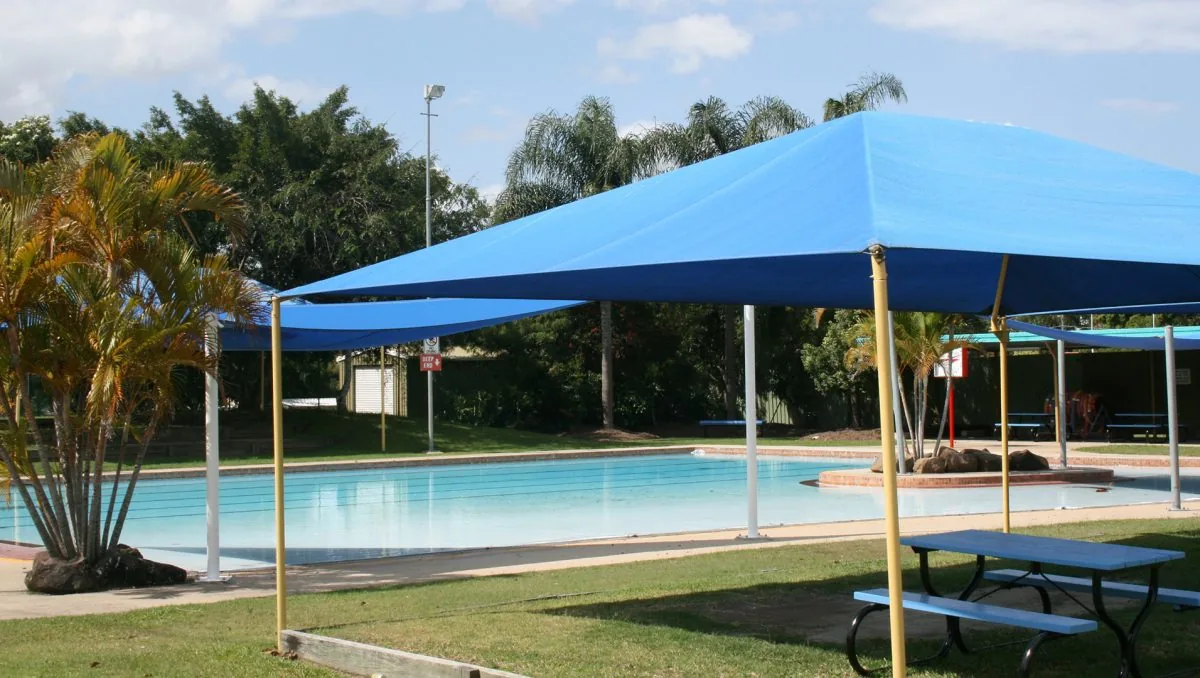
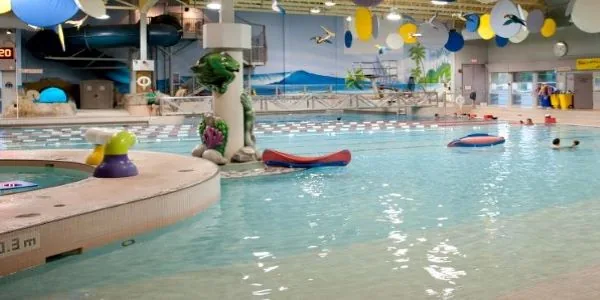
Eagleby Aquatic Centre
Logan City · Beach-entry pool
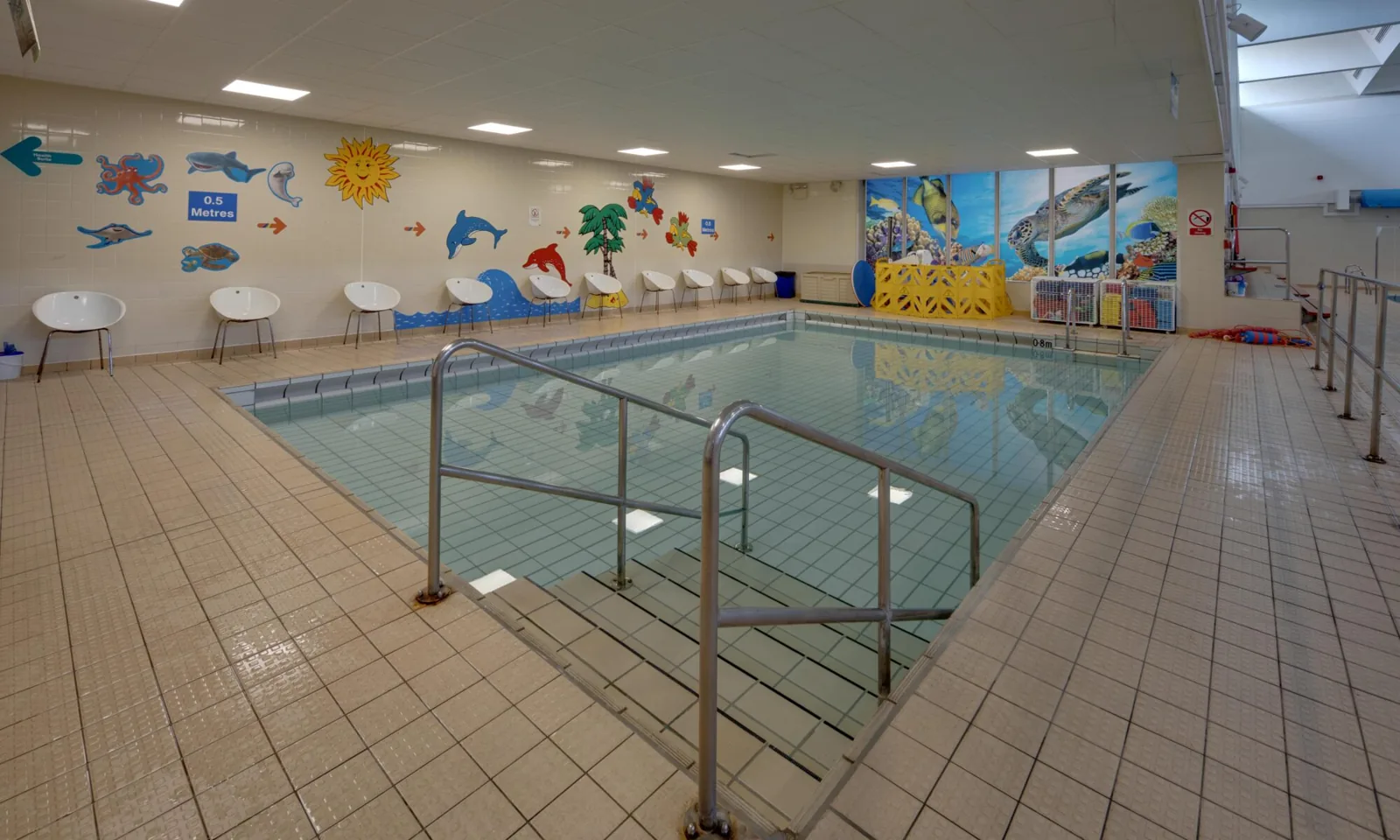
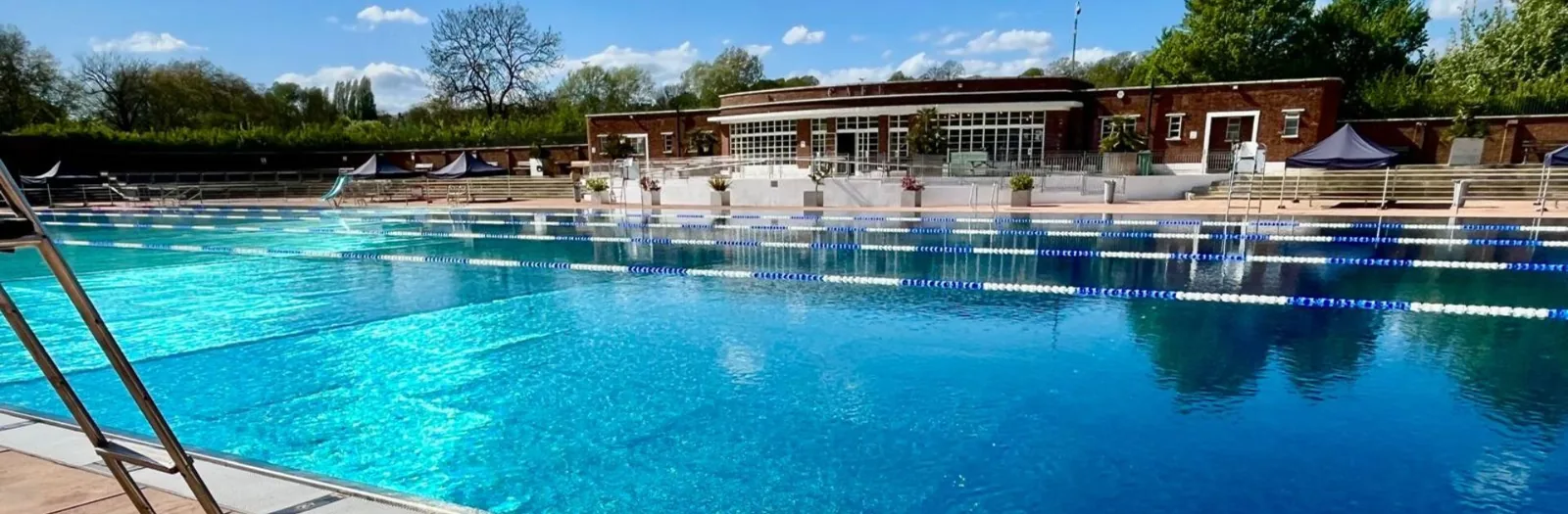
Ken Martin Leisure Centre
Nottingham · Teaching pool
Your first swim together
- Pick a good time. Go when your baby is fed and rested, but not straight after a big feed.
- Pack properly. A swim nappy (disposable or reusable, and many pools ask for both together), a hooded towel, a warm layer, a clean nappy for afterwards, and a feed or snack. See swim nappies for what pools accept.
- Get yourself ready first. Change into your swimwear before you undress your baby so they spend less time cold.
- Get in slowly. Walk in holding your baby close, with eye contact and a calm voice. Let them feel the water on their feet and body before going lower.
- Keep it short. A few minutes in the water is plenty the first time. Build up slowly over later visits.
- Hold them securely the whole time. Keep your baby's head clear of the water and never let go, even in a baby seat or float.
Do not dunk a baby on the first visit. Lessons sometimes teach gentle face-wetting step by step, with cues so babies learn to expect it. Leave that to a qualified teacher. In a public session, keep your baby's face out of the water.
Keeping your baby warm
Babies lose heat faster than adults and cannot tell you they are cold. Watch for:
- shivering or trembling
- a pale or blue tinge around the lips or fingers
- crying, fussing or turning away
If you see any of these, get out, wrap your baby in a towel and warm them up. Dry them straight away, including their head, and dress them before you dress yourself. A warm feed afterwards helps.
Some parents use a baby wetsuit or warm neoprene top to give longer in the water. They help in cooler pools but do not replace a warm pool and short sessions.
Chlorine can dry out baby skin. Rinse your baby in the shower with clean water afterwards and use a gentle moisturiser if their skin looks dry. If your baby has eczema, ask your health visitor whether swimming is likely to suit them.
As your baby grows, look at swimming lessons and family sessions. Our guide on what age children can swim without an adult covers the supervision rules pools use for under-8s.
Cities with the most pools for children in our directory:
FAQ
Can a newborn go swimming?
The NHS says babies can go swimming from a very young age and do not need to wait for vaccinations. Many parents still wait a few weeks until feeding has settled. Use a warm pool and keep it very short.
Does my baby need to have had their jabs before swimming?
No. NHS advice is that babies can go swimming before or after vaccinations. Wait if your baby is unwell or has a temperature after a jab, and go once they are back to normal.
How long should a baby stay in the pool?
Start with a few minutes and build up slowly over later visits. Get out sooner if your baby shivers, looks pale or blue around the lips, or is unhappy.
Do babies need a swim nappy?
Yes. Public pools require a swim nappy for babies and toddlers who are not toilet trained. Many ask for a reusable swim nappy over a disposable one.