How warm is a swimming pool?
 By the Find My Swimming Pool team·
Updated ·
5 min read
Pool temperature is one of the first things people notice and one of the least published. Here is what is normal for each kind of pool, why lane swimmers and toddlers want different water, and what to expect from an outdoor lido.
The short answer
Most indoor public pools are kept between about 27°C and 30°C (81°F to 86°F). Main pools used for lane swimming sit at the cooler end, around 28°C, while teaching and leisure pools are warmer, around 30°C to 32°C. Competition pools must be 25°C to 28°C under World Aquatics rules. Hydrotherapy pools are warmest, often around 34°C. Heated outdoor pools usually run at 24°C to 28°C, and unheated lidos follow the weather.
Typical temperatures by pool
There is no single legal temperature for a public pool. Operators set their own, guided by industry advice and by who uses each pool. These figures come from published pool temperatures in our directory and from council pages.
| Pool | Usual range | Examples |
|---|---|---|
| Competition pool | 25°C to 28°C (77°F to 82°F) | World Aquatics rule for racing |
| Main or lane pool | 27°C to 29°C (81°F to 84°F) | Rebecca Adlington Swimming Centre, Mansfield: 28°C. Gold Coast Aquatic Centre: 28°C |
| Teaching or learner pool | 30°C to 32°C (86°F to 90°F) | North Tyneside council small pools: 30°C. Tepid Baths, Auckland, learners' pool: 32°C |
| Leisure pool | 30°C to 32°C (86°F to 90°F) | Stirling Leisure Scarborough Beach, Perth: 31°C |
| Hydrotherapy pool | About 34°C (93°F) | Greerton Aquatic Centre, Tauranga: about 34°C |
| Heated outdoor pool | 24°C to 28°C (75°F to 82°F) | Thames Lido, Reading: 24°C to 26°C |
| Unheated lido | Follows the weather | Parliament Hill Lido, London |
Small pools that serve everyone at once often split the difference. Margaret Grant Pool in Winnipeg is a four-lane pool kept at 31°C, warm enough for lessons and still usable for early-morning lengths.
Why pools are kept at different temperatures
It comes down to how hard people are working in the water.
- Lane swimmers produce a lot of heat. In water above about 29°C a hard session starts to feel stuffy and tiring, so fitness and club swimmers prefer the high 20s.
- Racing needs the same conditions everywhere, which is why World Aquatics fixes competition water at 25°C to 28°C (World Aquatics pool certification).
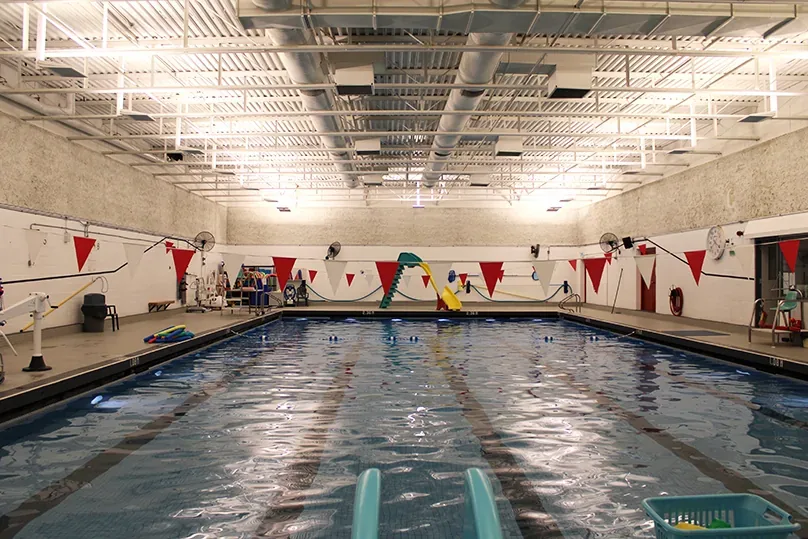
- Children and beginners move slowly, stand still a lot and lose heat fast. Teaching pools are kept around 30°C or more so lessons don't end in shivering.
- Aqua classes and older swimmers also move less and like warmer water. Some centres run their aqua aerobics in the leisure or teaching pool for that reason.
- Hydrotherapy uses warm water to relax muscles and ease stiff joints, with gentle movement rather than lengths, so the water is close to the low to mid 30s.
Warmer water also costs more to heat and makes the pool hall muggier, which is another reason main pools rarely go above 29°C or 30°C.
Air temperature matters too. An indoor pool hall is usually kept about as warm as the water, or a little warmer. If the hall is cold, getting out feels much worse than the water itself.
Outdoor pools and lidos
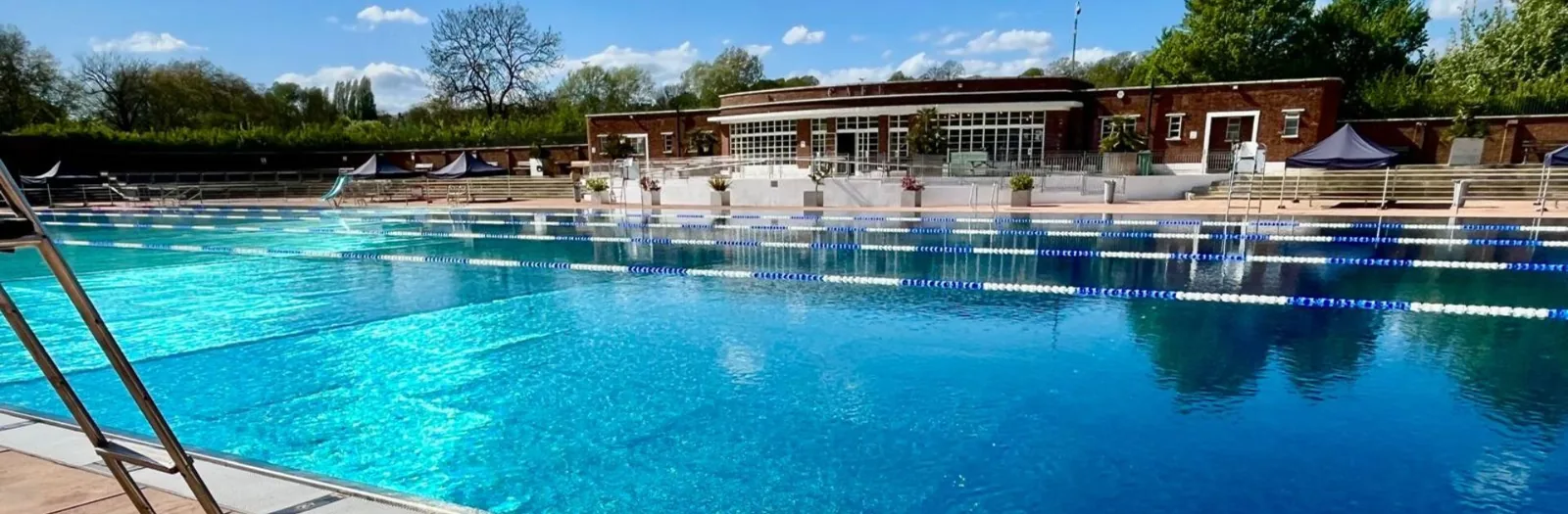
Outdoor pools fall into two groups. Heated ones aim for a steady temperature through the season, or all year. Thames Lido in Reading is heated to 24°C to 26°C year round, and the outdoor 50 m pools on the Gold Coast are heated to 28°C. In Munich the Dantebad keeps a heated 50 m pool open through the winter at about 30°C.
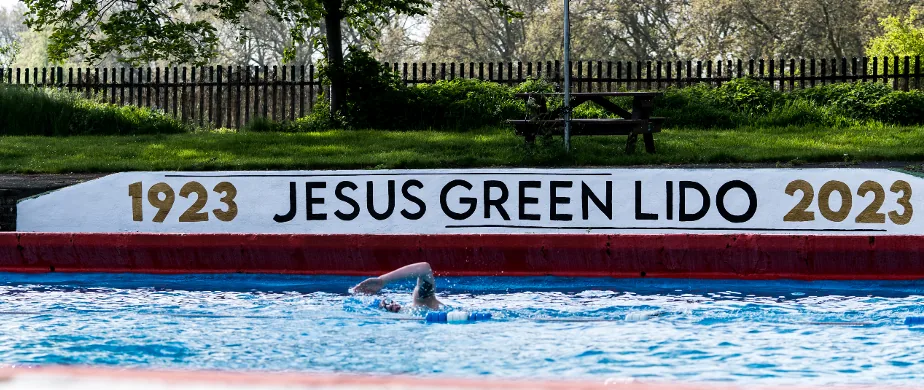
Unheated lidos simply follow the season. Parliament Hill Lido in London and Jesus Green Lido in Cambridge are both unheated, so the water can be pleasant in August and close to freezing in January. Winter swimmers there build up slowly and keep their swims short. The Met Office treats water below 15°C (59°F) as cold enough to cause cold water shock, the gasp and fast breathing you get on entry. If you are new to cold water, read cold water swimming benefits before you try a winter dip, and see what is a lido for how these pools work.
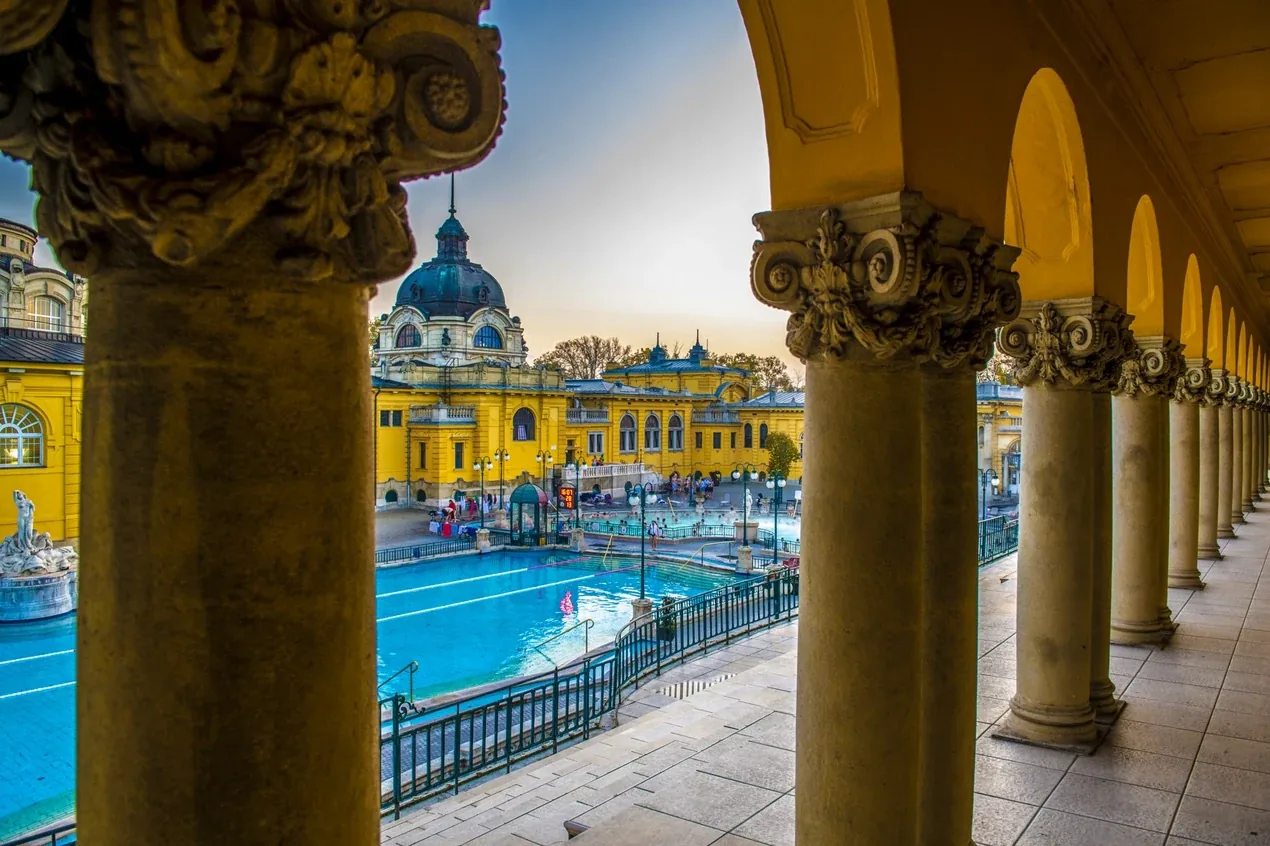
Thermal baths are a special case. At Széchenyi in Budapest the swimming pool is kept at 26°C to 28°C, while the thermal pools next to it run at 36°C to 38°C. Those hot pools are for soaking, not lengths. Our guide to thermal baths explains the difference.
Why the same water feels different
A 28°C pool can feel warm one day and cold the next. A few things change how it feels:
- Getting in slowly. Standing on the steps with wet skin in a draughty hall makes water feel colder than a quick entry and a few lengths.
- How much you move. Lengths warm you up; standing chatting in the shallow end cools you down.
- Body size. Smaller and leaner people, and children, lose heat faster.
- Outdoor air and wind. At an outdoor pool your head and shoulders are in the air, so a cold wind changes everything. A cap helps here.
How to find out before you go
Many pools publish their water temperatures on their website or on a board at reception, and outdoor pools often post the morning reading online. If a centre has several pools, the lane pool is nearly always the coolest and the teaching pool the warmest. Our venue pages list the temperatures that pools publish.
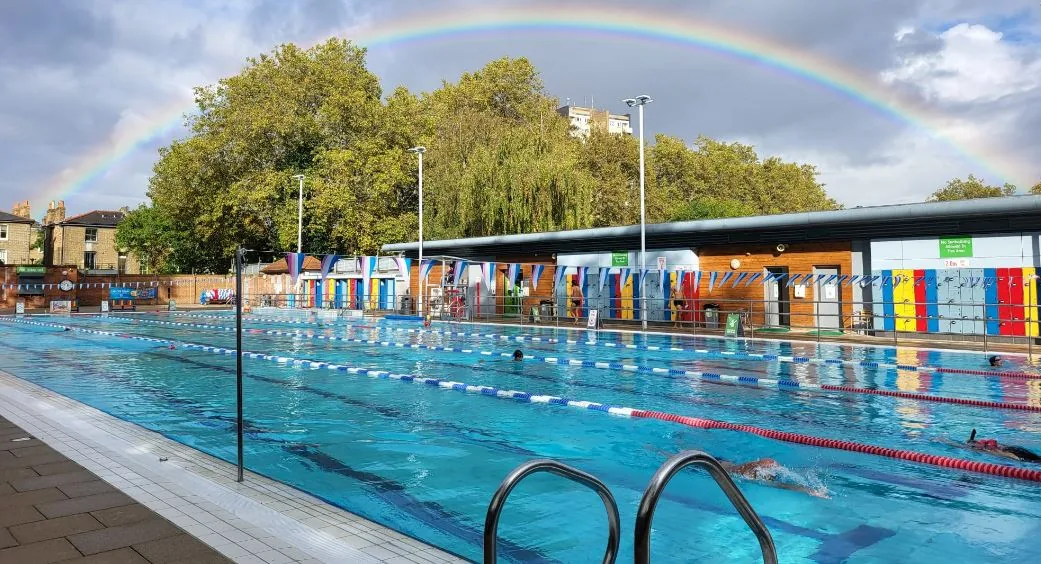
London Fields Lido
London · Heated 50 m lido
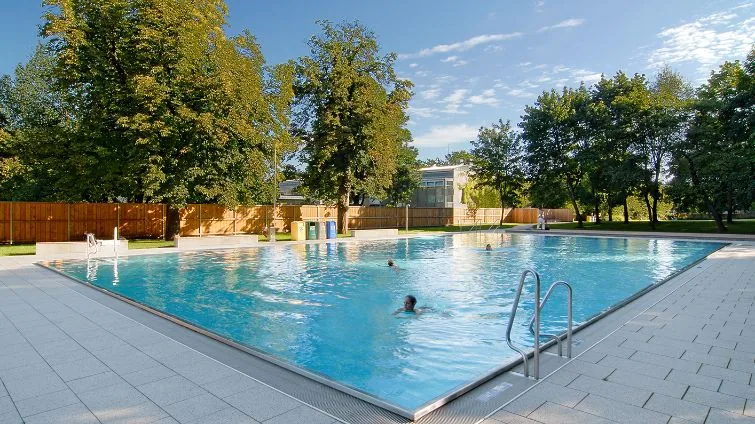
Dantebad (Winter-Warmfreibad)
Munich · Heated, open in winter
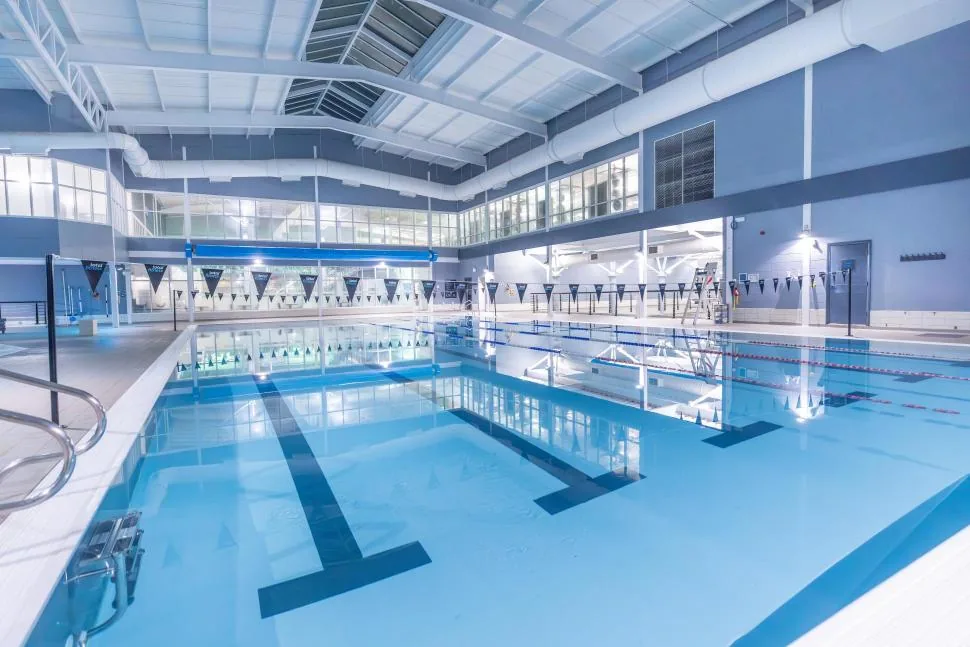
Total Fitness Lincoln
Lincoln · Warmer family pool
FAQ
What temperature is an Olympic pool?
World Aquatics rules set competition pool water at 25°C to 28°C (77°F to 82°F).
Is 26°C cold for a swimming pool?
It feels cool for a casual swim and fine for steady lengths. Most indoor public pools are a little warmer, around 28°C, and teaching pools around 30°C.
Why is my local pool so cold?
Main pools are kept cooler for lane swimmers, and some centres lower temperatures to save on heating costs. Try the teaching or leisure pool, or a session in a smaller warm pool.
How warm is a hydrotherapy pool?
Usually in the low to mid 30s. Greerton in Tauranga, for example, lists its hydrotherapy pool at about 34°C.