Low-chlorine pools: UV, ozone and salt
 By the Find My Swimming Pool team·
Updated ·
5 min read
Pools advertise themselves as UV-treated, ozone-treated or saltwater, and swimmers often take that to mean chlorine-free. In public pools it almost never does. What these systems do is let the pool run on less chlorine and produce fewer of the by-products that sting your eyes and smell.
The short answer
UV, ozone and salt systems all reduce how much chlorine a pool needs or how unpleasant it is, but public pools still keep some chlorine in the water. UV lamps in the plant room kill germs and break down chloramines, the compounds behind the "chlorine" smell. Ozone does a similar job and is removed before the water returns to the pool. A saltwater pool makes its own chlorine from dissolved salt. The result is usually softer-feeling water, less smell and fewer red eyes, not a chlorine-free swim.
Why pools still use chlorine
A public pool needs a disinfectant that stays in the water all the time. Germs arrive with every swimmer, and they have to be dealt with in the pool, within minutes, not only when the water passes through the plant room. Chlorine does that because a small amount stays dissolved in the pool. This lasting amount is called the residual.
UV and ozone work only inside the treatment plant. Once the water flows back into the pool, they have no further effect. So they are used alongside chlorine, not instead of it. Salt systems are a different case: they are simply a way of producing chlorine on site. Our guide to why chlorine is in pools covers the basics.
UV treatment
A UV system is a set of ultraviolet lamps in a sealed chamber that the pool water flows through. The UV light damages the genetic material of bacteria, viruses and parasites, including Cryptosporidium, which is resistant to chlorine. It also breaks down chloramines.
Chloramines form when chlorine reacts with sweat, urine and skin oils. They cause most of the sharp "chlorine" smell in a pool hall and much of the eye and skin irritation swimmers blame on chlorine. Cutting them is the main thing swimmers notice. See why pools smell of chlorine and red eyes after swimming.
The UK Pool Water Treatment Advisory Group describes UV as a secondary disinfection process that works with a primary disinfectant, usually chlorine. Its technical note on UV says free chlorine levels of 0.75 to 2 mg/l should be enough with a UV system. UV is now common in UK leisure centres, and many pools mention it on their websites.
Ozone treatment
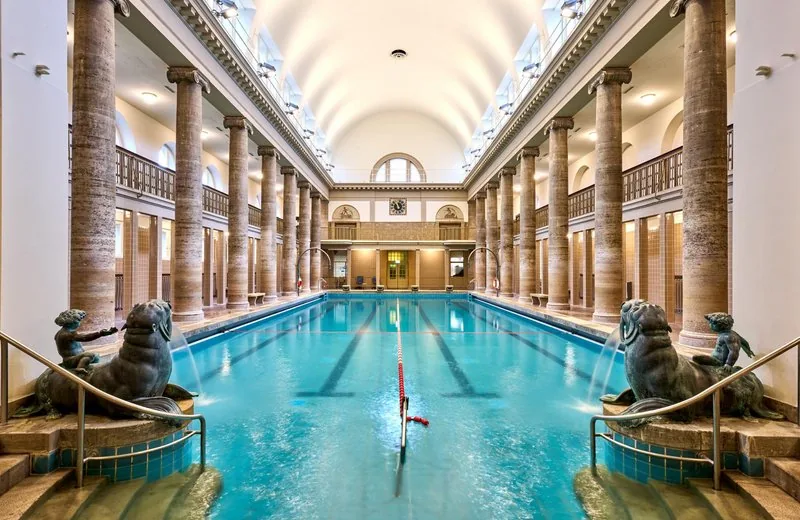
Ozone is a very strong oxidising gas. Pools that use it make it on site and mix it into the water in a contact tank in the plant room, where it kills germs and breaks down organic matter and chloramines. Water treated with ozone often looks very clear and smells of almost nothing.
Ozone is harmful to breathe, so it must not reach the pool. The water passes through a filter, usually activated carbon, that removes the leftover ozone before it goes back into the pool. A small chlorine residual is then added, because the ozone is gone by the time the water reaches swimmers.
Ozone has a long history in German public pools, whose water treatment follows the DIN 19643 standard, and it is also used in some UK pools. It needs more plant-room equipment than UV, including the carbon filters, which is one reason fewer pools use it.
Saltwater pools
A saltwater pool is a chlorine pool with a different supply. Salt (sodium chloride) is dissolved in the water, at a level far below the sea, so it tastes slightly salty but not like the ocean. A unit called an electrolytic chlorinator, or salt cell, passes a current through the water and turns some of the salt into chlorine. The chlorine disinfects, breaks down, turns back into salt, and the cycle repeats.
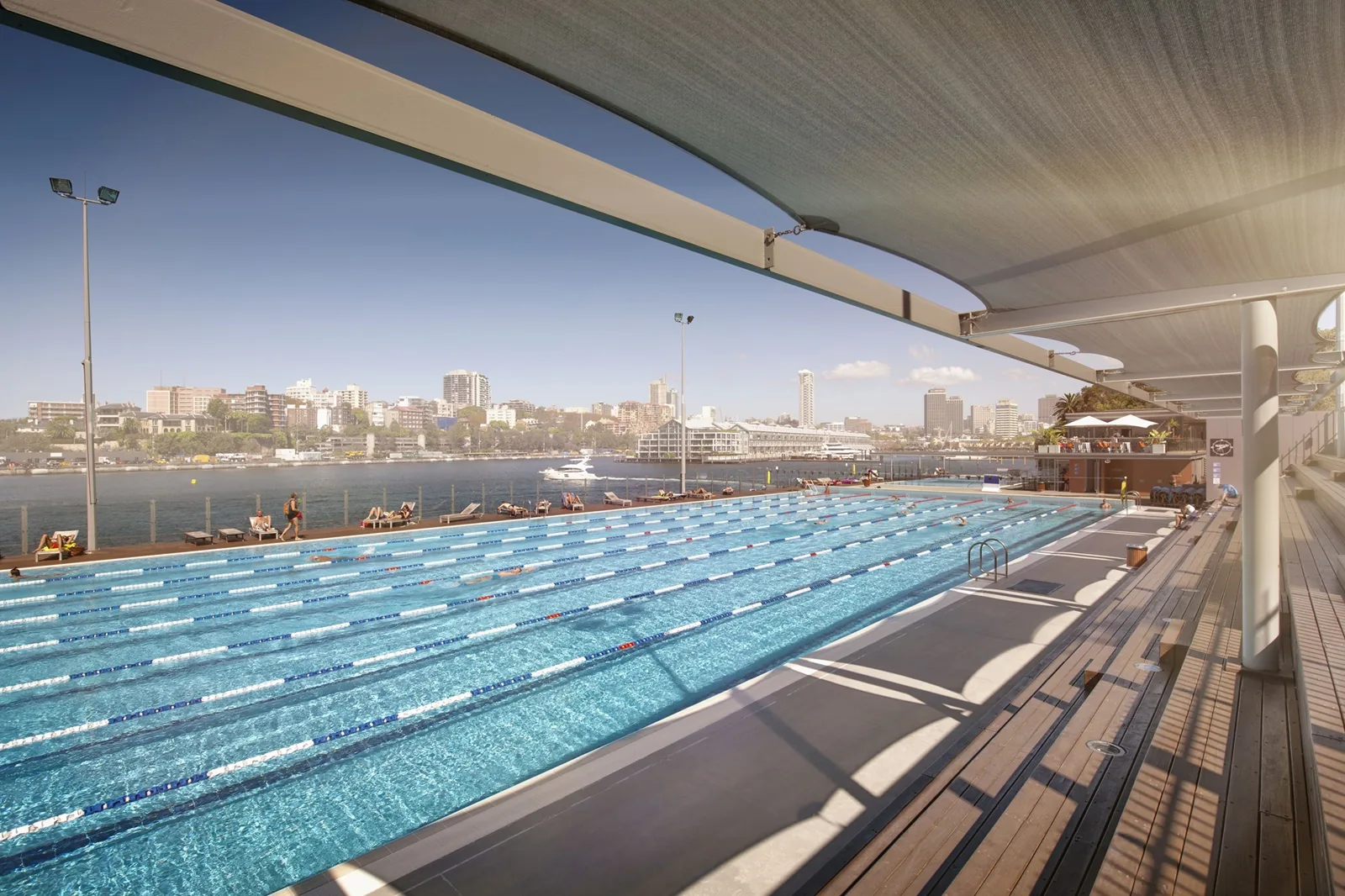
Swimmers often find saltwater pools gentler on skin and eyes. Part of that is the softer feel of slightly salty water, and part is that the chlorine is produced steadily rather than added in doses. The chlorine itself is the same chemical. Saltwater pools are common in Australia and Canada: the City of Edmonton runs salt-water pools at several recreation centres, and Ithaca Pool in Brisbane is a heated outdoor saltwater pool.
For the full comparison, see saltwater vs chlorine pools and do saltwater pools have chlorine.
Other low-chlorine options
- Copper and silver ionisers. Release small amounts of metal ions that slow algae and bacteria. Mostly found in private pools, and still used with some chlorine.
- Natural swimming pools. Use plants and biological filters instead of chemicals. The water is not disinfected in the same way, so there are strict limits on how many people can swim. See natural swimming pools.
- Ocean pools and sea baths. Filled and flushed by the tide, with no treatment at all. See ocean pools.
Ask the front desk. If a pool doesn't mention its treatment online, staff can usually tell you. Ask whether it has UV or ozone.
What it means for you
If chlorine makes your eyes sting, your skin itch or your chest feel tight, a pool with UV or ozone treatment, or a well-run saltwater pool, may suit you better. The difference is mostly in the air and the smell, because those systems reduce chloramines. Your hair and swimsuit will still meet some chlorine, so keep rinsing after every swim.
Don't take a "chlorine-free" claim from a public pool at face value. Any pool with many swimmers needs a disinfectant in the water, and that is good for you.
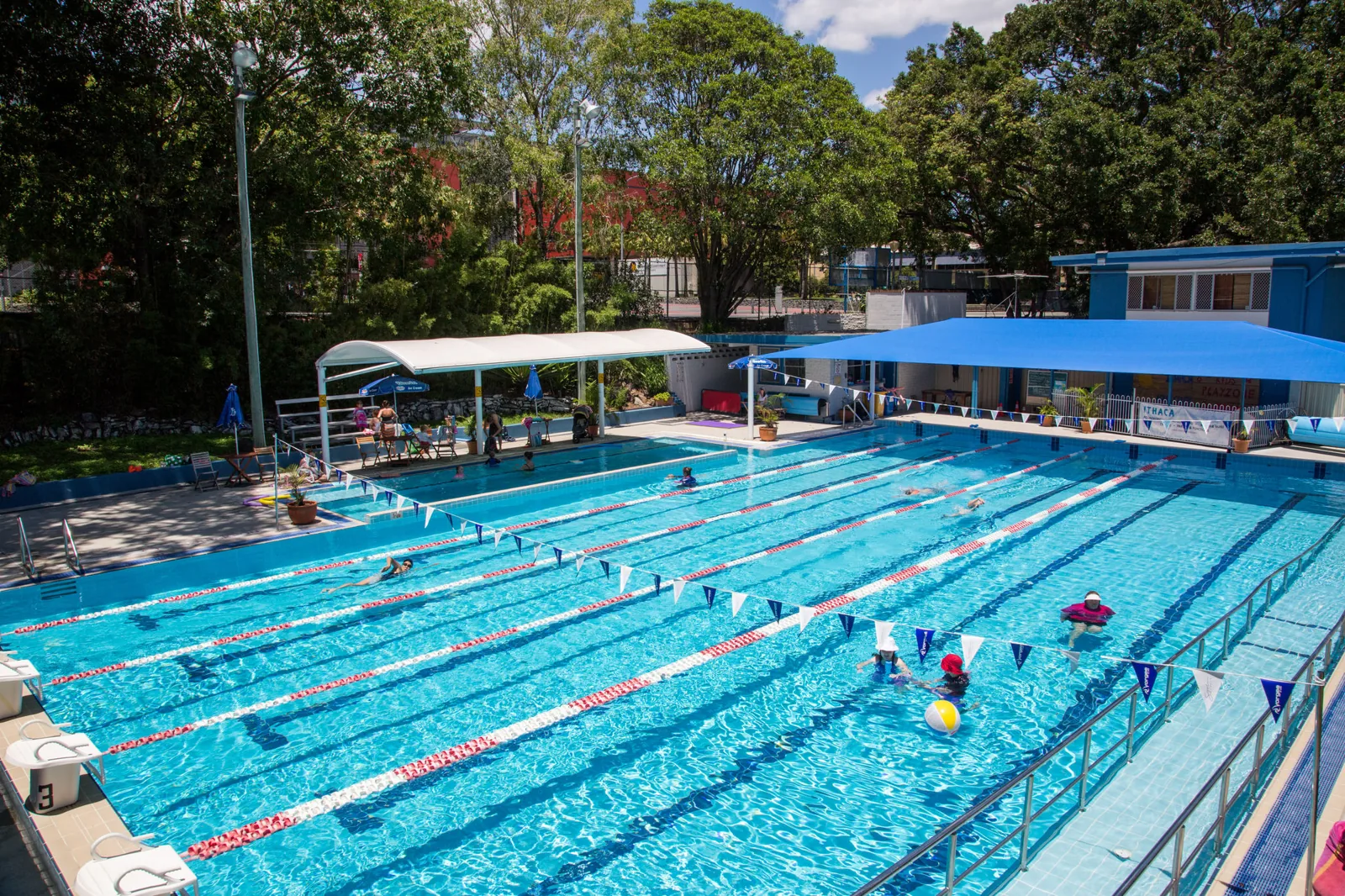
Ithaca Pool
Brisbane · Outdoor saltwater pool
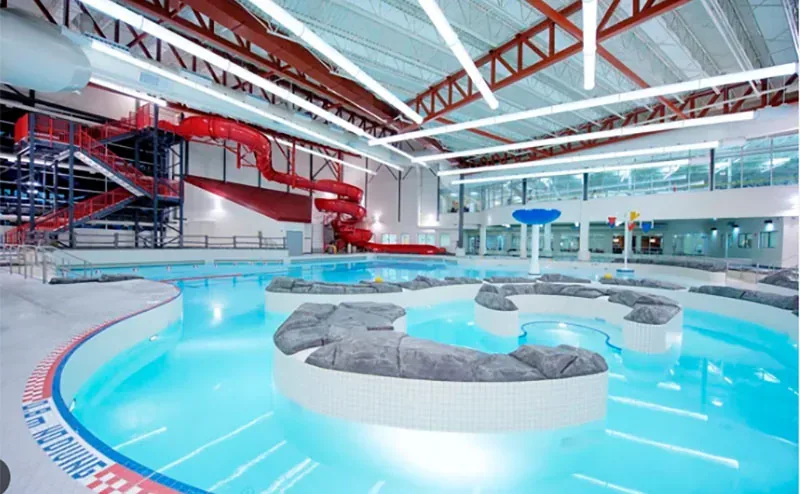
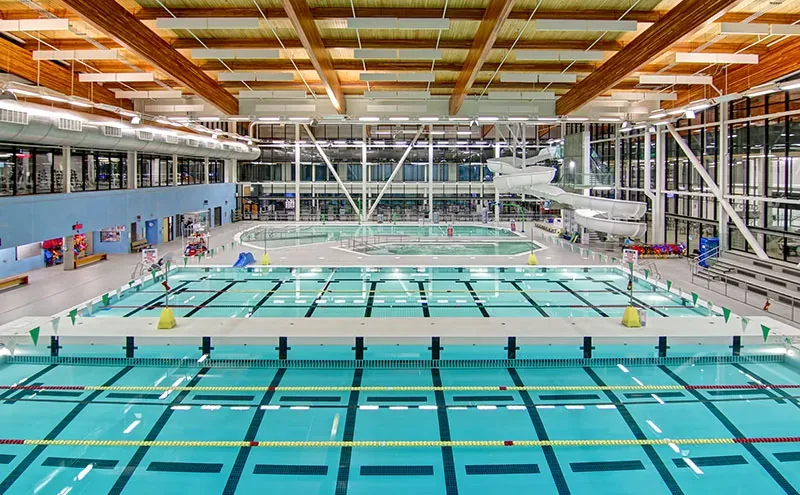
Booster Juice Recreation Centre in Terwillegar
Edmonton · Salt-water 53 m pool
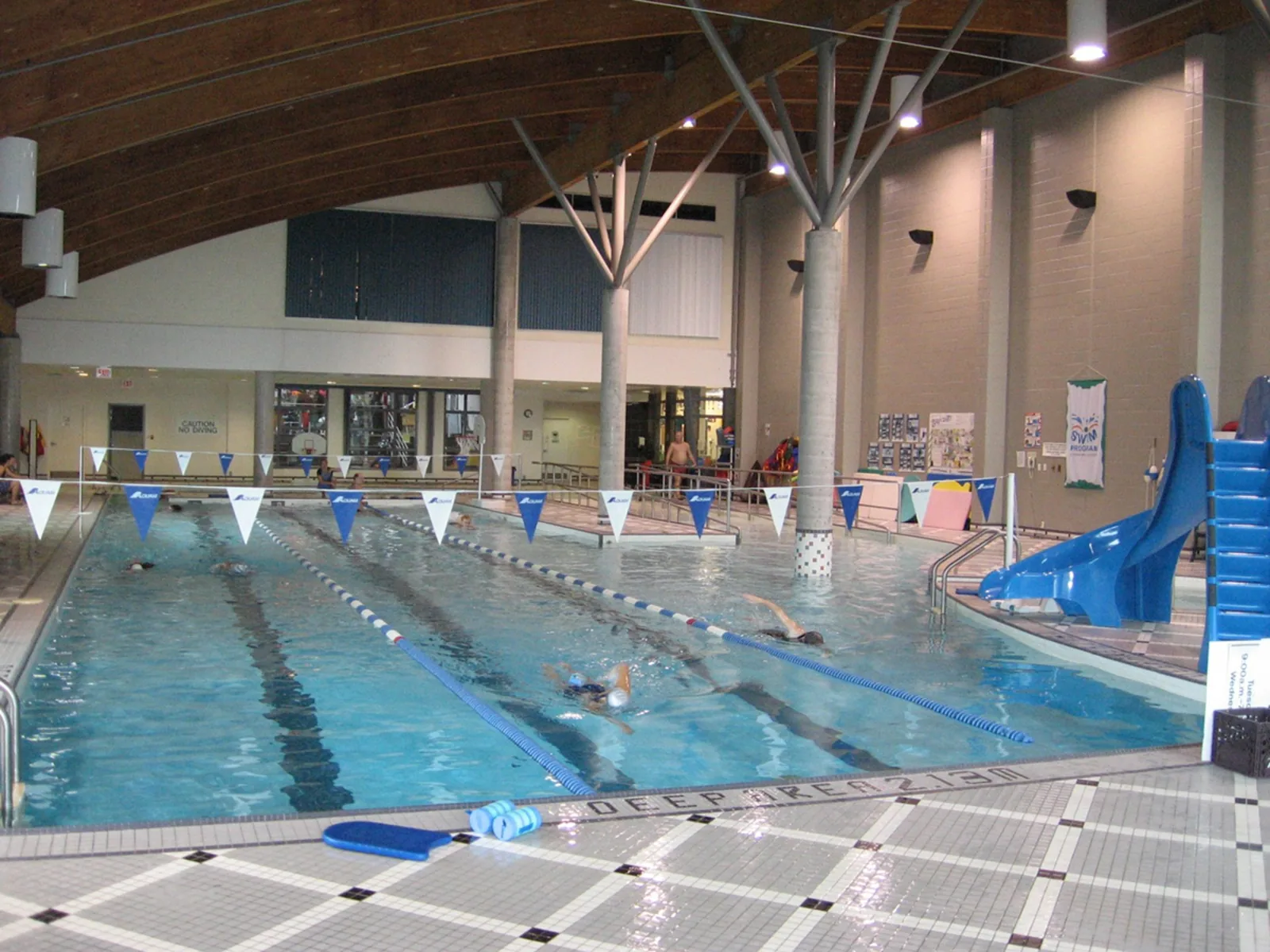
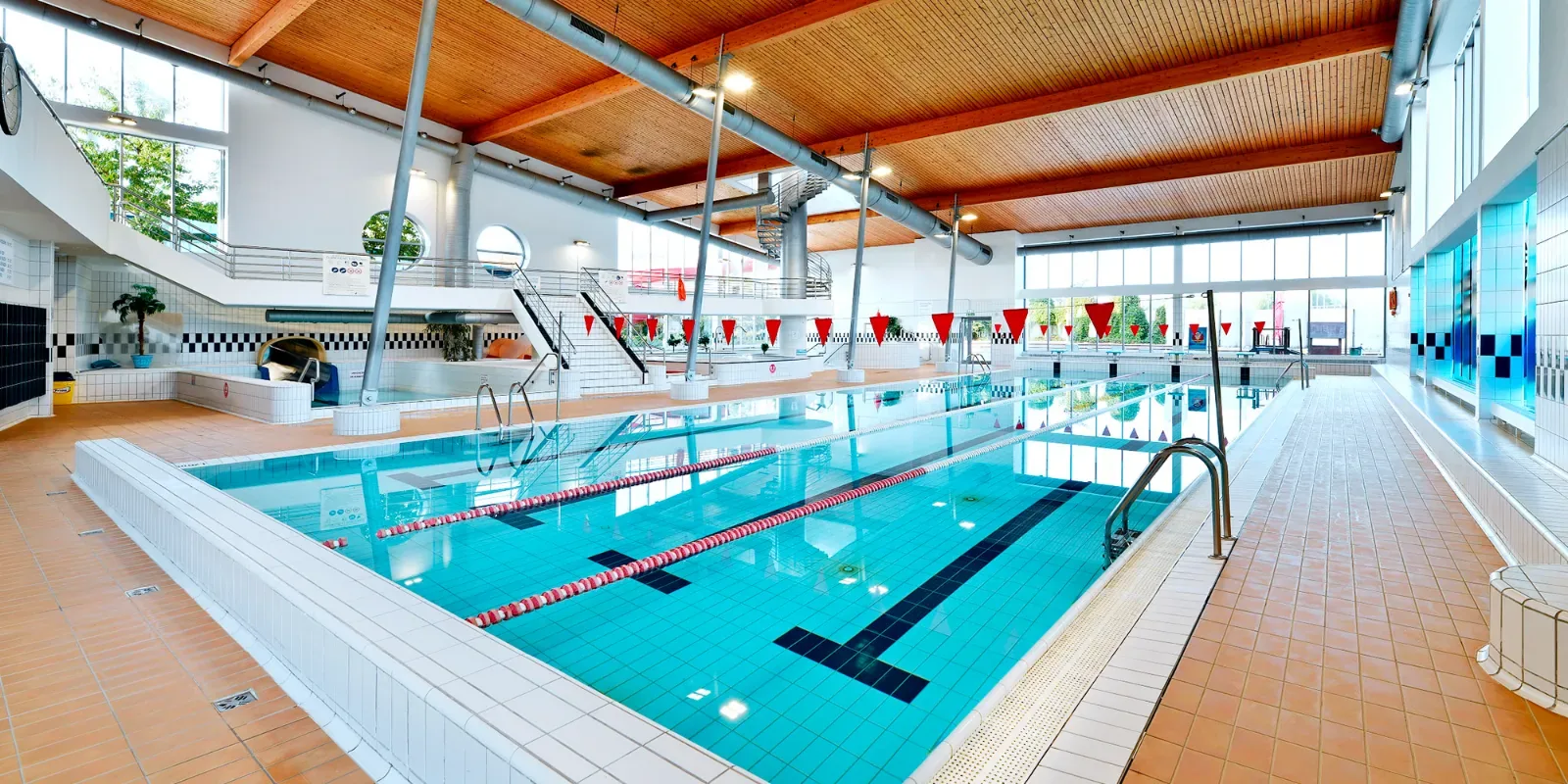
Levitank Saltwater Pool, Soloway JCC
Ottawa · Saltwater 25 m pool
FAQ
Is a UV pool chlorine-free?
No. UV only works inside the treatment plant, so a public pool with UV still keeps a lower level of chlorine in the water to disinfect it between passes through the plant.
Do saltwater pools have chlorine?
Yes. The salt is turned into chlorine by an electrolytic cell. The disinfectant in the water is the same, it is just made on site.
Is ozone in pools dangerous?
Ozone is harmful to breathe, which is why it is used only in the plant room and filtered out before the water returns to the pool. Swimmers should not be exposed to it.
Will a UV pool stop my hair going green?
Not by itself. Green hair is usually caused by copper in the water, not by chloramines. Rinsing straight after your swim helps more.