Why is chlorine added to swimming pools?
 By the Find My Swimming Pool team·
Updated ·
5 min read
Hundreds of people can share the same water in a day at a busy public pool. Chlorine is what stops that water passing illnesses from one swimmer to the next.
The short answer
Chlorine is added to swimming pools to kill germs. Every swimmer brings bacteria, viruses and traces of sweat, skin, urine and faeces into the water. At the right level, chlorine kills most germs within minutes, and it stays in the water as a reserve, so it keeps working as new swimmers arrive. It is cheap, easy to measure and has been used for well over a century. Filters remove dirt, but only a disinfectant like chlorine makes shared water safe.
What chlorine protects you from
Without a disinfectant, a pool would quickly become a soup of whatever swimmers carry. The illnesses linked to untreated or poorly treated water include:
- Stomach bugs. Diarrhoea from germs such as E. coli, norovirus, Shigella and Giardia. The CDC notes that one diarrhoea accident can put millions of germs into the water.
- Skin and ear infections. Bacteria such as Pseudomonas cause hot tub rash and swimmer's ear. See swimmer's ear.
- Respiratory infections. Legionella can grow in warm water and spread through spray, which is a particular concern for spa pools.
- Eye infections such as some forms of conjunctivitis.
Chlorinated pools still see outbreaks, but they are rare compared with the number of swims taken every year.
How chlorine kills germs
When chlorine goes into water, in whatever form, it forms hypochlorous acid. This small, uncharged molecule passes through the outer walls of bacteria and viruses and damages the proteins and enzymes inside them. The germ stops working and dies.
Two things make it effective in a pool:
- It works fast. According to the CDC, at recommended levels chlorine kills most germs within minutes.
- It stays in the water. Unlike UV light, which only treats water as it passes the lamp, chlorine stays in the pool. If a swimmer brings germs in at the far end, chlorine is already there waiting. Pool staff call this the residual.
Hypochlorous acid works best when the pH is slightly low. As pH rises, more of it turns into hypochlorite, a weaker form. That is why pools control pH so closely. Our guide to what is added to pool water covers pH control and the other chemicals involved.
Free and combined chlorine. "Free chlorine" is the active disinfectant still available to kill germs. "Combined chlorine" is chlorine that has already reacted with sweat and urine to form chloramines. Pools want plenty of the first and as little as possible of the second.
Why chlorine rather than something else
Other disinfectants exist, but chlorine has a combination that is hard to beat for a public pool:
- It keeps a residual in the water, which UV and ozone do not.
- It is cheap and widely available.
- It is easy to test. Staff can check free chlorine with a simple kit at the poolside in a minute, and automatic controllers measure it continuously.
- It is well understood. Water treatment has used chlorine since the early 1900s, and pool standards in the UK, Europe, Australia and North America are built around it.
Bromine is the main alternative. It holds up better in hot water, so it is common in hot tubs, but it costs more and is harder to manage in large pools. Saltwater pools also use chlorine; they just make it on site from salt. See saltwater vs chlorine pools.
What chlorine cannot do
Chlorine is not a force field. A few germs resist it. The parasite Cryptosporidium can survive more than 7 days in properly chlorinated water, according to the CDC. Pools deal with it through good filtration, UV or ozone treatment, and by closing the pool to treat the water after a faecal accident.
Chlorine also reacts with sweat, urine and skin oils. That uses it up and creates chloramines, which cause the sharp "pool smell" and red eyes. See why pools smell of chlorine.
How swimmers can help the chlorine
- Shower before you swim. The CDC says rinsing for one minute removes most of the dirt on your body.
- Use the toilet before you get in, and never pee in the pool.
- Stay out of the water if you have had diarrhoea. The NHS says not to use a pool until at least 48 hours after symptoms stop.
- Wear a swim cap to keep hair and hair products out.
- Use proper swim nappies for babies.
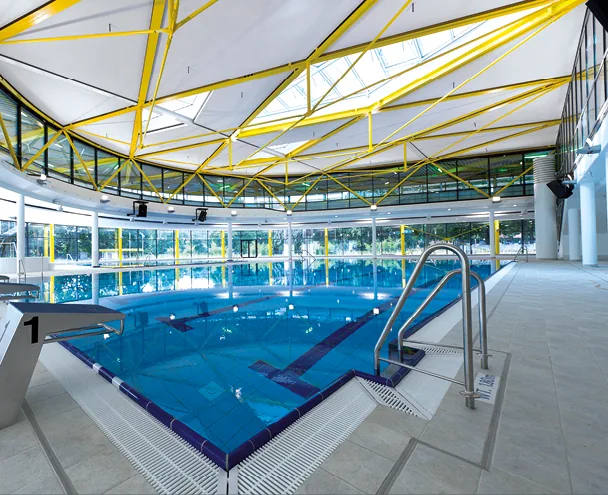
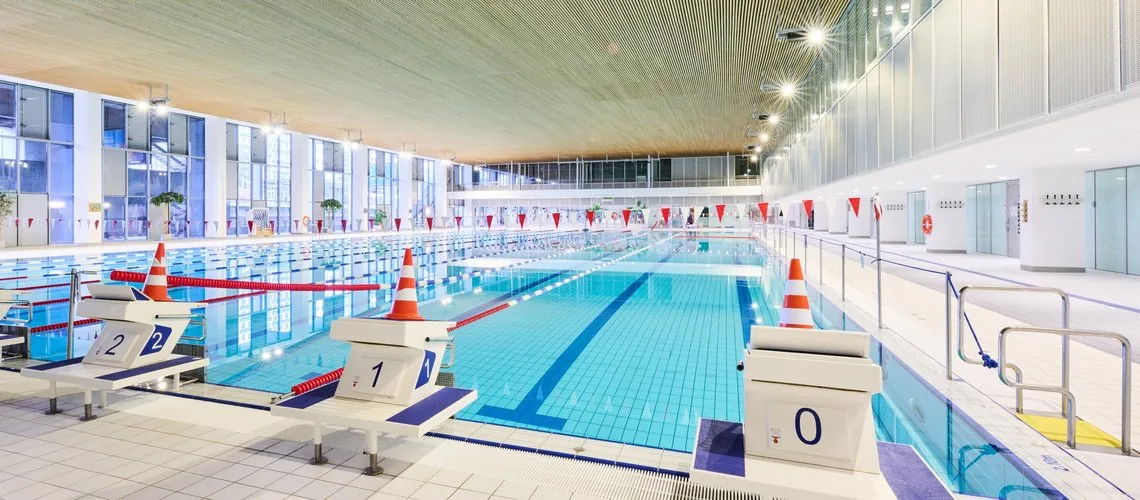
Ironmonger Row Baths
London · 30.5 m pool
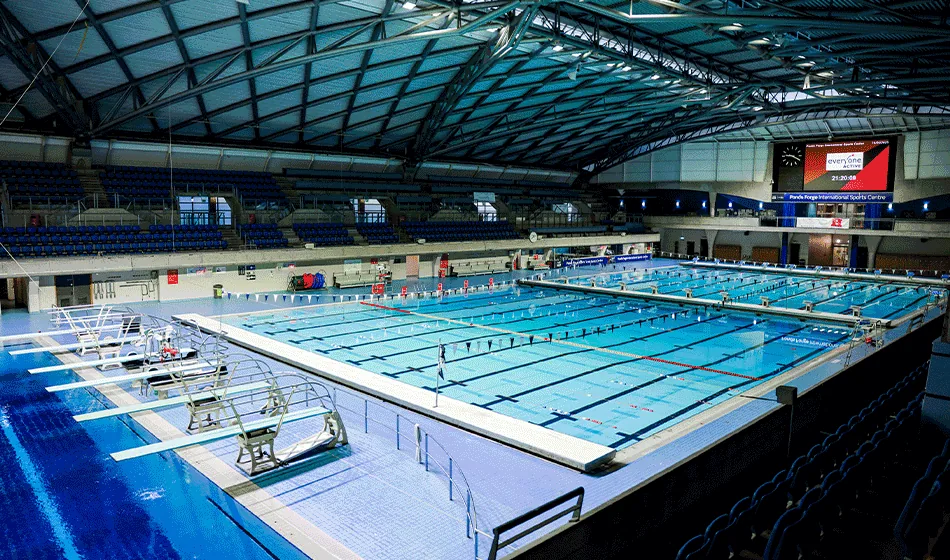
Douglas Snow Aquatic Centre
Toronto · 50 m pool
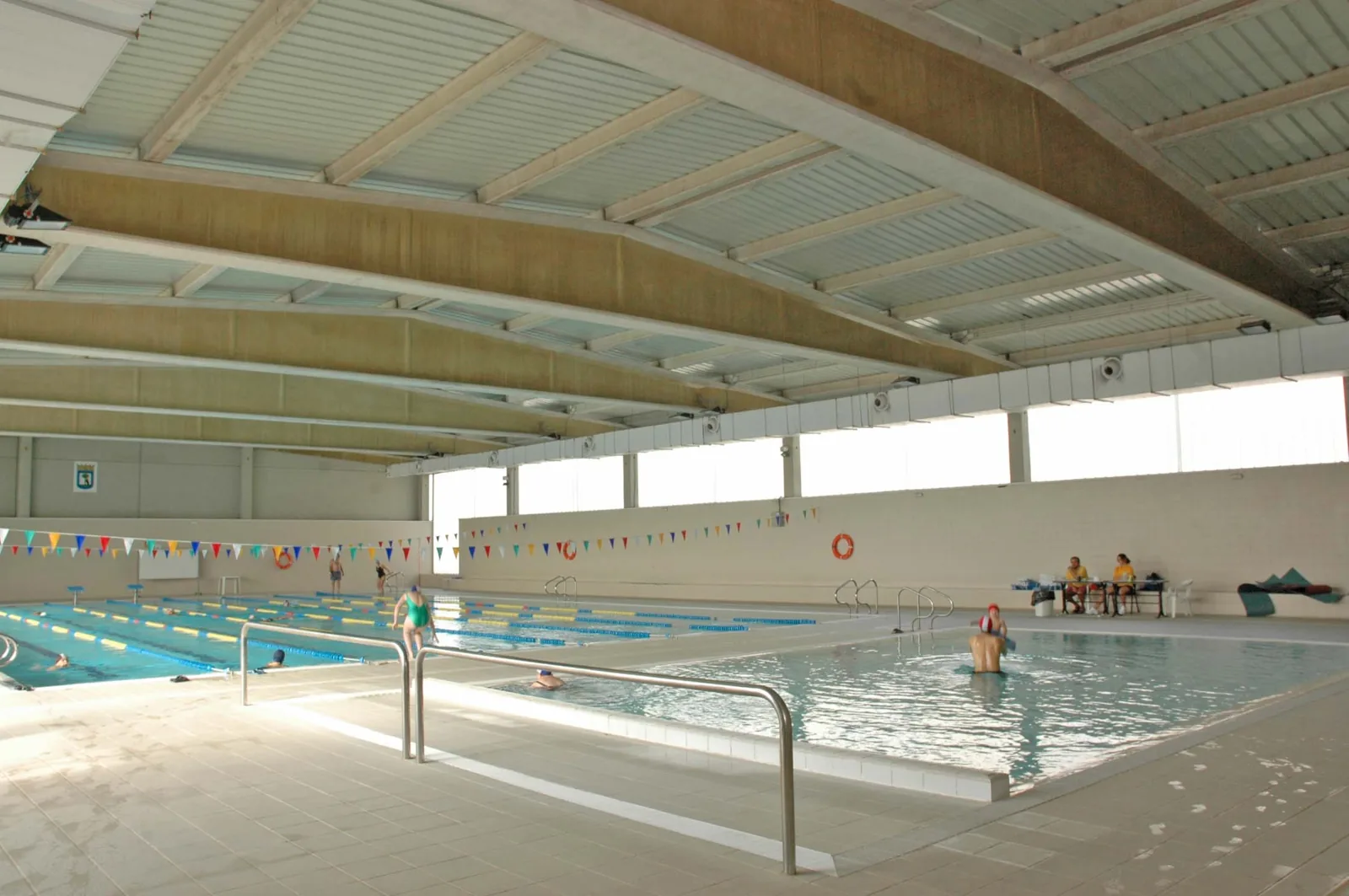
Centro Deportivo Municipal La Masó - Luis de la Fuente
Madrid · Indoor 25 m pool
FAQ
Why is chlorine used in swimming pools and not in the sea?
The sea is vast and constantly renewed, so germs are diluted and broken down by sunlight and salt. A pool is a small, closed volume shared by many people, so it needs a disinfectant.
How quickly does chlorine kill germs?
At recommended levels, chlorine kills most germs within minutes. A few, such as Cryptosporidium, can survive for days, which is why pools also rely on filtration and UV.
Can a pool work without chlorine?
Public pools need a disinfectant that stays in the water. Natural swimming pools use plants and biological filters instead, but they rely on low swimmer numbers and are a different kind of pool.
Why does chlorine run out?
It is used up as it reacts with germs, sweat and urine, and sunlight breaks it down in outdoor pools. Pools add more continuously to keep the level steady.