How clean is public pool water?
 By the Find My Swimming Pool team·
Updated ·
5 min read
Hundreds of people a day share the water in a busy public pool, and not all of them showered first. Yet most people swim for years without picking up anything worse than red eyes. Here is how pools keep water clean, and where the limits are.
The short answer
Water in a well-run public pool is clean enough to swim in safely, but it is not sterile. It is filtered continuously and disinfected with chlorine, which kills most germs within minutes. Staff test it several times a day. Some germs, mainly the parasite Cryptosporidium, survive chlorine for days, and sweat and urine use up chlorine and form irritating chloramines. Clear water, no strong chemical smell and visible tiles on the floor of the deep end are good signs. Showering first and staying out when you have diarrhoea keep it that way.
How pools keep water clean
A public pool is cleaned by three systems working together, around the clock.
- Circulation and filtration. Water is drawn off the surface through gutters or skimmers and from outlets in the floor, pumped through large sand or media filters and returned to the pool. The whole volume passes through the filters every few hours. Filters catch hair, skin flakes, dirt and some germs.
- Disinfection. Chlorine is dosed into the returning water, usually by an automatic controller that measures the level and tops it up. Some pools also use UV lamps or ozone in the plant room as an extra step, which lets them run lower chlorine in the pool. See why is chlorine in pools.
- Dilution. Pools replace a share of their water with fresh mains water every day, which dilutes the substances that chlorine and filters do not remove.
On top of that, staff test the water by hand several times a day, checking free chlorine, combined chlorine (chloramines) and pH. pH matters because chlorine works poorly if the water is too alkaline. In the US, the CDC's guidance for pools is free chlorine of at least 1 part per million and a pH of 7.2 to 7.8. The UK, Ireland and Australia set their own national targets, and pools there also send water samples to a lab for bacteria testing.
What chlorine cannot do
Chlorine is fast against most bacteria and viruses, but a few things are harder.
- Cryptosporidium. This parasite has a tough outer shell. According to the CDC, it can survive for more than seven days in properly chlorinated water. It causes watery diarrhoea and spreads when someone who is ill swims and others swallow the water. Filters and UV help, and pools close and treat the water after a faecal accident.
- Chloramines. When chlorine reacts with sweat, urine and body products it forms chloramines. These cause the "chlorine" smell, red eyes and coughing in badly ventilated pools. More on that in why do pools smell of chlorine.
- Surfaces. Chlorine in the water does not clean the changing room floor or the poolside. Verruca and athlete's foot germs live on wet floors, not in the water. See verrucas and swimming pools.
- Hot tubs. Warm water uses up chlorine faster, and spa pools hold far more people per litre than a swimming pool. They need much tighter control.
What swimmers put in the water
Every swimmer adds sweat, skin cells, hair, cosmetics, sunscreen and, too often, urine. None of these are germs on their own, but they use up chlorine and form chloramines, so the pool has to work harder.
Urine is the one people ask about. A 2017 study at the University of Alberta used an artificial sweetener that passes through the body unchanged as a marker. It estimated about 75 litres of urine in one pool roughly a third the size of an Olympic pool, and about 30 litres in a pool half that size (Jmaiff Blackstock and others, 2017). That sounds alarming, but it is diluted in hundreds of thousands of litres. Urine is not the main infection risk; the problem is the chloramines it helps form. Read is there a dye that shows pee in pools for the myth that goes with it.
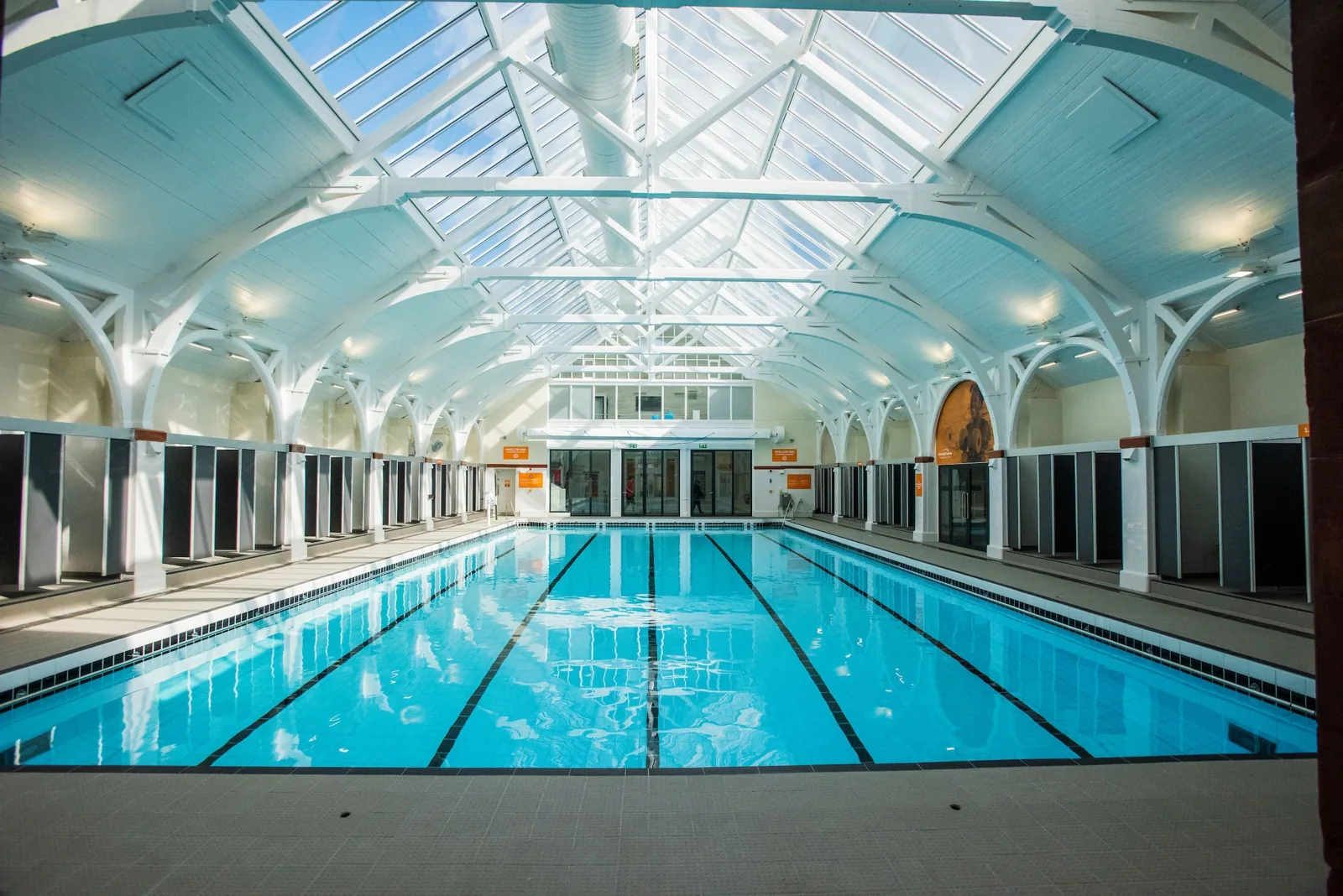
How to tell if a pool is clean
You cannot see germs, but you can see whether a pool is run well.
| Good signs | Warning signs |
|---|---|
| Clear water; you can see the floor and drains in the deep end | Cloudy or hazy water |
| Little or no smell | A strong, sharp chemical smell |
| Smooth tiles and clean gutters | Slimy tiles or scum along the waterline |
| Pumps running; water moving at the gutters | Still water, debris on the surface |
| Clean changing rooms and working showers | Standing water, dirty floors, broken showers |
Cloudy water is the clearest red flag. Lifeguards are trained to close a pool if they cannot see the bottom, because they cannot see a swimmer in trouble either. If your eyes sting badly and the air catches your throat, mention it to staff.
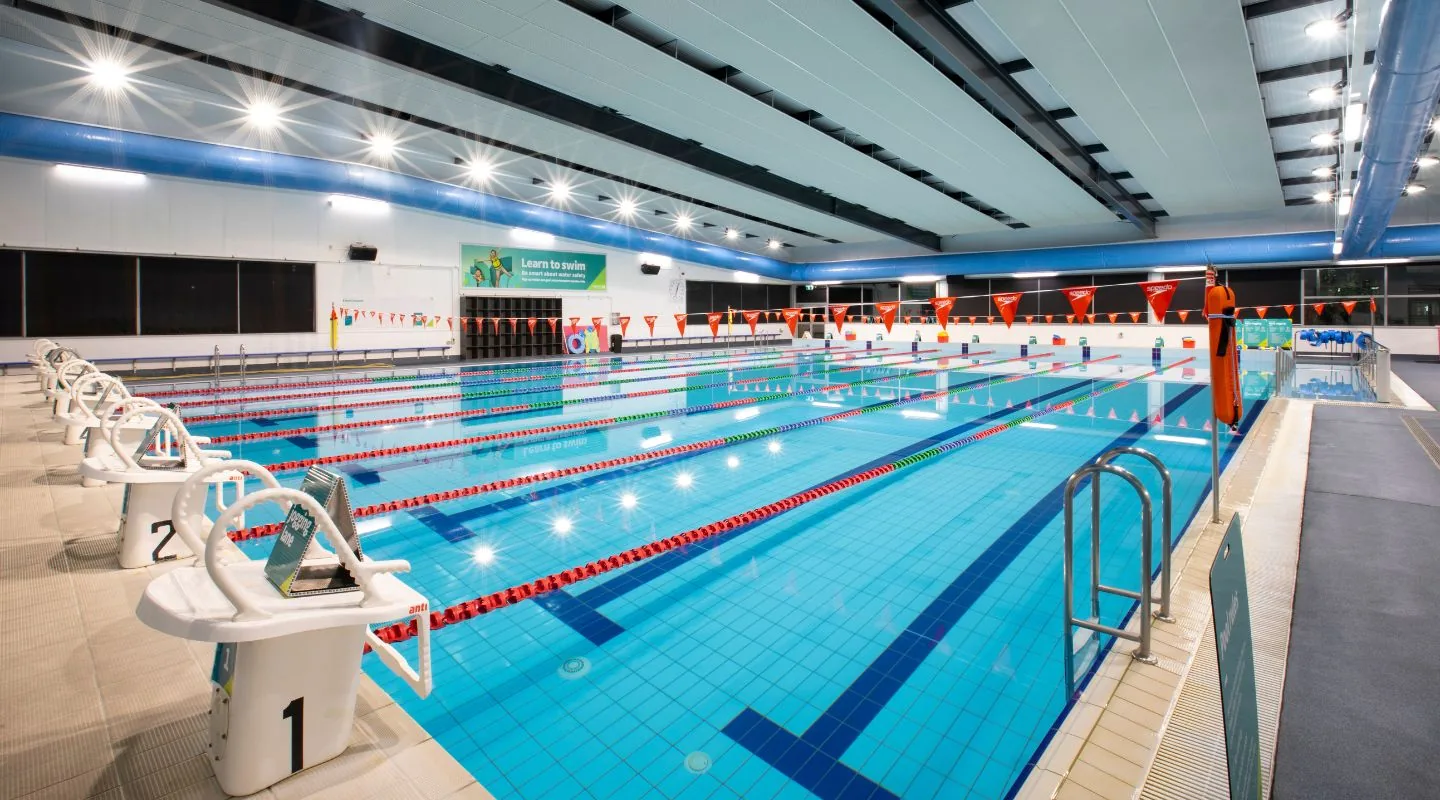
Graham Condon Recreation and Sport Centre
Christchurch · 8-lane 25 m pool
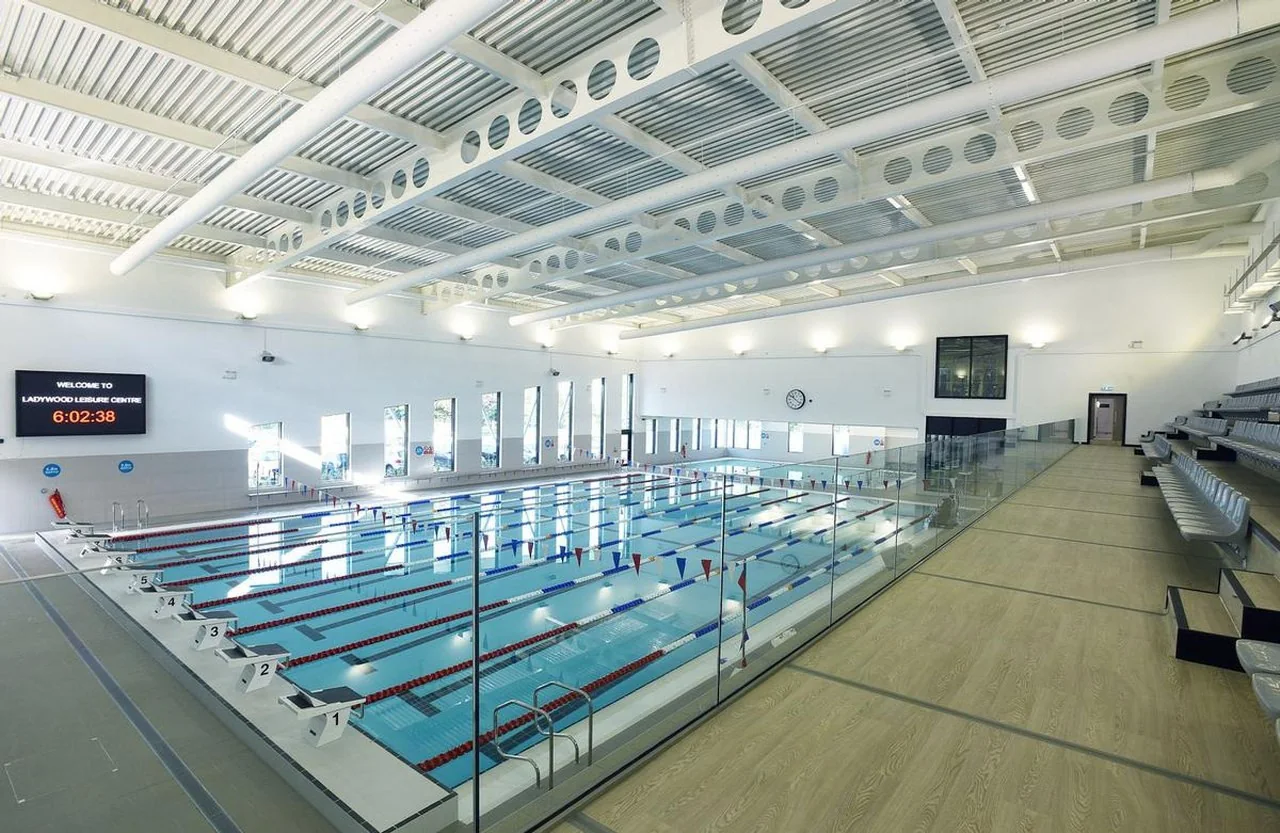
Ladywood Leisure Centre
Birmingham · 8-lane public pool
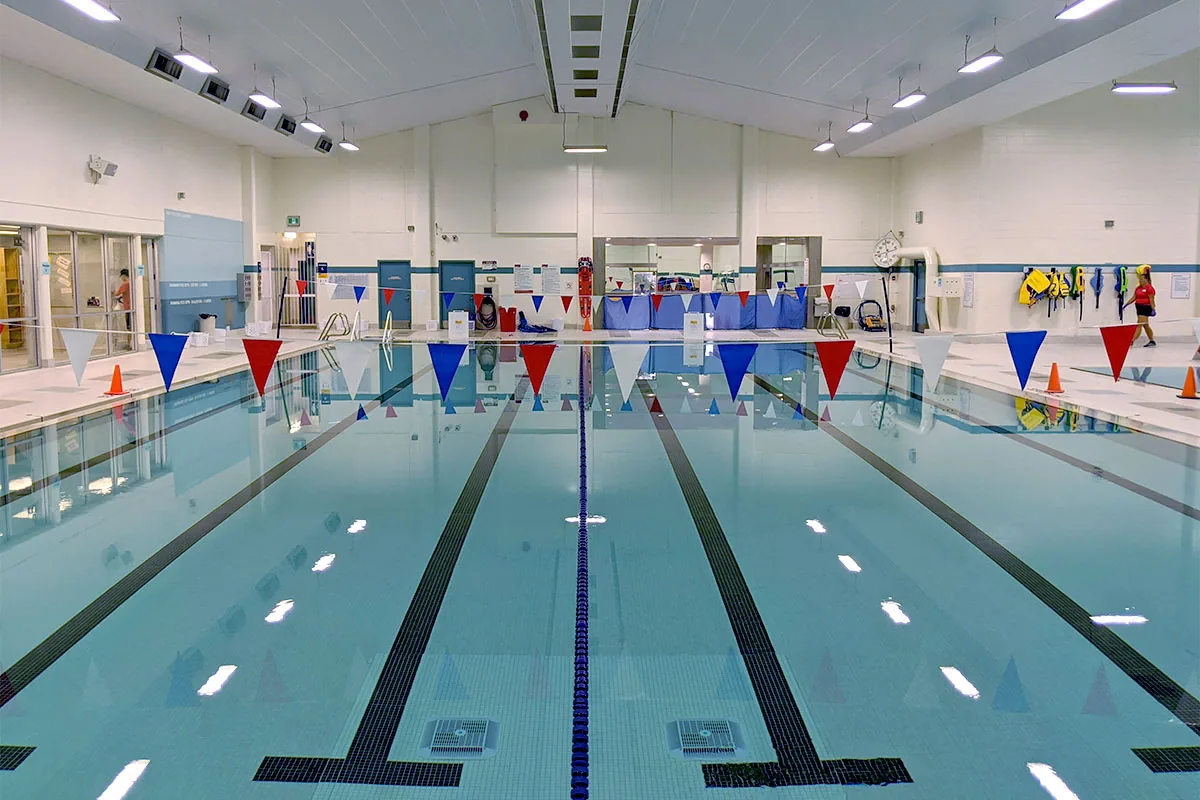
Glenmore Aquatic Centre
Calgary · 25 m lane pool
How you can help
Pool water is only as clean as the people in it allow. A few habits make a real difference:
- Shower before you swim. The CDC says a one-minute shower removes most of the dirt, sweat and oils that use up chlorine. See why you should shower before swimming.
- Use the toilet before you get in, and get out when you need to go.
- Stay out if you have diarrhoea, and for two weeks after it stops if you have had Cryptosporidium.
- Use swim nappies for babies and toddlers, and check them often.
- Try not to swallow the water.
Cities with the most public pools in our directory:
FAQ
Is public pool water dirty?
A well-run public pool is clean enough to swim in safely. It is filtered and disinfected all the time, but it is not sterile, and some germs such as Cryptosporidium survive chlorine.
How often is pool water changed?
Public pools rarely empty completely. Instead they filter the whole volume every few hours and replace part of the water with fresh water each day.
Is a strong chlorine smell a sign of a clean pool?
No, often the opposite. The sharp smell comes from chloramines, formed when chlorine reacts with sweat and urine. A clean, well-ventilated pool smells of very little.
Are hotel pools as clean as public pools?
They can be, but standards and staffing vary more. Hot tubs and small hotel pools are more likely to have problems because they are small, warm and less closely watched.