How to protect your hair from chlorine
 By the Find My Swimming Pool team·
Updated ·
6 min read
Swim three or four times a week and your hair will tell you about it: dry ends, a straw feel, sometimes a green tint. Most of that is avoidable with a few minutes of routine before and after the pool.
The short answer
Wet your hair with clean shower water before you swim, so it soaks up less pool water. Add a little conditioner or leave-in product, then wear a well-fitting silicone cap. After the swim, rinse straight away, wash with a mild shampoo and condition. Once a week, use a clarifying or swimmer's shampoo to lift build-up. If blonde or bleached hair turns green, that is copper in the water, not chlorine, and a clarifying wash usually shifts it.
What chlorine does to hair
Pools are disinfected with chlorine because it kills germs quickly. The same chemistry that makes it good at breaking down germs also strips the natural oils from your hair and scalp. Those oils are what keep the outer layer of each strand, the cuticle, lying flat and smooth.
Without them, the cuticle lifts. Hair loses moisture faster, tangles more easily and feels rough. Repeated week after week, you get dry, brittle ends that snap when you brush them. Hair that is already porous, such as bleached, permed or heat-styled hair, takes up more pool water and suffers more.
A single swim does no lasting harm. The problem is frequency. Club swimmers and people who swim before work most days notice it within a few weeks.
Before you get in
Hair works like a sponge. If it is already full of clean water, it has less room for pool water. That is the single most useful habit, and most pools have a poolside shower you are meant to use anyway.
- Soak your hair in the shower. A minute under the shower is enough. You were going to shower before swimming in any case; see why you should shower before swimming.
- Add a light barrier. A small amount of conditioner, a leave-in spray or a few drops of oil on the lengths slows how much pool water gets in. Keep it light. Some pools dislike heavy oils because they leave a film on the water.
- Put on a cap. A silicone cap grips better and lets in less water than latex or fabric. It will not keep your hair dry, but it cuts the flow of water through it. See does a swim cap keep hair dry for what to expect.
- Tie long hair up first. A low bun or plait under the cap stops the ends floating out, and the ends are the part that dries out first.
Two caps for regular swimmers. Some long-haired swimmers wear a fabric cap under a silicone one. The fabric cap holds the hair and the silicone cap seals better over it. It also stops silicone pulling at fine hair.
After your swim
The sooner you rinse, the less time chlorine has to work. Do it in the pool shower before you go to the changing room, not at home an hour later.
- Rinse thoroughly. Run clean water through your hair for a minute or two, working it through the lengths with your fingers.
- Use a mild shampoo. You do not need a strong one after every swim. A gentle shampoo is enough on most days.
- Condition every time. Conditioner smooths the cuticle back down. Leave it on for a minute or two before rinsing.
- Clarify once a week. Chlorine and minerals build up over time. A clarifying shampoo or a shampoo sold for swimmers removes that build-up. Do not use one every day, as it dries hair too.
- Go easy on heat. Hair that is already dry from the pool does not need a hot hairdryer and straighteners on top. Dry it on a cool setting or let it air-dry when you can.
Comb with a wide-toothed comb while conditioner is still in. Wet hair stretches and breaks more easily, so brushing it hard straight after a swim adds to the damage.
Why blonde hair turns green
Green hair after swimming is usually blamed on chlorine, but the colour comes from copper. Copper gets into pool water from some algaecides, from copper pipes and heat exchangers, and from water that corrodes metal fittings when its chemistry is off. Chlorine oxidises the copper, and the oxidised copper sticks to the protein in hair.
It shows on light hair: blonde, grey, white and bleached. Dark hair picks up the same copper, but you cannot see it. The fix:
- Wash with a clarifying or swimmer's shampoo, which is designed to lift metal deposits.
- Repeat over a few washes if the tint is strong. It fades.
- Prevent it next time with the same routine as above: pre-wet, cap, rinse straight after.
If you see green tints after a particular pool and not others, the water at that pool is the likely cause. Outdoor pools in hot weather and home pools are more often the culprits than large public indoor pools, where the chemistry is tested several times a day.
Coloured, curly and long hair
Dyed and bleached hair
Chlorine fades colour and makes bleached hair more fragile. Wait until a few days after colouring before you swim, so the colour has time to settle. Your colourist can tell you how long for the product they used. Use a colour-safe conditioner and do not skip the cap.
Curly and Afro-textured hair
Curly hair is naturally drier because scalp oils travel down a curl less easily. Pool water makes that worse. Saturate it with water and a generous amount of conditioner or a leave-in before swimming, then use a long-hair or volume cap that fits over braids, locs or a puff without forcing them. Deep-condition once a week if you swim often.
Long hair
The ends are the oldest and driest part. A trim every couple of months keeps split ends from travelling up the strand. Plait long hair before capping and condition the lengths more than the roots.
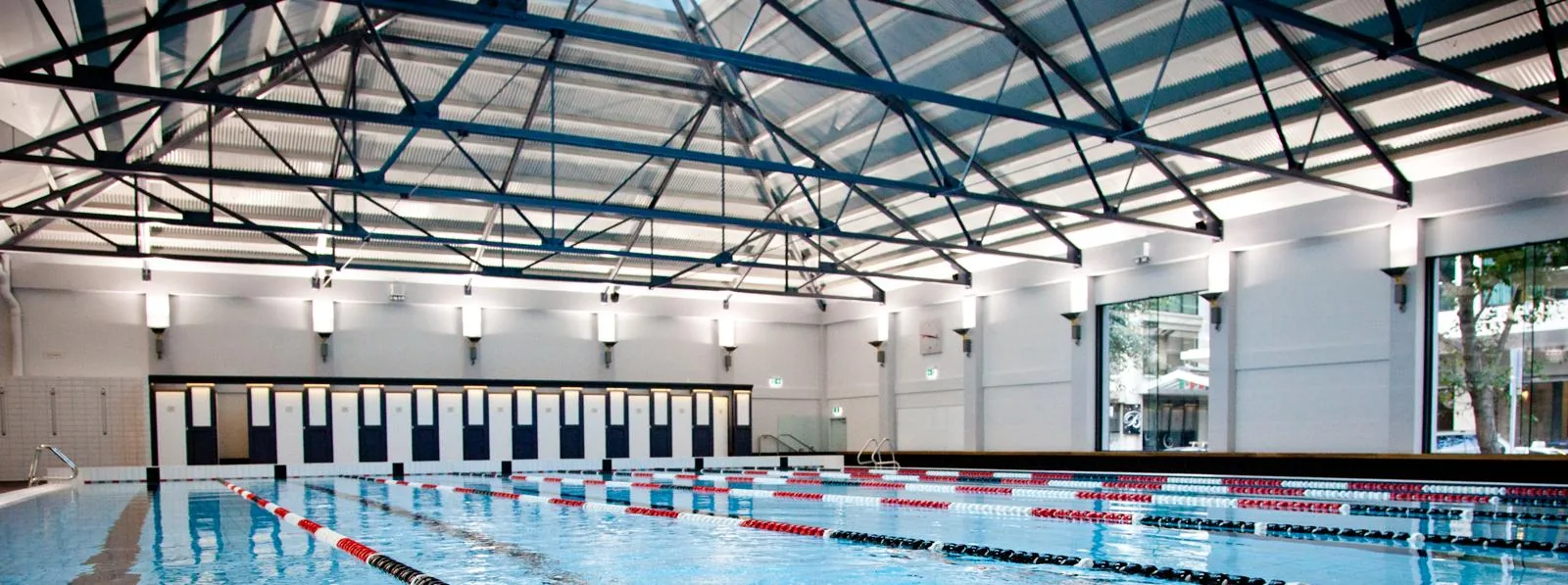
Tepid Baths
Auckland · 25 m lane pool
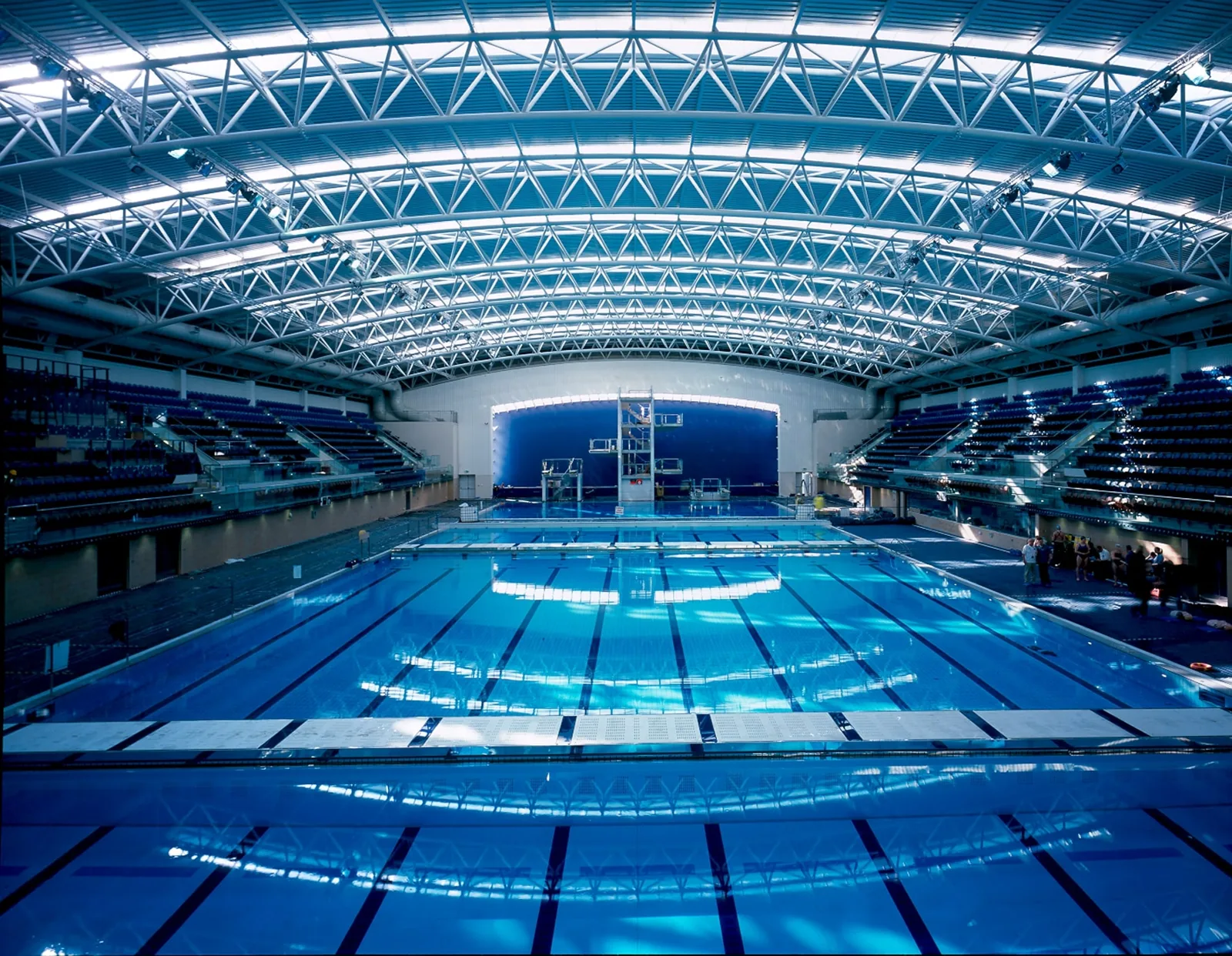
Sport Ireland National Aquatic Centre
Dublin · 50 m pool
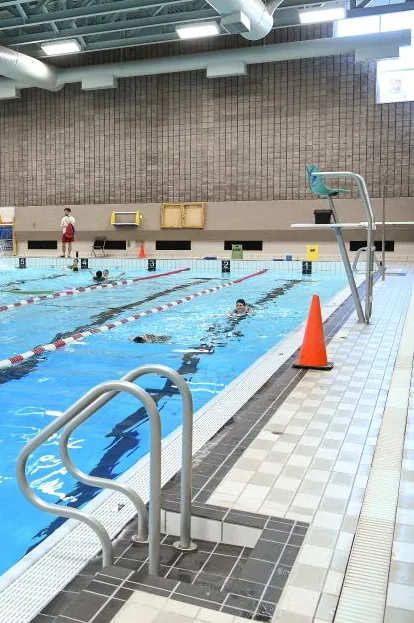
Piscine du centre communautaire Lucien-Borne
Quebec City · Free lane pool
Salt water dries hair too, so a saltwater pool or the sea is not a free pass. Read saltwater vs chlorine pools for how the two compare, and dry skin and itching after swimming if your skin reacts as well as your hair.
FAQ
Does chlorine make your hair fall out?
No. Chlorine dries hair and makes it break more easily, so you may see more short broken pieces, but it does not affect the roots. Hair loss from the root has other causes.
Should I wash my hair after every swim?
Rinse it every time. A mild shampoo and conditioner after each swim is best if you swim several times a week. If you swim once a week, a thorough rinse and conditioner is often enough.
Is swimmer shampoo worth buying?
For regular swimmers, yes, used once or twice a week. It is a clarifying shampoo that removes chlorine and mineral build-up. It is too strong for daily use.
Can I put coconut oil in my hair before swimming?
A small amount on the lengths works as a barrier. Use very little, because heavy oil leaves a film on the water and some pools ask swimmers not to use it.