Do saltwater pools have chlorine?
 By the Find My Swimming Pool team·
Updated ·
5 min read
If you picked a saltwater pool because you wanted to avoid chlorine, this may be a surprise. The salt is there to make chlorine. It is simply made on site instead of being poured in from a drum.
The short answer
Yes. A saltwater pool is disinfected by chlorine, the same as a traditional pool. The difference is where the chlorine comes from. Salt is dissolved in the water, and a device called a salt chlorinator passes the water over electrically charged plates. Electrolysis splits the salt and produces hypochlorous acid and sodium hypochlorite, the active forms of chlorine that kill germs. Tests for free chlorine in a saltwater pool read the same way as in any other pool.
How salt becomes chlorine
Table salt is sodium chloride. The "chloride" part is where the chlorine comes from. In a saltwater pool, the water is pumped through the filter and then through a chlorinator cell, a tube holding metal plates with a low electric current running between them.
- Salt dissolved in the pool water reaches the cell.
- The current splits it. Chloride at one plate becomes chlorine, which dissolves at once to form hypochlorous acid and hypochlorite.
- That disinfected water goes back into the pool and kills bacteria, viruses and algae just as added chlorine does.
- As the chlorine is used up, it ends up back as chloride, so most of the salt is recycled. It only needs topping up when water is lost to splashing, backwashing or rain.
This is called electrolysis, and the device has several names: salt chlorinator, salt chlorine generator, salt cell or salt system. They all do the same thing.
How much chlorine is in a saltwater pool
About the same as in any other pool. What matters for safety is the level of free chlorine, the chlorine that is still available to kill germs, and the pH, which controls how well that chlorine works. Neither depends on whether the chlorine was made from salt or added from a bottle.
The CDC says chlorine or bromine at proper levels kills most germs within minutes. In the US, the CDC's guidance for pools is a free chlorine level of at least 1 part per million and a pH of 7.2 to 7.8. Public pools in the UK, Ireland, Australia and elsewhere follow their own national standards and test the water several times a day.
The salt itself is at a much higher concentration than the chlorine. Most saltwater pools run at a few thousand parts per million of salt, often around 3,000, while free chlorine is measured in single figures. The salt is the raw material; the chlorine is the small amount made from it at any moment.
Why it is called a saltwater pool
The name describes what you add, not what disinfects the water. Owners buy bags of pool salt instead of buckets of chlorine, so "saltwater pool" stuck. It is also an easier sell than "self-chlorinating pool".
The salt level is low. Seawater has about 35,000 parts per million of salt, so a saltwater pool is around a tenth as salty as the sea. Most people can barely taste it. Our comparison of saltwater vs chlorine pools covers the rest of the differences, including cost.
Why it feels different
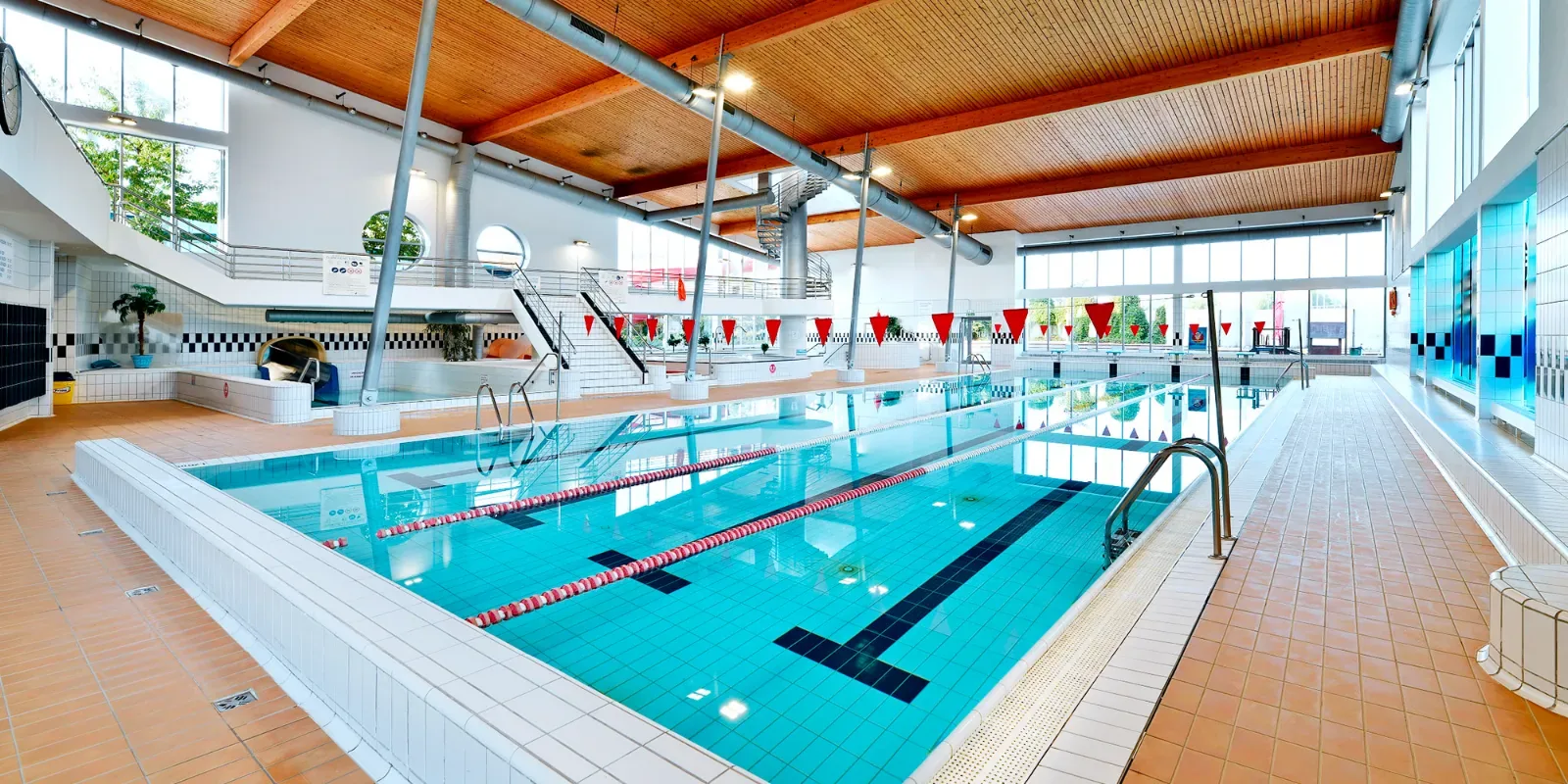
The disinfectant is the same, yet many swimmers say saltwater pools feel nicer. There are a few reasons, and they are real but modest.
- Steady production. A salt cell makes chlorine continuously, in small amounts. Hand-dosed pools can swing between high and low levels, and a high spike is when eyes and skin notice it most.
- Fewer chloramines. The sharp pool smell and red eyes come mainly from chloramines, formed when chlorine reacts with sweat and urine. Steady chlorine levels help keep them in check.
- The salt itself. A small amount of salt makes the water feel slightly softer on the skin.
None of that makes a saltwater pool chlorine-free, or kind to blonde hair and swimsuits forever. You still need to rinse off after swimming. See is chlorine bad for you if the worry is chlorine itself.
Pools that really avoid chlorine
If you want water with no chlorine at all, there are a few options, each with trade-offs.
| Type | How it is kept clean | Chlorine? |
|---|---|---|
| Saltwater pool | Chlorine made from salt | Yes |
| Pool with UV or ozone | UV or ozone treats the water in the plant room, with a lower chlorine level in the pool | Yes, usually less |
| Bromine pool or spa | Bromine, a related chemical, common in hot tubs | No, but bromine instead |
| Natural swimming pool | Plants, gravel filters and biological filtration | No |
| Sea, ocean pools and lakes | Not treated | No |
Natural pools and open water have no chlorine, but nothing kills germs quickly either, so water quality depends on the weather, the number of swimmers and the source. Ocean pools are refilled by the tide or pumped seawater.
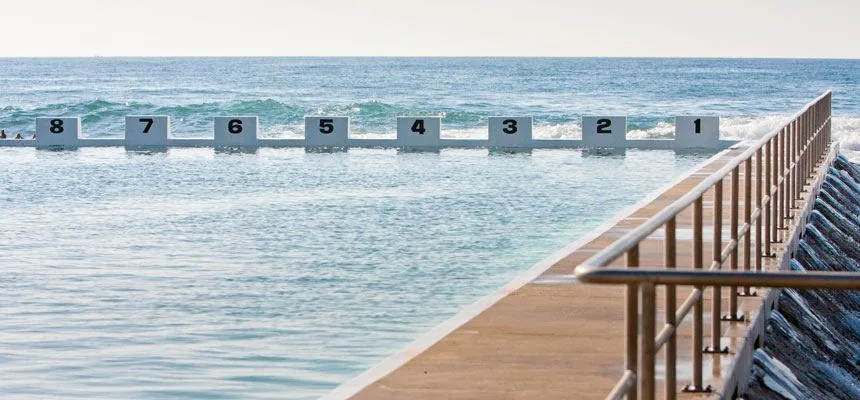
For more on these, read natural swimming pools, ocean pools and UV and ozone pools.
FAQ
Is a saltwater pool chlorine-free?
No. The salt is turned into chlorine by electrolysis, and that chlorine disinfects the water just as in a traditional pool.
Can I swim in a saltwater pool if I am allergic to chlorine?
True chlorine allergy is rare, and most reactions are irritation. A saltwater pool still contains chlorine, so it may feel gentler but will not avoid it. Speak to a doctor if you react badly to pools.
Do saltwater pools smell of chlorine?
Usually less than hand-dosed pools, because chlorine is made steadily and chloramines tend to stay lower. A poorly maintained saltwater pool can still smell.
Can you add normal chlorine to a saltwater pool?
Yes. Owners sometimes add chlorine directly in cold weather, when the cell produces less, or to shock the pool after heavy use.