Natural swimming pools: how they stay clean without chlorine
 By the Find My Swimming Pool team·
Updated ·
5 min read
A natural swimming pool looks like a clear garden pond you can swim lengths in. There is no chlorine and no blue tiles, only plants, gravel and a lot of careful engineering. Here is how they stay clean, where to find public ones and what swimming in one is like.
The short answer
A natural swimming pool cleans its water with plants, gravel and bacteria instead of chlorine. Water is pumped from the swimming area through a planted regeneration zone, which often takes up 30% to 70% of the total area, and through gravel or biological filters. Microbes break down organic matter and the plants take up the nutrients that would otherwise feed algae. The water is not disinfected, so public natural pools limit swimmer numbers, test the water often and ask everyone to shower first.
How a natural pool stays clean
A natural pool has two parts, side by side or one below the other:
- The swimming zone. A clear basin, often lined with a membrane, where people swim. It has no plants in it.
- The regeneration zone. A shallow, planted area separated from the swimming zone by a low wall. Reeds and taller plants grow at the shallow edges; submerged and floating plants grow in the deeper water.
Pumps keep the water moving between the two. In the regeneration zone, and in gravel filters below it, bacteria on the plant roots and stones break down organic matter: skin cells, sweat, leaves and dead insects. The plants then take up nutrients, especially phosphorus, which is what algae need to grow. Starve the algae of phosphorus and the water stays clear.
Many larger public pools add a separate biological filter, a tank of gravel or other media colonised by bacteria, and sometimes UV treatment or skimmers. Diffusers can add oxygen so the water does not stagnate.
Natural pool vs chlorinated pool
| Natural pool | Chlorinated pool | |
|---|---|---|
| Cleaning | Plants, gravel and bacteria | Chlorine (or another disinfectant) and sand filters |
| Water | Clear, slightly green or brown tint, no smell | Clear blue, may smell of chloramines |
| Germs | Removed slowly by the system | Most killed quickly by the chlorine in the water |
| Swimmer numbers | Strictly limited | Can take heavy use |
| Temperature | Follows the weather; usually unheated | Usually heated |
| Season | Mostly summer | All year |
| Skin and eyes | No chlorine sting | Can irritate some people |
The trade-off is simple. Chlorine kills most germs fast, so a busy indoor pool can stay safe with hundreds of swimmers a day. A natural pool cannot do that. It cleans the water continuously but slowly, so it relies on fewer swimmers, good hygiene and regular testing. If tests show high bacteria levels, the pool closes until they fall.
Natural pools also do not like heat. In a hot spell, warm water and strong sunlight favour algae and bacteria, and the pool may need to cut numbers.
Our guide to why chlorine is in pools explains what a disinfectant does that plants cannot.
Where to find public natural pools
The idea comes from the German-speaking world. Private natural pools were built in Austria from the 1980s, and Germany opened Europe's first public natural swimming pool in 1998. Germany and Austria now have the most, often as summer pools in parks, called Naturbad or Schwimmteich. There are no binding national rules for them; the International Organization for Natural Bathing Waters, founded in Germany in 2009, publishes guidelines.
Elsewhere they are still rare and newsworthy:
- Canada. Edmonton's Borden Park has the country's first public natural swimming pool.
- United States. Minneapolis opened the first public natural pool in the US in 2015.
- United Kingdom. London's King's Cross Pond Club was an unheated, plant-filtered pond built as a temporary art project. A handful of other plant-filtered pools and lakes run in summer, mostly on a small scale.
Our directory does not list natural pools yet; most of the outdoor venues in it are chlorinated lidos and seawater pools.
What swimming in one is like
- Colder than you expect. Most are unheated. Early and late in the season the water can be cold enough to take your breath away.
- Soft water. No chlorine smell, no red eyes, no dry skin afterwards.
- Not blue. The water is clear but takes the colour of the lining and plants, so it looks green or brown. You may see insects, pond skaters or a dragonfly.
- Strict rules. Shower before you swim, no sunscreen or as little as possible before you get in, and a timed slot so the pool is not overloaded.
Do not swim with diarrhoea. That is true at every pool, but even more so at one with no disinfectant in the water. Wait until you are well.
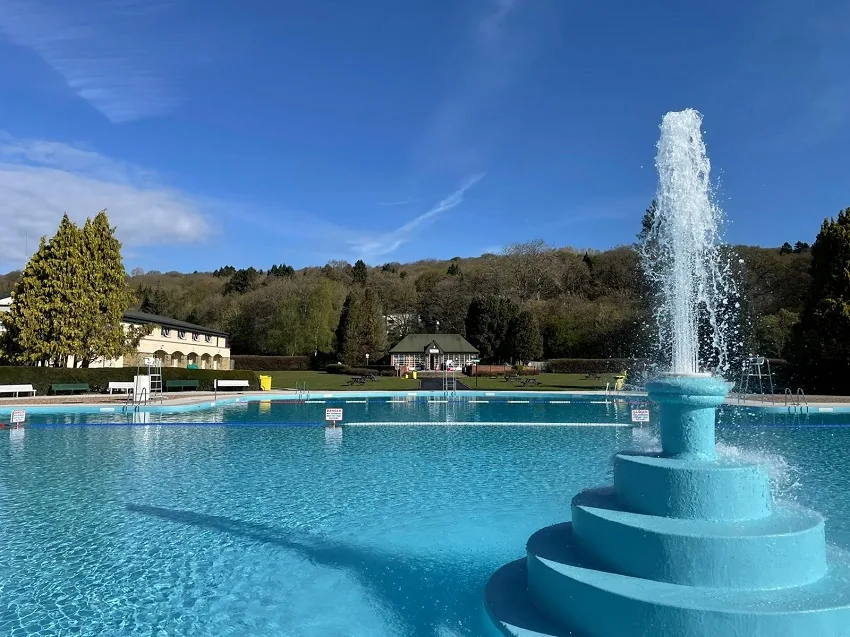
Other ways to swim without chlorine
If you want to swim without chlorine and there is no natural pool nearby, you have three other options:
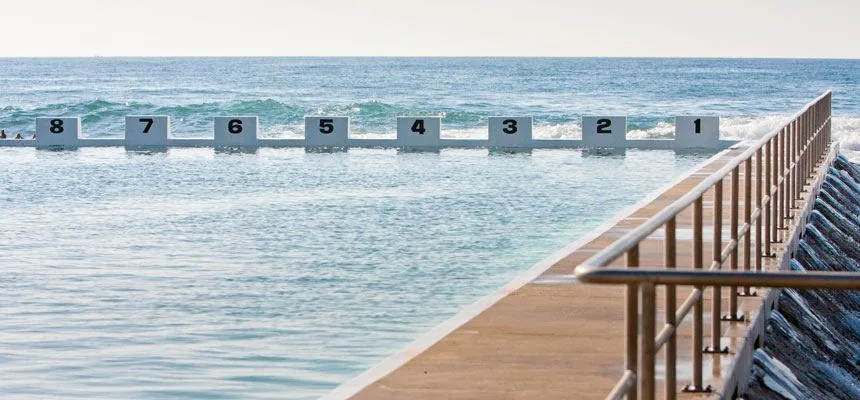
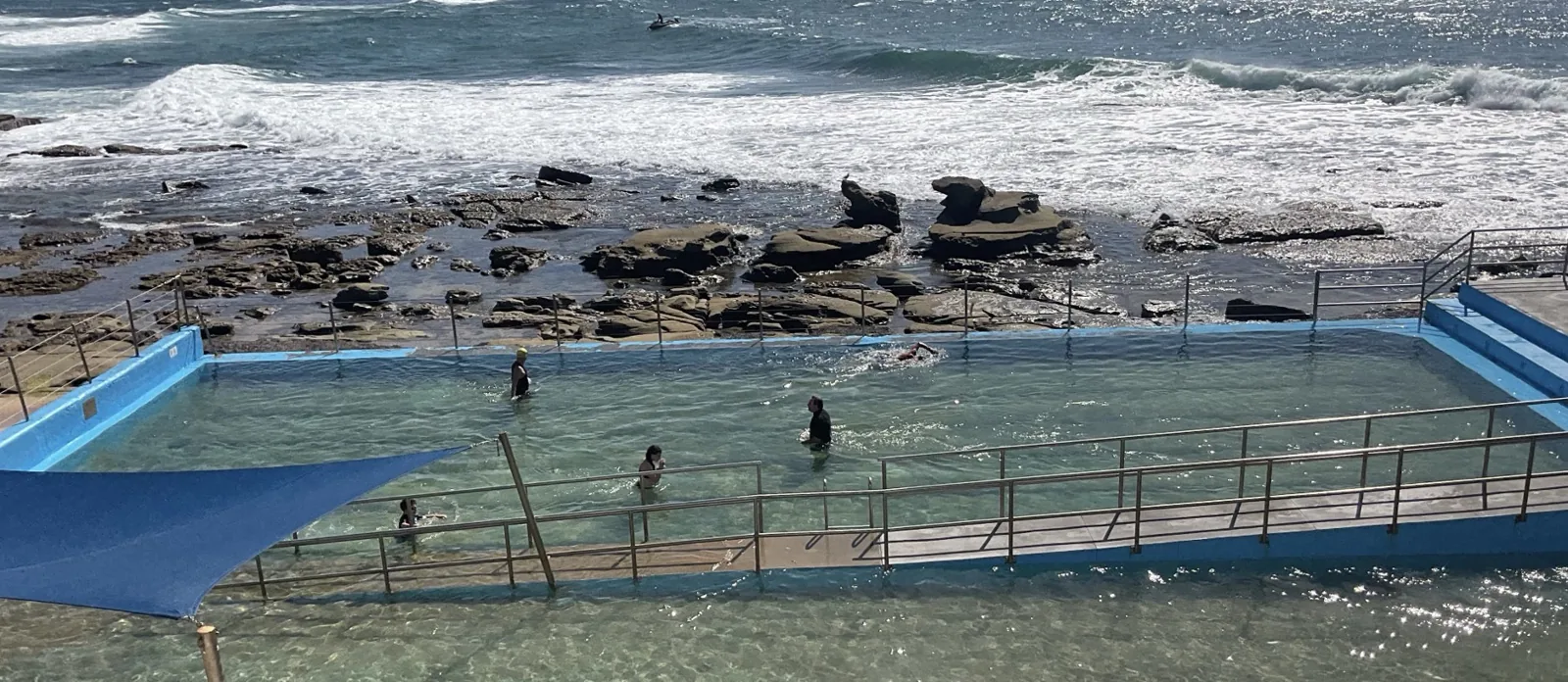
- Ocean pools. Built into the rocks and filled with seawater by the tide or by pumps. Australia has many. Read ocean pools.
- Lakes, rivers and ponds. Supervised swimming lakes and bathing ponds, such as the Hampstead Heath ponds in London. Water quality varies with weather, so check before you go.
- The sea. See swimming in the sea vs a pool.
Saltwater pools are not chlorine-free: they make chlorine from salt. See do saltwater pools have chlorine.
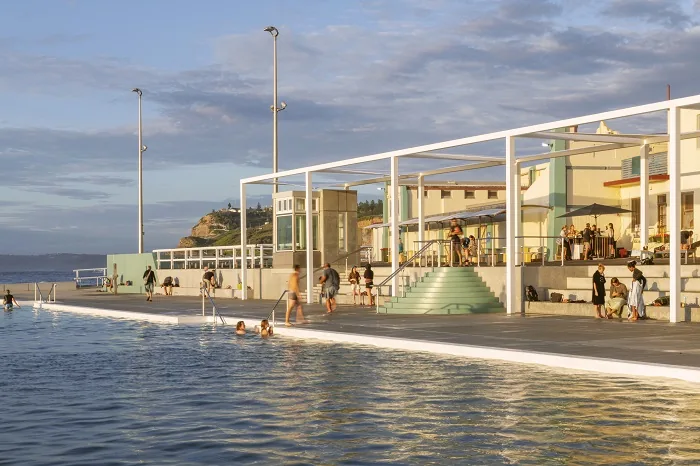
Newcastle Ocean Baths
Newcastle · Heritage ocean pool
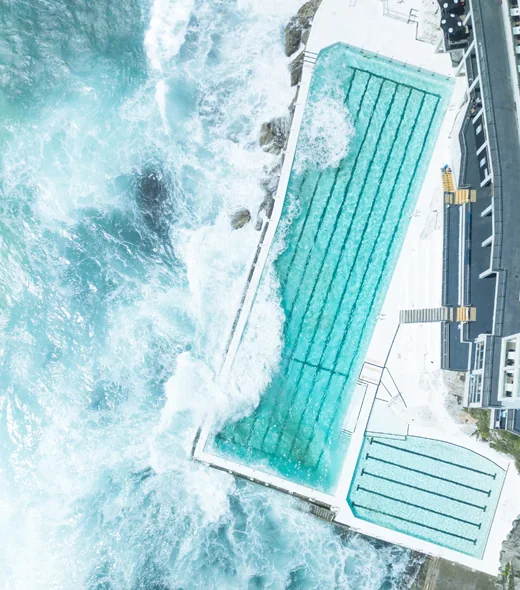
Bondi Icebergs Pool
Sydney · Ocean lap pool
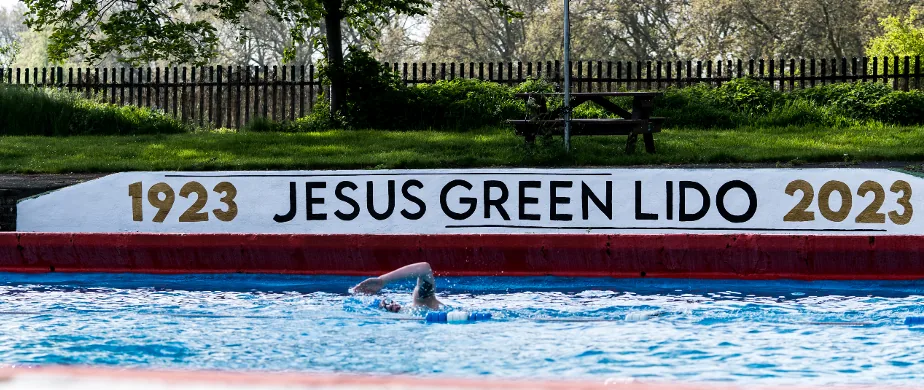
Jesus Green Lido
Cambridge · Unheated outdoor lido
FAQ
Are natural swimming pools safe?
Well-run public ones are tested often and close if bacteria levels rise. Because there is no disinfectant, they depend on limited numbers and clean swimmers, so follow the shower and health rules.
Do natural swimming pools have chlorine?
No. They use plants, gravel and bacteria to clean the water. Some add UV treatment, but no chemical disinfectant.
Why is natural pool water not blue?
A normal pool looks blue partly because of the water and mostly because white or blue tiles reflect it. Natural pools usually have dark liners and plants, so the clear water looks green, brown or black.
Are natural pools heated?
Rarely. Warm water favours algae, so most are left unheated. Most are open from late spring to early autumn, and the water follows the weather.