Main pool, learner pool, leisure pool: what's the difference?
 By the Find My Swimming Pool team·
Updated ·
5 min read
Many leisure centres have more than one pool, and the timetable assumes you know which is which. Here is what the main pool, the teaching or learner pool and the leisure pool are for, and which one to pick.
The short answer
The main pool is the larger, deeper pool, usually 25 metres, used for lane swimming, clubs and general swims. A teaching pool, also called a learner, training or small pool, is shallower and often warmer, typically under a metre deep, and is used for swimming lessons, parent and baby sessions and nervous swimmers. A leisure pool is built for fun rather than lengths, with a beach-style shallow end, fountains, flumes or a wave machine. In Spain the teaching pool is the piscina de enseñanza; in Australia it is often the learners' pool.
The main pool
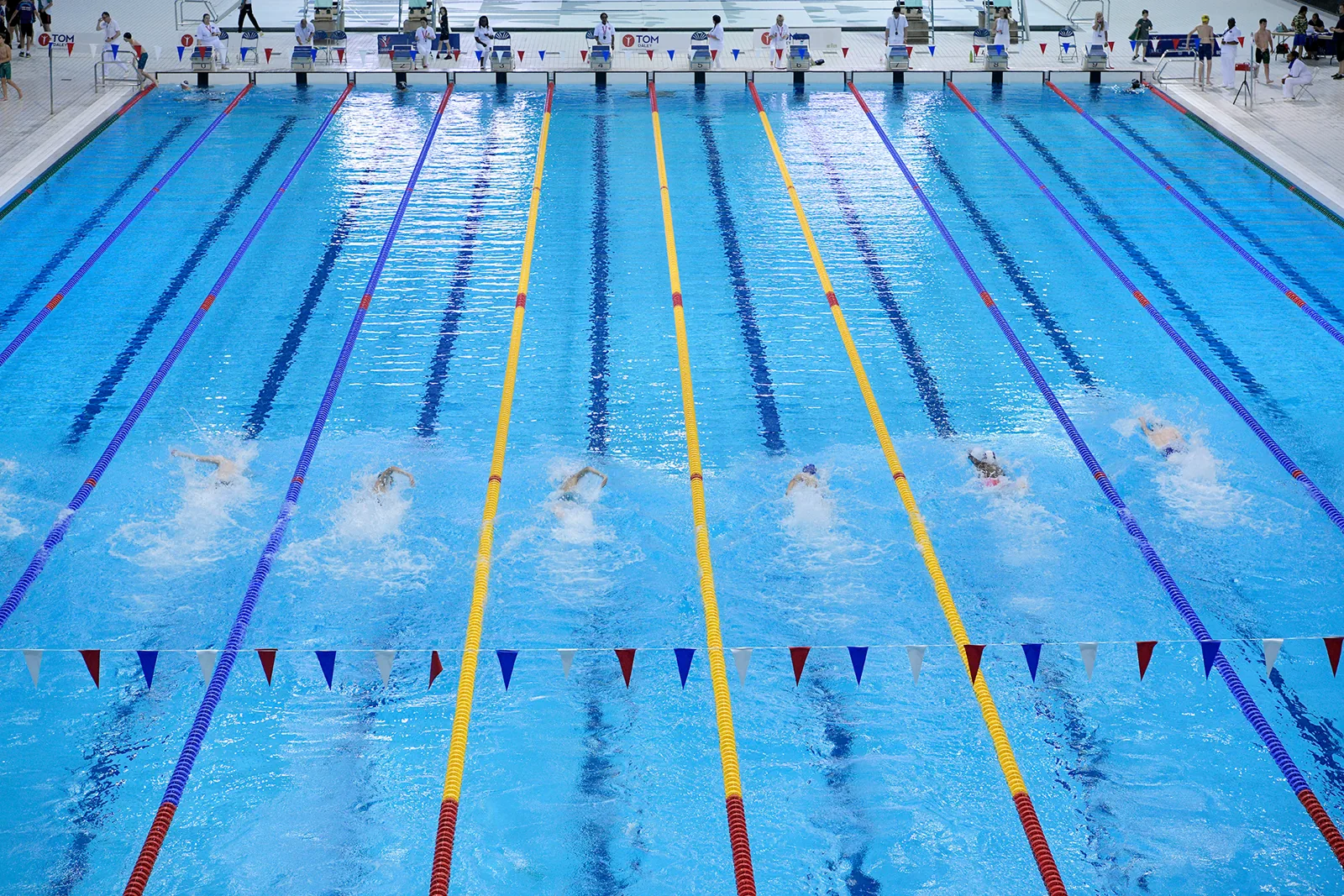
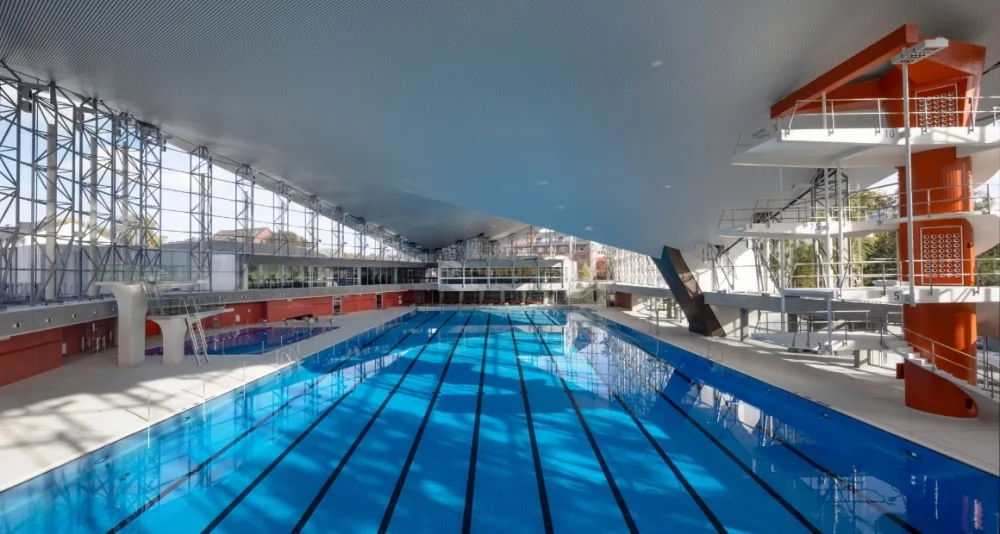
The main pool is the one you picture when you think of a swimming pool: a rectangle with lane markings on the floor, usually 25 metres long and between four and eight lanes wide. Some cities have a 50 metre main pool, and older Victorian and Edwardian baths often have odd lengths such as 25 yards, 30.5 metres or 33 metres.
Depth varies. Many have a shallow end around 0.9 to 1.2 metres and a deep end of 1.8 to 2 metres, while newer competition pools are deep all the way along. The main pool hosts lane swimming, general public swims, aqua aerobics, swimming clubs and galas. On the timetable it may be called the main pool, the 25 m pool, the competition pool or the large pool.
For how big main pools are, see 25 m versus 50 m pools and how deep a swimming pool is.
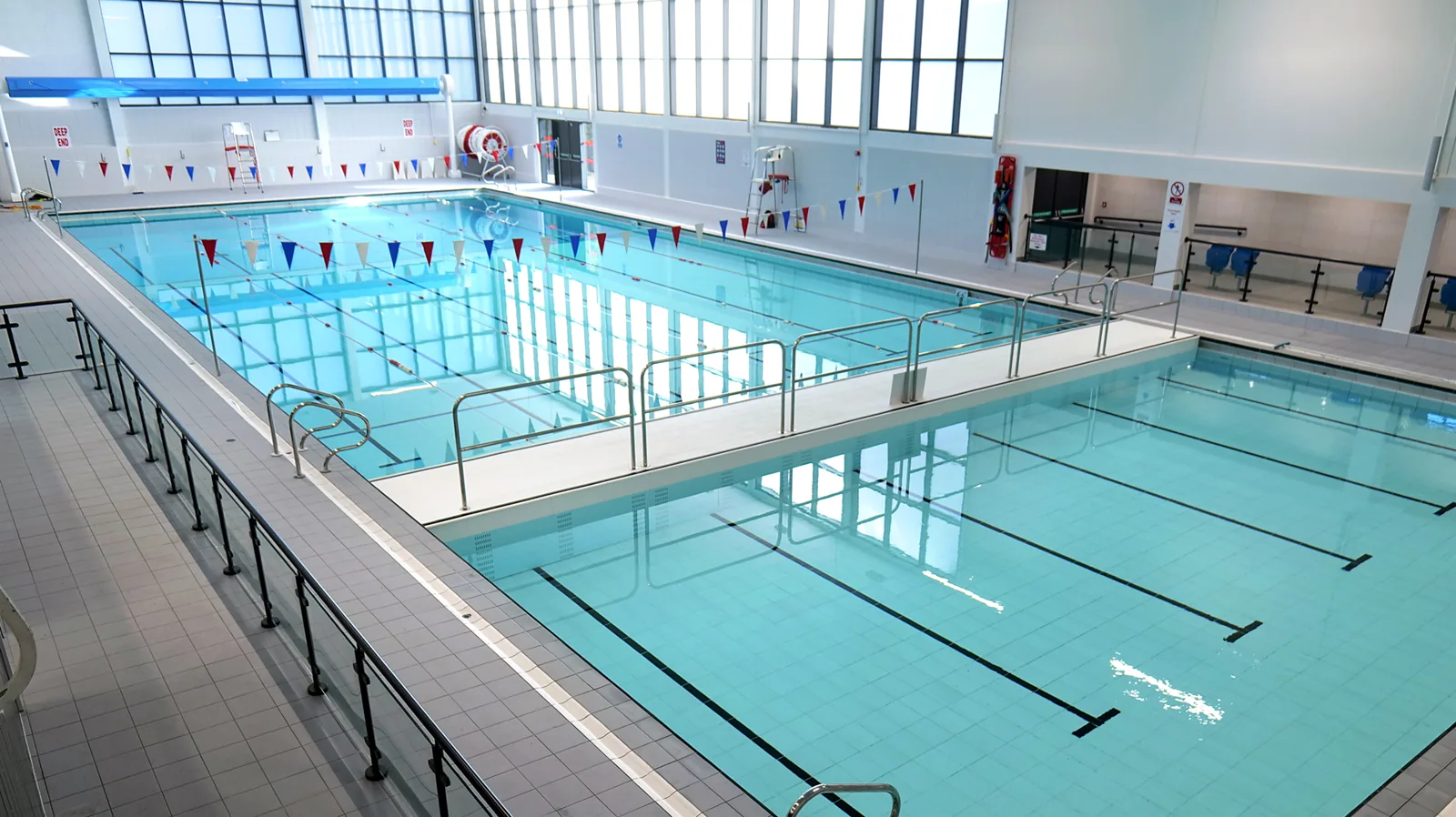
The teaching or learner pool
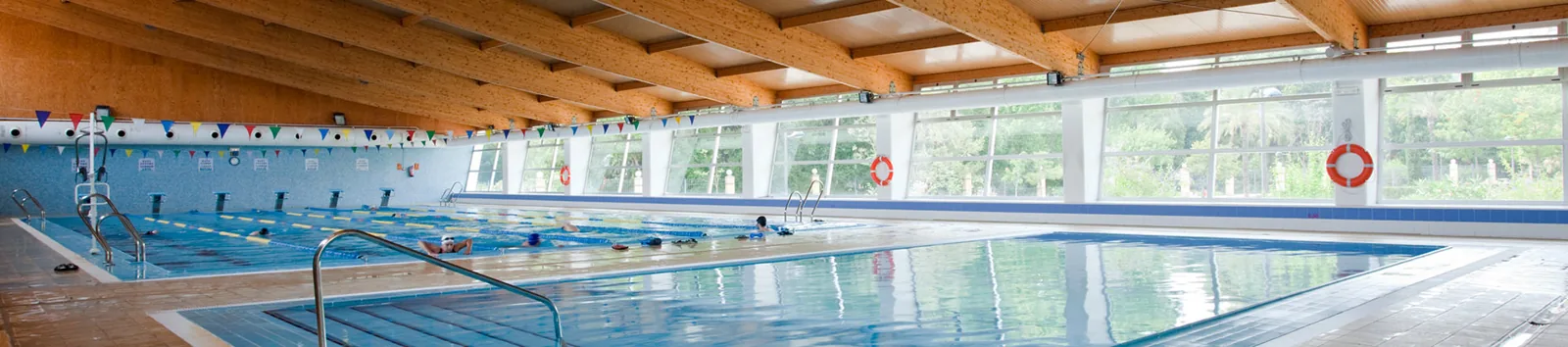
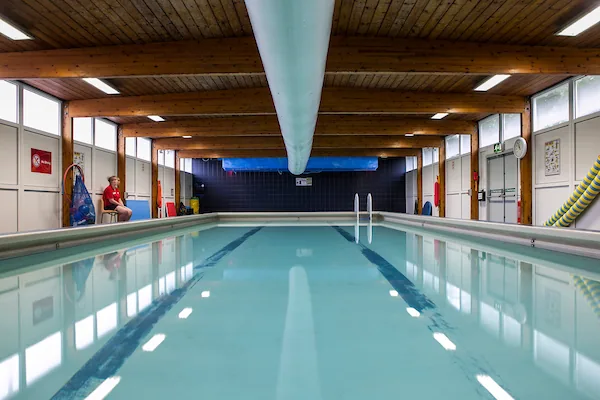
The teaching pool is the small one, often tucked beside the main pool or in its own room. Kings Hedges Learner Pool in Cambridge is typical: 15 metres by 6 metres and 0.9 metres deep. Tullos in Aberdeen has a 12.5 metre learner pool next to its 25 metre main pool. Some are even shallower at one end so small children can stand.
Teaching pools are usually kept a little warmer than the main pool, because people in lessons stand still more and babies and young children get cold fast. They often have wide steps with handrails, and many have a poolside hoist.
They are used for:
- children's swimming lessons, especially the early stages
- adult lessons and improver sessions
- parent and baby or toddler sessions
- quieter swims for older or less confident swimmers
- aqua classes that need standing depth
Some teaching pools have a moveable floor that rises or drops to change the depth between sessions. A few are big enough to be roped into short lanes when lessons are not running. If you are an adult learning to swim, a teaching pool session is a much less exposed place to start: see learning to swim as an adult.
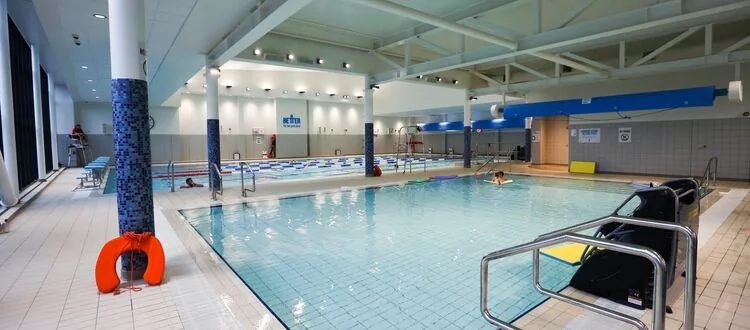
Olympia Leisure Centre and Spa
Belfast · Teaching pool
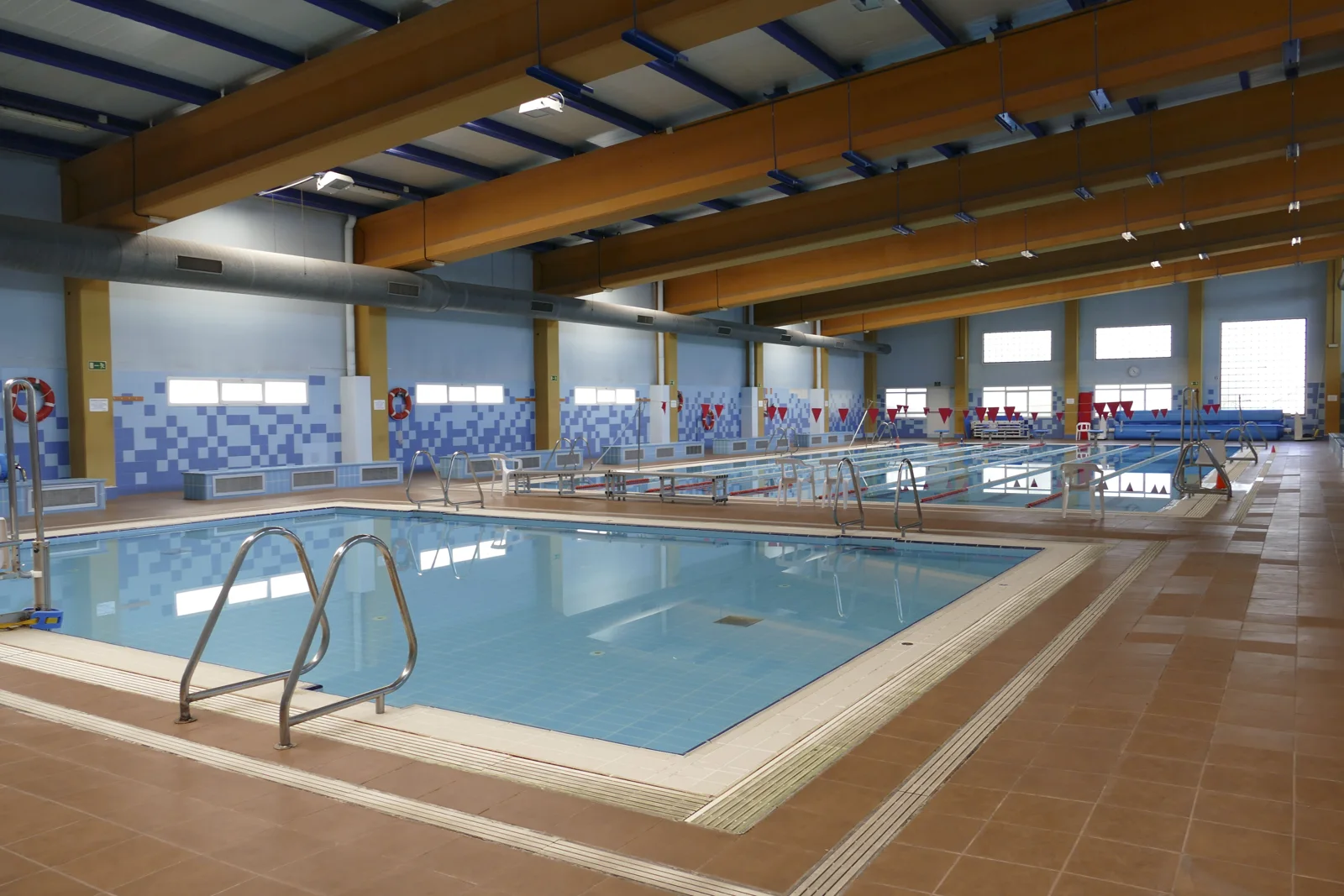
Piscina Municipal las Cumbres
Mostoles · Main and teaching pools
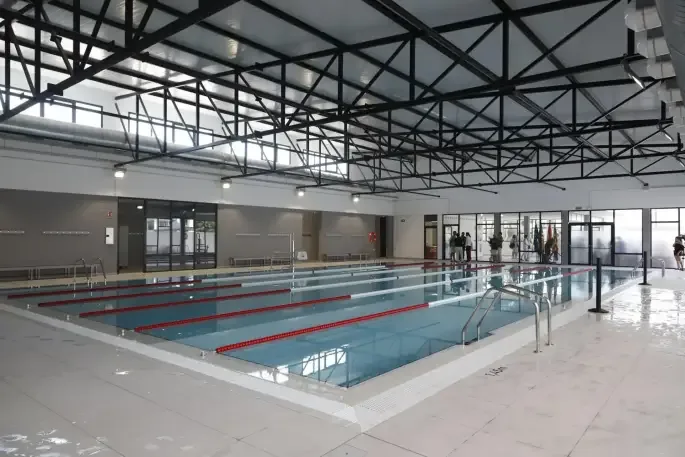
Poliesportiu Municipal de Maó
Mahón · New teaching pool
The leisure pool
A leisure pool is for play. It may have an irregular shape, a sloping beach entry, fountains, water cannons, a wave machine or flumes landing in it. There are rarely lane markings and no fixed deep end. Sessions are usually family fun swims, inflatable sessions and toddler splash times.
Many UK leisure centres pair a leisure pool with a 25 m pool, as at Woolwich Waves in London or Crown Pools in Ipswich. Bigger versions turn into indoor water parks; see our guide to wave pools and water parks.
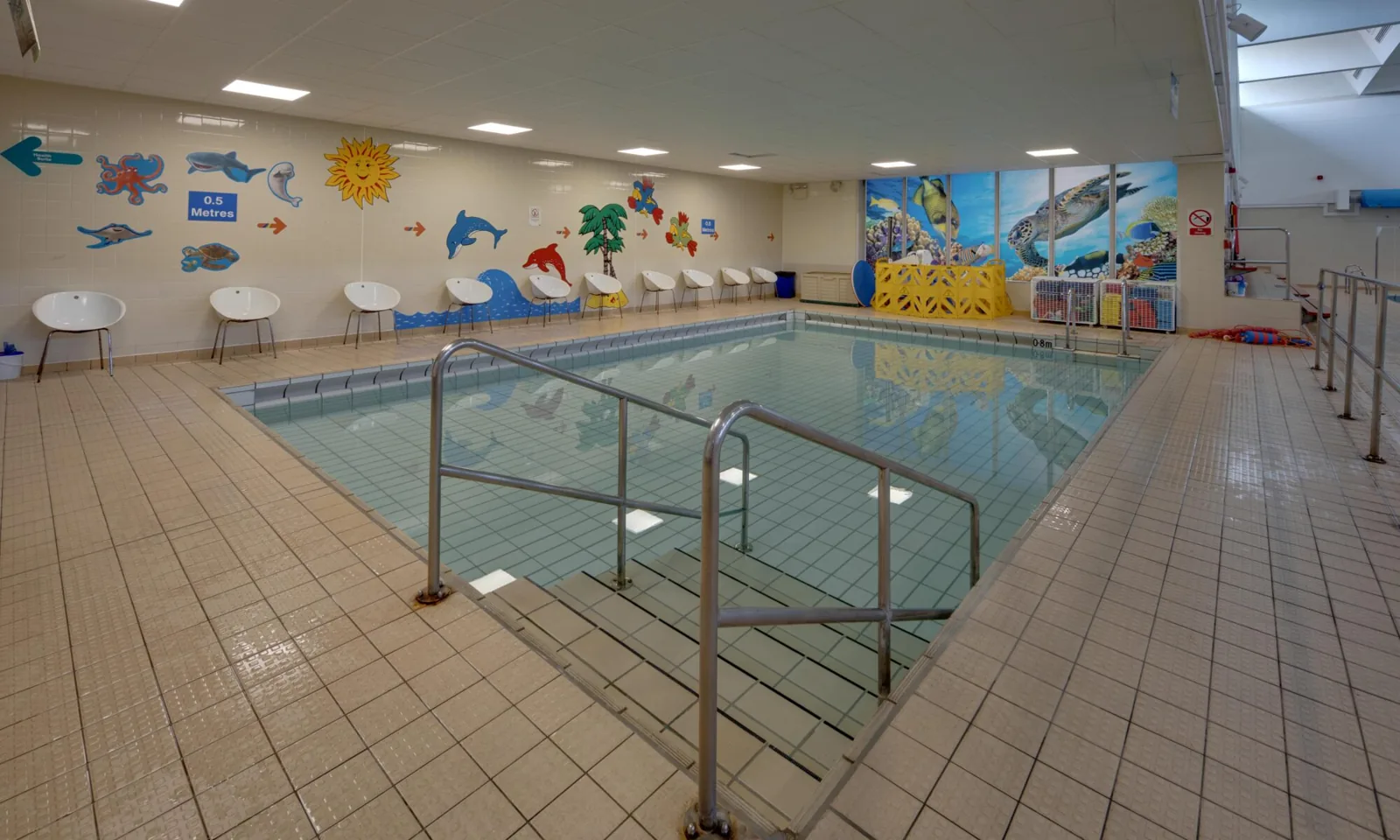
Side by side
| Main pool | Teaching pool | Leisure pool | |
|---|---|---|---|
| Typical size | 25 m, 4 to 8 lanes | 10 to 20 m, small | Irregular shape |
| Depth | About 0.9 to 2 m | Under 1 m, often standing depth | Beach entry to around 1.5 m |
| Water | Standard temperature | Usually a little warmer | Often warmer than the main pool |
| Used for | Lanes, clubs, general swims | Lessons, babies, confidence | Family fun, play |
| Lanes | Yes | Rarely | No |
Which pool to choose
- For fitness and lengths: the main pool during a lane session. Our guide to lane swimming etiquette covers how lanes work.
- For a baby or toddler: the teaching pool during a parent and baby or toddler session, where the water is warmer and shallower.
- For children who can't swim yet: a teaching or leisure pool where they can stand, rather than a general swim in the main pool.
- If you are nervous in water: a teaching pool session or an adult lesson. Standing depth all the way across makes a big difference.
- For a family afternoon out: the leisure pool during a fun or inflatable session.
Read the timetable by pool. Most centres publish a separate timetable for each pool. The teaching pool is often closed to the public for much of the day because lessons and school swimming fill it, so check the times for the pool you want before you go.
Cities with the most public pools in our directory:
FAQ
What is a learner pool?
Another name for a teaching pool: a small, shallow pool, often warmer than the main pool, used for swimming lessons, baby sessions and new swimmers.
Can adults use the teaching pool?
Yes, during public or adult sessions. Many centres run quiet adult swims or adult lessons in the teaching pool, but it is often booked for children’s lessons in the late afternoon.
Is the teaching pool warmer than the main pool?
Usually, by a degree or two, because people in lessons and young children move less and get cold faster.
What is the difference between a leisure pool and a teaching pool?
A teaching pool is a plain shallow rectangle for lessons. A leisure pool is built for play, with features such as a beach entry, fountains, waves or flumes.