25 m vs 50 m pools
 By the Find My Swimming Pool team·
Updated ·
5 min read
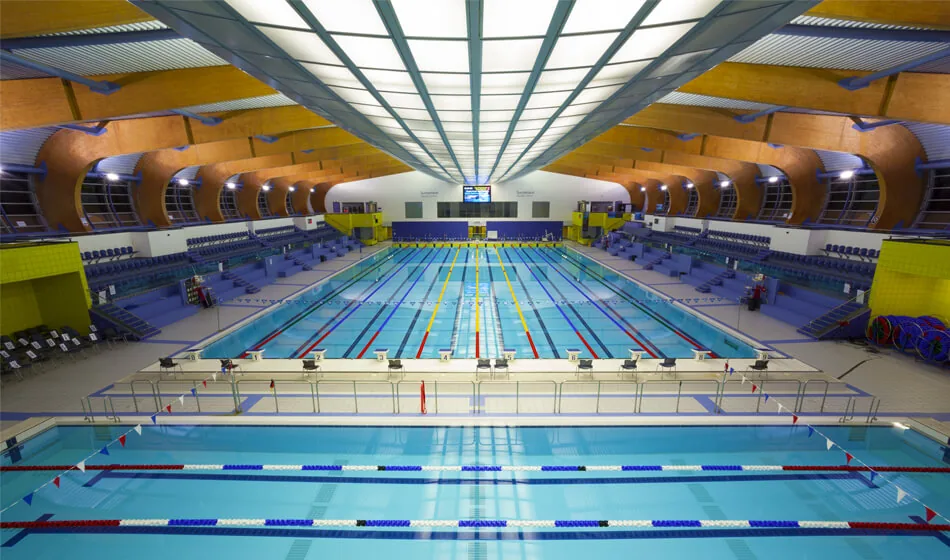
Most of us learn and train in 25 m pools. Then one day you swim in a 50 m pool and the far wall seems to take forever to arrive. Here is what actually changes between the two, and which one suits your swimming.
The short answer
A 25 m pool is the short course standard used by most community pools. A 50 m pool is the long course, Olympic length. In a 50 m pool you make half as many turns, so you swim more of each session and push off the wall less. That makes the same distance feel harder and usually slower. Times swum in 25 m and 50 m pools are kept as separate records. For fitness, both work; a 50 m pool is better practice for open water and racing long course.
Short course and long course
| 25 m pool | 50 m pool | |
|---|---|---|
| Name in competition | Short course (SC) | Long course (LC) |
| Lengths in 1,000 m | 40 | 20 |
| Lengths in 1,500 m | 60 | 30 |
| Lengths in a mile (1,609 m) | about 64 | about 32 |
| Turns per 100 m | 3 | 1 |
| Where you find them | Most leisure centres and local pools | Big cities, universities, national and regional centres |
| Major events | Short course world championships | Olympics, world championships |
The 25 m pool is far more common. In our own directory, roughly four times as many pools are listed with a 25 m pool as with a 50 m one. A 50 m pool costs much more to build, heat and staff, so most towns have one 25 m pool and travel to the nearest city for long course.
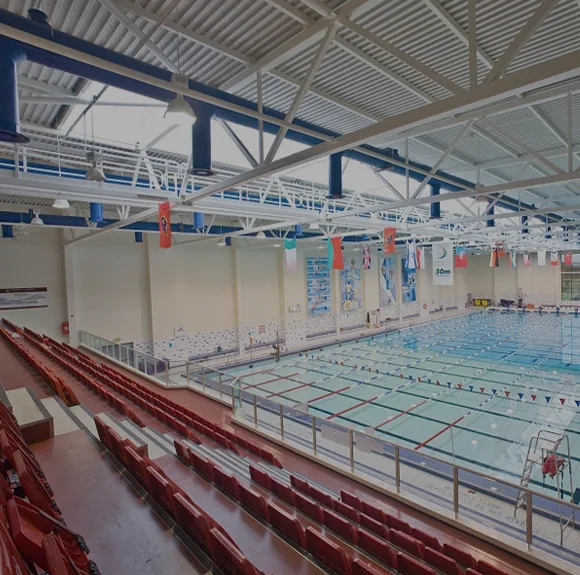
How a 50 m pool feels different
- Fewer rests. Every wall is a small break: a glide, a breath, a push-off. In a 50 m pool you get half as many, so 1,000 m is more continuous swimming.
- Pacing matters more. It is easy to go off too fast and fade in the second 25 m. Counting strokes per length helps you settle.
- Deeper water. Many 50 m pools are 2 m deep throughout. You cannot stand halfway, which matters for newer swimmers.
- Busier lanes, more space. Lanes are longer, so even with more swimmers per lane you overtake and get overtaken less often.
- Sighting. The far wall is a long way away. Swim along the black line on the floor rather than looking ahead.
Most people find their pace per 100 m is slower in a 50 m pool for the first few sessions, then the gap closes.
Why times are faster in a 25 m pool
A push-off from the wall is faster than swimming. Each turn gives you a few metres of streamlined glide, often with underwater kicks, at more than swimming speed. Over 100 m, a 25 m pool gives you three push-offs to the 50 m pool's one.
That is why swimming keeps separate records for short course and long course, and why a time from a 25 m pool is quicker than the same swimmer's time over the same distance in a 50 m pool. Clubs use conversion tables to compare them. When someone quotes a personal best, it is worth asking which pool it was in.
Training for open water or a triathlon? Swim at least some sessions in a 50 m pool. Long stretches without a wall are closer to the real thing, and you find out whether your pace holds without push-offs to help.
Which one to choose
Choose a 25 m pool if you are building up fitness, coming back after a break, working on technique or swimming with children. Shorter lengths make it easy to stop, check your stroke and count distance. Turns are also good practice in themselves.
Choose a 50 m pool if you are training for long course racing, open water or triathlon, or simply want uninterrupted swimming. Many regulars say the length makes 50 m pools less tedious, with fewer lengths to count.
If you have both nearby, mixing them works well. For lane manners in either, see lane swimming etiquette.
Cities with the most 50 m pools in our directory:
Split pools and odd lengths
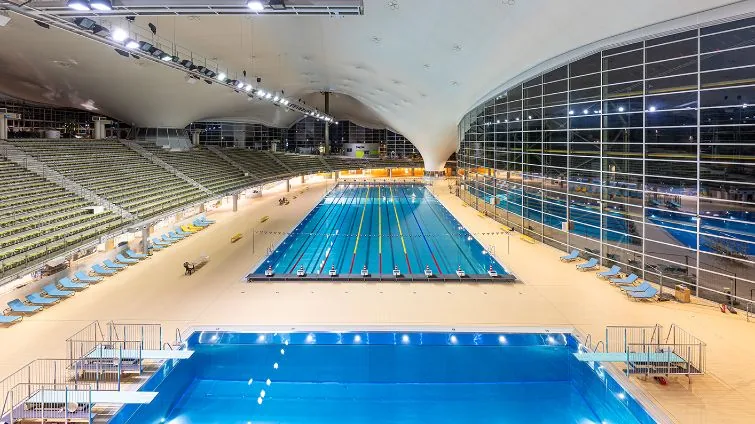
Many 50 m pools are not always set up as 50 m. A boom or bulkhead, a moveable wall across the pool, can split it into two 25 m pools: one for public swimming and one for a club, for example. Sunderland Aquatic Centre's 50 m pool can be split into two 25 m pools, and Piscine Georges Hermant in Paris uses movable walls to make 25 m pools at some times. Check the timetable for long course sessions before you travel to swim 50 m.
Older pools can also be odd lengths. Victorian and Edwardian baths in the UK were often built to imperial lengths such as 25 or 33⅓ yards. Others are 33⅓ m long, where three lengths make 100 m. The Health Hydro in Swindon has a 33 m pool. In Canada some older pools are 25 yards (about 22.9 m), so a length is shorter than you think.
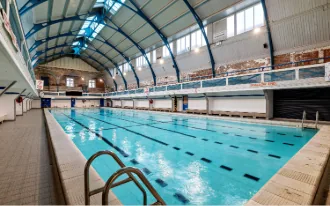
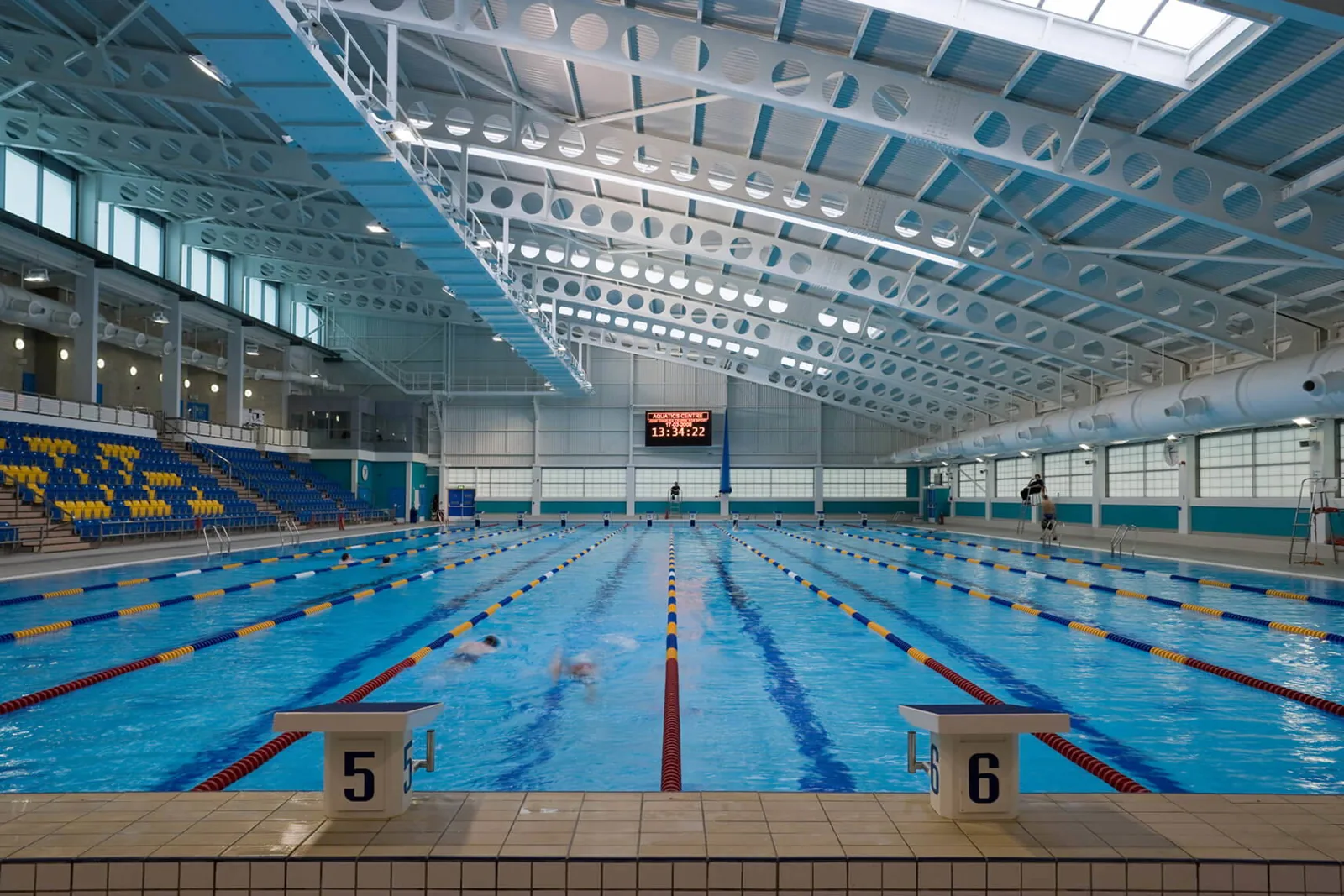
Aquatics Centre, John Charles Centre for Sport
Leeds · 50m and 25m lane swims
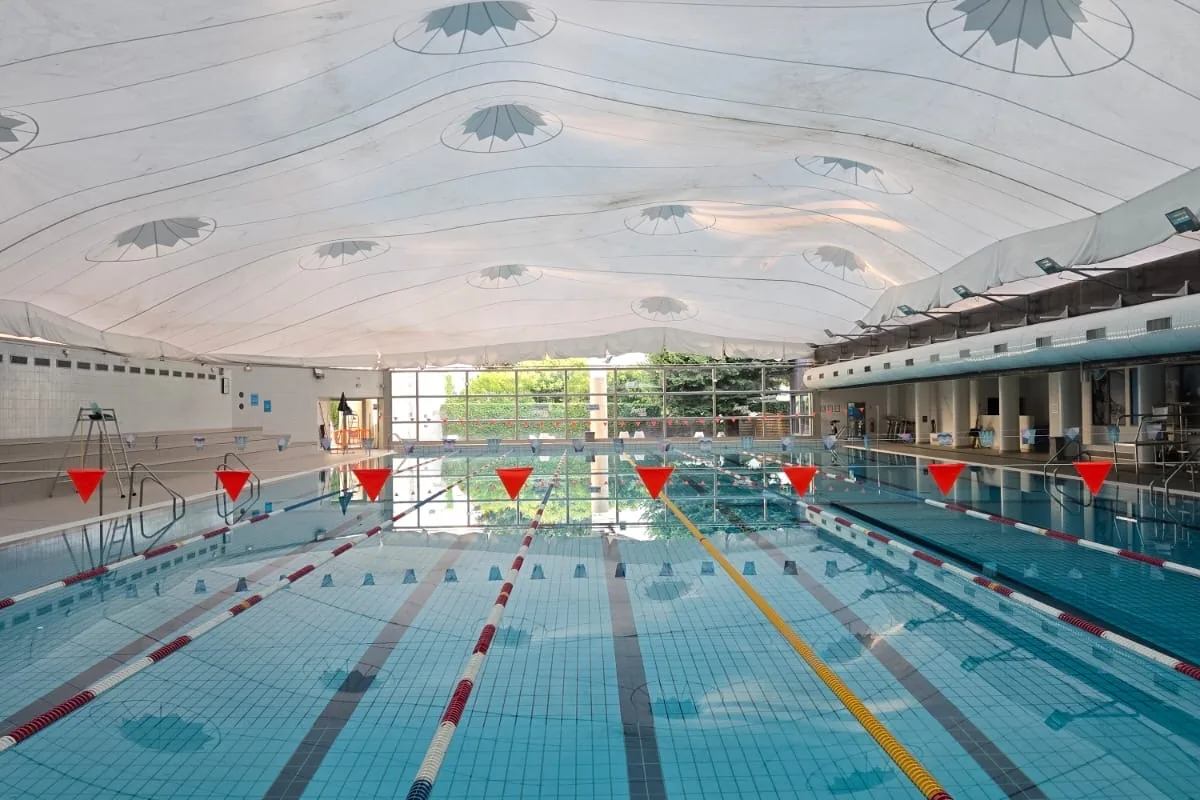
Piscine Georges Hermant
Paris · Movable walls
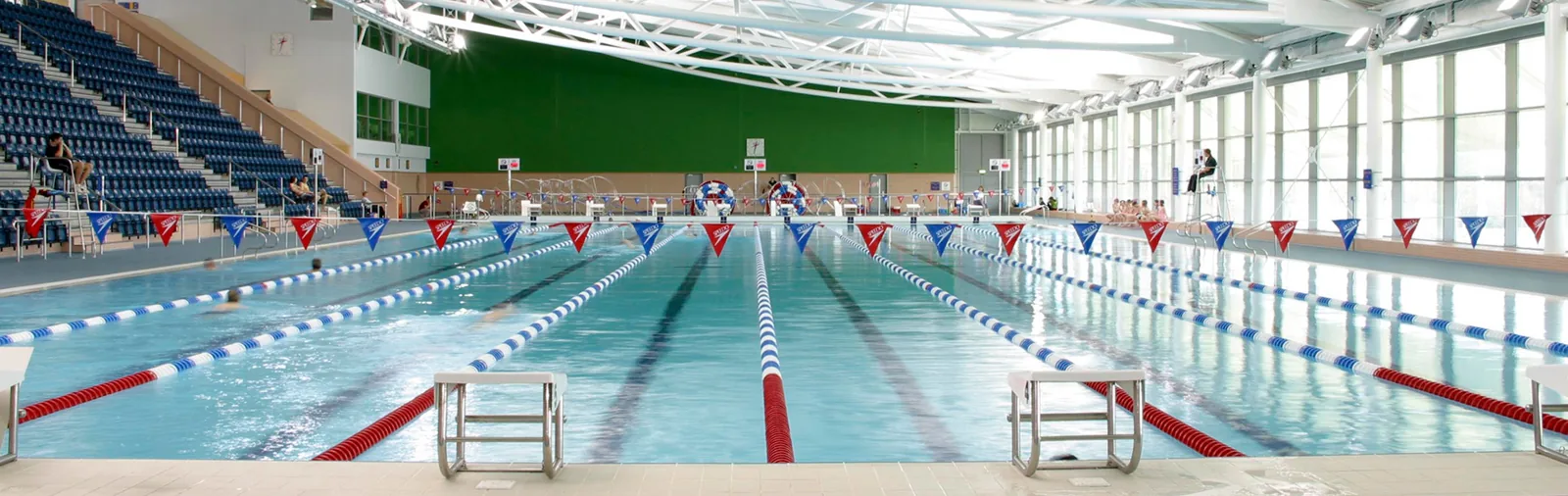
Wales National Pool Swansea
Swansea · Moveable floor
For the full measurements of a long course pool, read Olympic swimming pool size, and for counting distance, how many lengths is a mile.
FAQ
Is a 50 m pool harder than a 25 m pool?
For the same distance, yes, a little. You get half as many push-offs, so you swim more of each length and rest less at the walls.
Do 25 m and 50 m times count the same?
No. Swimming keeps separate short course and long course records, and clubs use conversion tables to compare times across the two.
How many lengths of a 50 m pool is 1 km?
Twenty. In a 25 m pool it is forty.
Why do some 50 m pools only offer 25 m lanes?
Many 50 m pools are split by a boom or moveable wall so two groups can use the water at once. Long course public sessions are usually at set times.