How deep is a swimming pool?
 By the Find My Swimming Pool team·
Updated ·
5 min read
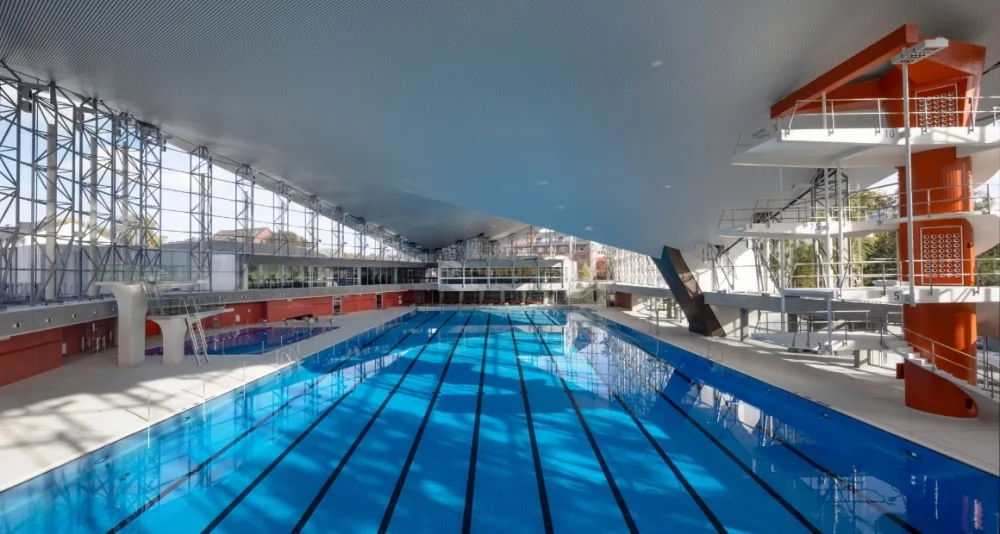
Pool depth decides whether you can stand up, whether you can dive and which sessions you can join. It varies far more than length does, from a few centimetres in a toddler pool to more than four metres under a diving board.
The short answer
A typical public lane pool is about 0.9 m to 1 m deep at the shallow end and 1.8 m to 2 m at the deep end. Teaching pools are usually 0.6 m to 0.9 m, toddler areas shallower still. A full Olympic pool is at least 2 m deep throughout, and diving pools are often 3.5 m to 5 m deep. Swim England guidance says diving should not be allowed in public sessions where the water is less than 1.5 m deep. Depth markings on the poolside tell you where you are.
Typical depths by pool type
| Pool | Usual depth |
|---|---|
| Toddler or splash pool | 0.2 m to 0.6 m |
| Teaching or learner pool | 0.6 m to 0.9 m, sometimes adjustable |
| Leisure pool | From zero at a beach entry to about 1.5 m |
| 25 m community lane pool | About 0.9 m to 1 m shallow end, 1.8 m to 2 m deep end |
| 50 m competition pool | 2 m minimum throughout, 3 m recommended for Olympic pools |
| Diving pool | Usually 3.5 m to 5 m |
In feet, 1 m is about 3 ft 3 in, 1.8 m is about 5 ft 11 in and 2 m is about 6 ft 7 in. Older pools in Canada and the UK sometimes still mark depths in feet.
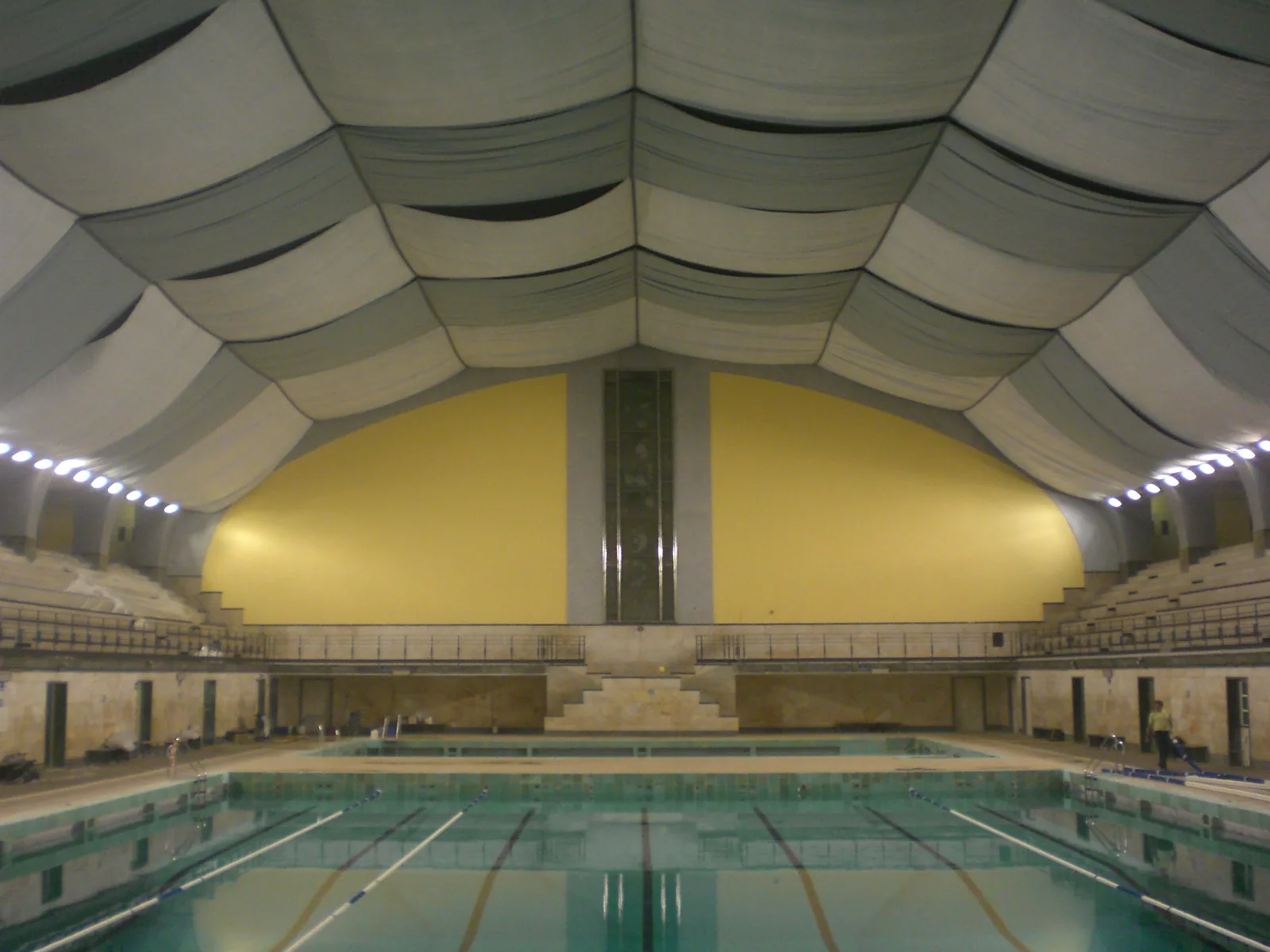
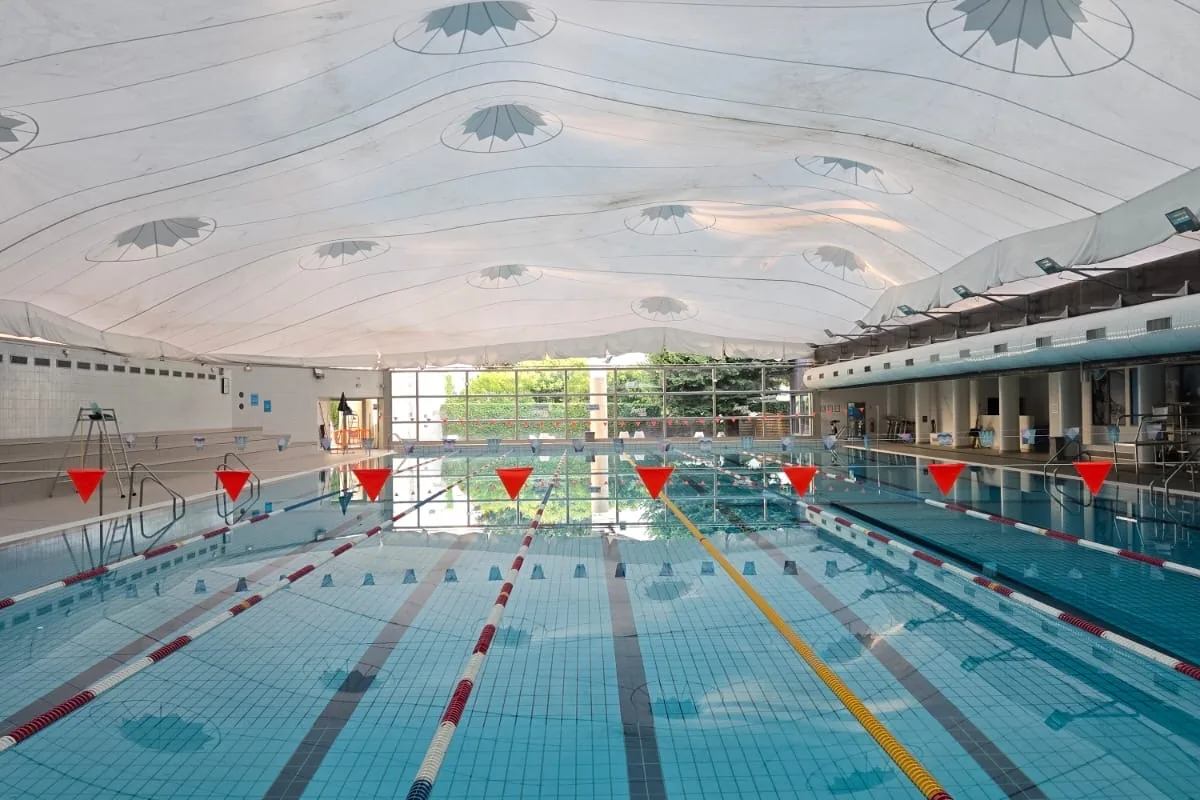
Real pools vary. Piscina Cozzi in Milan, from our directory, has a 25 m pool running from 0.40 m to 1.30 m and a separate 33 m diving pool from 1.80 m to 4.30 m. Piscine Georges Hermant in Paris has a 3.9 m diving pit next to its 50 m pool.
Depth needed for each activity
Swim England, the governing body in England, publishes guidance on the water depth each activity needs. Some of its figures:
- Parent and toddler water confidence: 0.2 m to 0.6 m.
- Learning to swim, smaller children: 0.6 m to 0.8 m. Older children and adults: 0.9 m upwards.
- Lane swimming and aqua fitness: 0.9 m plus, 1 m preferred.
- Tumble turns: at least 0.9 m.
- Adults with spinal problems: at least 1.2 m.
- Sub-aqua and canoe practice: an area at least 1.5 m deep.
- Lifesaving, surface dives and teaching a shallow dive: 1.8 m.
- Water polo above local league level: 2 m throughout the playing area.
That is why Swim England recommends community pools offer both shallow and deep water, with deep water of at least 1.8 m. It lets children learn to tread water and get used to being out of their depth before they meet it on holiday.
Diving and depth
Diving into water that is too shallow causes serious neck and spinal injuries. Pools set strict rules, and Swim England's guidance gives these depths for diving from the side or blocks:
- Public and unprogrammed sessions: no diving into water less than 1.5 m deep.
- Teaching diving in lessons: at least 1.8 m.
- Racing starts: never in water less than 1.35 m deep, and never from the shallow end. World Aquatics rules for competition pools with starting blocks require at least 1.35 m from 1 m to 6 m out from the end wall.
Springboards and platforms need much deeper water. World Aquatics asks new diving pools to be 5 m deep under the boards where possible. Most public diving pits are a little shallower and only open boards at set times with a lifeguard watching.
"No diving" means no diving. Even where the deep end looks deep enough, a pool may ban diving because of the slope of the floor, the height of the edge or the space in front. Jump in feet first unless a sign or lifeguard says otherwise.
Moveable floors
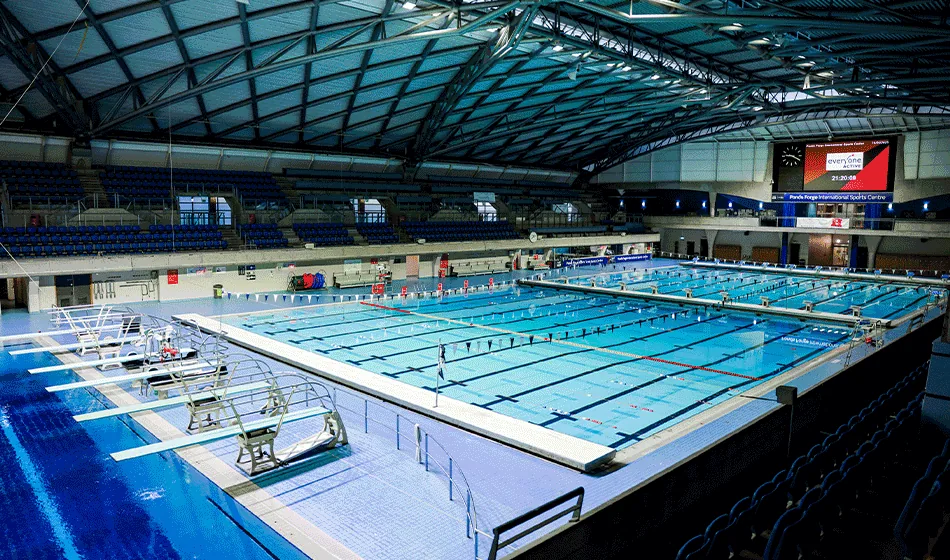
Many newer pools have a moveable floor: a section of the pool bottom that can be raised or lowered hydraulically. The same water can be 0.6 m deep for a toddler lesson at ten o'clock and 2 m deep for lane swimming at midday. Some 50 m pools, such as the Wales National Pool in Swansea, have one.
If your pool has a moveable floor, the depth signs may change through the day. Electronic signs show the current depth, and lifeguards will usually tell you. Pools with diving pits over a moveable floor only open the boards when the floor is at full diving depth.
Reading the depth signs
Depth is marked on the poolside edge and often on the wall, every few metres and wherever the depth changes. Look for:
- Numbers in metres, sometimes with feet alongside.
- A line or rope across the pool where the floor starts to slope more steeply.
- "No diving" or "Shallow water" signs, often a red symbol of a diver with a line through it.
Weaker swimmers should stay where they can stand, and children may need to pass a swim test before they can use the deep end. See what age can kids swim alone and swimming pool rules.
Piscine Georges Hermant
Paris · 3.9m diving pit
Keith Spry Pool
Wellington · 3.4m diving pool
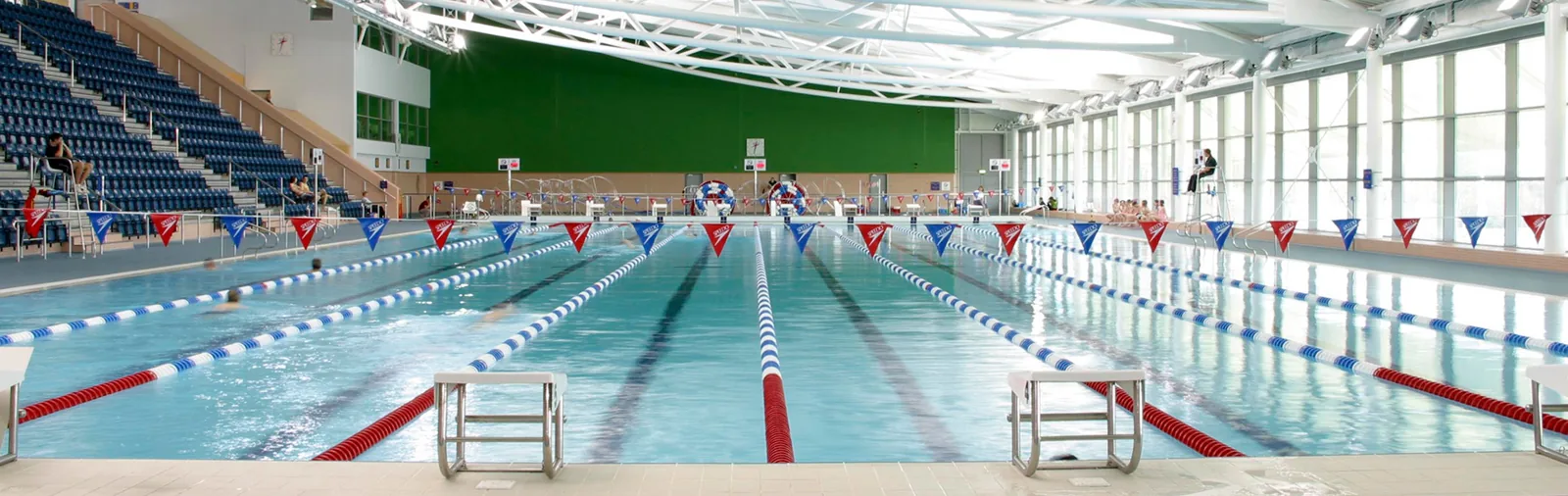
Wales National Pool Swansea
Swansea · Moveable floor
FAQ
How deep is the deep end of a normal pool?
Usually about 1.8 m to 2 m in a 25 m community pool. Some older pools go deeper, and many newer pools are flatter and shallower throughout.
How deep is an Olympic pool?
World Aquatics sets a minimum of 2 m throughout, and recommends 3 m. See our Olympic pool size guide for the rest of the measurements.
How deep does water need to be to dive?
Swim England guidance says no diving in public sessions where the water is less than 1.5 m deep. Springboard diving needs a proper diving pool, several metres deep.
Can I stand up in a public swimming pool?
In the shallow end of most pools, yes, if you are an adult. Deep ends and 50 m pools are often 2 m or more, so check the depth markings before you go in.