Types of swimming pools
 By the Find My Swimming Pool team·
Updated ·
6 min read
A "swimming pool" can mean a 50 m competition tank, a warm teaching pool for toddlers, a sea-filled bath on the rocks or a hotel pool with sun loungers. Knowing the types helps you pick the right one for the swim you want.
The short answer
The main types of public swimming pool are lane or competition pools (usually 25 m or 50 m), leisure pools with slides, waves and beach entries, small warm teaching or learner pools, deep diving pools, outdoor pools and lidos, ocean or tidal pools, natural pools cleaned by plants, hydrotherapy pools and thermal baths. Hotels, gyms and water parks have their own pools too. Many leisure centres combine two or three types under one roof.
Lane and competition pools
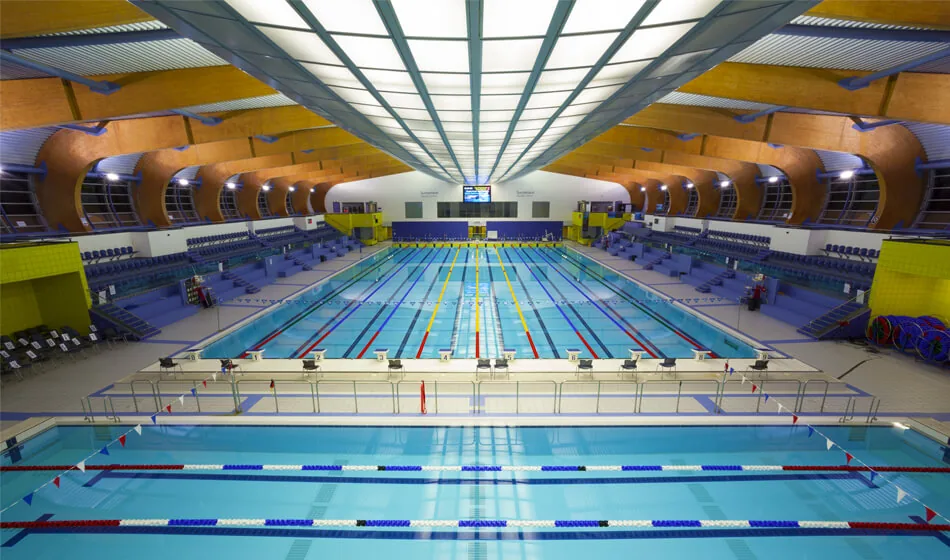
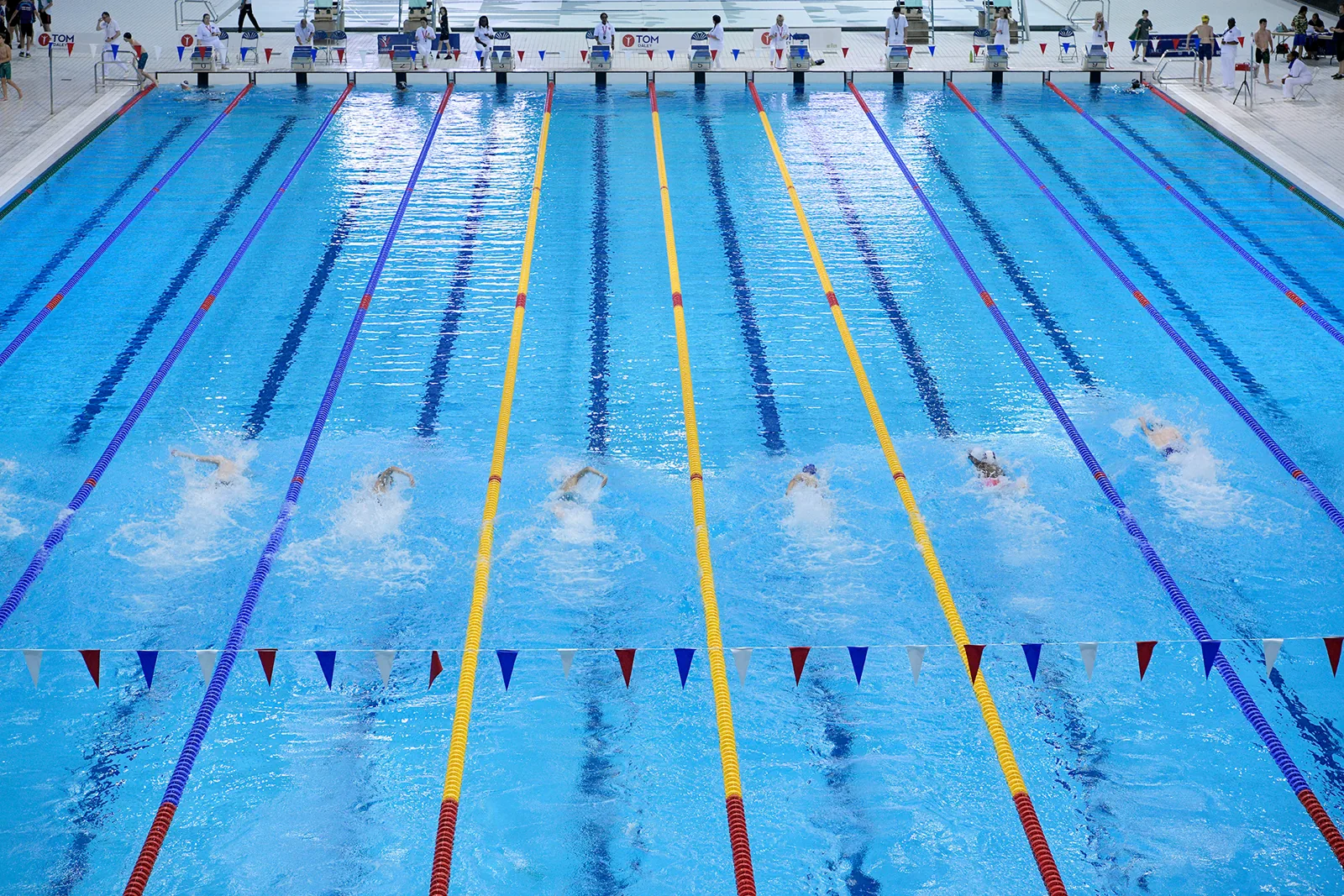
This is the classic rectangular pool with lane ropes and black lines on the floor. It is built for swimming lengths.
- 25 m pools are the standard community pool in the UK, Ireland, Spain, Canada and most of Europe. Most have four to eight lanes. They are called short course pools in competition.
- 50 m pools are long course pools, the size used at the Olympics. A full Olympic pool is 50 m by 25 m with ten lanes. They are less common and usually found in big cities and university or national sports centres.
- Odd lengths. Older baths can be 33⅓ m, 20 m or measured in yards. Three lengths of a 33⅓ m pool make 100 m.
Our guides to Olympic pool size and 25 m vs 50 m pools go into the details.
Leisure and teaching pools
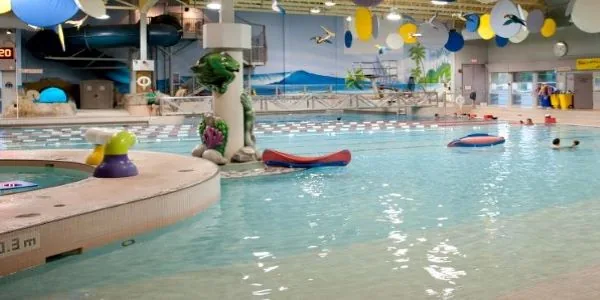
A leisure pool is built for fun rather than lengths. It is usually free-form in shape, warmer than a lane pool and full of features: a beach or zero-depth entry, wave machines, flumes, rapids, fountains and spray toys. Depth often runs from nothing at the beach to around a metre and a half.
A teaching or learner pool is small, shallow and warm. It is where swimming lessons, parent and baby classes and aqua sessions for older people happen. Some have a moveable floor that can be raised for toddlers and lowered for adults.
A splash pad or spray park has no standing water at all, only jets and fountains. It is for small children.
Diving pools
Diving pools, or diving pits, are short and deep, usually somewhere between 3.5 m and 5 m under the boards. They have springboards at 1 m and 3 m, and some have platforms up to 10 m. Many big pool complexes have one beside the main pool. Public diving sessions are rare and usually timetabled separately. The deep water also suits water polo, artistic swimming and sub-aqua training.
See how deep is a swimming pool for the depths each activity needs.
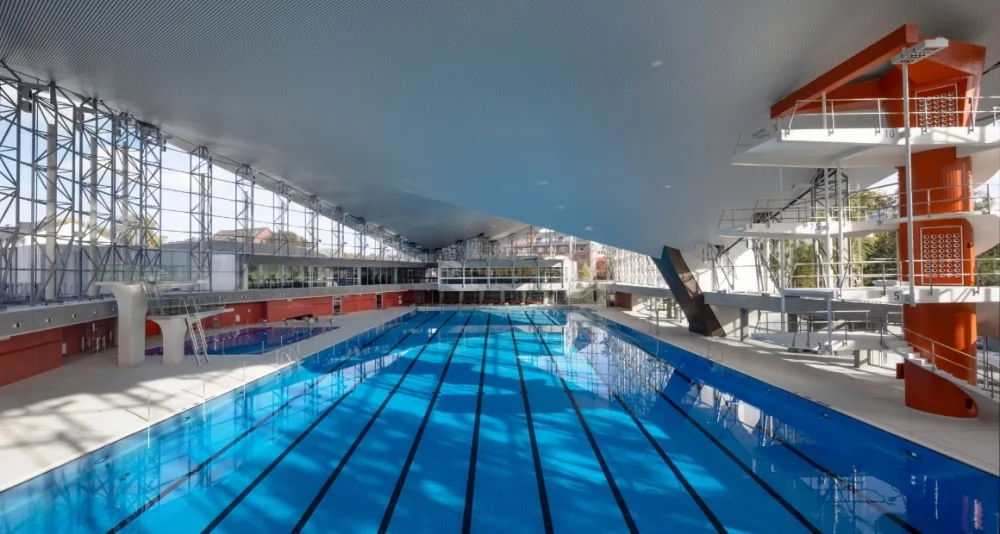
Outdoor pools, lidos and ocean pools
An outdoor pool is any pool open to the sky. Some are heated and open all year, others only in summer. In the UK and Ireland the big public ones are called lidos, many built in the 1930s. Read what is a lido for their story.
An ocean pool or tidal pool is built into the rocks at the edge of the sea and filled with seawater, either by the tide washing over the walls or by pumps. Australia, especially New South Wales, has dozens. South Africa, Portugal and the UK have some too.
Some pools have a retractable roof and switch between indoor and outdoor with the seasons. Our indoor vs outdoor pools guide compares the two.
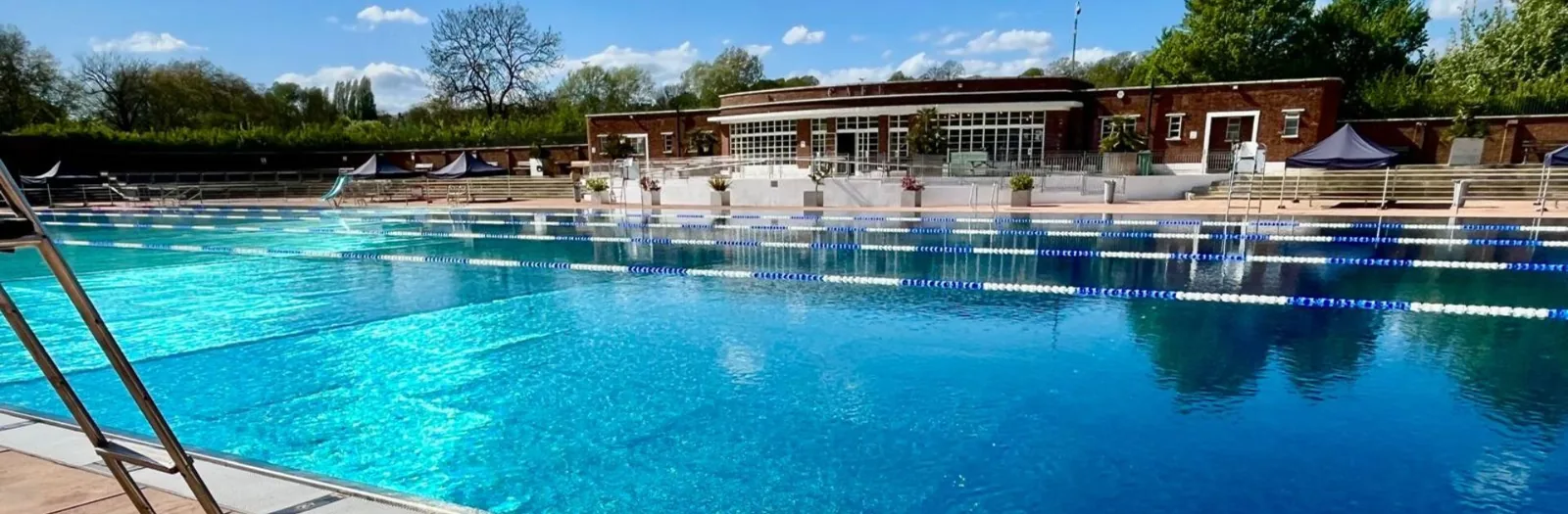
Natural, hydrotherapy and thermal pools
- Natural swimming pools use plants, gravel and biological filters instead of chlorine to keep the water clean. They look like ponds with clear water. See natural swimming pools.
- Hydrotherapy pools are small, very warm pools used for rehabilitation and physiotherapy, often with a hoist, handrails and a ramp. They are booked through a therapist or for set sessions rather than used for lengths. See what is a hydrotherapy pool.
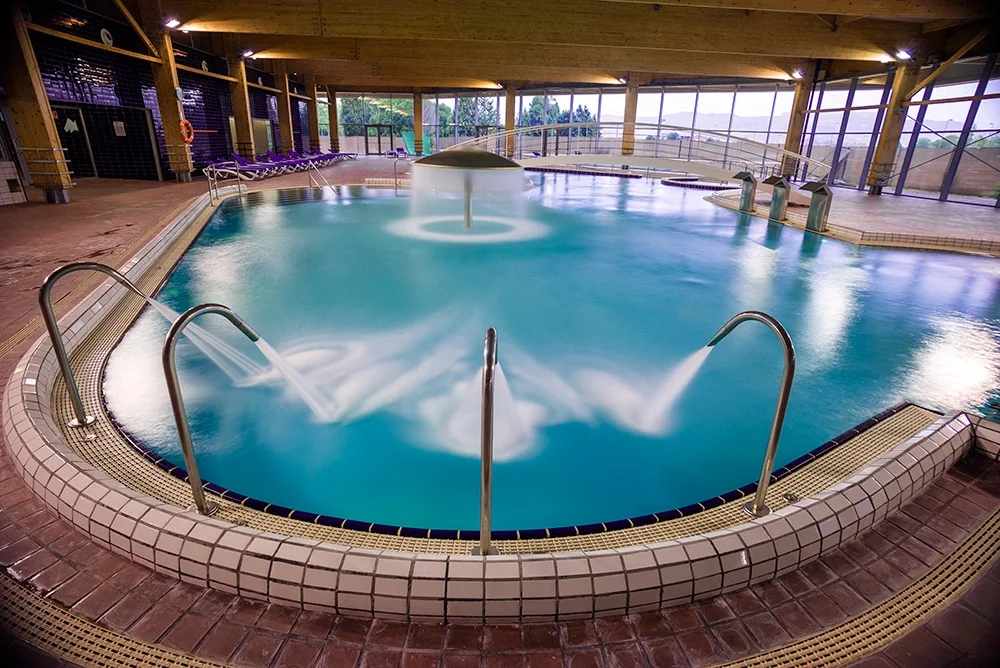
- Thermal baths are filled with naturally warm spring water. Budapest is famous for them, and they exist across Hungary, Iceland, Germany and Italy. Many have a swimming pool among the warmer soaking pools. See thermal baths.
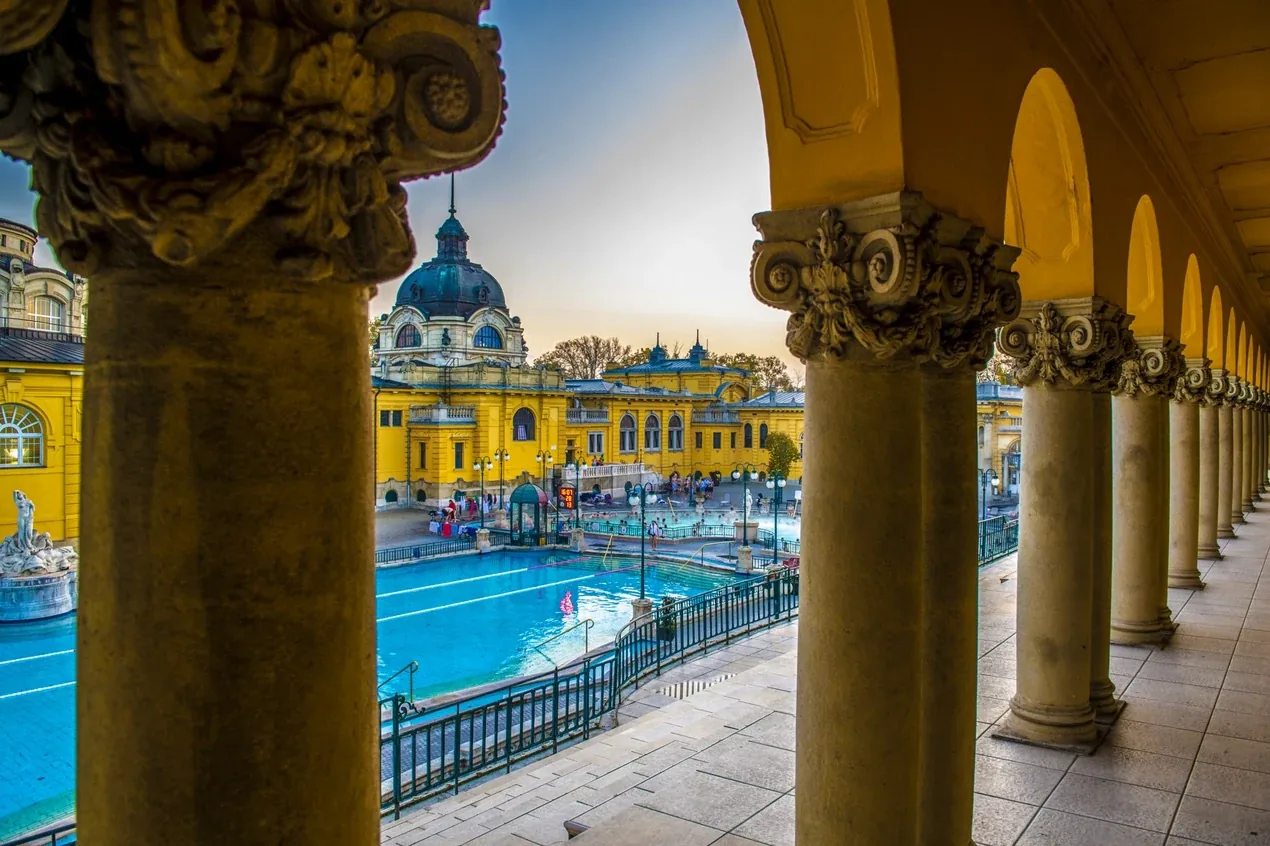
Hotel, gym and water park pools
- Hotel pools range from a small indoor pool beside a spa to large outdoor resort pools. Some are open to non-guests on day passes or spa packages.
- Gym pools sit inside private health clubs. They are usually 20 m or 25 m with a few lanes and are for members.
- Water parks are built around slides, wave pools and lazy rivers rather than swimming. Some indoor ones also have a lane pool. See wave pools.
Hotel and resort pools are also where you see design types such as infinity pools, whose water seems to run off one edge, and plunge pools, small cold or warm pools for a quick dip.
Which type suits you
| You want to | Look for |
|---|---|
| Swim lengths for fitness | A 25 m or 50 m lane pool with lane swimming sessions |
| Take toddlers | A leisure or teaching pool, or a splash pad |
| Train for open water | A 50 m pool, an unheated lido or an ocean pool |
| Swim in winter sun | A heated outdoor pool or a thermal bath |
| Recover from an injury | A hydrotherapy pool, booked with a physiotherapist |
| Avoid chlorine | A natural pool or an ocean pool |
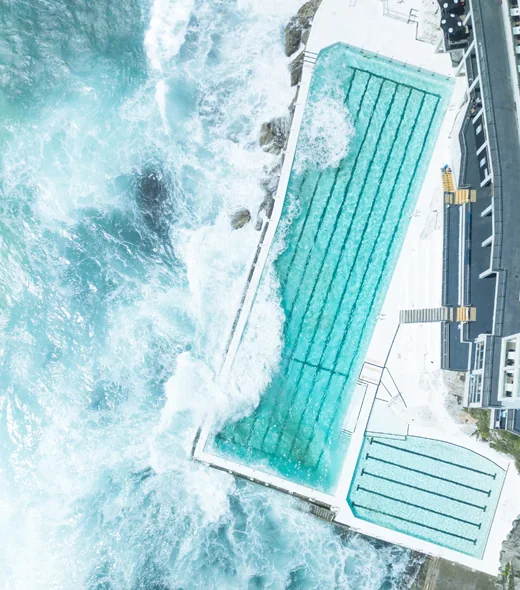
Bondi Icebergs Pool
Sydney · Ocean lap pool
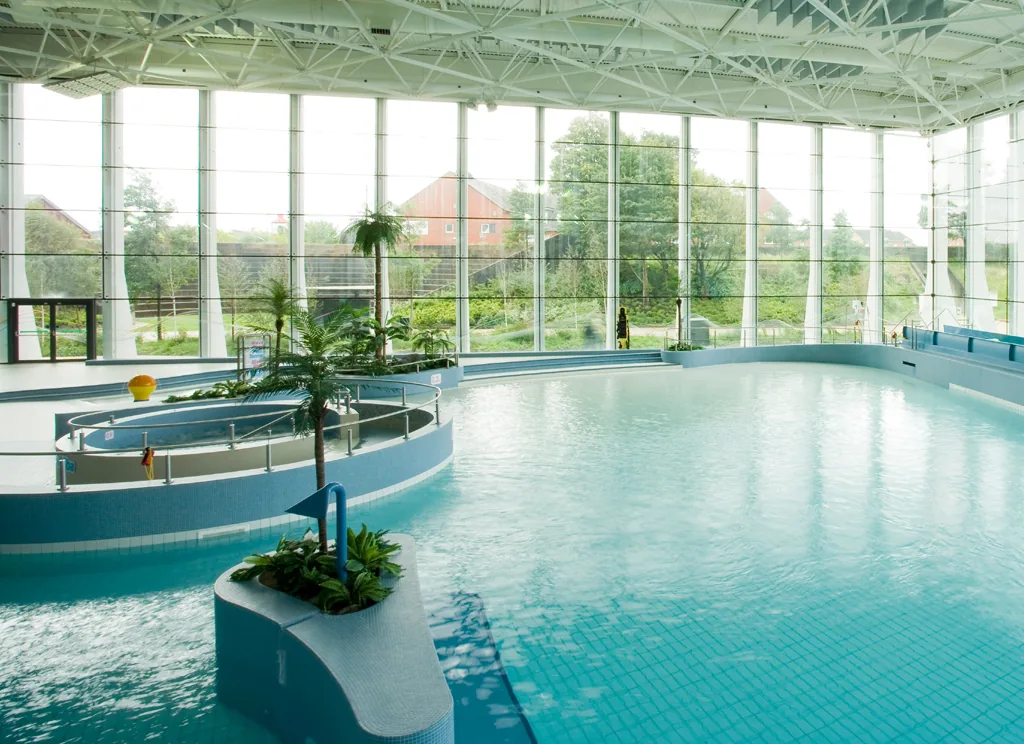
LC Swansea
Swansea · Indoor waterpark
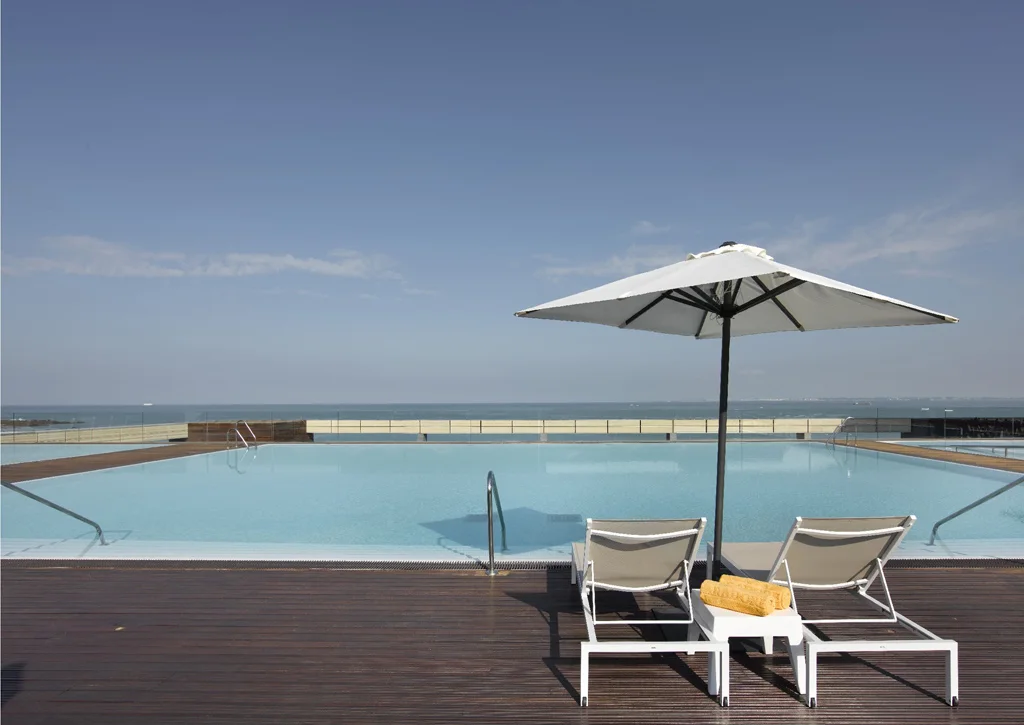
Parador de Cádiz
Cádiz · Hotel pool, sea view
FAQ
What is the most common type of public pool?
The 25 m lane pool. It is the standard size for community pools in the UK, Ireland, Canada and most of Europe, often with a smaller teaching pool beside it.
What is the difference between a lido and an outdoor pool?
A lido is an outdoor public pool, usually a large one with sunbathing terraces, and the word is mostly used in the UK and Ireland. Every lido is an outdoor pool, but not every outdoor pool is called a lido.
What is a zero-depth pool?
A pool that starts at the same level as the floor and slopes gently down, like a beach. It is common in leisure pools and makes it easy for small children and wheelchair users to get in.
Are saltwater pools a different type?
Not really. A saltwater pool is a normal pool that makes its own chlorine from dissolved salt. It is a way of cleaning the water, not a pool type.