Wave pools and water parks
 By the Find My Swimming Pool team·
Updated ·
5 min read
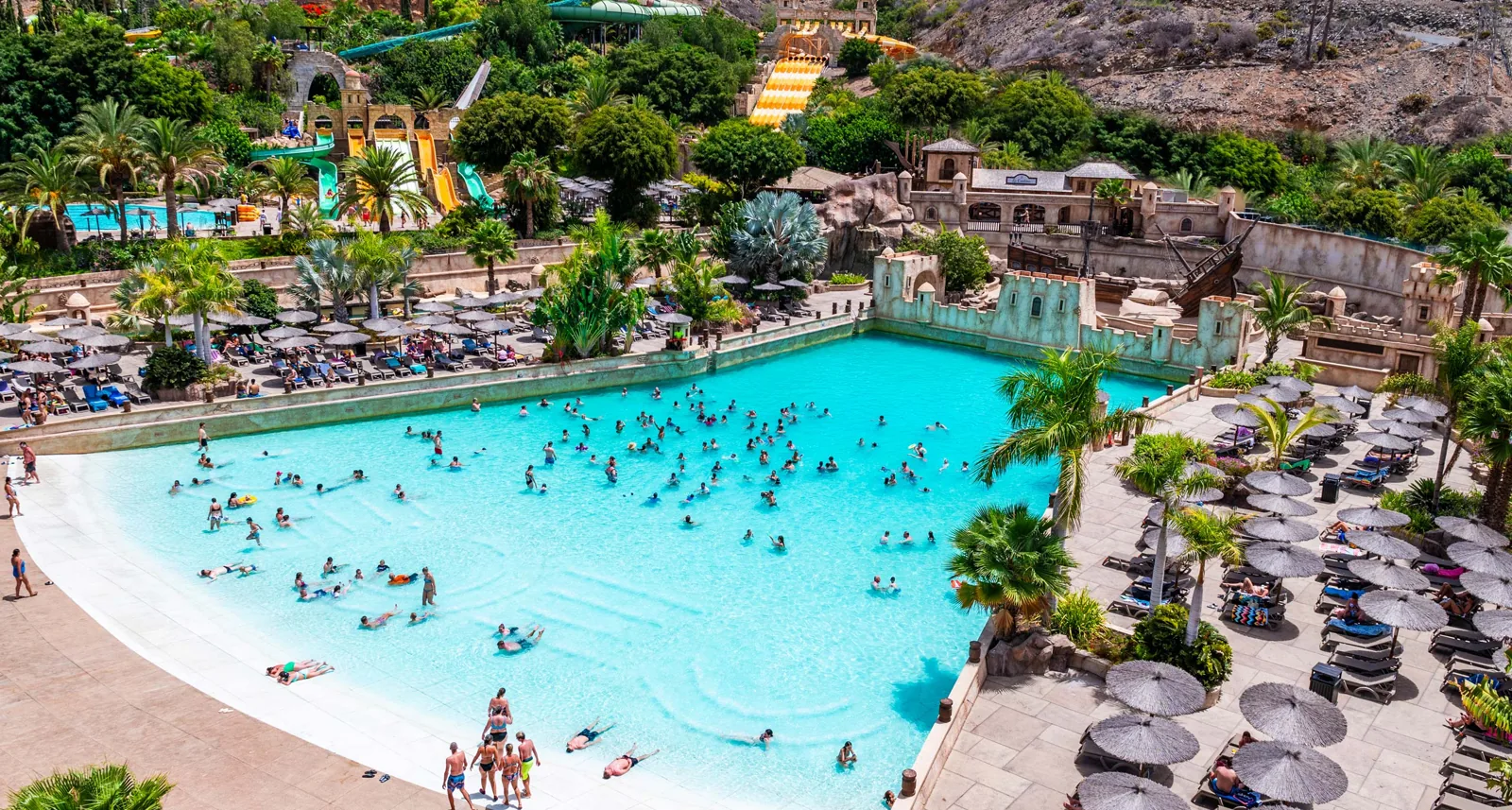
A wave pool is a pool with a machine that makes waves, usually for a few minutes at a time. You find them in water parks, holiday resorts and plenty of ordinary council leisure centres.
The short answer
A wave pool has a machine at the deep end that pushes water in pulses, sending waves towards a shallow, beach-style end. Waves usually run in timed bursts, often a few minutes every half hour or hour, and the pool is calm in between. Leisure centre wave pools are part of a normal swim ticket, often under £10 in the UK in 2026. Water parks charge more, typically £15 to £28 for a session in the UK, or €30 to €35 for a day in Spanish holiday parks, with slides and a lazy river included.
How a wave pool works
Behind the wall at the deep end is a chamber with fans, paddles or air valves. When the waves are switched on, the machine pushes water or air in a rhythm, and each push sends a wave rolling along the pool. The floor slopes up towards the far end, so the waves get smaller and break gently on a shallow "beach", sometimes at zero depth.
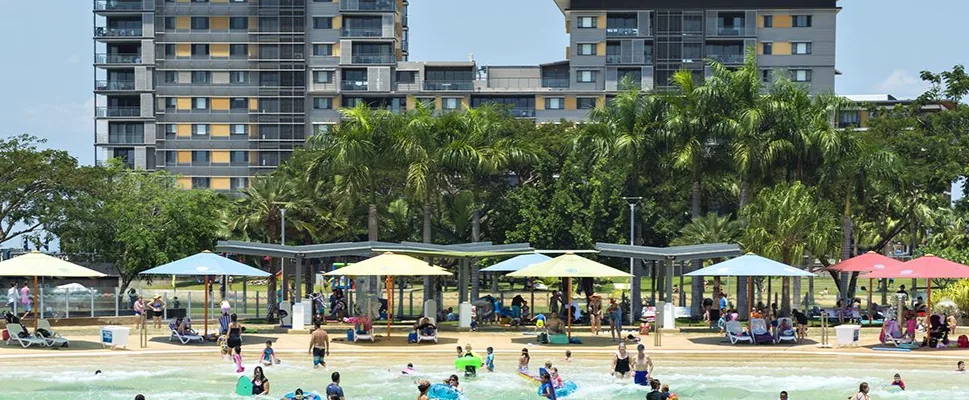
The operator can choose the pattern: small regular ripples for families, bigger rolling waves for teenagers and adults, or choppy crossing waves. Darwin's Wave Lagoon has ten wave patterns, with waves up to 1.2 metres. Most indoor leisure pools run something far smaller.
Between wave sessions the pool is an ordinary leisure pool. The shallow end suits paddling and toddlers, the deep end gets deep quickly, and lifeguards usually move to the wave end before the machine starts. A siren or announcement warns you a few seconds before the first wave.
Leisure centres, water parks and lagoons
There are three common settings, and they feel quite different.
- Leisure centre wave pools. A council leisure pool with a wave machine, often next to a 25 m lane pool. Waves run for a short spell at set times, usually during public and family sessions. Belfast's Shankill Leisure Centre and Cardiff's Llanishen Leisure Centre both have one. Munich's Cosimawellenbad runs waves for 15 minutes on the hour on Friday afternoons and at weekends.
- Indoor water parks. A larger wave pool alongside slides, a lazy river and play areas, on a timed ticket. Examples include Sandcastle Waterpark in Blackpool, The Wave in Coventry, AquaZone at Ireland's National Aquatic Centre and Therme București in Romania.
- Outdoor water parks and lagoons. Holiday parks in the Canary Islands and southern Spain, often with a huge wave pool and a sand-coloured beach. Aqualand Maspalomas, Aqualava in Lanzarote and Darwin's Wave Lagoon in Australia are in this group. Some are seasonal.
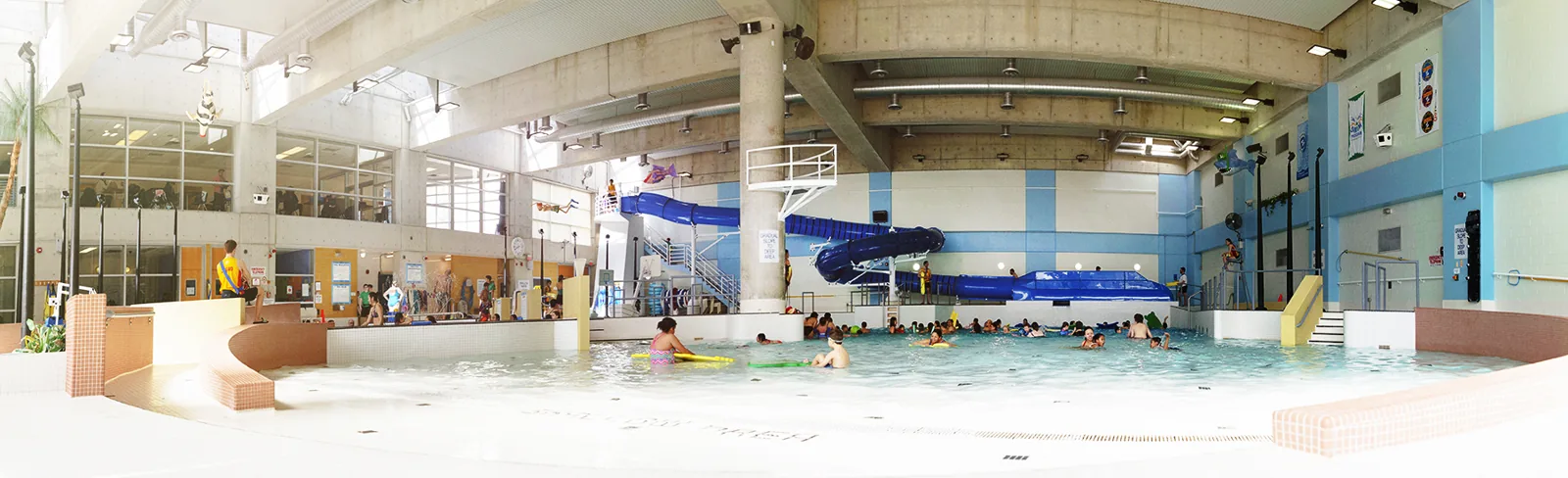
The Wave Pool
Richmond Hill · Beach-entry wave pool
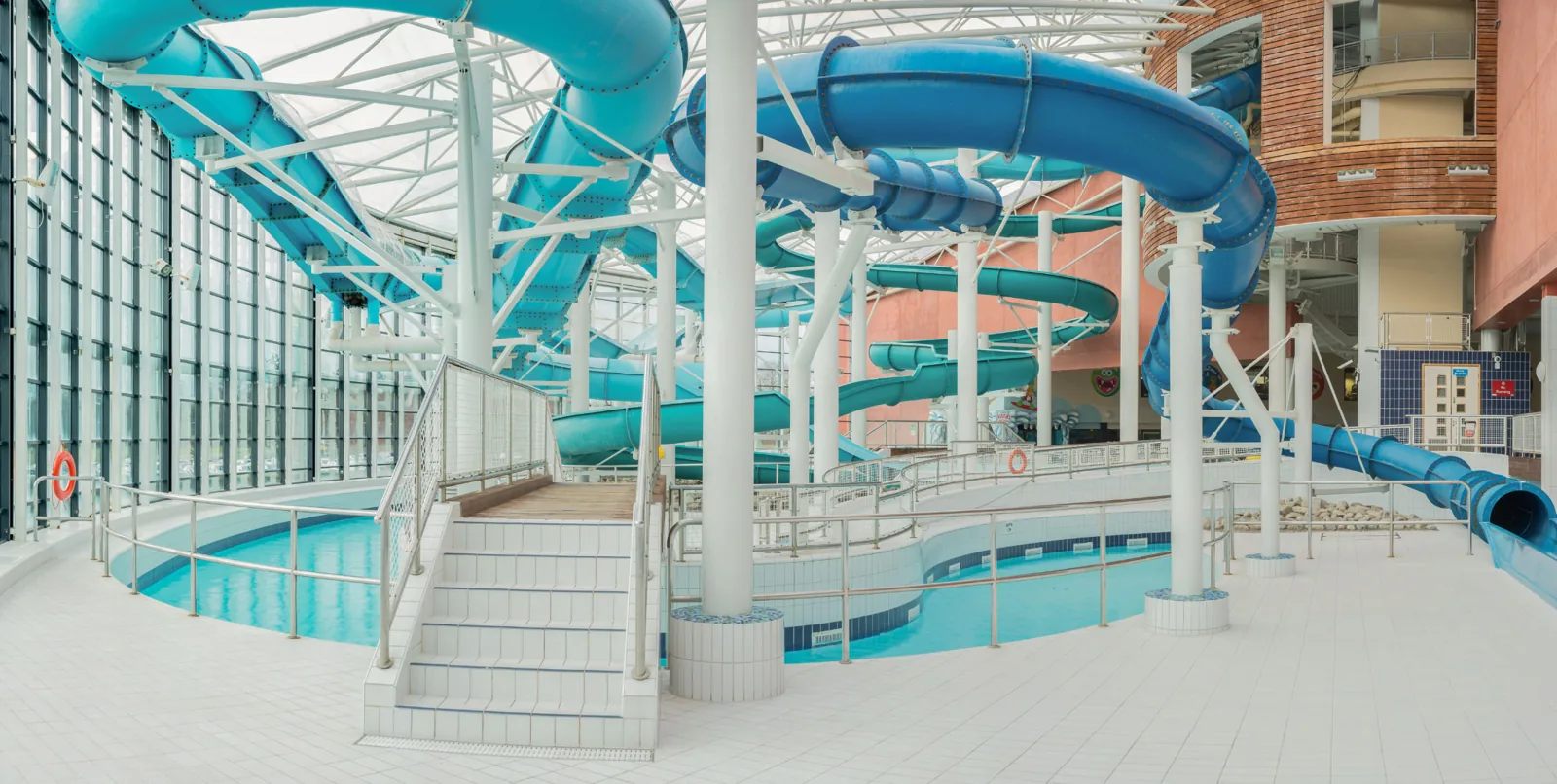
AquaZone
Dublin · Wave pool and slides
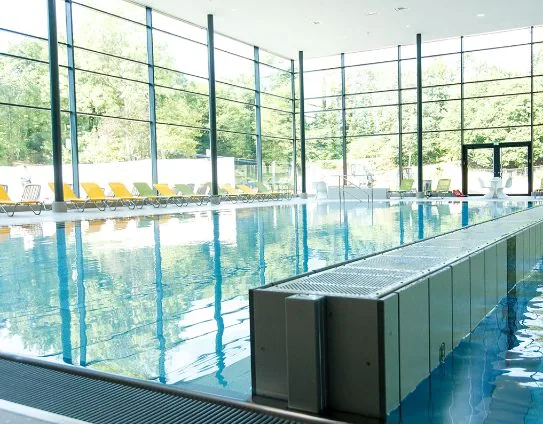
Cosimawellenbad
Munich · Waves on the hour
What a wave pool costs
These are adult prices from the venue pages in our directory, checked in 2026.
| Venue | Type | Adult price |
|---|---|---|
| Shankill Leisure Centre, Belfast | Leisure pool with waves | £5.60 |
| Cosimawellenbad, Munich | City pool with wave pool | €6.90 |
| Wave Lagoon, Darwin | Outdoor wave lagoon | A$10 |
| The Wave Pool, Richmond Hill | Indoor wave swim | C$13.90 |
| The Wave, Coventry | Indoor water park | £15.00 to £19.70 |
| Sandcastle Waterpark, Blackpool | Indoor water park, 3 hours | £25.50 online |
| Aqualand Maspalomas | Outdoor water park, 1 day | €35 |
Water parks often sell cheaper tickets online or for off-peak sessions, and family tickets cut the price per person. For ordinary swim prices, see our guide to how much a swim costs.
Staying safe in the waves
Wave pools look shallow and friendly, but the deep end and the moving water catch people out. Lifeguards in wave pools are busy for a reason.
- Stay where you can stand if you are not a strong swimmer. Waves lift you off your feet and the water gets deeper quickly towards the machine.
- Keep young children within arm's reach. A small child can be knocked over in knee-deep water by a single wave. Many parks set height or age rules for the deep end.
- Do not hang on the wall at the deep end. The grilles in front of the wave chamber are off limits, and waves can push you into the wall.
- Use the tubes and floats the venue provides. Some, like Darwin, supply rings. Your own inflatables are often banned because they block lifeguards' view.
- Listen for the siren. When waves are about to start, move to where you are comfortable. When the siren sounds to stop, the water settles within a minute or two.
Goggles and glasses. Waves knock goggles loose and wash glasses off faces. Tighten your strap before the waves start, and leave anything you would hate to lose in the locker.
Can you swim lengths in a wave pool?
Sometimes. With the machine off, a few wave pools are roped for lane swimming at quiet times. Cosimawellenbad in Munich keeps two swimmer lanes in its wave pool outside wave times, cut to one during school holidays. Matsqui Recreation Centre in Abbotsford, Canada, has a 25 m pool with a wave machine. During wave sessions, lengths are not possible, so check the timetable if you want a proper swim. Most leisure centres with waves also have a separate lane pool.
Cities with the most wave pools in our directory:
For the wider family of pool types, from lidos to learner pools, see our guide to types of swimming pools.
FAQ
How deep is a wave pool?
It slopes from zero or ankle depth at the beach end to around two metres or more near the wave machine. Check the depth markings on the side.
How often do the waves run?
It varies by venue. Leisure centres often run waves for a few minutes every half hour or hour, while water parks may run them more often in busy periods.
Can toddlers go in a wave pool?
Usually yes, in the shallow end with an adult holding them. Many venues set ratios of adults to young children and keep under-fives out of the deep end.
Do you need to be able to swim to use a wave pool?
No, if you stay in the shallow end where you can stand. Non-swimmers should keep well away from the deep end once the waves start.