Swimming pool changing rooms explained
 By the Find My Swimming Pool team·
Updated ·
5 min read
The changing room is the part of a swim that worries first-timers most, and it is simpler than it looks. Most pools use one of a few layouts, and each has its own small routine.
The short answer
Swimming pool changing rooms are either separate men's and women's rooms, or "village" changing: one shared area where everyone changes inside private lockable cubicles. Most pools also have family or accessible changing rooms. You change, put your things in a locker (often with a refundable coin or token), shower, and walk through to the pool. Outdoor shoes usually stay outside the wet area. Phones and photos are banned in most changing rooms.
The main layouts
Separate men's and women's changing rooms
The traditional layout. Each room has benches, lockers, showers, toilets and usually a few private cubicles for people who prefer not to change in the open. In Australia and New Zealand you will often see these called change rooms.
Village changing
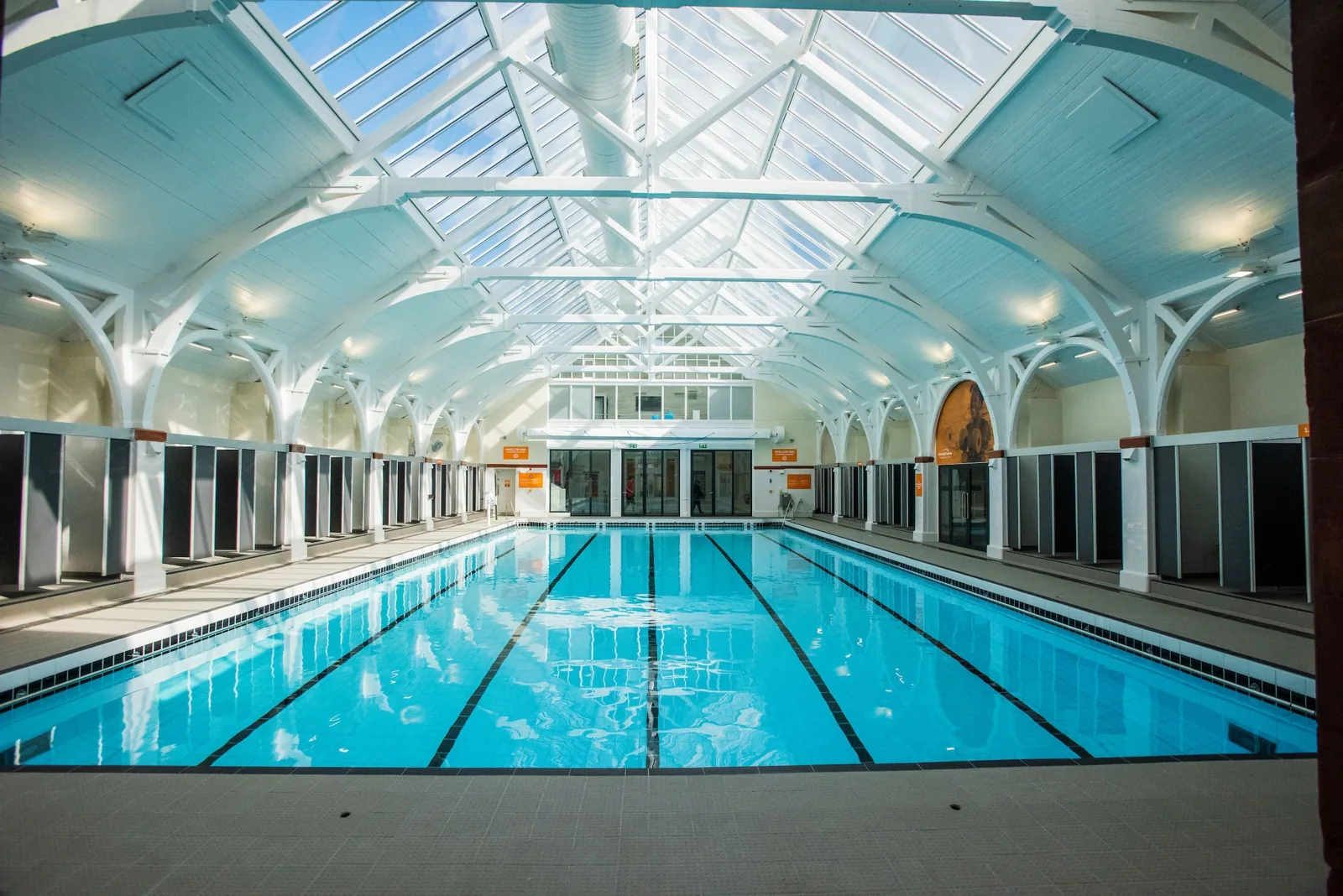
Common in UK leisure centres built or refurbished since the 1990s. Everyone, men, women and families, shares one changing area, but you change inside a private cubicle with a lockable door. Lockers, hair dryers and sinks are in the shared space. Showers are often on poolside or in a shared area, and you shower in your swimwear. If you are new to village changing, the rule is simple: get undressed only inside a cubicle with the door shut.
Poolside cabins and huts
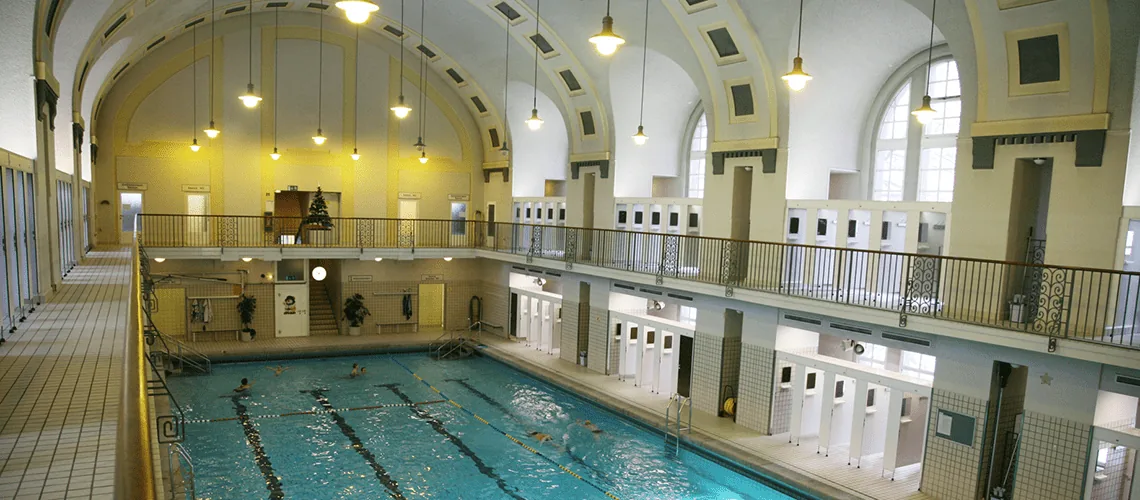
Older baths and lidos sometimes have changing cabins opening straight onto the pool. Stadtbad Spandau Nord in Berlin, from 1911, still has individual cabins around the pool and along the gallery. Hilsea Lido in Portsmouth has a row of colourful changing huts by the water.
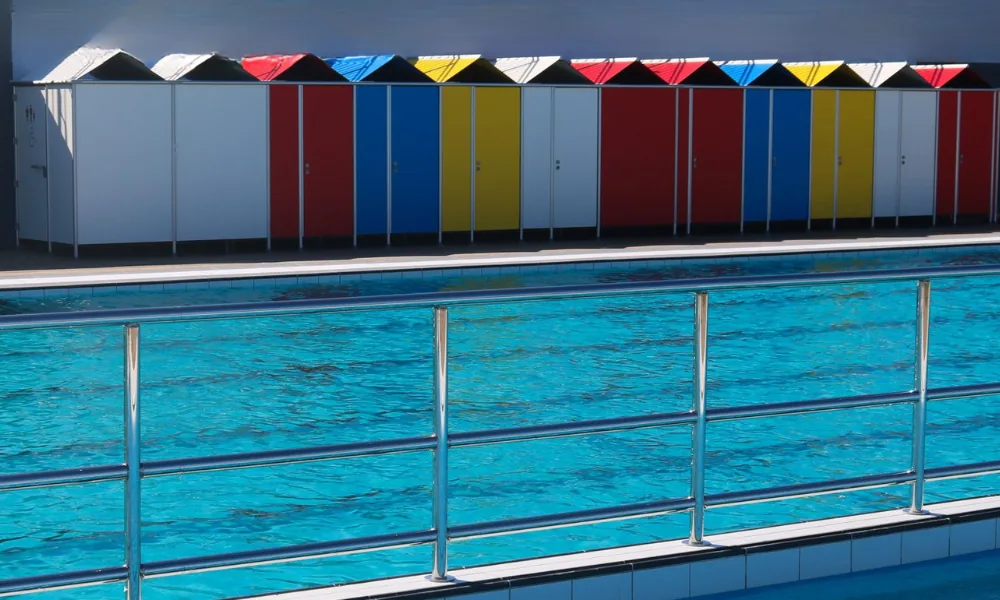
Lockers and valuables
Lockers come in a few kinds:
- Refundable coin lockers. Put in a coin, lock it, and get the coin back when you open it. The classic UK type takes a £1 coin; Europe uses €1 or €0.50.
- Token or paid lockers. You buy a token or pay a small fee. York's Energise centre uses a 25p token bought by card.
- Wristband or digital lockers. Newer centres and spas use a wristband or a keypad code.
- Bring your own padlock. Some older pools, gyms and many European pools have lockers with just a hasp.
The key usually comes on an elastic band for your wrist or ankle. Wear it in the pool. If you lose it, reception has a master key, but there may be a fee. Take as little of value as you can, and never leave a bag on a bench while you swim.
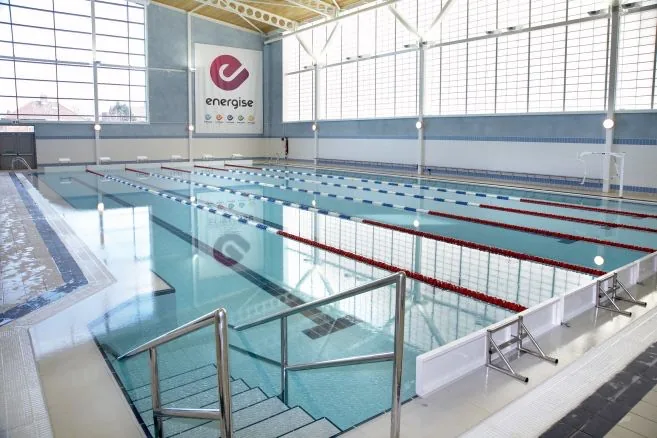
Energise Leisure Centre
York · 25p locker token
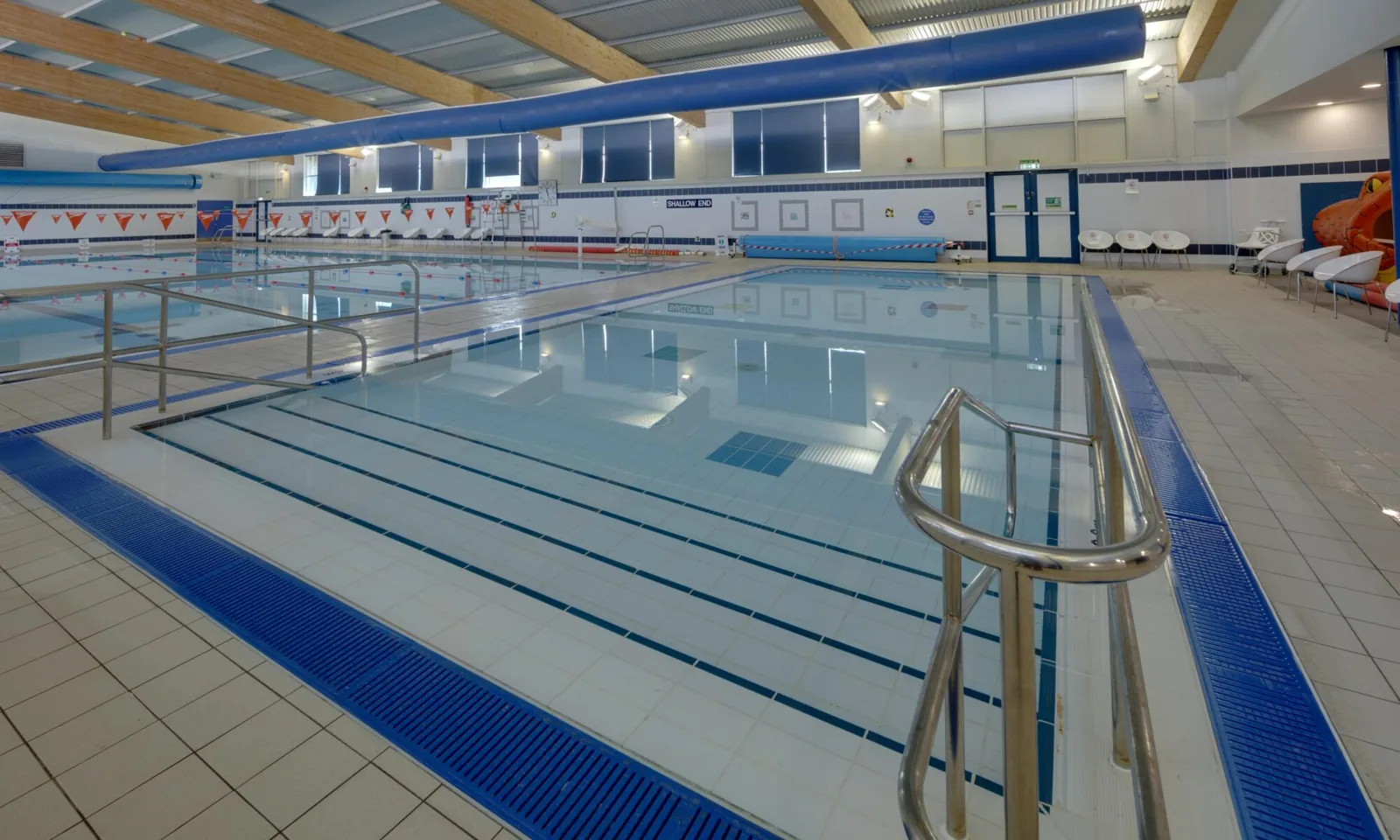
Southglade Leisure Centre
Nottingham · Accessible changing
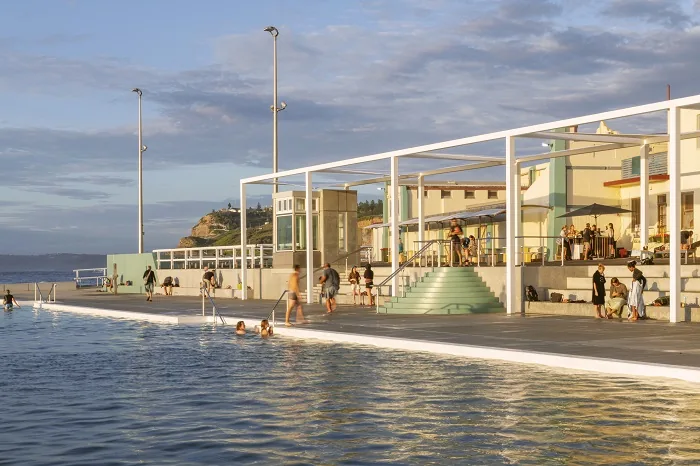
Newcastle Ocean Baths
Newcastle · Change rooms from 5.30am
Showers
You are expected to shower before getting in the pool and are encouraged to shower after. In UK, Irish and Australian pools, most people shower in their swimwear, and in village changing that is the only option. In single-sex changing rooms some people shower without swimwear afterwards; nobody will mind either way.
Pre-swim showers are usually a quick rinse at the poolside showers. After your swim, use the changing room showers with your own shampoo and shower gel. Our guide to why you should shower before swimming explains what the rinse is for.
Getting changed fast. Wear your swimsuit under your clothes on the way in, and take a towel big enough to wrap around you. In busy village changing at peak times, cubicles go quickly, so a quick change helps everyone.
Children in changing rooms
Each pool sets its own rule on children of the opposite sex in single-sex changing rooms. In the UK many councils set the cut-off at 8. Rhondda Cynon Taf, for example, says children aged 8 and over must use the changing room for their own sex (RCT council swimming information). Younger children can usually change with a parent of either sex, and a family room is the other option. Village changing avoids the question, which is one reason families like it.
Most pools have baby changing tables in the changing area, and some have playpens or baby seats so you can get dressed with a toddler in sight. If you are bringing more than one child, a family cubicle saves a lot of juggling.
Accessible and family changing
Most public pools have at least one accessible changing room with a wider door, a bench, grab rails and a shower. Larger centres may also have a Changing Places room, a larger room with a hoist and an adult-sized changing bench for people who need help from a carer. Southglade Leisure Centre in Nottingham, for example, lists poolside accessible changing and a pool hoist. If you need a hoist or extra space, check the pool's accessibility page or call ahead.
Family changing rooms are larger cubicles or rooms with space for a parent and children together, often with a baby changing shelf. Anyone with children can usually use them.
Changing rooms abroad
- Germany and Austria. Many pools use changing cabins (Umkleidekabinen) opening onto a shared locker area, similar to village changing. Showers are usually single-sex, and many people shower without swimwear.
- Iceland and Scandinavia. You are expected to shower without swimwear and wash thoroughly before swimming. In Reykjavik this is part of the written pool rules (Reykjavik pool rules).
- France, Italy and Spain. Mostly single-sex changing rooms with cubicles. Some French pools have a shoe-free zone before the changing area. Check whether you need your own padlock.
- Hungary. Thermal baths offer lockers or private cabins, with cabins costing extra.
For everything else about your visit, see your first visit to a public pool and what to bring swimming.
FAQ
What is village changing at a swimming pool?
A shared changing area for everyone, with private lockable cubicles where you get changed. Lockers, sinks and hair dryers are in the shared space.
Do you have to shower naked at the pool?
Not in the UK, Ireland, Australia, New Zealand or Canada, where most people shower in swimwear. In Iceland and much of Scandinavia, you are expected to wash without swimwear before swimming.
Can I use my phone in the changing room?
Most pools ban phones and cameras in changing areas to protect privacy. Keep your phone in your locker.
What if I lose my locker key?
Tell reception. Staff can open the locker with a master key, though some pools charge for a lost key or band.