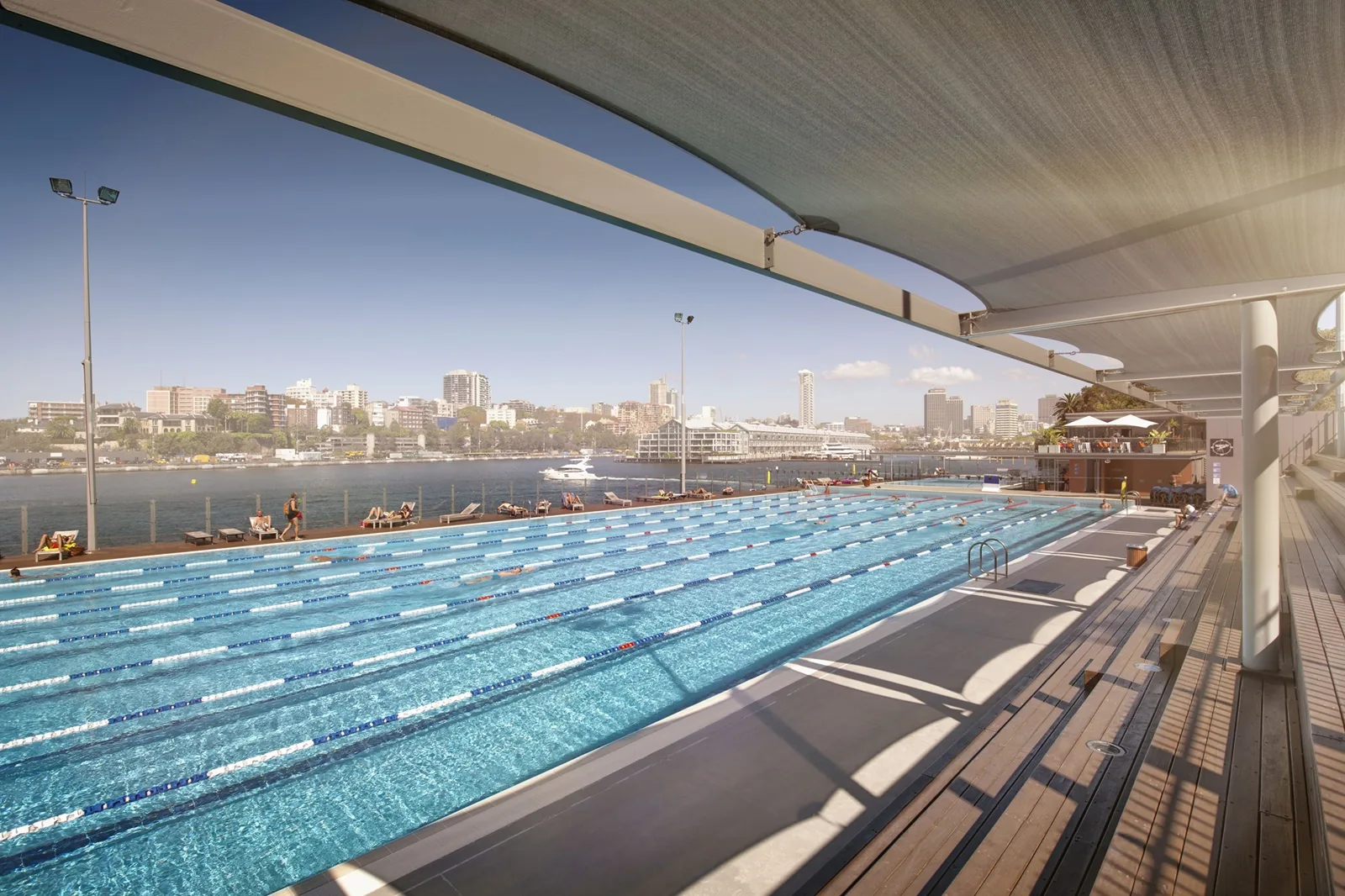
Swimming in the sea vs a pool
 By the Find My Swimming Pool team·
Updated ·
5 min read

The sea and the pool are different sports in all but name. One gives you lines, walls and warm, treated water. The other gives you waves, cold, salt and no chlorine at all. Here is how they compare for exercise, health and safety.
The short answer
A pool is safer, warmer and better for steady training: the water is disinfected, lifeguarded and the same every visit. The sea has no chlorine and many swimmers love the cold, the views and the buoyancy of salt water, but the water quality changes with rain and sewage overflows, and currents, waves and cold shock are real risks. Swim in the sea at lifeguarded beaches, check the water quality first, and never swim alone. An ocean pool or tidal pool sits between the two.
The water itself
| Sea | Pool | |
|---|---|---|
| Salt | About 35,000 ppm | None, or about 3,000 ppm in a saltwater pool |
| Disinfection | None | Chlorine (or bromine), filtered continuously |
| Temperature | Varies with season and place; cold for much of the year in the UK and Ireland | Usually heated to the high 20s °C indoors |
| Visibility | Often low; you cannot see the bottom | Clear, with a line on the floor to follow |
| Surface | Waves, swell and chop | Flat, apart from other swimmers |
Salt water is denser than fresh water, so you float higher in the sea. Many swimmers find it easier to relax and breathe there, and legs that sink in a pool sit closer to the surface. The flip side is that salt stings your eyes and dries skin and hair, much as chlorine does. Rinse off afterwards either way.
Temperature is the other big difference. A public pool is kept warm all year. Around the UK and Ireland, the sea is cold for much of the year and only warms to the mid to high teens Celsius at its best in late summer. On the Mediterranean and in much of Australia it is far milder. Read cold water swimming benefits if the cold is part of the attraction.
Water quality and germs
Pool water is filtered and disinfected all the time. Chlorine kills most germs within minutes, and staff test the water several times a day. That does not make it sterile; see how clean is pool water. But it is controlled.
The sea is not treated at all. Most of the time, at a designated beach, the water is fine to swim in. It gets worse after heavy rain, when rivers, drains and storm overflows carry sewage and farm run-off out to the coast. That is when stomach bugs, ear and skin infections from sea swimming are more likely.
- Check before you go. In the UK and EU, designated bathing waters are tested through the summer season and given a classification. Many councils and environment agencies publish daily pollution risk warnings, and campaign groups run sewage alert maps.
- Avoid the sea after heavy rain. Give it a day or two, especially near river mouths, harbours and outfall pipes.
- Keep cuts covered and try not to swallow the water.
- Wash hands before eating after a sea swim.
Safety: the biggest difference
In a pool, the main risks are slipping on the deck and banging into another swimmer. A lifeguard can see the whole pool and reach you in seconds. The sea is a different matter.
- Rip currents can pull even strong swimmers away from shore. If you are caught in one, do not swim straight against it. Float, raise a hand and shout, or swim parallel to the beach until you are out of it.
- Cold water shock. Sudden cold makes you gasp and breathe fast for the first minute or so. If you get in slowly and float until your breathing settles, it passes.
- Waves and tides make it hard to get back out, and tides change where it is safe to swim through the day.
- Boats, jellyfish and weever fish are local hazards to ask about.
Swim at a lifeguarded beach, between the red and yellow flags where they are used, and never on your own. A bright tow float and a bright cap make you easier to see. In the UK and Ireland, the RNLI publishes detailed beach safety advice.
As exercise
For fitness training, the pool wins. You can count lengths, hold a pace, use a clock and do drills and intervals. Walls let you rest, and turns add a little extra work.
The sea is more varied. Chop and swell make you work harder for the same distance, sighting builds neck and shoulder strength, and there is no wall to push off every 25 metres. Many triathletes and open water swimmers train in the pool through the week and in open water at weekends. Lengths in a pool are easier to measure; see how many lengths is a mile.
Ocean pools and lidos
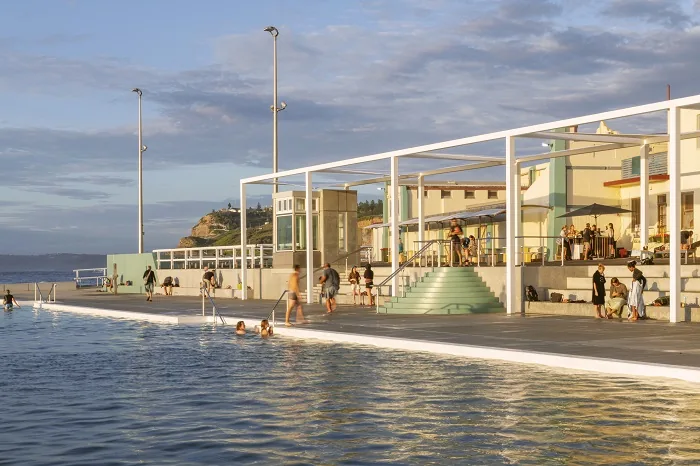
If you want sea water without the waves, an ocean pool is the answer. These are walled pools on the shore, filled by the tide or with pumped seawater. They are common on the New South Wales coast and found in Cornwall, Scotland, Spain and elsewhere. You get salt water and fresh air, with walls to swim to and usually calmer conditions. They are not chlorinated, and big seas can wash over them.
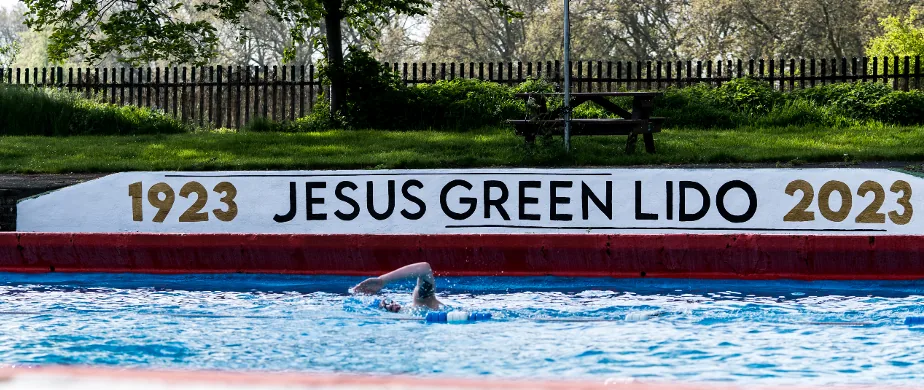
Outdoor lidos give you open sky with treated water. Cities with the most outdoor pools in our directory:
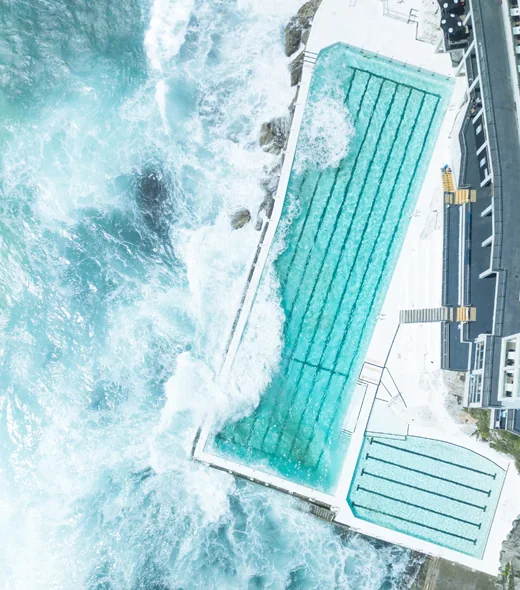
Bondi Icebergs Pool
Sydney · Ocean pool
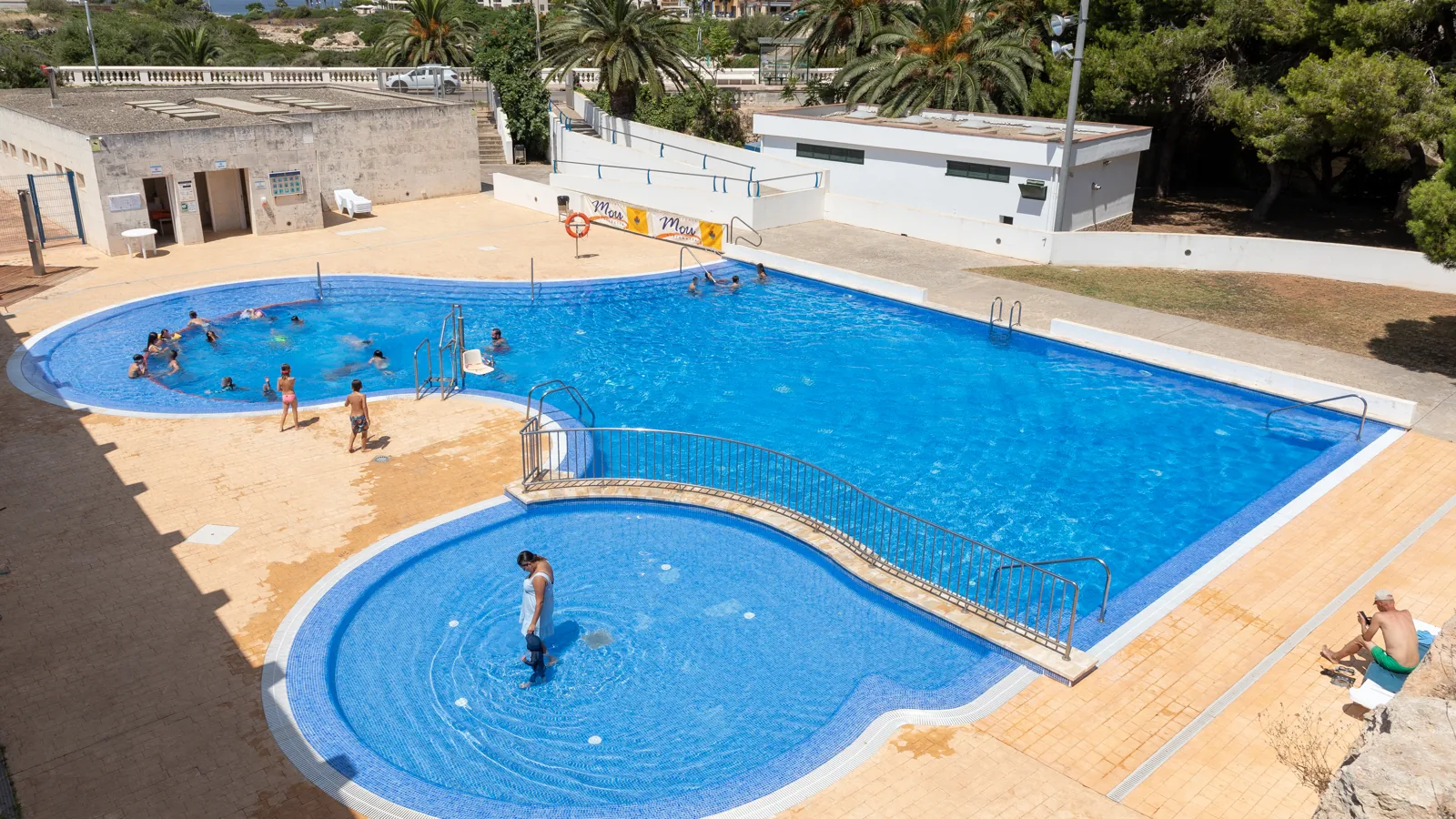
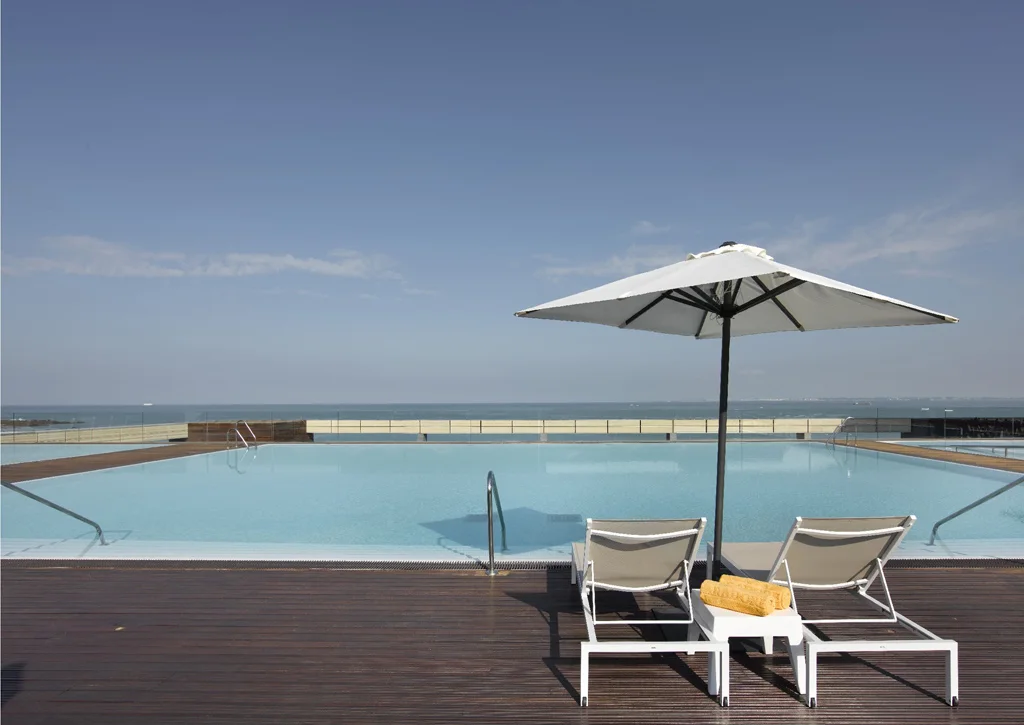
Piscina Municipal Descoberta
Ciutadella de Menorca · Beachside outdoor pool
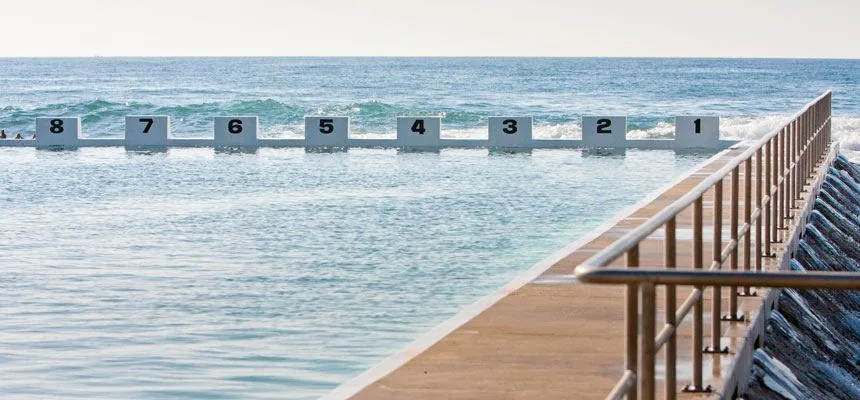
Merewether Ocean Baths
Newcastle · Ocean baths
More on these in ocean pools and what is a lido.
FAQ
Is swimming in the sea healthier than a pool?
Neither is clearly healthier. The sea has no chlorine and many people enjoy the cold and the setting, but the water is not treated. A pool is controlled, warmer and safer for regular exercise.
Is the sea cleaner than a pool?
Not usually. Pool water is filtered and disinfected all the time. Sea water is untreated, and its quality drops after heavy rain when sewage and run-off reach the coast.
Is it easier to float in the sea?
Yes. Salt water is denser than fresh water, so your body sits higher and floating takes less effort.
Should I shower after swimming in the sea?
Yes. Rinsing off salt and sand stops skin and hair drying out, and washes off any germs from the water.