Saltwater pools vs chlorine pools
 By the Find My Swimming Pool team·
Updated ·
5 min read
Saltwater pools are often sold as the gentle, chemical-free option. They are gentler for some people, but they are not chemical-free, and the difference from a well-run chlorine pool is smaller than the marketing suggests.
The short answer
A saltwater pool is a chlorine pool that makes its own chlorine. Salt is dissolved in the water at roughly a tenth of the strength of seawater, and a cell uses electrolysis to turn it into chlorine. A traditional pool has chlorine added directly. To swim in, saltwater pools usually feel softer and smell less, because chlorine is produced steadily rather than in doses. For the owner, they cost more to install, need less handling of chemicals, and can corrode metal and some stone over time.
How each type works
Traditional chlorine pools
In a conventional pool, chlorine is added to the water as a liquid (sodium hypochlorite), as granules or tablets (calcium hypochlorite or stabilised chlorine), or as a gas in some older plant. Public pools dose it automatically through controllers that measure the water and top it up. Home pools are often dosed by hand or with a floating tablet dispenser.
Saltwater pools
In a saltwater pool, ordinary salt (sodium chloride) is dissolved in the water. Pool water passes through a chlorinator cell, where a low electric current splits the salt and produces hypochlorous acid and sodium hypochlorite. Those are the same disinfectants a traditional pool uses. After they have done their job, they turn back into salt, so the salt level stays fairly stable and only needs topping up when water is lost.
The salt level is low. Most systems run at a few thousand parts per million, often around 3,000, and the exact target depends on the make of chlorinator, so check its manual. Seawater is about 35,000 parts per million (USGS), so a saltwater pool is around ten times less salty than the sea. Many people cannot taste it. If you want the real thing, see swimming in the sea vs a pool.
What the difference feels like
Swimmers who switch between the two usually notice three things.
- Softer water. The small amount of salt makes the water feel slightly silkier. It is subtle, and some swimmers cannot tell at all.
- Less smell. The "chlorine" smell of a pool is mostly chloramines, made when chlorine reacts with sweat and urine. A saltwater cell produces chlorine continuously, which tends to keep levels steadier and can mean fewer chloramines. A badly run saltwater pool can still smell, though.
- Less sting after a swim. Many swimmers find their skin and eyes feel better after a saltwater pool. It varies from person to person, and the general standard of the pool matters more than the type.
You will not float noticeably better. At a tenth of seawater, the salt does not change buoyancy in any way you can feel.
Side-by-side comparison
| Saltwater pool | Traditional chlorine pool | |
|---|---|---|
| How it is disinfected | Chlorine made from salt by electrolysis | Chlorine added as liquid, granules or tablets |
| Salt in the water | Around 3,000 ppm | Small amounts from chlorine products |
| Feel and smell | Softer, usually less smell | Depends on how well it is run |
| Chemicals handled | Salt, plus pH and other balancing chemicals | Chlorine, plus pH and other balancing chemicals |
| Upfront cost | Higher: the chlorinator and cell | Lower |
| Running costs | Electricity and a cell replaced every few years | Regular chlorine purchases |
| Wear on the pool | Salt can corrode metal fittings and some natural stone | Less corrosion if the water is balanced |
| pH | Tends to drift upward and needs correcting | Depends on the chlorine product used |
Hair, skin and eyes
Because both types disinfect with chlorine, they both dry skin and hair to some degree. The routine is the same: shower before, rinse off after, condition your hair and moisturise. Our guides to protecting your hair from chlorine and dry skin and itching after swimming cover the details.
Saltwater pools are not "chemical-free", whatever the advert says. They also need the same testing for free chlorine and pH as any other pool, because germs do not care how the chlorine got there. A saltwater pool that is not looked after can be less safe than a well-dosed chlorine pool.
If you have very sensitive skin or eczema, it is worth trying a saltwater pool to see if you find it easier. Do not expect it to be a cure.
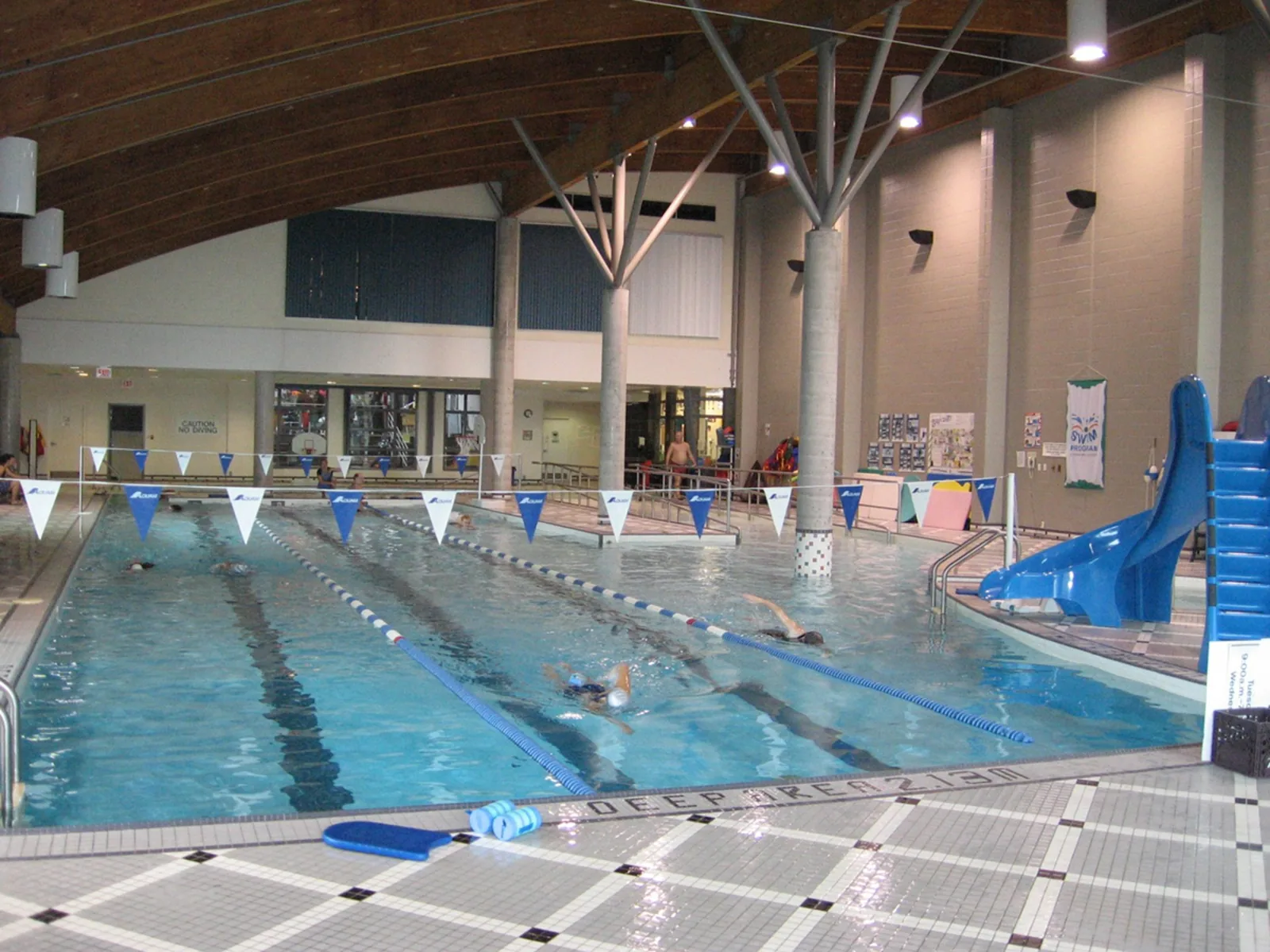
Levitank Saltwater Pool, Soloway JCC
Ottawa · 25 m saltwater pool
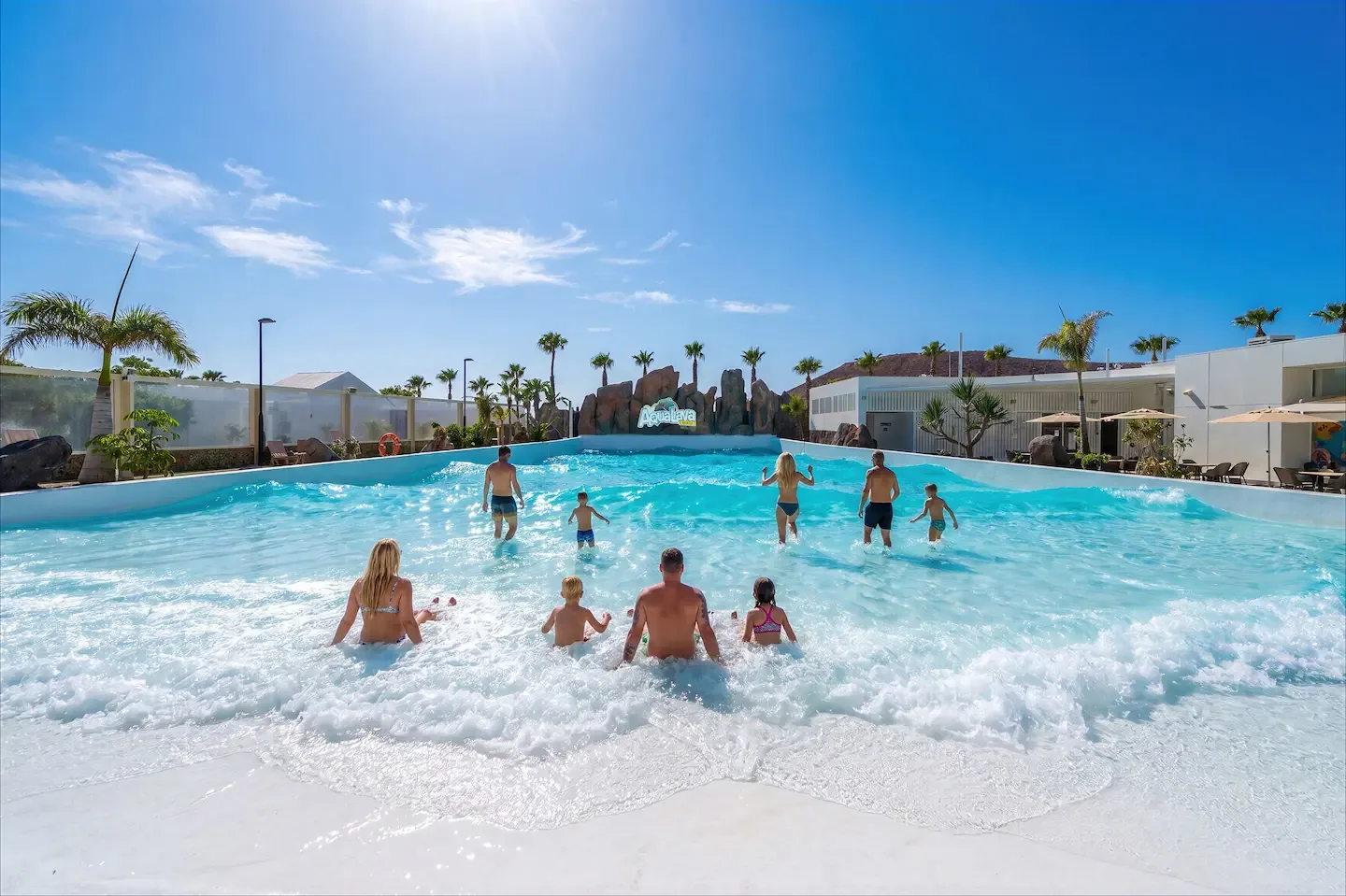
Aqualava Waterpark
Playa Blanca · Saltwater wave pool
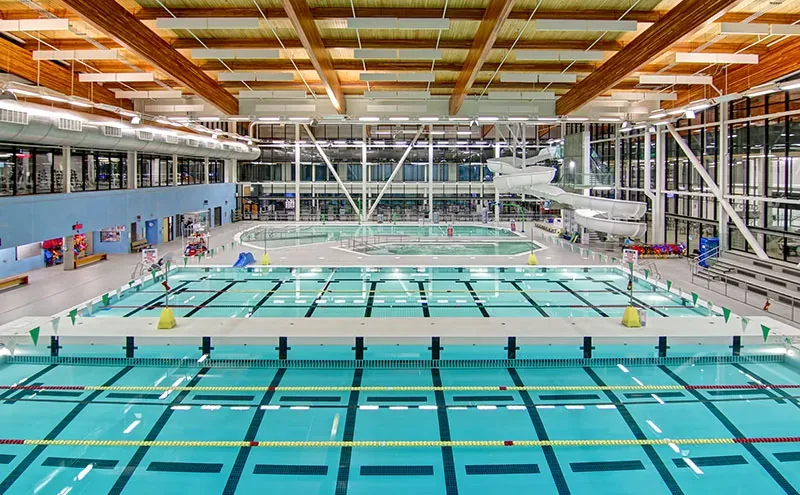
The Meadows Community Recreation Centre
Edmonton · 25 m salt-water pool
For pool owners
If you are choosing for a home pool, the decision is mostly about cost, effort and materials.
- Convenience. A salt system makes chlorine automatically, so there is less buying, storing and adding of chlorine. You still need to test the water and adjust pH regularly.
- Cost. The chlorinator is the big upfront expense. The cell wears out and needs replacing after a few years. Over the life of the pool, running costs can come out similar.
- Materials. Salt water is hard on metal ladders, light fittings, heaters and some types of natural stone coping. Check that your equipment is rated for salt.
- Climate. Salt cells produce less chlorine in cold water. In cooler countries, owners sometimes need to supplement with added chlorine in spring and autumn.
Big public pools in the UK and Ireland mostly dose chlorine directly, with automatic controllers. Saltwater systems are more common in home pools and in some public pools, especially in Australia and Canada.
FAQ
Is a saltwater pool better for you than a chlorine pool?
Not in any major way. Both are disinfected by chlorine. Many swimmers find saltwater pools softer on skin and eyes, but a well-run chlorine pool is just as safe and the difference is small.
Does a saltwater pool taste salty?
Only faintly, if at all. The salt level is about a tenth of seawater, close to the point where most people start to taste salt.
Is a saltwater pool the same as swimming in the sea?
No. Seawater is about ten times saltier, is not disinfected, and carries the bacteria, algae and wildlife of the sea.
Do saltwater pools still need chemicals?
Yes. They need the salt itself, and the water must be tested and balanced for pH and other factors like any pool.