Silicone vs latex swim caps (and fabric)
 By the Find My Swimming Pool team·
Updated ·
5 min read

Most swim caps are made of one of three materials: silicone, latex or fabric. They look similar on the shelf but feel very different on your head, and the right one depends on your hair, how often you swim and whether you have a latex allergy.
The short answer
Silicone caps are thicker, stretchier and last longer than latex. They pull hair less, keep out more water and suit most regular swimmers. Latex caps are thin, light and cheap, but they tear more easily, can snag hair and are not for anyone with a latex allergy. Fabric caps (lycra or polyester) are the most comfortable and easiest to put on, but they let water through and add a little drag. For lengths several times a week, buy silicone. For a relaxed swim or a child, fabric is fine.
Silicone, latex and fabric compared
| Silicone | Latex | Fabric | |
|---|---|---|---|
| Feel | Thick, soft, stretchy | Thin, tight, light | Soft, like a swimsuit |
| Pulls on hair | A little | Most | Hardly at all |
| Keeps water out | Best of the three | Fairly well | Poorly |
| Warmth | Warmest | Some | Least |
| Durability | Lasts longest | Tears easily | Lasts well, but stretches |
| Price | Mid | Cheapest | Cheap to mid |
| Allergy risk | Very low | Avoid with latex allergy | Very low |
Silicone caps
Silicone is the default choice for regular swimmers. The material is thicker than latex and very stretchy, so the cap slides on more easily and grips your head without squeezing. It is smooth, so it pulls hair less than latex, and it keeps out more water than either of the others, though no cap keeps hair completely dry.
A silicone cap also holds heat better, which you notice in an outdoor pool or a cool lane pool. With care it lasts a long time, often a year or more of regular swimming. The downsides are small: it costs a little more than latex, and some people find it warm in a very warm pool.

Latex caps
Latex caps are the thin, cheap caps you see in multipacks, in vending machines at the pool and at triathlons and open water races, where organisers hand them out in bright colours. They are light, they fit tightly and they cost very little.
The catch is that latex is thin. It tears, especially if you catch it with a nail or a ring, and it sticks to itself and to hair when dry. Many swimmers find it pulls more than silicone when putting it on and taking it off. And anyone with a latex allergy should avoid it completely: choose silicone or fabric instead.
Club swimmers sometimes wear a latex cap under a silicone one for races. The latex holds the hair and the goggle strap, and the silicone on top gives a smooth surface.
Fabric caps
Fabric caps are made of lycra, elastane or polyester, like a swimsuit. They are the most comfortable caps, they don't pull hair at all and they are easy to put on, which makes them popular with children, aqua class swimmers and people who swim at a gentle pace.
They don't keep much water out, so your hair will be wet, and the fabric adds a bit of drag. They also let more pool water through your hair, which matters if you are trying to protect it from chlorine. In pools where caps are compulsory, fabric caps are usually accepted. Some fabric caps have a thin silicone or polyurethane coating on the outside, which keeps out more water while staying comfortable.

Other caps worth knowing
- Long-hair caps. Silicone caps with extra volume at the back for long hair, buns, braids and locs.
- Racing dome caps. Moulded silicone caps with no wrinkles, used by competitive swimmers for the smoothest fit.
- Neoprene caps. Thick wetsuit-material caps, often with a chin strap, made for cold open water and winter lido swims.
- Bubble or aqua caps. Textured rubber caps, often with a chin strap, made for aqua aerobics with your head above water.
Which one to buy
- You swim lengths two or more times a week: silicone.
- You have long or thick hair: a silicone long-hair cap.
- You have a latex allergy: silicone or fabric, never latex.
- You swim gently, or the cap is only to meet a pool rule: fabric.
- You need a cheap spare for the gym bag: latex.
- You swim outdoors in cold water: a thick silicone or neoprene cap.
Not sure you need a cap at all? See why wear a swim cap and do you have to wear a swim cap.
Making a cap last
- Rinse it in cold fresh water after every swim to wash out chlorine.
- Let it dry in the air, away from radiators and direct sun.
- Keep latex caps from sticking to themselves: dry them fully, and many swimmers dust them with a little talc before storing.
- Take off rings and watch your nails when putting a cap on. Most tears start there.
Putting it on the right way also helps it last. How to put on a swim cap shows the method.
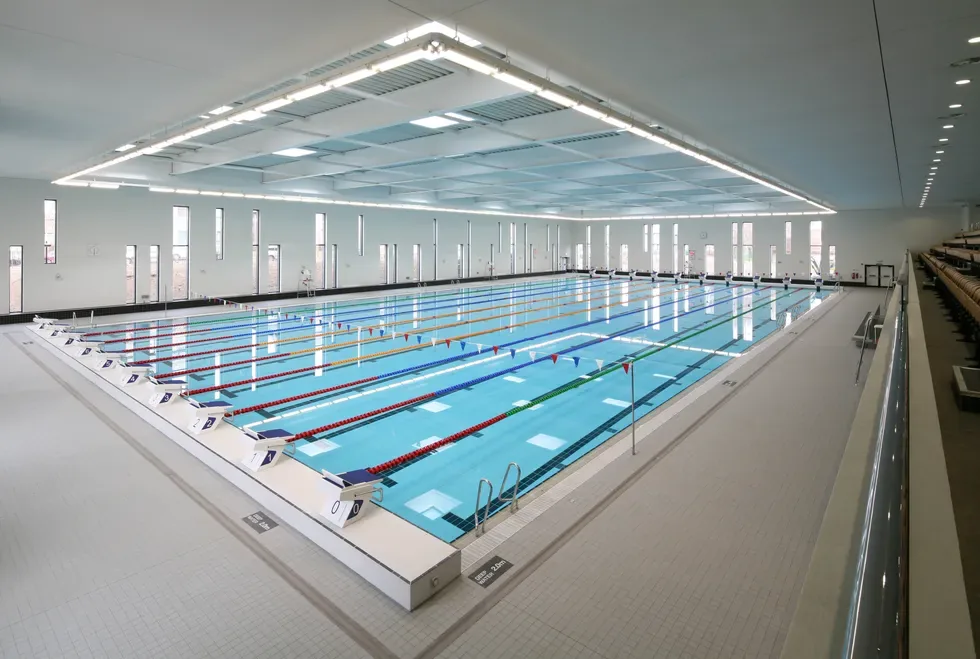
Aberdeen Aquatics Centre
Aberdeen · 50 m, ten lanes

Nordbad
Munich · 33 m sports pool

Adelaide Aquatic Centre
Adelaide · Indoor 50 m pool
FAQ
Is silicone or latex better for long hair?
Silicone. It stretches further and pulls less, and long-hair silicone caps have extra room at the back for a bun.
Which swim cap keeps hair driest?
A well-fitted silicone cap keeps out the most water, but no cap keeps hair completely dry. Expect damp hair at the edges.
Are silicone caps safe for latex allergies?
Silicone does not contain latex, so silicone caps are the usual choice for people with a latex allergy. Check the packaging says latex-free.
Why do swimmers wear two caps?
Racers often wear a latex cap underneath to hold their hair and goggle strap, and a silicone cap on top for a smooth surface.