Do you have to wear a swim cap at a public pool?
 By the Find My Swimming Pool team·
Updated ·
5 min read
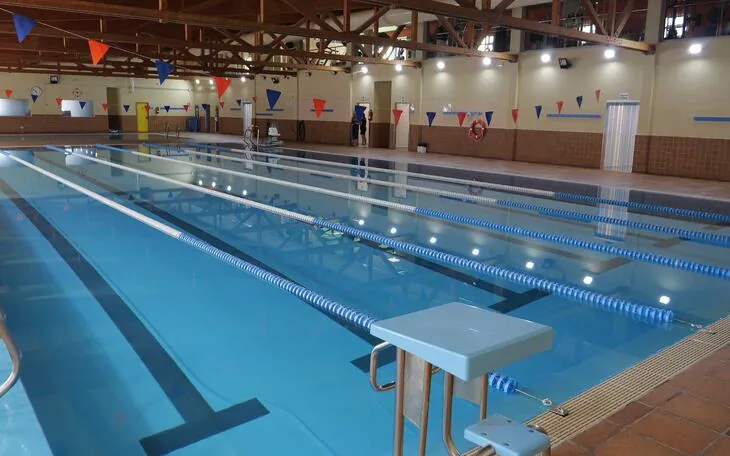
Whether you need a swim cap depends almost entirely on where you swim. In a British leisure centre nobody will ask. In a Spanish, French or Italian municipal pool you may not get past the poolside without one.
The short answer
It depends on the country and the pool. In the UK, Ireland, Australia, New Zealand and most of English-speaking Canada, public pools usually leave caps optional, although lessons and clubs may ask for one. In France, Italy and Spain most municipal pools make caps compulsory for everyone, short hair included. Many pools in Poland, Bulgaria and Quebec do too. Germany and Austria vary by pool. The rule is set by each pool, so check its rules or website, and pack a cap when you travel.
Cap rules by country
Pool rules are local. These are the usual patterns for public pools, based on pool rules we have read while building our directory.
| Country | Swim cap at public pools |
|---|---|
| United Kingdom, Ireland | Usually optional for public sessions. Some lessons, clubs and long-hair rules |
| Australia, New Zealand | Usually optional |
| Canada | Usually optional, but many Quebec city pools make caps compulsory |
| France | Usually compulsory, often with tight swimming trunks for men |
| Spain | Compulsory at most municipal indoor pools, often with pool sandals |
| Italy | Almost always compulsory, often with pool slippers |
| Germany, Austria | Varies by pool; sometimes required for long hair only |
| Poland, Bulgaria | Often compulsory, especially in sports pools |
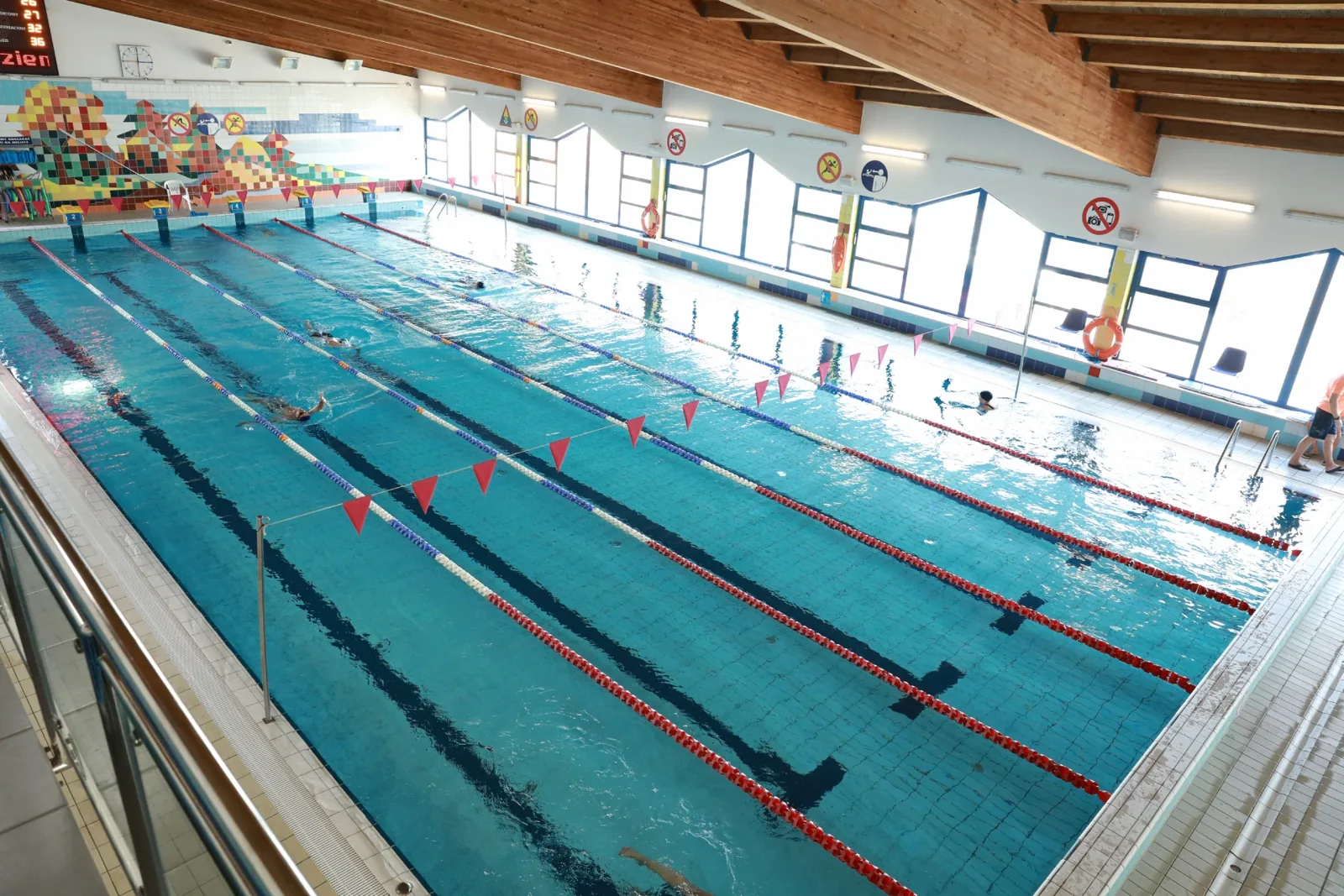
Some real examples from our listings. In Spain, the municipal pools in Granada ask for a cap and pool sandals, Alicante's municipal pools tell swimmers to bring identification, a cap, a swimsuit and sandals, and Benidorm's main sports centre pool lists a swimming cap as required. In Warsaw, Pływalnia SGGW requires a cap and close-fitting swimwear in its sports pool. In Canada, several city pools in Montreal and Saguenay list caps as compulsory, while pools in Ontario and the West rarely mention them.
Why some pools insist
The reasons are practical. Loose hair clogs the strainers in front of the pumps and tangles in filters, and staff have to clear it by hand. Hair also carries sweat, skin oils and styling products into the water, which use up chlorine. In countries where caps are the norm, pools are designed and run around that rule, and staff enforce it at the poolside.
A cap also makes swimmers easier for lifeguards to see, and in busy lane sessions it keeps long hair out of other people's faces. Our guide to why wear a swim cap covers what a cap does for you as well as for the pool.
Who the rule covers
Where caps are compulsory, the rule usually applies to everyone in the water: men and women, adults and children, long hair, short hair and no hair. Swimmers with a shaved head are often surprised to be sent back to reception, but pool staff rarely make exceptions, because a rule with exceptions is hard to enforce.
Some pools allow exemptions for medical reasons or for particular groups such as babies, and some rules include a clause allowing the manager to grant a special exception. If you have a reason you can't wear a cap, ask the pool before your visit rather than at the poolside.
In the UK and Australia, where caps are mostly optional, some pools still ask swimmers with long hair to tie it back or wear a cap. Swimming lessons and clubs often require caps for children, partly so teachers can see the class clearly.
What counts as a swim cap
In most pools any swim cap is fine: silicone, latex or fabric. The point is to cover your hair. A few things usually don't count:
- a shower cap or a hairnet;
- a sun hat, bandana or cotton headscarf;
- a cap with long hair hanging out of the back.
A small number of pools ask for silicone or latex only. If you are unsure which to buy, read silicone, latex or fabric swim caps. For long hair, a long-hair cap with extra room at the back makes it much easier to cover everything. See how to put on a swim cap for the technique.
Check the swimwear rule at the same time. Pools that require caps often have other dress rules too: tight trunks rather than board shorts for men in France, pool sandals in Spain and Italy. Our guide to what to wear to a swimming pool covers them.
If you forget your cap
Most pools that require caps sell them at reception or from a vending machine, usually cheap fabric or thin latex ones. That gets you in the water, but it won't be the most comfortable cap. A few pools don't sell them at all, so on holiday in Europe it is worth packing your own. Caps fold flat and weigh almost nothing.
If you swim in several countries, a silicone cap is the safest choice. It is accepted everywhere, lasts for years with care and stays on better than fabric.
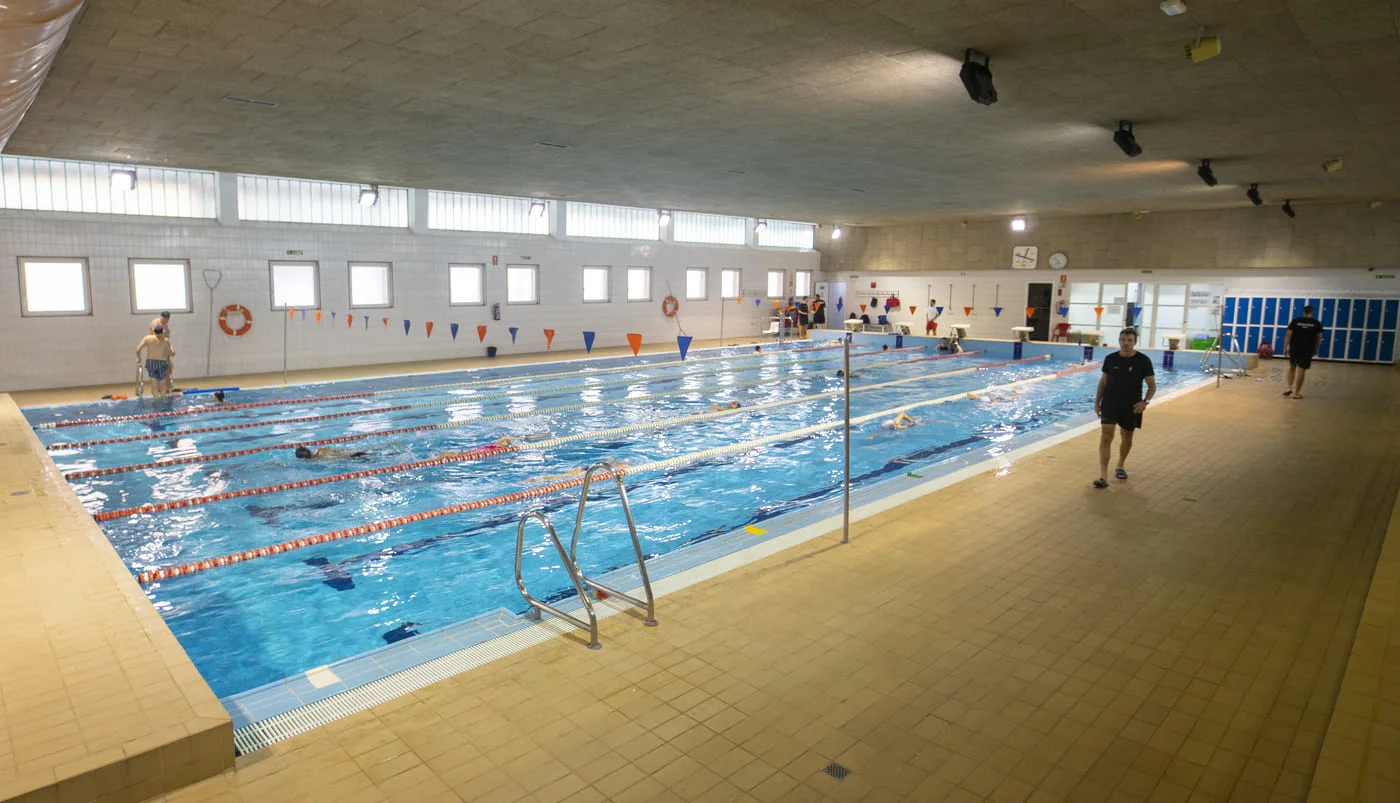
Piscina Cubierta Arabial
Granada · Cap and sandals required
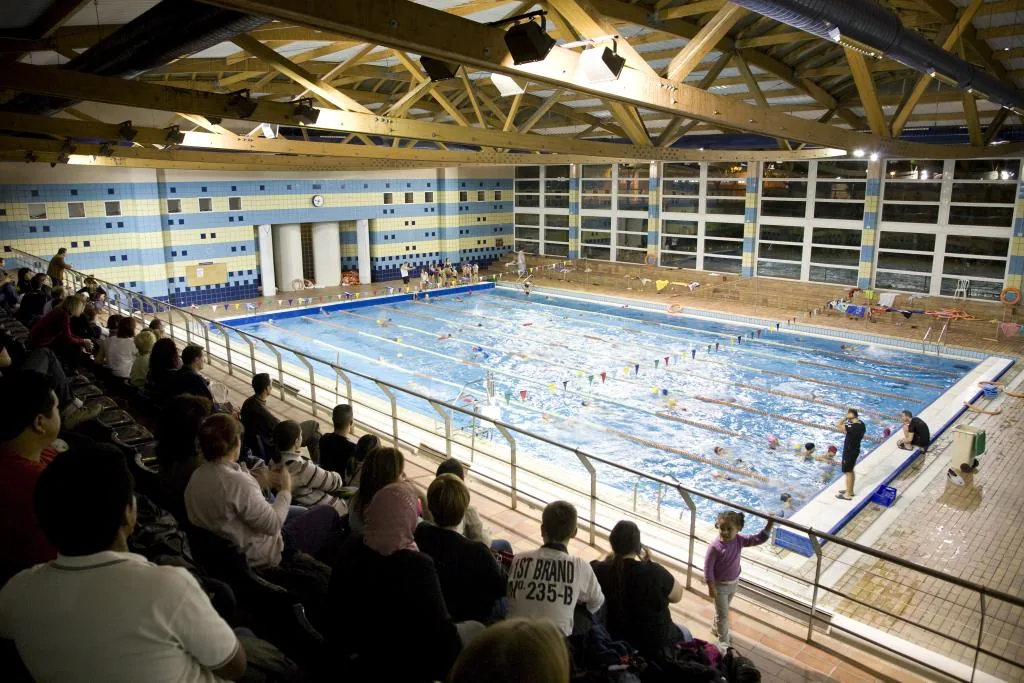
Complejo de Piscinas Monte Tossal José Antonio Chicoy
Alicante · Cap required
Pływalnia SGGW
Warsaw · Cap in sports pool
Cities with the most public pools in our directory:
FAQ
Do you have to wear a swim cap in UK pools?
Usually not for public swimming. A few pools ask people with long hair to tie it back or wear a cap, and many lessons and clubs require one.
Do bald men need a swim cap?
Where caps are compulsory, yes. The rule normally applies to everyone in the water, whatever their hair.
Can I wear a fabric swim cap where caps are compulsory?
In most pools yes. A small number accept only silicone or latex caps, so check the rules if you are unsure.
Do kids have to wear swim caps?
Where caps are compulsory, children usually need one too. Babies are sometimes exempt. In the UK and Australia it is optional, but swimming lessons often ask for caps.