Types of swimwear explained
 By the Find My Swimming Pool team·
Updated ·
4 min read
Shop shelves and websites use a lot of names for what is basically fabric that gets wet. This guide sorts them out: what each style is, who wears it and where it works best.
The short answer
The main women's styles are the one-piece swimsuit, bikini, tankini, swim dress and full-coverage swimwear such as the burkini. The main men's styles are briefs, trunks (square-cut shorts), jammers and board shorts. Racing swimwear, rash vests, swim leggings and wetsuits sit across both. For lane swimming, a one-piece, briefs, trunks or jammers work best. For the beach or a leisure pool, almost anything made of swimwear fabric is fine, though some European pools ban loose board shorts.
Women's swimwear
One-piece swimsuit
A single garment covering the body from the chest to the hips. Also called a swimming costume or cossie in the UK and a bathing suit in North America. Backs vary: a racerback or open back gives your shoulders room to move, while a thicker strap suits people who want more support.
Bikini
A two-piece with a separate top and bottoms. Triangle and string bikinis are made for the beach and can shift when you swim. Sports bikinis with wider straps and a crop-style top stay in place for lengths.
Tankini
A vest-style top over separate bottoms. It covers the stomach like a one-piece but is easier to take off for the toilet.
Swim dress and skirted swimsuit
A one-piece with a short skirt attached. Good for more cover around the hips. The skirt adds a little drag, which matters only if you are counting seconds.
Men's swimwear
Briefs
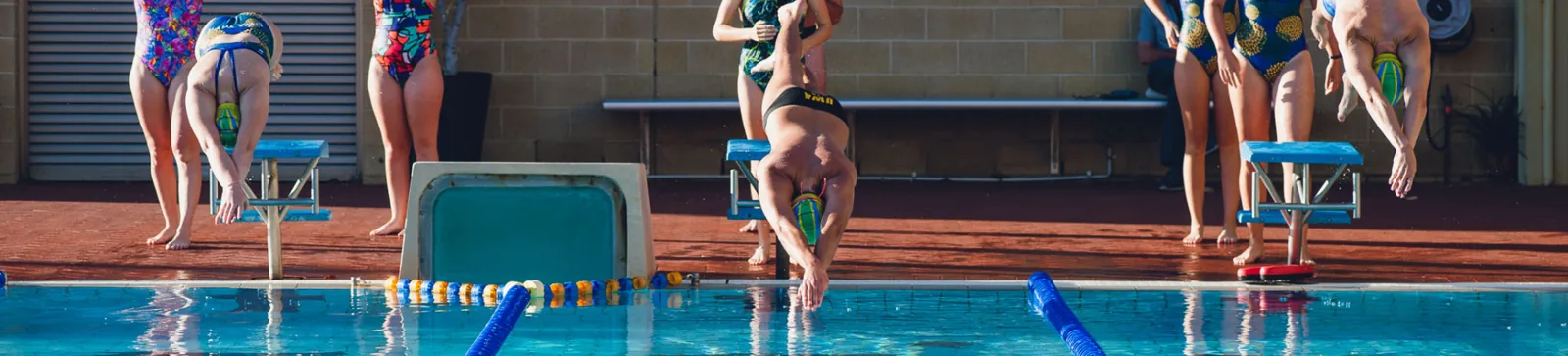
Close-fitting with a low leg, often called Speedos after the brand. Standard for club and racing swimmers. Nothing drags, nothing rides up.
Trunks or square-cut shorts
Close-fitting like briefs but with a short leg. A common middle ground for lane swimmers who want a bit more cover. Allowed at strict French pools.
Jammers
Tight shorts that reach to just above the knee. Used for training and racing, and for anyone who wants the fit of briefs with the cover of shorts. Our guide to jammers, briefs or shorts compares them.
Swim shorts and board shorts
Swim shorts are loose and mid-thigh, usually with a mesh lining. Board shorts are longer, often knee length, with no lining and a tie fly. Both are comfortable at the beach. They drag in the water and are banned at some pools, mainly in France. See can you wear board shorts in a pool.
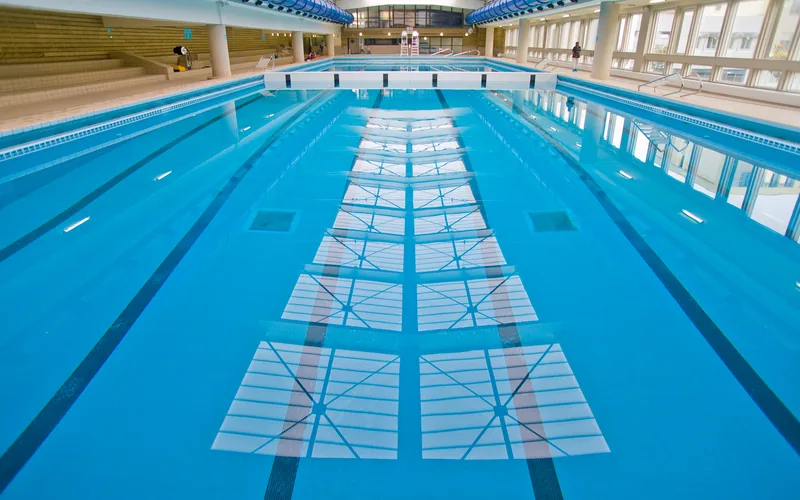
Piscine Keller
Paris · 50m pool
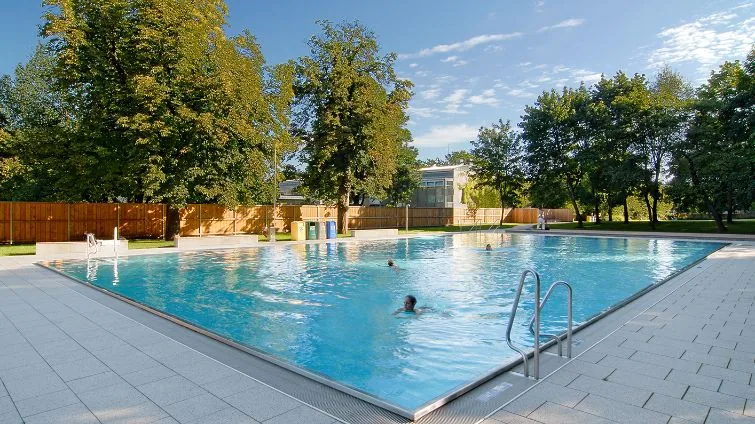
Dantebad (Winter-Warmfreibad)
Munich · 50m outdoor pool
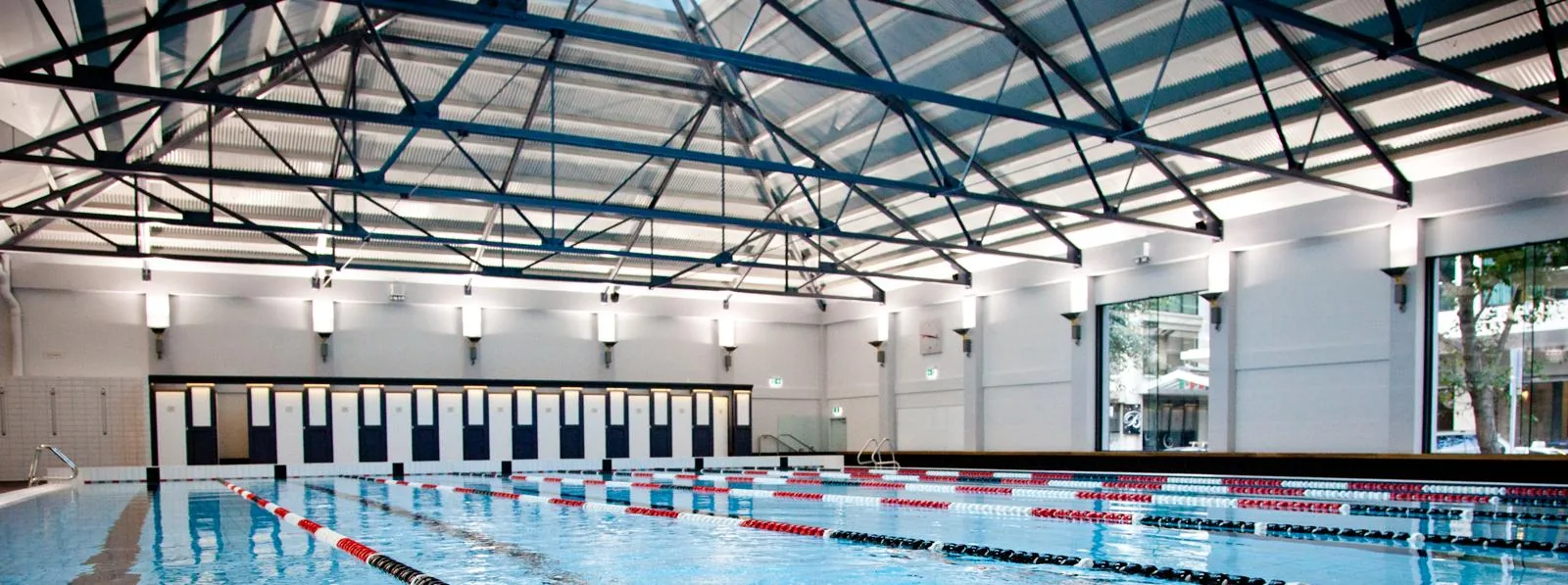
Tepid Baths
Auckland · Indoor lane pool
Styles for everyone
- Rash vest. A close-fitting top in swimwear fabric, short or long sleeved. Made for surfers, now common at pools and beaches for sun protection. In Australia and New Zealand it is often called a rashie.
- Swim leggings. Full-length leggings in swimwear fabric. Worn for cover, warmth or sun protection.
- Full-coverage swimwear. Burkinis and similar suits cover the arms, legs and hair, and are worn for religious reasons, sun protection or comfort. Read modest swimwear and burkinis for pool rules.
- Racing suits. Technical suits for competition, knee-length for women and jammers for men. They are very tight, take minutes to put on and are expensive. Not needed for training.
- Wetsuits. Neoprene suits for open water. Most pools do not allow them outside special sessions or lessons.
Fabrics
The label tells you a lot about how long a swimsuit will last.
| Fabric | Feel | In chlorine |
|---|---|---|
| Nylon with elastane (Lycra, spandex) | Soft and stretchy | Wears out fastest; goes baggy and thin |
| Polyester with elastane | Slightly firmer | Lasts longer than nylon blends |
| 100% polyester or PBT | Firm, less stretch | The most chlorine resistant |
| Neoprene | Thick, insulating | Made for open water, not pools |
If you swim more than once a week, a chlorine-resistant suit is usually worth it. Our guide to chlorine-resistant swimwear explains why.
Which type for which swim
- Lane swimming and fitness. One-piece with a sporty back, sports bikini, briefs, trunks or jammers. Pick chlorine-resistant fabric.
- Leisure pools and water parks. Anything secure. Bikini tops and loose shorts can move on slides, so tie everything firmly.
- Lidos and outdoor pools. Add a rash vest or leggings for sun protection on long summer days.
- Holidays abroad. Men should pack tight trunks or briefs in case the local pool bans loose shorts.
Not sure what is allowed? Our guide to what to wear to a swimming pool covers pool rules.
FAQ
What is the difference between a swimsuit and a swimming costume?
Nothing. Swimming costume, cossie and swimmers are British and Australian names for a swimsuit. In North America it is often called a bathing suit.
What are men's tight swimming shorts called?
Short close-fitting ones are called trunks or square-cut shorts. Longer ones that reach the knee are called jammers.
What swimwear do competitive swimmers wear?
Women wear one-piece suits, often knee-length racing suits in competition. Men wear briefs or jammers in training and jammers in races.
Are swim dresses allowed at public pools?
Yes, at almost all pools. They are made of swimwear fabric, so they meet the usual rules.