Can you swim in a T-shirt?
 By the Find My Swimming Pool team·
Updated ·
4 min read
Lots of people would rather keep their top half covered in the water, for sun protection, warmth or simply comfort. You can, but not in any T-shirt. What matters is the fabric.
The short answer
Not in a cotton T-shirt at most public pools. Cotton soaks up water, gets heavy, sheds fibres that clog the filters and is often worn in from the street, so pools ban it. You can swim in a top made for the water: a rash vest, a swim T-shirt or a long-sleeved swim top. These are made of swimwear fabric, dry fast and are allowed at almost every pool in the UK, Ireland, Australia, New Zealand and Canada. On a beach or in the sea, any T-shirt is up to you.
Why pools say no to cotton
The ban is about the water and the filters, not about how you look.
- Fibres. Cotton sheds lint as it moves in the water. Over a day of swimmers, that adds up in the filters and strainers.
- Dirt and residue. A T-shirt you wore to the pool carries sweat, deodorant, washing powder and dust. All of it ends up in the water and uses up chlorine.
- Dyes. Cheap cotton dyes can run in chlorinated water.
- Safety. A wet cotton T-shirt is heavy and baggy. It drags, and for a weak swimmer it makes staying afloat harder.
The same goes for cotton shorts, gym kit and leggings. See what to wear to a swimming pool for the full list.

Tops pools do allow
| Top | What it is | At public pools |
|---|---|---|
| Rash vest | Close-fitting top in swimwear fabric, short or long sleeved | Allowed almost everywhere |
| Swim T-shirt | Looser T-shirt cut, made of quick-dry swimwear fabric | Usually allowed |
| Burkini tunic | Long top, part of a full-coverage suit | Allowed in most English-speaking countries |
| Wetsuit top | Neoprene, for warmth in cold water | Often only at lessons or special sessions |
| Cotton T-shirt | Everyday clothing | Not allowed at most pools |
Rules are set by each pool, and some apply them more firmly than others. In France, loose swimwear of any kind is often refused at municipal pools. If in doubt, ask at reception before you change.

Kings Beach Ocean Pool
Sunshine Coast · Ocean pool

Miami Aquatic Centre
Gold Coast · Outdoor 50m pool
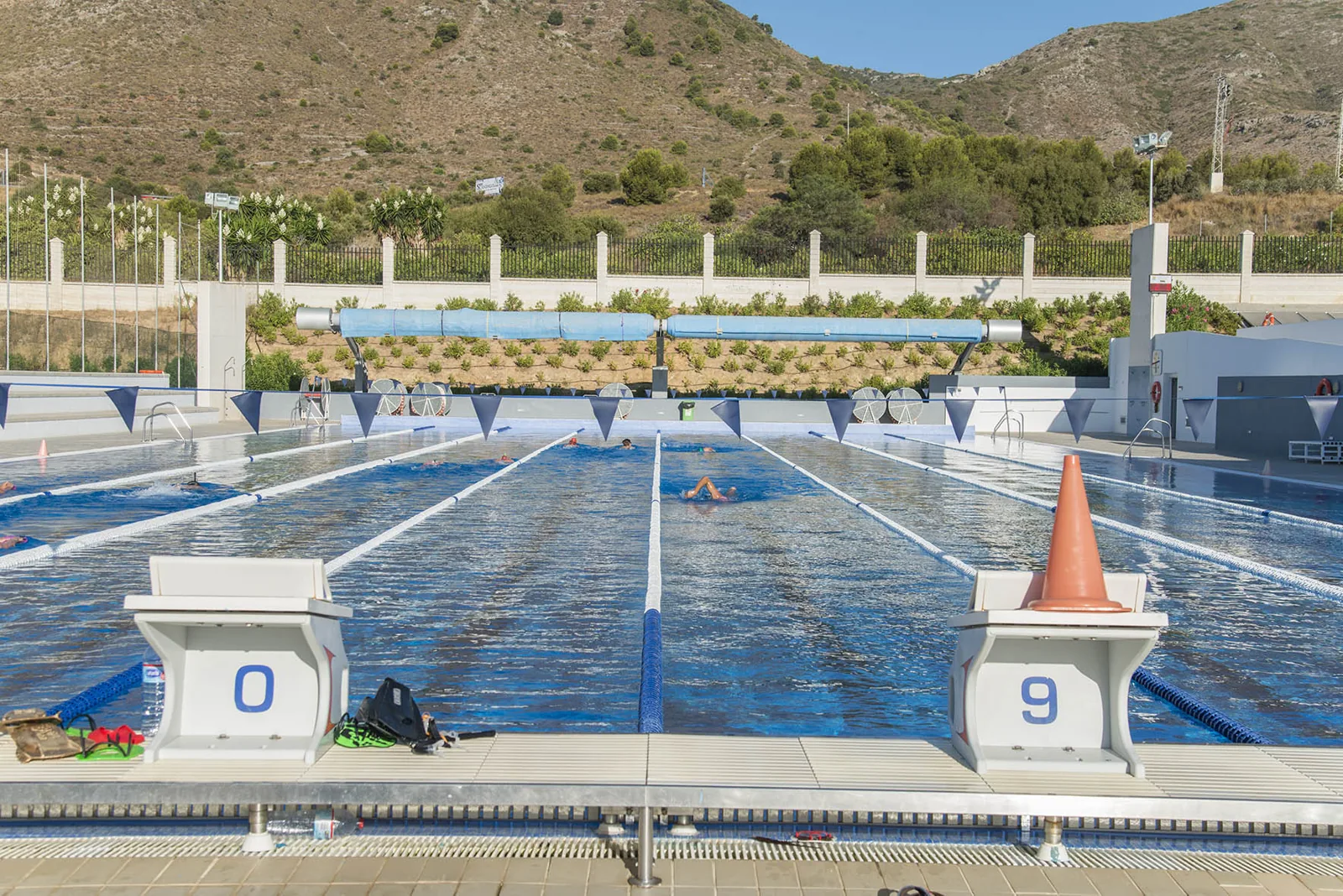
Virgen del Carmen III y IV outdoor pools
Torremolinos · Outdoor 50 m pool
Good reasons to cover up
- Sun protection. At outdoor pools and the beach a rash vest protects your shoulders and back, the places people burn first. In Australia and New Zealand, children and adults wear them as a matter of course.
- Body confidence. Plenty of adults feel more relaxed in the water with their top half covered. A swim T-shirt does that without breaking pool rules.
- Warmth. A long-sleeved swim top keeps a little heat in during a long session in a cooler pool or a lido in spring.
- Skin and scars. Some people cover eczema, scars or a new tattoo. A new tattoo should stay out of the water entirely until it has healed. See swimming after a tattoo.
- Religious dress. See modest swimwear and burkinis.
Children in rash vests. Kids in long-sleeved rash vests are a common sight at outdoor pools and are welcome at almost all public pools. A cotton T-shirt over a swimsuit is not, however much it would help with the sun.
T-shirts at the beach
In the sea or a lake there are no pool rules, so a cotton T-shirt is your choice. It will protect you from the sun, but it has drawbacks:
- Wet cotton lets more UV through than dry cotton, so the protection drops once you are in the water.
- It gets heavy and drags, which tires you faster when swimming.
- It takes a long time to dry and stays cold on your skin.
A rash vest is lighter, dries faster and keeps its sun protection when wet. Our guide to sea and pool swimming covers the other differences.
Choosing a swim top
- Fabric. Look for swimwear fabric: polyester or nylon with elastane. Polyester lasts longer in chlorine.
- Fit. A close fit drags less. A looser swim T-shirt is fine for relaxed swimming but slows you down in the lane.
- Sleeves. Short sleeves for swimming lengths, long sleeves for sun protection outdoors.
- UPF rating. For outdoor swimming, choose a top labelled UPF 50+.
- Colour. Bright colours make you easier to spot in open water.
For the other styles of swimwear, see types of swimwear.
FAQ
Can I wear a T-shirt over my swimsuit at a public pool?
Not a cotton one at most pools. A rash vest or swim T-shirt made of swimwear fabric is usually fine.
Why do rash vests get allowed but T-shirts do not?
Rash vests are made of swimwear fabric that does not shed fibres or soak up water, and they are not worn in from the street.
Can I swim in a sports top or gym T-shirt?
Most pools say no, even if it is synthetic, because it is not made for swimming and is usually worn outside.
Does a wet T-shirt still protect from the sun?
Less than a dry one. Wet cotton lets more UV through. A rash vest labelled UPF 50+ keeps its protection in the water.