Do you need goggles to swim?
 By the Find My Swimming Pool team·
Updated ·
4 min read
People swam for centuries without goggles, and plenty still do a gentle breaststroke with their head up. But if you put your face in the water, goggles make the swim easier, more comfortable and safer in a busy lane.
The short answer
You do not need goggles to swim, and no public pool requires them. They are worth having if you swim with your face in the water. Goggles stop the stinging and red eyes many people get in pools, let you see the lane line and the wall, and make it easier to breathe properly in front crawl. If you swim heads-up breaststroke or only splash about, you can manage without. If you wear contact lenses, goggles are strongly advised.
What goggles do for you
- Comfortable eyes. Pool water stings many people's eyes, especially after a long swim. Goggles keep it out.
- Clear vision underwater. Without goggles everything is a blur. With them you can see the black line on the pool floor, the wall coming up for your turn and other swimmers.
- Better technique. Front crawl and backstroke work best with your face in the water. Many beginners lift their head to keep their eyes dry, which drops their legs and makes swimming much harder.
- Safety in the lane. Seeing the swimmer ahead and the person coming the other way prevents collisions. Our guide to lane swimming etiquette explains the rest.
- Open water. In lakes and the sea, goggles protect against salt, algae and glare, and tinted lenses help you sight the next buoy.
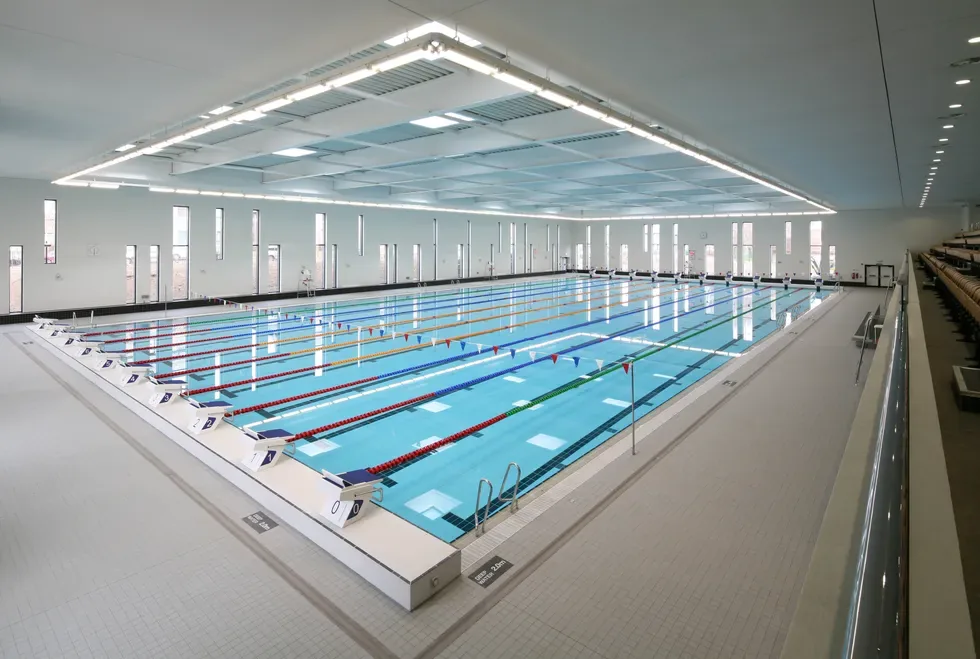
Red eyes and pool water
Most people blame chlorine for stinging eyes, but the US Centers for Disease Control and Prevention points to chloramines instead. These form when chlorine combines with sweat, urine and other matter swimmers bring into the water. Chloramines can irritate the eyes, and the CDC notes they are more of a problem in indoor pools, which are often less well ventilated. Its page on eye irritation gives the advice for swimmers: shower before you swim, use the toilet and never pee in the pool.
Goggles keep that water out of your eyes. They do not fix a badly run pool, so if your eyes are bad after every visit, tell the staff. Our guide to red eyes after swimming covers the causes in more detail. If your eyes stay sore, painful or blurry well after a swim, see a doctor or optician.
Contact lens wearers. Swimming in contact lenses without goggles is not advised, because pool water can carry germs that cause eye infections under the lens. Wear well-sealed goggles, or buy prescription goggles. See swimming with contact lenses.
When you can skip them
- You swim heads-up breaststroke and your face rarely goes under.
- You are in the water for a play or a short splash, not lengths.
- You are at an aqua aerobics class.
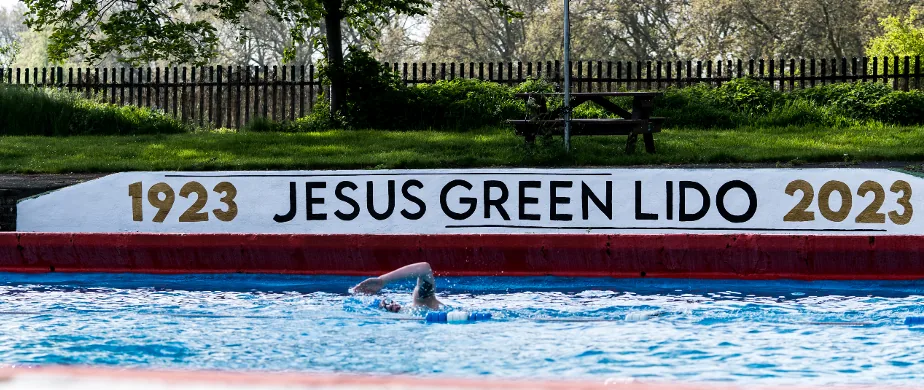
- You swim in a lido or the sea, and the water does not bother your eyes.
Learning to open your eyes underwater without goggles is also a useful safety skill, and swimming teachers practise it with children. It is fine to swim without them now and then.
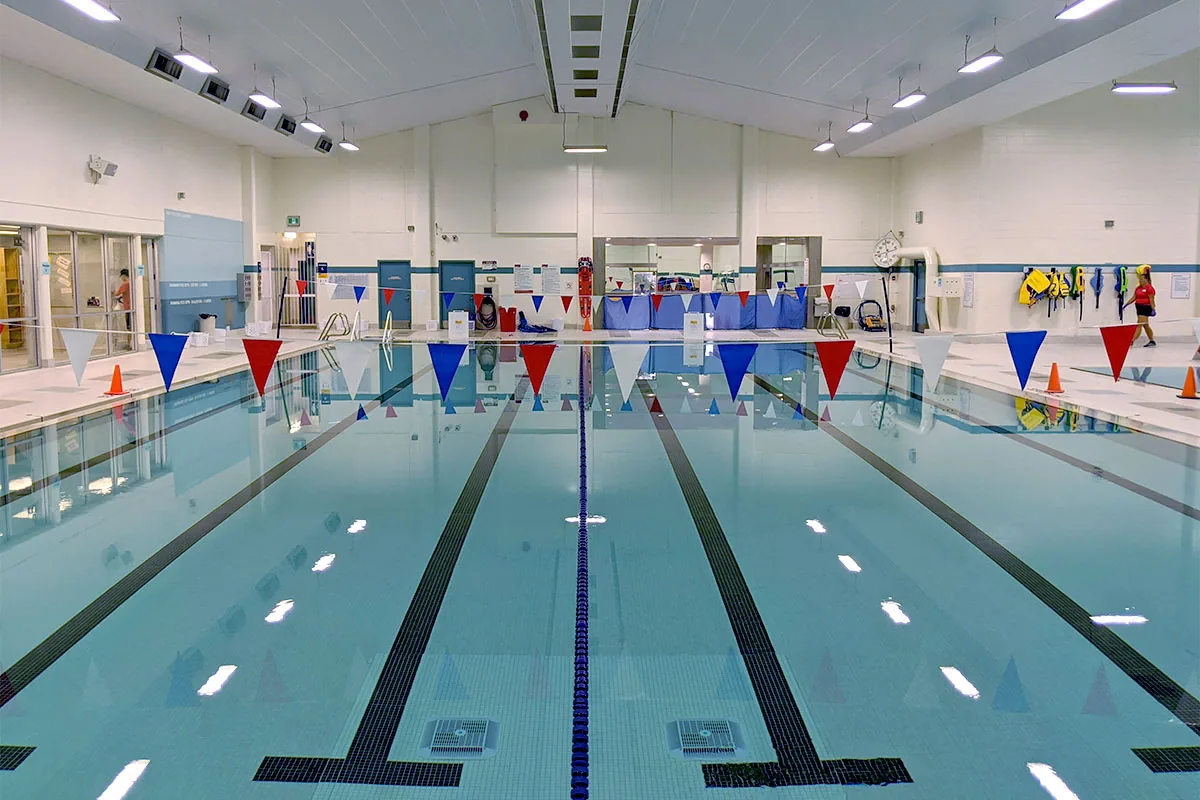
Glenmore Aquatic Centre
Calgary · Lane pool
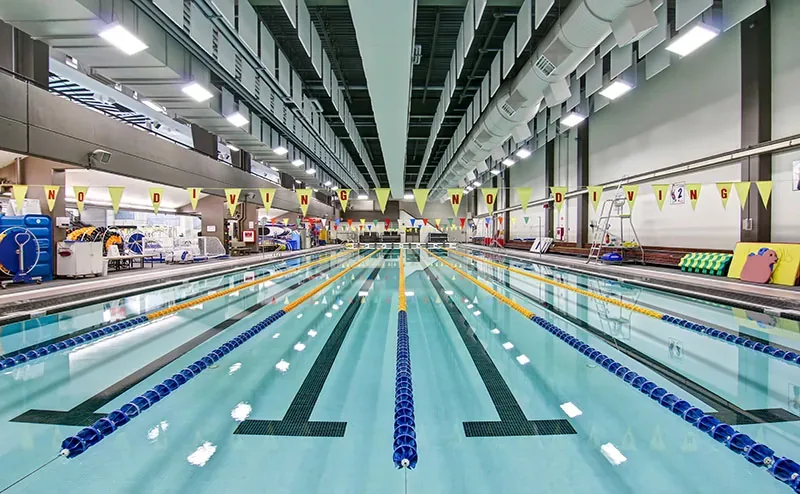
Kinsmen Sports Centre
Edmonton · 50m pool
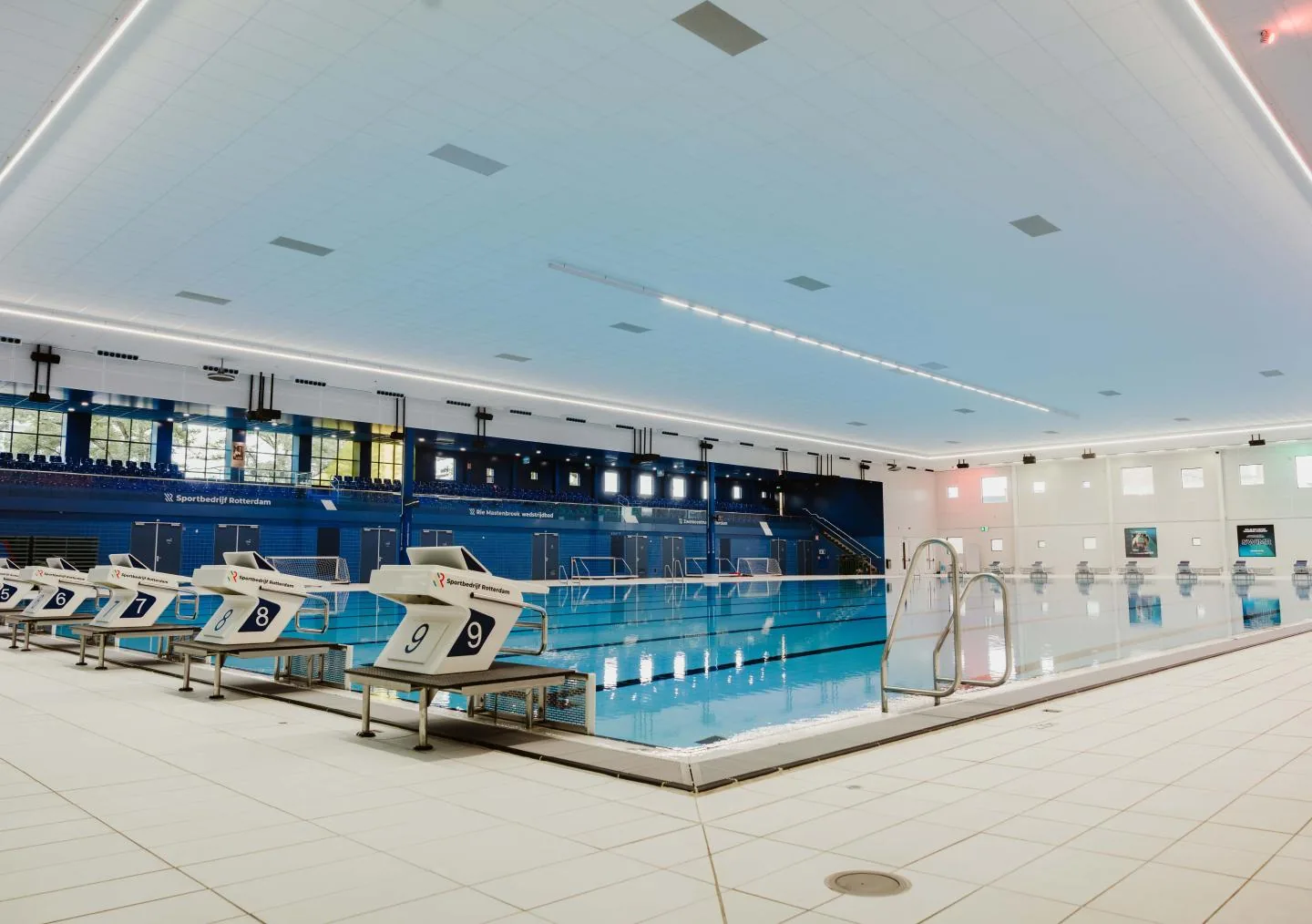
Zwemcentrum Rotterdam
Rotterdam · 50m pool
Types of goggles
| Type | What it is like | Best for |
|---|---|---|
| Standard soft-seal goggles | Silicone gaskets, adjustable strap | Most pool swimmers |
| Racing goggles | Small, low profile, firm seal | Club swimmers and racing |
| Swedish goggles | Hard plastic, no gasket, self-assembled | Experienced racers who like a custom fit |
| Swim masks | One large lens over both eyes and the upper face | Open water, comfort, wide view |
| Prescription goggles | Corrective lenses in a standard frame | Short-sighted swimmers |
Lens colour matters too. Clear lenses suit indoor pools. Tinted, smoked or mirrored lenses cut glare at outdoor pools and in open water.
Getting a good fit
- Hold the goggles against your eyes without the strap and press gently. If they stick for a second or two, the seal fits your face.
- Adjust the nose bridge so the lenses sit over your eyes, not pressed into the side of your nose.
- Put the strap high on the back of your head, not around your ears.
- Tighten just enough to keep water out. Too tight leaves marks and gives headaches.
If yours fog up after a few lengths, our guide on how to stop goggles fogging has the fixes.
FAQ
Do you have to wear goggles in a public pool?
No. Goggles are optional at public pools. Some swimming lessons and clubs ask for them.
Is it bad to swim without goggles?
Not harmful for most people, but pool water can make your eyes red and sore. Goggles prevent that.
Can I open my eyes underwater in a pool?
Yes. It may sting a little and everything will look blurry, but it does no lasting harm for most people.
Why do my goggles leave marks around my eyes?
They are too tight, or the seal is the wrong shape for your face. Loosen the strap or try a different style.