Swim nappies: what pools require
 By the Find My Swimming Pool team·
Updated ·
5 min read
If your child is not toilet trained, almost every public pool will ask for a swim nappy (a swim diaper in North America). Many also want a second layer on top. Here is what pools require, which nappies work and how to avoid the dreaded pool closure.
The short answer
Public pools require babies and toddlers who are not toilet trained to wear a swim nappy, never an ordinary one. Many pools in the UK and Ireland also ask for a snug swim pant or neoprene cover over the top, the so-called double layer. Swim nappies hold in solid poo but not wee, and they are not leak-proof. The CDC advises checking them about every 60 minutes and changing them in the changing room, away from the poolside. Children with diarrhoea should stay out of the water.
What pools require
Rules are set by each pool, but most follow the same lines:
- Who needs one. Any child who is not reliably toilet trained. Some pools give an age, such as under three, but the real test is whether your child can tell you in time.
- What counts. A disposable swim nappy, or a reusable fabric swim nappy with elastic at the legs and waist.
- Double layer. Many UK and Irish leisure centres ask for a swim nappy plus a close-fitting outer layer: a neoprene swim pant or a tight swimsuit over the top. Some baby swimming schools make this a condition of joining a class.
- Adults too. Pools apply the same principle to older children and adults with continence needs. Ask staff discreetly; most have a policy and accessible changing rooms.
Pools in Spain, France and Germany follow similar rules. In Canada and Australia, the wording is usually swim diaper and swim pants. If you are not sure, phone the pool or check its family swim page before you go.
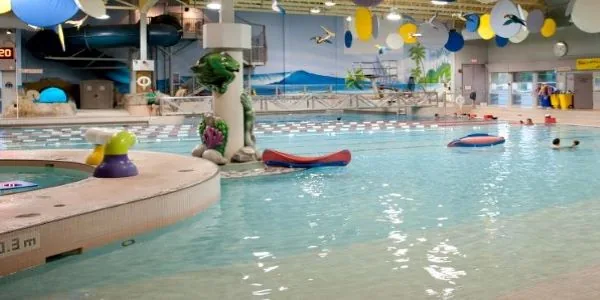
Types of swim nappy
| Type | What it is | Good to know |
|---|---|---|
| Disposable swim nappy | A pull-up made from material that does not swell in water | Easy for occasional swims and holidays. One use only. |
| Reusable swim nappy | A fabric nappy, often with a mesh or towelling lining and tight leg cuffs | Washable and cheaper over a few months. Needs to fit snugly. |
| Neoprene outer pant | A stretchy, close-fitting cover worn over a swim nappy | The second layer many pools ask for. Also keeps a small baby warmer. |
Fit matters more than brand. The leg and waist cuffs should sit flat against the skin with no gaps. A nappy that is too big lets solids escape; one that is too small marks the skin.
Why ordinary nappies are banned
An ordinary disposable nappy is built to soak up liquid. In a pool it soaks up pool water instead, swells to several times its size, gets heavy and drags down. It can split and release the absorbent gel into the water. It also stops holding in anything else.
A swim nappy works differently. It does not absorb water at all. Its only job is to keep solid poo in until you can get out. That is also why you will not find a swim nappy that holds wee: it is designed to let water pass through.
Not leak-proof. The CDC's swim nappy advice says swim nappies and swim pants may hold in some solid poo but are not leak-proof, and do not stop germs like Cryptosporidium getting into the water. A nappy is one layer of protection, not a guarantee.
Tips for the swim
- Put the swim nappy on in the changing room just before you go to the pool, not at home, so it is fresh.
- Take your child to the toilet or change them right before you get in, even if they do not seem to need it.
- Check the nappy about once an hour, as the CDC suggests, and straight away if you notice a sudden quiet face or a strained look.
- Change nappies on the changing mats in the changing room, never on the poolside or on a lounger.
- Wash your own hands and your child's after a change.
- Pack a spare swim nappy, a normal nappy for afterwards and a nappy bag.
Keep your child out of the water if they have had diarrhoea. The CDC says anyone with diarrhoea should not swim, with or without a swim nappy. If your child has been diagnosed with Cryptosporidium, ask your GP or health visitor how long to wait after the symptoms stop.
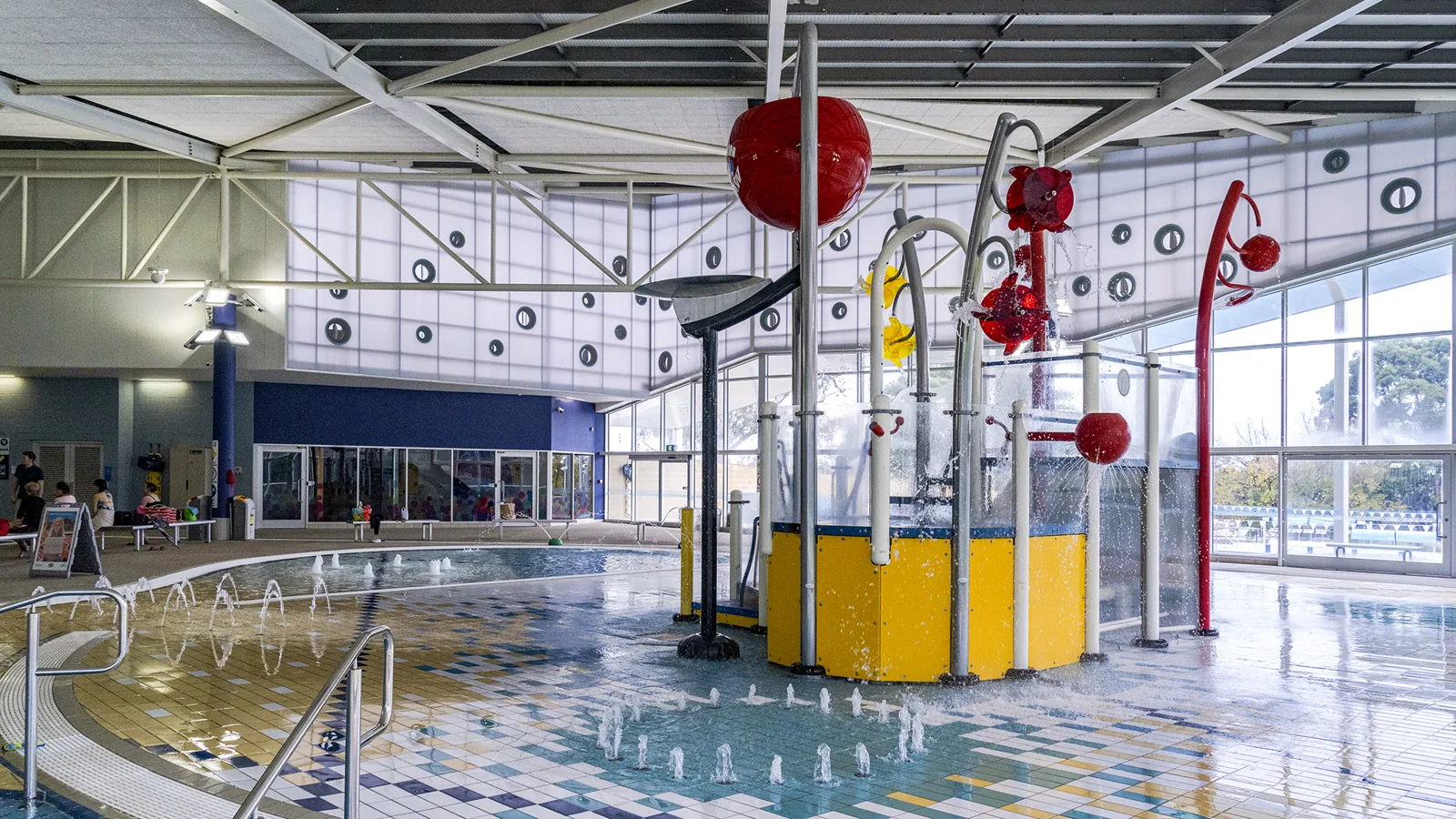
If there is an accident
Tell a lifeguard straight away, even if it is embarrassing. Pools have a set procedure. A solid poo is usually removed and the area treated, sometimes with a short closure. A loose or runny stool is a bigger problem: some germs survive normal chlorine levels for days, so the pool may close for many hours while staff raise the chlorine and run the filters. Telling staff quickly shortens the closure and protects other swimmers.
Take your child out, change them in the changing room and do not go back in that session. No one will lecture you. Lifeguards deal with this more often than you think.
To understand what happens to germs in the water, see can you get sick from a swimming pool. Wondering when to start? Read when can babies go swimming.
Cities with the most pools for kids in our directory:
Matsqui Recreation Centre
Abbotsford · Zero-depth beach
Aqualink Box Hill
Melbourne · Indoor splash pad
Sandra Schmirler Leisure Centre
Regina · Tot pool
FAQ
Do swim nappies hold wee?
No. They are designed not to absorb water, so wee passes straight through. They are only meant to hold in solid poo.
Can I use a normal nappy in the pool?
No. It soaks up pool water, swells and can burst, and it is banned at public pools. Use a swim nappy.
What is a double nappy at the pool?
A swim nappy with a tight-fitting outer layer, such as a neoprene swim pant, worn over it. Many UK and Irish pools and baby swim classes ask for it.
Are reusable swim nappies allowed?
Yes. Pools accept reusable swim nappies as long as they have tight elastic at the legs and waist. Many parents use one under a neoprene pant.
Until what age does a child need a swim nappy?
Until they are reliably toilet trained. Some pools set an age, so check if your child is older but still has the odd accident.