Flip-flops and pool shoes: do you need them?
 By the Find My Swimming Pool team·
Updated ·
5 min read
In a British leisure centre almost everyone walks to the pool barefoot. In Milan or Madrid you may be stopped at the door without sandals. Here is what pool shoes are for, when you need them and what to buy.
The short answer
Most pools in the UK, Ireland, Australia, New Zealand and Canada do not require pool shoes, but flip-flops are a good idea in changing rooms and showers. The NHS advises wearing flip-flops in places like changing rooms and showers to avoid athlete's foot, and not walking barefoot in public places if you have a verruca. In Italy, Spain and parts of Germany and Austria, pool sandals are often compulsory on the poolside. Take them off at the edge, and never wear outdoor shoes past the changing area.
What pool shoes are for
Pool shoes do three jobs.
- Fungus and warts. Athlete's foot and verrucas spread on warm, wet floors. The NHS page on athlete's foot names changing rooms and showers as typical places to catch it and says to wear flip-flops there. A thin layer of rubber between your feet and the floor is the cheapest protection there is.
- Grip. Pool decks and changing room floors are wet, and some tiles are slippery even when they are designed not to be. A sandal with a ridged sole helps, especially for older swimmers and anyone carrying a child.
- Keeping the pool clean. Pools that ask for pool shoes want you to swap out of your street shoes at the changing area, so grit and dirt from outside never reach the poolside. That is the reason behind most of the rules in southern Europe.
They also make cold tiled floors more pleasant in winter, and stop your feet burning on a hot deck at an outdoor pool in summer.
Where they are required
Each pool sets its own rules, but the pattern by country is clear.
| Country | Pool shoes at public pools |
|---|---|
| Italy | Usually compulsory on the poolside, together with a swim cap |
| Spain | Often compulsory at municipal indoor pools; called chanclas |
| France | Rarely required, but you walk through a footbath and must leave street shoes before the pool area |
| Germany, Austria | Recommended in changing areas and showers; some pools require them |
| United Kingdom, Ireland | Optional; most people go barefoot on the poolside |
| Australia, New Zealand, Canada | Optional; thongs (Australia) or jandals (New Zealand) are common at outdoor pools |
In our directory, Milan's Milanosport pools tell swimmers to bring a swimsuit, cap and pool sandals, and several Spanish municipal pools list a cap and chanclas as compulsory. If you are travelling, pack a pair. A pool that requires them may sell them at reception, but not always.
Flip-flops, sliders or water shoes
- Flip-flops. Light, cheap and quick to dry. They fit in a swim bag. The thong between the toes is uncomfortable for some people, and thin soles can be slippery when wet.
- Sliders (pool slides). A single strap over the foot, with a thicker moulded sole. Easy to step in and out of at the pool edge. Usually the best all-round choice.
- Pool clogs. Closed toes and drainage holes. They stay on securely and protect the toes, but take more room in a bag.
- Water shoes. Fabric and rubber shoes you can swim in. They are for rocky beaches, ocean pools and water parks, not for lane swimming. Many pools do not allow footwear in the water, so check first.
Whatever you choose, look for a textured sole with some grip and a material that does not hold water. Avoid anything with a leather or cork footbed: it stays wet and starts to smell.
Verruca socks. If you have a verruca, the NHS advice is to cover it with a plaster when swimming. Some swimmers wear a thin rubber verruca sock instead. Our guide to verrucas and swimming pools covers whether you can still swim.
How to use them
- Change out of your street shoes at the point the pool marks, usually the entrance to the changing village or a line of benches. Put the outdoor shoes in your locker.
- Wear your pool shoes through the changing room, the showers and the toilets.
- Walk to the poolside in them. Leave them neatly at the edge, at the end of your lane, or on the racks some pools provide. Do not leave them on the edge where swimmers turn or push off.
- After your swim, put them back on before you walk to the showers.
- At home, rinse them and let them dry in the open, not sealed in a bag.
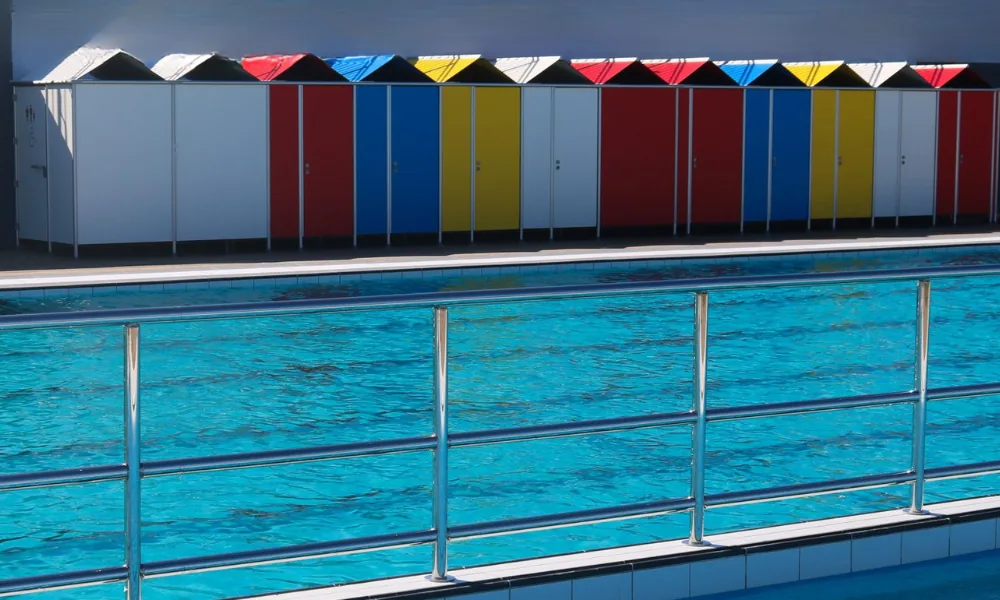
At outdoor pools, such as lidos with changing huts along the poolside, you may walk further on wet ground. Sliders are easier than flip-flops on a long walk.
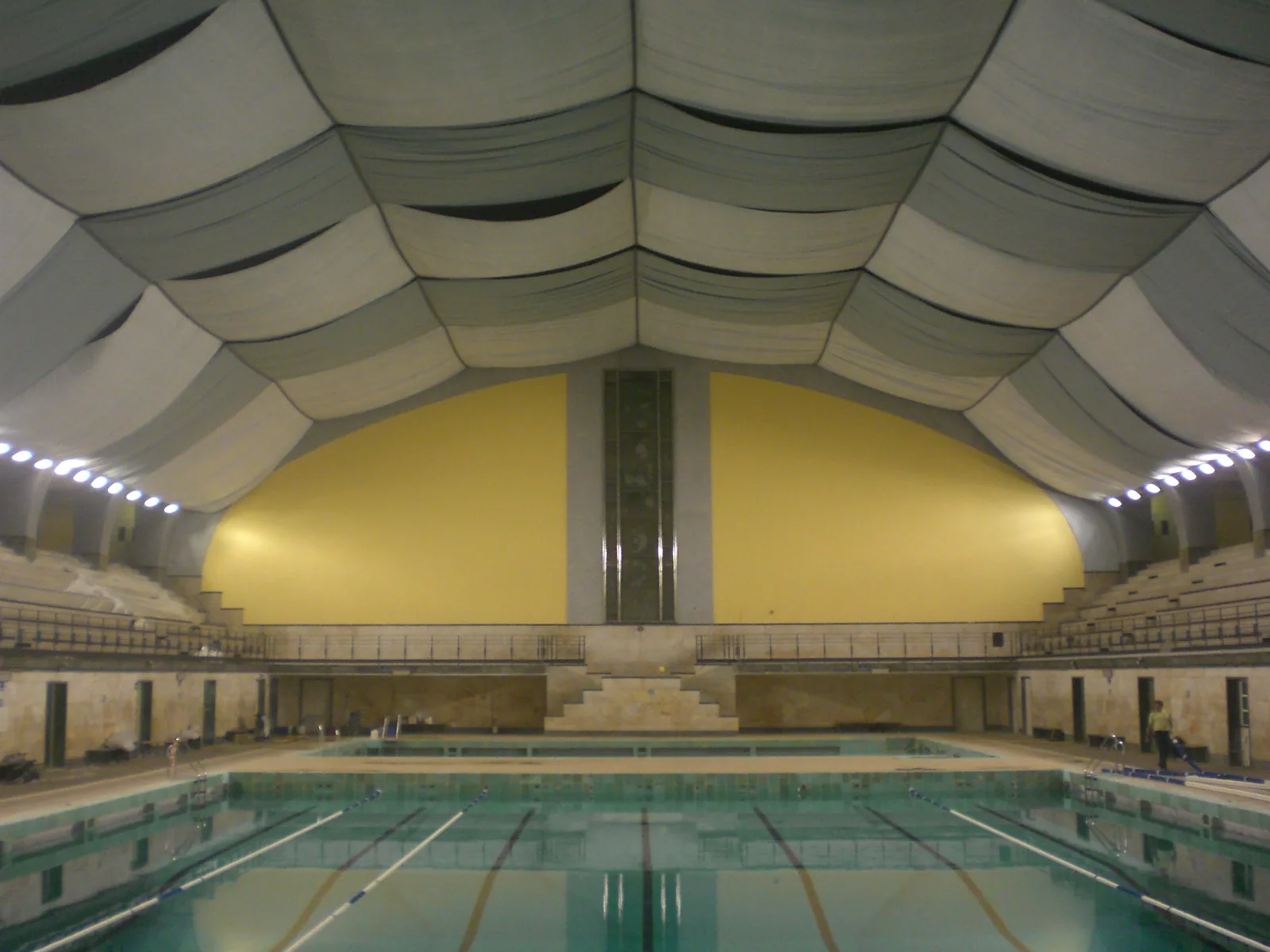
Piscina Cozzi
Milan · Pool sandals required
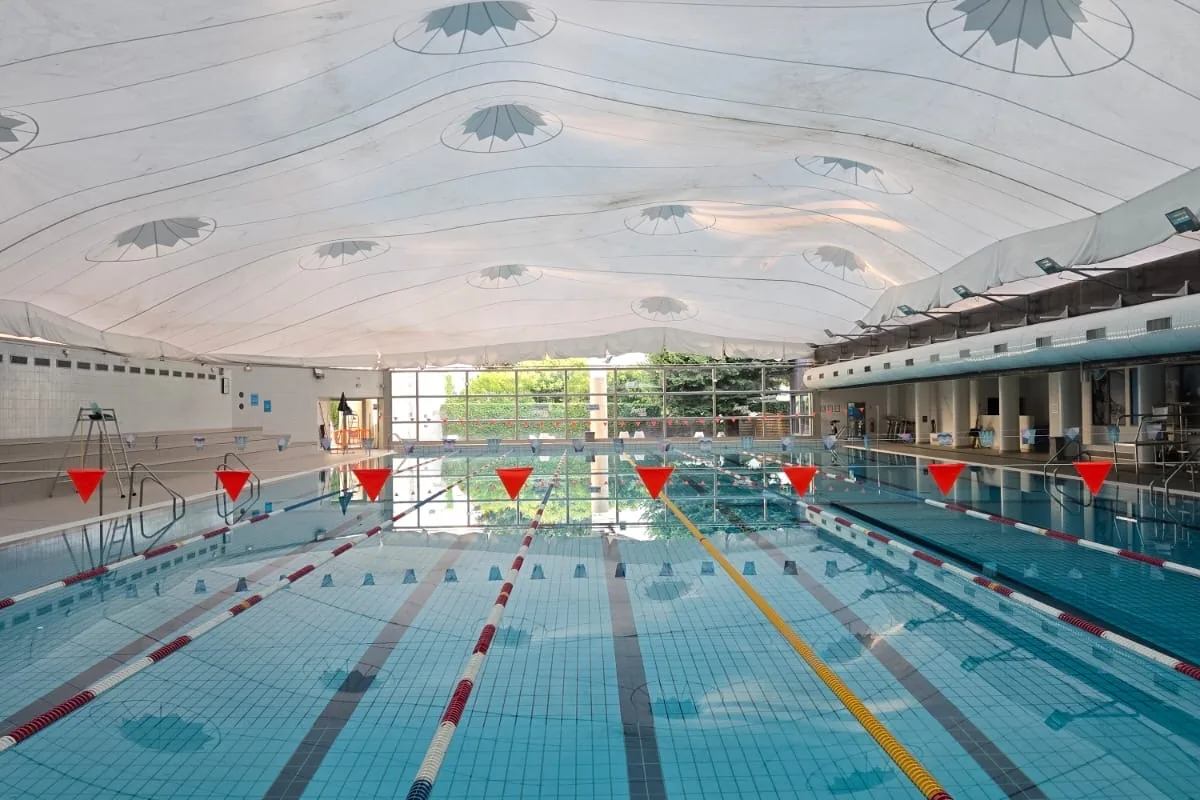
Piscine Georges Hermant
Paris · 8-lane 50m pool
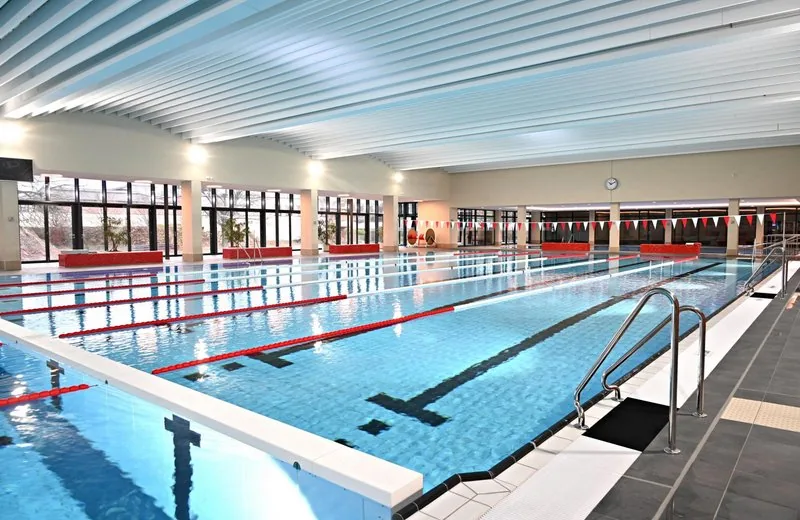
Stadtbad Tiergarten
Berlin · 50m pool
For the rest of your swim bag, see what to bring swimming. If changing rooms are your worry, pool changing rooms explains how village and separate changing areas work.
FAQ
Can I wear trainers on the poolside?
No. Outdoor shoes are not allowed beyond the changing area at almost every pool, because they bring dirt and grit onto the deck. Some pools let spectators in with shoe covers.
Are flip-flops allowed in the pool?
No. Leave them at the edge. Footwear in the water is only allowed in special sessions or at water parks with water shoes.
Do I need pool shoes in Spain?
At many municipal indoor pools, yes. Rules list a cap and chanclas, the Spanish word for pool sandals. Outdoor summer pools are often more relaxed, but bring a pair anyway.
Do pool shoes stop verrucas?
They reduce contact with wet floors where the virus spreads, which lowers the risk. They do not make it impossible, and other people's bare feet still touch the same floors.