Why are swimming pools blue?
 By the Find My Swimming Pool team·
Updated ·
5 min read
Fill a glass from the pool and the water is clear. Look down a 2 m deep end and it is a strong blue. The colour is real, and it comes from the water itself as much as from the paint and tiles.
The short answer
Swimming pools look blue for two main reasons. Water absorbs a little red, orange and yellow light, and over a depth of a metre or more that adds up, so the light that bounces back to your eye is mostly blue. Pools then strengthen the effect with white or blue tiles and liners that reflect light back up through the water. Outdoors, the sky reflecting off the surface adds more blue. Chlorine does not make the water blue. Clear, sparkling blue is a sign the water is well filtered and balanced.
Water itself is blue
Pure water has a very faint blue colour of its own. Water molecules absorb a small amount of light at the red end of the spectrum. In a glass you can't see it, because the light only passes through a few centimetres. In a pool, light travels down to the floor and back up again, through several metres of water in total. Over that distance enough red, orange and yellow light is soaked up that the light reaching your eye is noticeably blue.
That is why the shallow end looks paler than the deep end of the same pool, and why a diving pool 4 or 5 m deep looks a much darker blue than the learner pool next to it. The deeper the water, the more red light it absorbs, and the bluer it looks.
Tiles, liners and lights
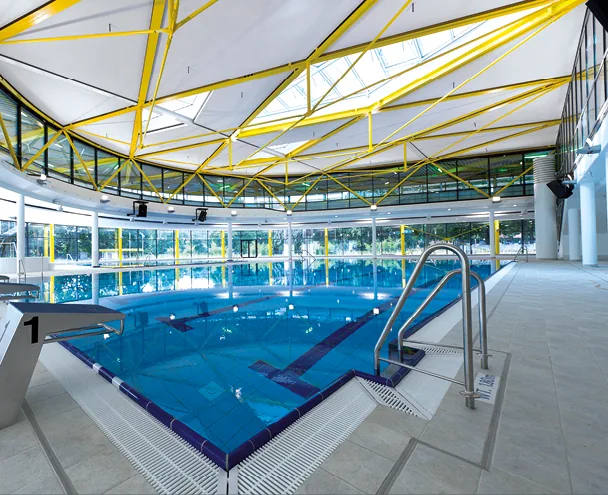
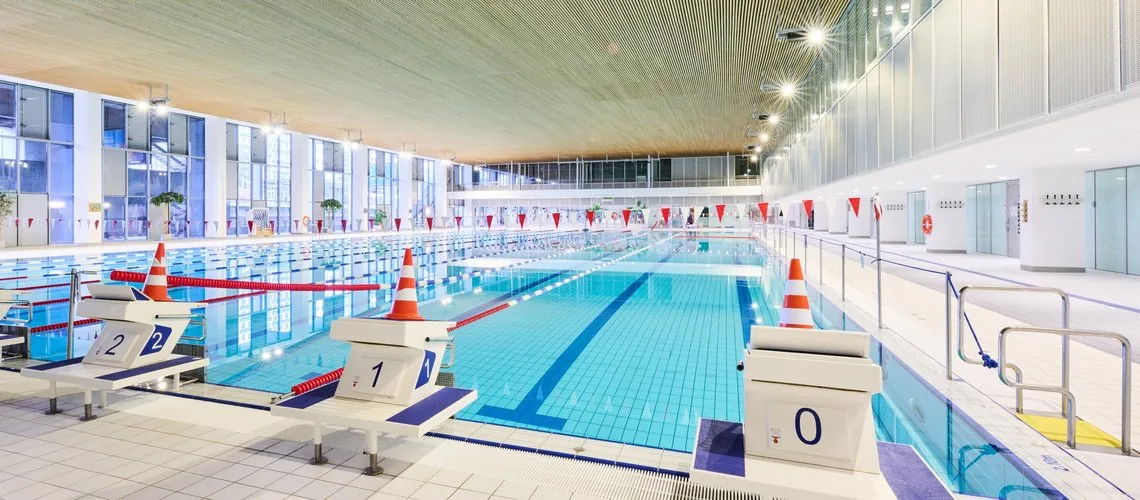
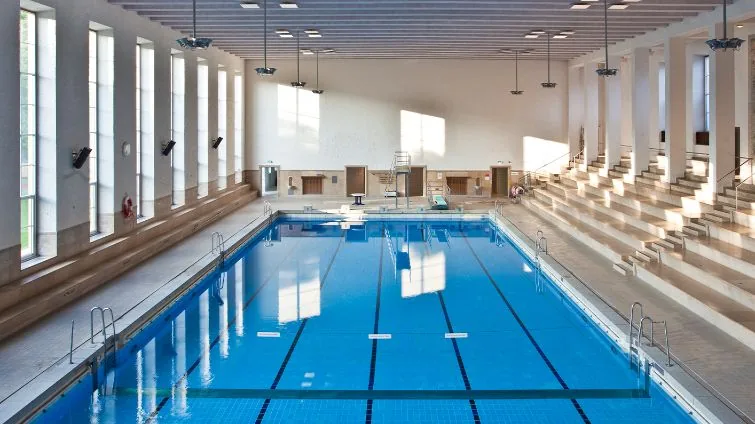
Pool builders help the colour along. Most pools are finished in white, pale blue or light turquoise tiles, or a blue vinyl liner. A white floor reflects almost all the light back up through the water, so you see the water's own blue at its clearest. A blue floor adds its colour on top.
There are practical reasons for pale floors as well. Lifeguards need to see the bottom clearly to spot a swimmer in trouble, and staff need to see dirt, hair and plasters on the floor so they can clean them. Dark lane lines on a pale floor also give lane swimmers something to follow.
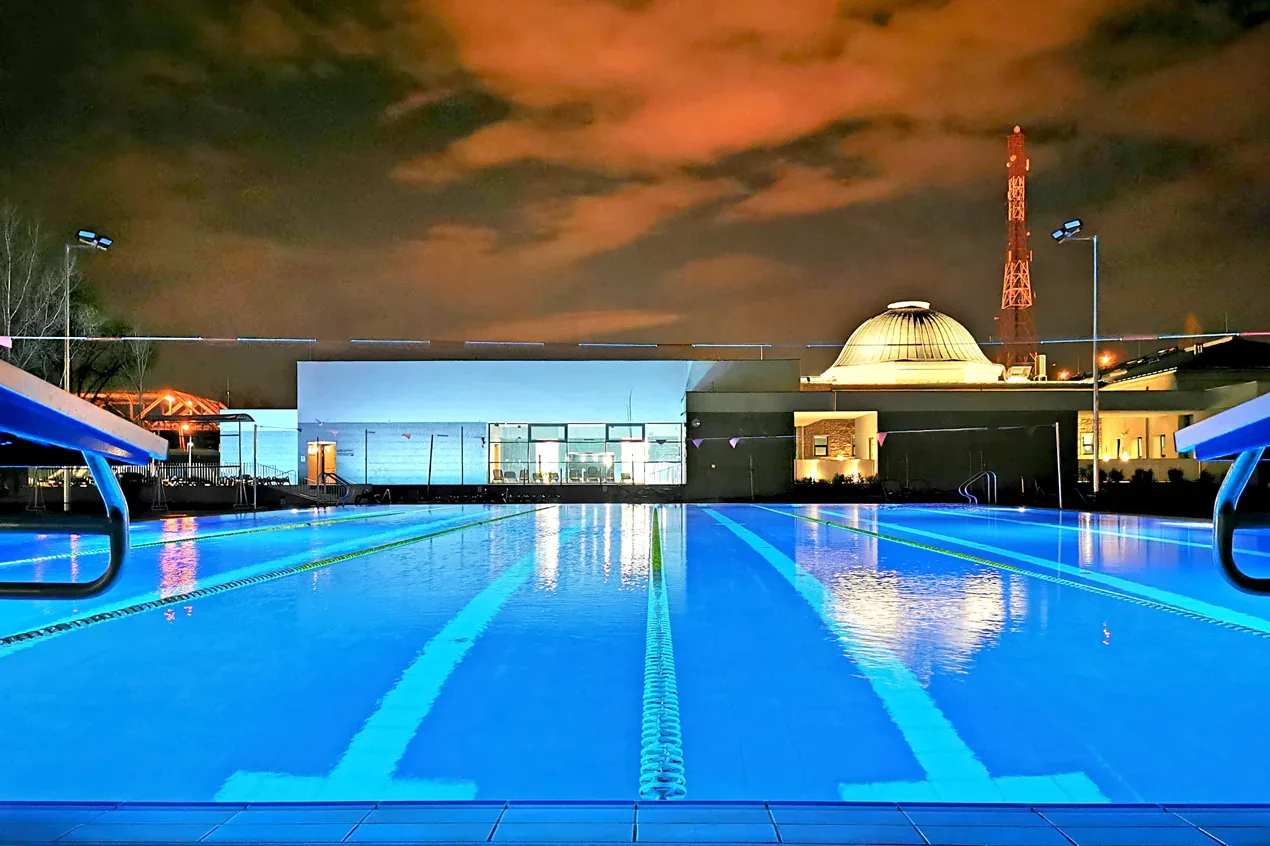
Some pools choose a different finish on purpose. Dark grey or black tiles make water look deep green or almost black, which is popular in hotel and design pools. Sand-coloured finishes give a Caribbean turquoise. Underwater lights at night can turn the whole pool into a block of bright blue light.
Sky, sun and depth
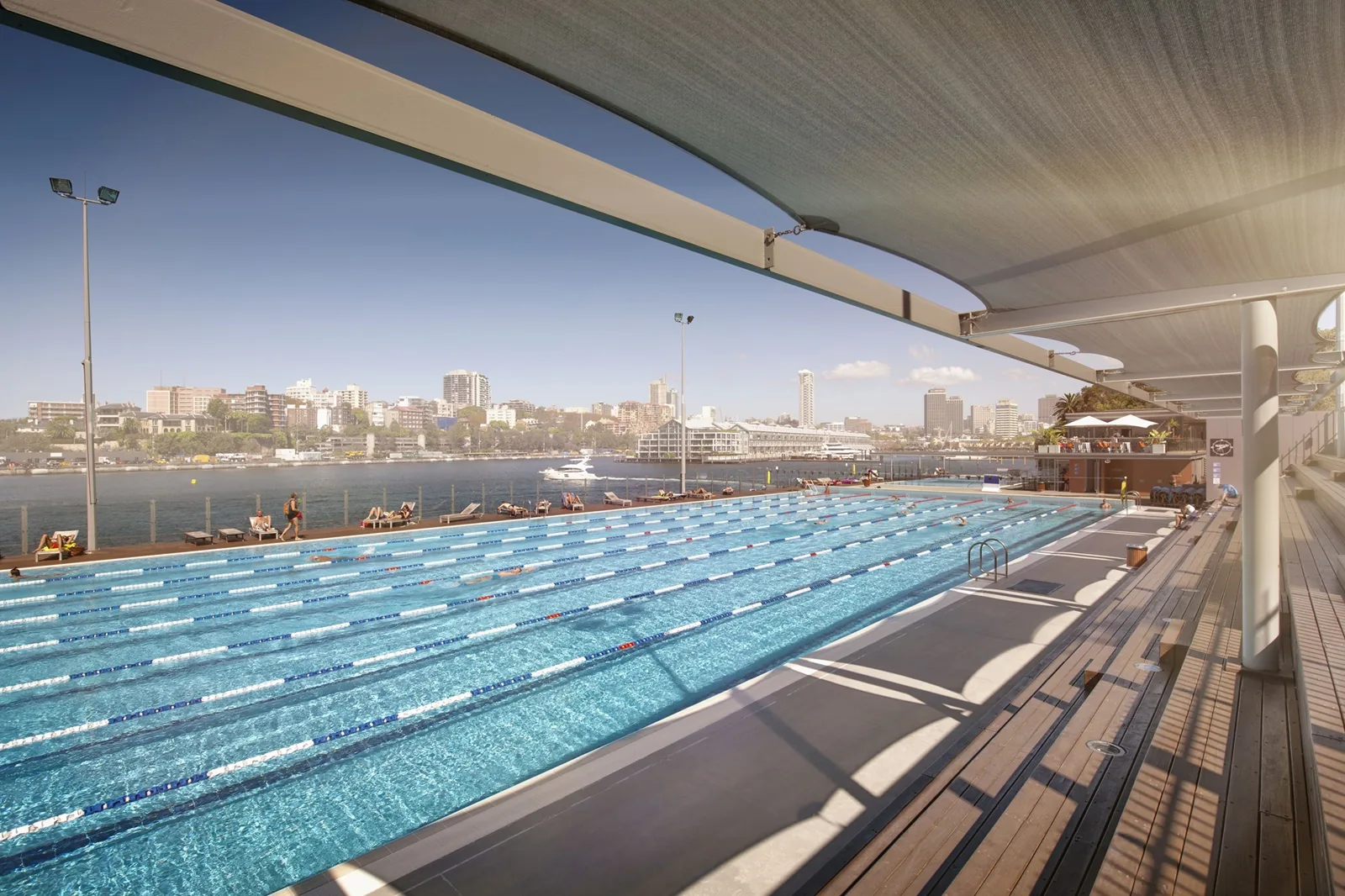
An outdoor pool also picks up colour from above. The surface reflects the sky, so on a clear day the pool takes on the sky's blue, and on a grey day it looks duller and greener. Sunlight shining straight down into clean water lights up the tiles and gives the bright, glittering turquoise you see in holiday photos.
The angle you look from matters. Looking straight down, you see mainly the floor through the water. Looking across the pool at a low angle, you see more of the reflected sky.
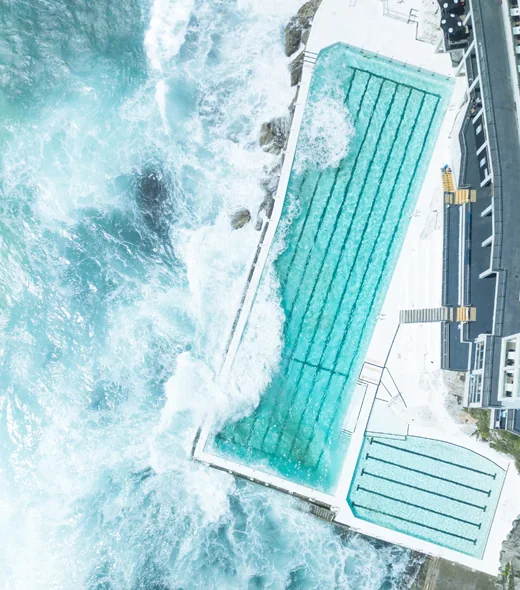
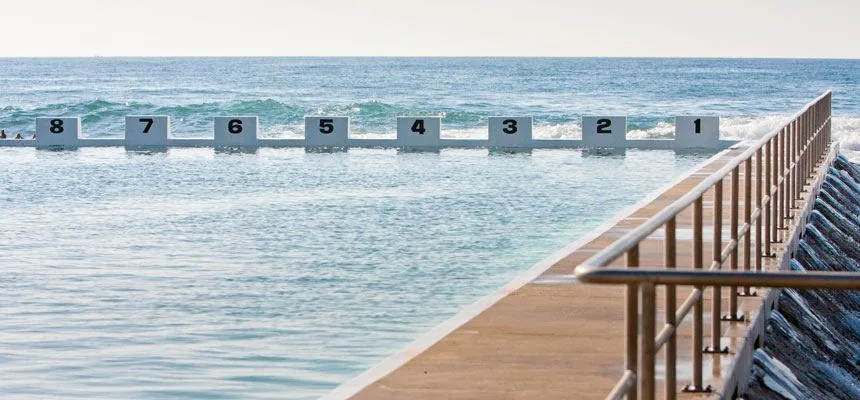
The sea works the same way, with extras. Clean open sea looks blue for the same reason pools do. Near the coast, tiny algae, sand and dissolved plant matter in the water add green and brown. That is why an ocean pool filled by the tide often looks greener than a tiled pool. See ocean pools for more on them.
When pool water is not blue
A colour change is often the first sign that something is wrong with the water.
| What you see | Usual cause |
|---|---|
| Cloudy or milky water | Poor filtration, water chemistry out of balance, or a sudden rush of bathers |
| Green water | Algae growing because disinfectant levels have dropped, mostly in poorly kept outdoor pools |
| Green or brown tint in clear water | Dissolved metals such as iron or copper, often from the water supply or pipework |
| Grey or dull water indoors | Often just the lighting, but check the floor is clearly visible |
A good test at any pool: stand at the edge of the deep end and look at the floor. If you can see the drain covers and lane lines sharply, the water is clear. If you can't, a well-run public pool will close it until it is fixed, because lifeguards must be able to see the bottom.
The chemicals that keep pool water clear are covered in what chemicals are in pool water, and the hygiene side in how clean is pool water.
Andrew (Boy) Charlton Pool
Sydney · Outdoor saltwater 50 m
Nordbad
Munich · 33 m sports pool
Pesterzsébeti Jódos-sós Gyógy- és Strandfürdő
Budapest · Outdoor 25 m pool
FAQ
Does chlorine make pool water blue?
No. Chlorine in pool water is colourless at the levels used. The blue comes from the water absorbing red light and from the white or blue tiles underneath.
Why does the deep end look darker blue?
Light travels through more water there, so more red light is absorbed and the blue is stronger.
Is a dye added to make pools blue?
Public pools do not normally colour their water. Some home pool owners use blue colourants for looks, but they do nothing for the water quality.
Why do some pools look green?
Dark tiles, sea water or dissolved metals can give a green tint in clean water. Murky green water usually means algae, a sign the water treatment has failed.