Is swimming healthy?
 By the Find My Swimming Pool team·
Updated ·
6 min read
Swimming is one of the few sports you can start at 8 or 80. It works your heart and most of your muscles while the water carries your weight. Here is what it does for your body, where it falls short, and who should check with a doctor first.
The short answer
Yes. Swimming is a full-body aerobic exercise that trains your heart, lungs and most of your major muscle groups, with very little impact on your joints. The NHS counts swimming as vigorous activity, so 75 minutes a week meets the adult guideline. A large British study linked regular swimming with a lower risk of early death and of death from heart disease. Its weak spots are bone loading and drowning risk if you cannot swim well. For most people it is one of the safest ways to stay active for life.
What swimming does for your body
Swimming asks your heart and lungs to keep a steady supply of oxygen going to muscles that are all working at once. Your legs kick, your arms and back pull, and your core holds you level in the water. That combination is why a 30-minute swim can leave you more tired than a 30-minute walk, even if you never felt out of breath.
- Heart and lungs. Steady lengths are aerobic exercise, the kind that improves your fitness over weeks. Breathing to a rhythm also trains you to control your breath.
- Muscles. Shoulders, back, chest, arms, core, hips and legs all do work. Water resistance is gentle at low speed and grows quickly as you go faster. Our guide to what muscles swimming works breaks this down by stroke.
- Joints. Water supports much of your body weight, so there is no pounding through your knees and hips. That makes swimming popular with people who are heavier, older, injured or stiff.
- Mood and sleep. Many swimmers find the rhythm of lengths calming. The CDC notes that water-based exercise has mental as well as physical benefits. See swimming and mental health.
What the research shows
The best-known study is a 2017 analysis of 80,306 adults in England and Scotland, published in the British Journal of Sports Medicine. People who said they swam had a hazard ratio of 0.72 for death from any cause during follow-up, compared with people who did not swim. That is about a 28% lower risk. For death from cardiovascular disease the hazard ratio was 0.59, about 41% lower (Oja and colleagues, 2017).
Two things to keep in mind. First, this was an observational study. People who swim may differ from people who do not in other ways, such as income or general health, even after the researchers adjusted for these. Second, in the same study running and football did not show a significant link with lower death rates, which says more about who took part than about running being bad for you.
The wider message from exercise research is simple: regular moderate or vigorous activity of almost any kind lowers your risk of heart disease, type 2 diabetes and several other long-term conditions. Swimming is one good way to get it. Our guide to swimming benefits goes through the research topic by topic.
How much swimming counts
The NHS guidelines for adults aged 19 to 64 ask for at least 150 minutes of moderate activity a week, or 75 minutes of vigorous activity, plus muscle strengthening on at least two days. The NHS lists swimming under vigorous activity and water aerobics under moderate (NHS physical activity guidelines).
In practice, intensity depends on how you swim. Lengths where you can only say a few words between breaths are vigorous. A gentle breaststroke where you could chat to the person in the next lane is closer to moderate. A sensible target looks like this:
| How you swim | Rough weekly target |
|---|---|
| Steady lengths, breathing hard | 75 minutes, for example three 25-minute swims |
| Easy lengths with rests | 150 minutes, for example five 30-minute swims |
| Aqua aerobics class | Counts as moderate; mix with other activity |
You can mix swimming with walking, cycling or anything else. Our guide on how often you should swim has sample weekly plans.
Where swimming falls short
Swimming is not perfect, and it helps to know its gaps.
- Bones. Because the water takes your weight, swimming does little to load your bones. Bones respond to impact and weight-bearing work. If bone health matters to you, add walking, running, stair climbing or strength training.
- Technique limits effort. If you can only swim a few lengths before stopping, you may not keep your heart rate up for long. Lessons fix this faster than effort alone. See learning to swim as an adult.
- Shoulders. Lots of front crawl with poor technique can irritate the shoulders. Mixing strokes and building up slowly helps.
- Pool water. Chlorine can dry skin and hair and irritate eyes. Rinse after your swim and wear goggles.
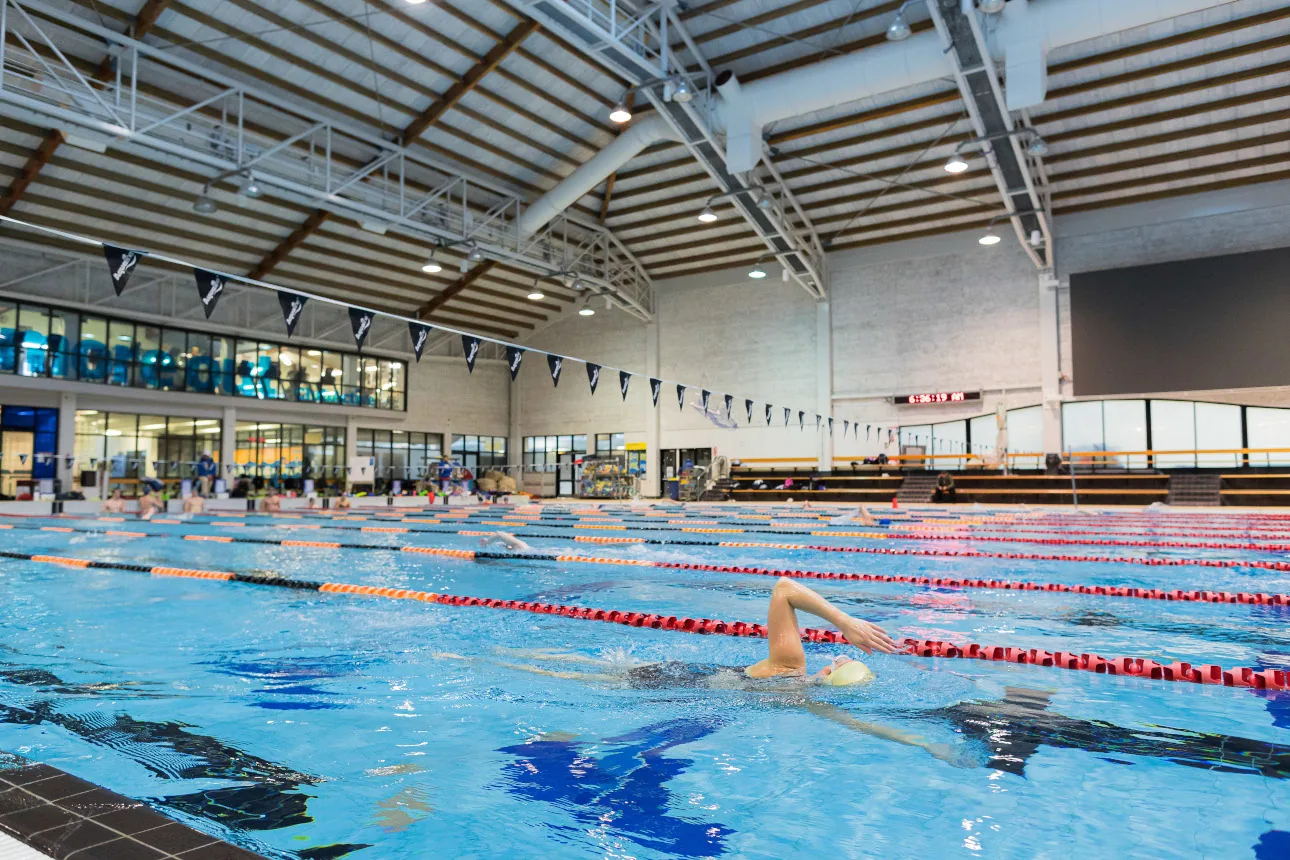
Wellington Regional Aquatic Centre
Wellington · 50 m pool
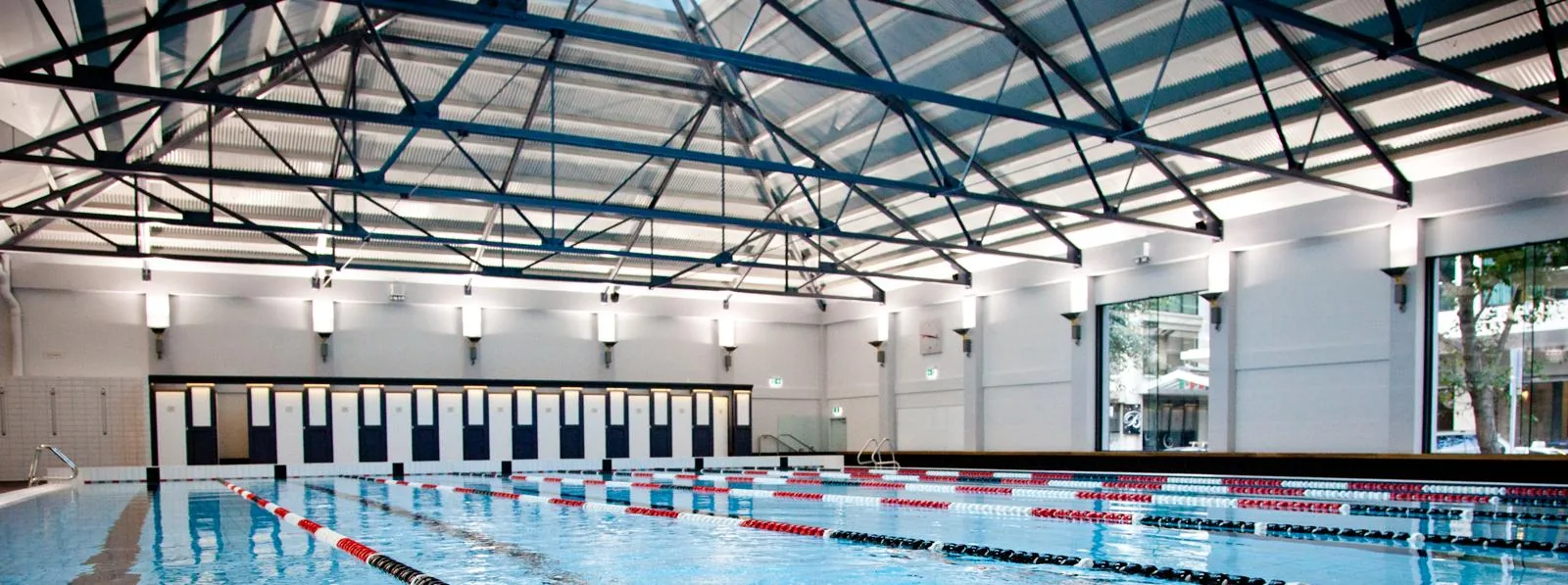
Tepid Baths
Auckland · 25 m lane pool

Theresienbad
Vienna · Outdoor pool
Who should check first
Most people can start swimming without any medical check. Speak to your GP or doctor before you start if you have a heart condition, have had chest pain or fainting during exercise, have epilepsy that is not well controlled, or have recently had surgery or an open wound. If you have asthma, keep your inhaler at the poolside. If you feel chest pain, sudden breathlessness or dizziness in the water, stop, get out and tell a lifeguard.
Swim where there is a lifeguard. Cramp, a mouthful of water or simple tiredness can catch out anyone. A lifeguarded public pool is the safest place to build fitness, especially if you are new to swimming or returning after years away.
Getting started
- Pick a pool with a lane session that suits your speed. Most public pools mark lanes as slow, medium and fast.
- Start with 20 minutes. Swim a length, rest at the wall if you need to, then swim another.
- Add a few minutes each week until you reach 30 to 45 minutes without long stops.
- Mix strokes. Backstroke balances the forward pull of front crawl and breaststroke.
Read lane swimming etiquette before your first lane session. Cities with the most public pools in our directory:
FAQ
Is swimming better than the gym?
It depends on your goal. Swimming trains your heart and muscles together with little joint strain, but it does little for bone strength. Many people do both: swimming for fitness and weights for strength and bones.
Is it healthy to swim every day?
For most people, yes, as long as you vary the effort and rest when you feel worn out or your shoulders ache. Daily easy swims are fine; hard sessions need recovery days.
Is swimming good for older people?
Yes. The water supports your weight, which makes it easier on stiff joints, and many pools run quieter adult or over-50 sessions. Add some weight-bearing activity for bone health.
Does chlorine make swimming unhealthy?
No. Pool chlorine levels are set to kill germs and are safe to swim in. It can irritate eyes and dry skin, so wear goggles and rinse off after your swim.