Swimming vs running: which is better for you?
 By the Find My Swimming Pool team·
Updated ·
5 min read

Both are excellent for your heart, both are cheap, and both can be done almost anywhere. They differ on calories, joints, bones and how easy they are to fit into your week. Here is a straight comparison so you can pick, or decide to do both.
The short answer
Neither is better overall. Running burns slightly more calories at a typical effort, is easier to fit in, and loads your bones, which helps keep them strong. Swimming works more of your upper body, puts almost no strain on your joints, and suits people who are heavier, injured, older or pregnant. Both meet the NHS activity guidelines at a vigorous pace. If you can, combine them: running for bones and convenience, swimming for the rest of your body and easy recovery days.
Side by side
| Swimming | Running | |
|---|---|---|
| Calories, 30 min, 75 kg | About 218 easy, 368 hard | About 281 jogging, 349 at 6 mph |
| Impact on joints | Very low | High |
| Bone loading | Very little | Good |
| Upper body | Works hard | Little |
| Legs | Endurance | Endurance and strength |
| Skill needed | Real technique to swim far | Most people can start today |
| Where and when | Pool times, travel, changing | Out of your front door |
| Cost | Entry fee each time or membership | Shoes |
Calories
The 2024 Adult Compendium of Physical Activities gives jogging at a self-chosen pace 7.5 METs and running at about 6 mph (a 10-minute mile) 9.3 METs. Easy front crawl is 5.8 METs and fast, vigorous front crawl 9.8. For a 75 kg adult over 30 minutes, that is roughly:
- Easy front crawl: 218 calories
- Jogging: 281 calories
- Running at 6 mph: 349 calories
- Fast front crawl: 368 calories
So the gap is less about the sport and more about effort. Most casual swimmers go at an easy pace and stop often, while most runners keep moving. In real life that means running usually burns more per session. Our guide to calories burned swimming has figures for every stroke.

Joints and injury
This is where swimming wins clearly. Every running stride sends a jolt through your feet, knees and hips. Fit runners adapt, but running injuries such as shin splints, runner's knee and Achilles problems are common, especially when people build up too fast.
In the water, your weight is supported. Swimming injuries do happen, mainly sore shoulders from lots of front crawl with poor technique, but they are less common for recreational swimmers. That is why physiotherapists often suggest swimming or pool running to injured runners, and why swimming suits people with arthritis or who are carrying extra weight.
Bones
Here running wins. Bones get stronger when they are loaded, and running's impact is exactly that. Swimming takes the weight off your skeleton, so it does very little for bone density. Research on athletes generally finds that impact sports build bone density and swimming does not.
That does not make swimming bad for your bones, it just does not help them. If you only swim, add walking, stair climbing, skipping or weight training. This matters most for women after the menopause and for anyone with a family history of osteoporosis.

Woree Sports & Aquatic Centre
Cairns · 50 m outdoor pool
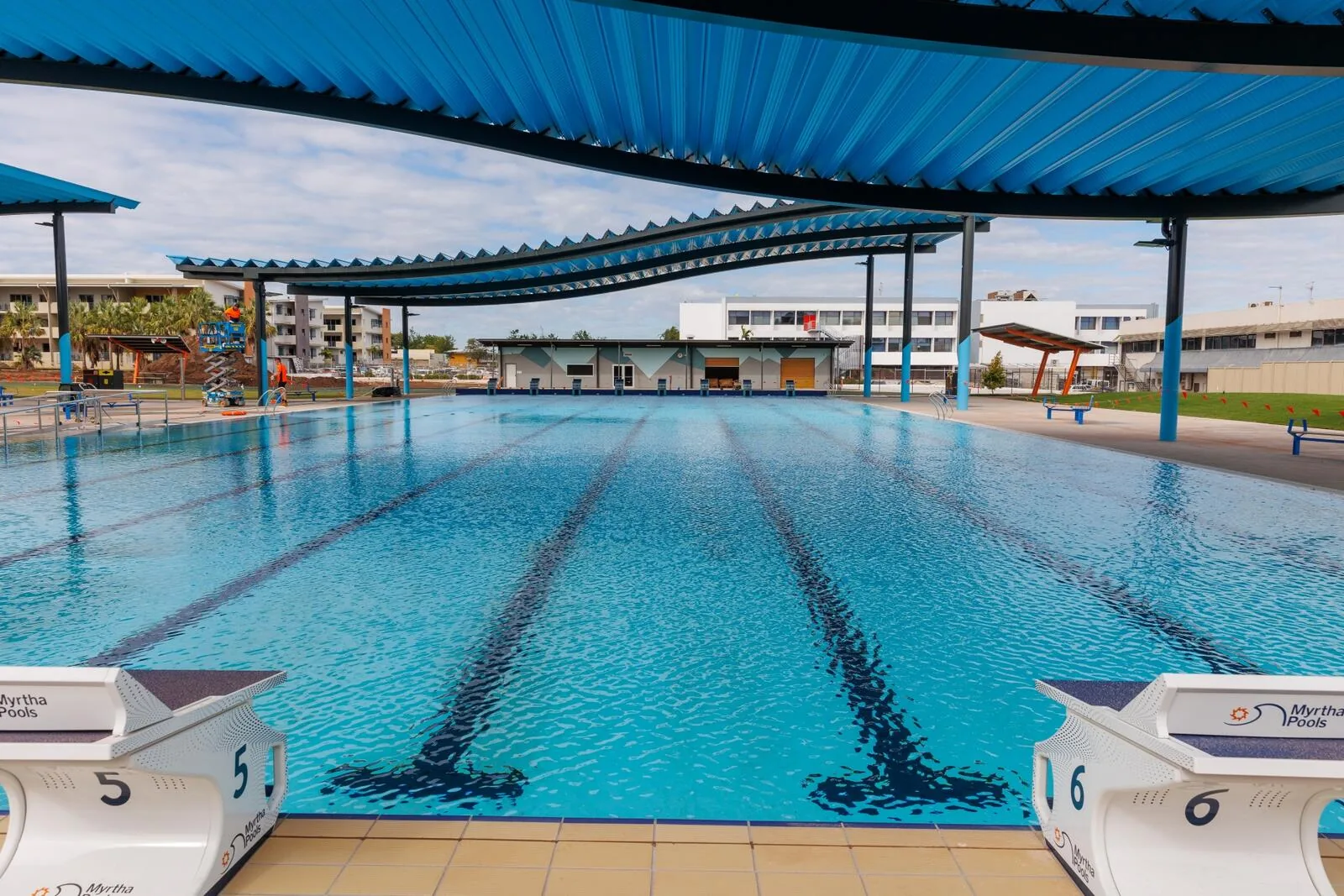
Casuarina Aquatic & Leisure Centre
Darwin · Shaded 50 m pool
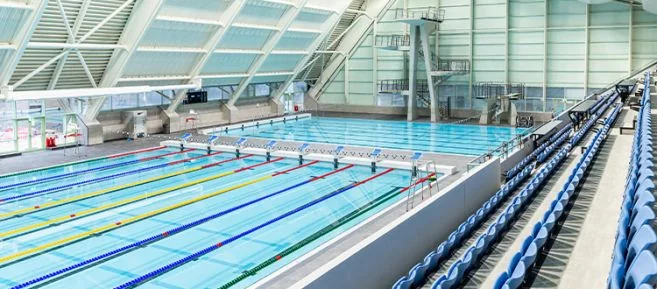
Manchester Aquatics Centre
Manchester · 50 m pool
Muscles and fitness
Running mainly trains your legs, glutes and the muscles that keep your trunk upright. Swimming spreads the work across your back, shoulders, arms, chest, core and legs. For heart and lung fitness both are excellent. Both count as vigorous activity in the NHS guidelines when you are working hard, so 75 minutes a week of either meets the adult target.
In a large British study, regular swimmers had a lower risk of death from any cause than non-swimmers, while running showed no significant link either way in that dataset. That reflects who was in the study more than any real harm from running; many other studies link running with longer life. See is swimming healthy for the details.
Cost, time and convenience
Running is hard to beat for convenience. You step out of the door, run for 30 minutes and are back in the shower 35 minutes later. Swimming means travel, changing, pool timetables and sometimes busy lanes, so a 30-minute swim can take an hour or more door to door.
Swimming has its own advantages. You can swim in any weather, and indoors there is no ice, dark or traffic. Many people find a pool easier to stick with because a regular lane session becomes part of the week. Check how much a swim costs and the best time to go swimming to plan around both.
Doing both? Swim the day after a hard run. The water takes the load off your legs while keeping you moving, and your heart and lungs still get a workout.
Which to choose
- Choose swimming if you have sore joints, are heavier, are recovering from a leg injury, are pregnant, or want more upper-body work.
- Choose running if you have little time, want to protect your bones, or cannot get to a pool regularly.
- Choose both if you can. Two runs and one or two swims a week gives you most of the benefits of each and spreads the strain.
FAQ
Is 30 minutes of swimming equal to running?
At an easy pace, 30 minutes of swimming burns a bit less than 30 minutes of jogging. Swum hard, it burns about the same as running at 6 mph.
Is swimming or running better for losing belly fat?
Neither targets belly fat. Both help reduce body fat overall when combined with eating less. Pick the one you will do most often.
Can swimming improve my running?
Yes, as cross-training. It builds aerobic fitness without extra impact, which helps runners add training without adding injury risk. It does not replace running-specific sessions.
Is swimming or running better for older adults?
Swimming is easier on the joints and lower risk for falls, but running or brisk walking helps bones more. Many older adults swim and walk.