Does swimming help you sleep?
 By the Find My Swimming Pool team·
Updated ·
5 min read
Most swimmers know the feeling: a hard session, a hot shower and then the best night's sleep of the week. The research mostly agrees, with a few useful details on timing.
The short answer
Yes, swimming can help you sleep. Large reviews of exercise studies find that regular activity gives a moderate improvement in how well people feel they sleep, and small gains in how fast they fall asleep and how long they stay asleep. Swimming counts like any other aerobic exercise. An evening swim is fine for most people. The one thing to avoid is a hard session that ends within about an hour of bedtime, which can delay sleep.
What the research says
There are few studies on swimming alone and sleep, so the best evidence comes from reviews of exercise in general. Swimming is aerobic exercise, so these findings apply to it.
- Regular exercise. A 2015 meta-analysis in the Journal of Behavioral Medicine pooled 66 studies. It found that regular exercise had a moderate benefit for sleep quality, small to medium benefits for how long it takes to fall asleep, and small benefits for total sleep time and sleep efficiency (the share of time in bed actually spent asleep).
- A single session. The same review found that even one bout of exercise brought small gains on the following night, including more slow-wave (deep) sleep and less time awake after first falling asleep.
- Evening exercise. A 2019 review in Sports Medicine looked at 23 studies of healthy adults exercising in the evening. Overall, evening exercise did not harm sleep and slightly increased deep sleep. The exception was vigorous exercise ending one hour or less before bedtime, which could make it harder to fall asleep.
The effects in these studies are real but modest. Swimming will not cure insomnia on its own, and it works best alongside the usual sleep habits: a regular bedtime, a dark, cool room and less caffeine later in the day.
Why swimming may help
Researchers are still working out exactly why exercise improves sleep, but a few things are likely to play a part.
- Physical tiredness. Swimming works your arms, legs and core at the same time. Building up a need for rest during the day makes it easier to drop off at night.
- Body temperature. Your core temperature rises during exercise and falls afterwards. Falling temperature is part of how the body winds down for sleep, which is why the timing of a swim matters. The 2019 review found that a higher body temperature at bedtime went with less efficient sleep.
- Stress and mood. Regular exercise is linked with lower stress and better mood, and a mind that is less wound up settles more easily. Our guide to swimming and mental health covers this in more detail.
- Daylight. A morning swim at an outdoor pool gets you out in daylight, which helps set your body clock.
Morning, lunchtime or evening
Any time you will actually stick to is a good time. There are some differences, though.
| When | For sleep | Notes |
|---|---|---|
| Early morning | Good | Daylight at an outdoor pool helps your body clock. Pools are often quiet before work. |
| Lunchtime or afternoon | Good | Plenty of time for your temperature to settle before bed. |
| Early evening | Good for most people | Research does not support the old advice to avoid evening exercise. |
| Hard session close to bed | Can delay sleep | Vigorous exercise ending within about an hour of bedtime is the one pattern linked to falling asleep later. |
NHS advice for insomnia is more cautious: exercise regularly during the day, and avoid exercising in the 4 hours before bed. If you already sleep badly, follow that and see how you get on. If you sleep fine, a relaxed evening swim is unlikely to cause trouble.

A swim routine for better sleep
- Swim on most days you can. The benefits in the research come mainly from regular exercise. Two or three swims a week is a sensible start. See how often you should swim for more.
- Keep evening swims steady. Save sprints and hard sets for the morning or afternoon. A late session works better as easy lengths, technique work or a gentle aqua class.
- Leave a gap before bed. Aim to finish a hard swim at least an hour before you go to bed, and longer if you are sensitive to late exercise.
- Take a warm, not hot, shower. A warm shower straight after the pool is fine. A very hot one right before bed keeps your temperature up.
- Eat and drink sensibly. Swimming makes many people hungry. A light snack afterwards beats a big meal right before bed, and the pre-swim coffee is best skipped in the evening.
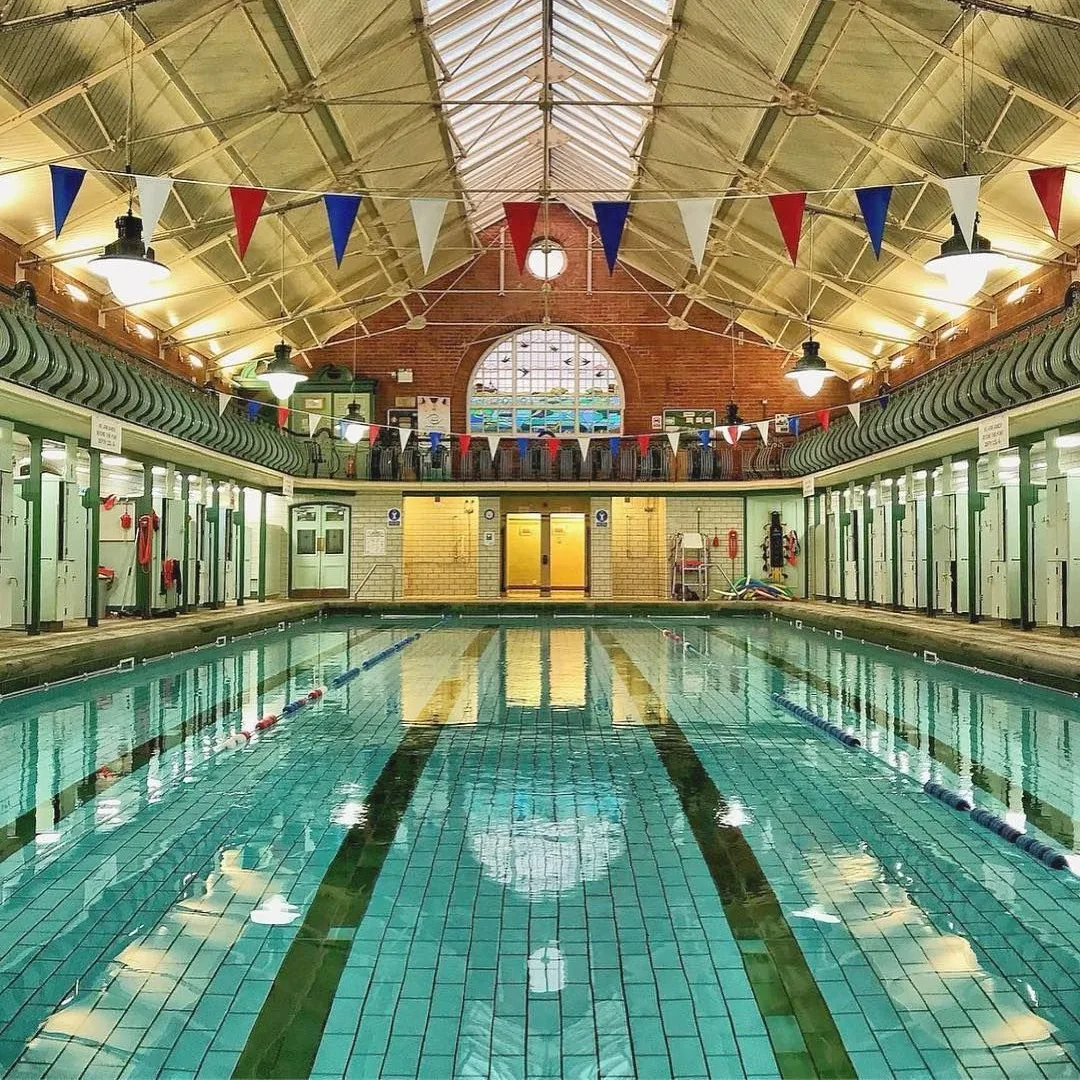
Pick quieter sessions. Late lane sessions at many pools are calmer than the after-work rush. Pools with old Edwardian or Victorian halls, like Bramley Baths, can feel especially restful in the evening. Our guide to the best time to go swimming has more on avoiding the crowds.
Thames Lido
Reading · Heated outdoor pool
Miami Aquatic Centre
Gold Coast · Two 50 m pools
Bramley Baths
Leeds · Edwardian baths
If poor sleep has gone on for months, or it is making daily life hard to cope with, see a GP. Exercise helps, but it is not a replacement for proper treatment of insomnia or a sleep disorder.
FAQ
Why does swimming make me so tired?
Swimming uses most of your major muscles at once, and moving through water takes more effort than it feels like at the time. Cool water also makes your body work to stay warm. Being tired after a swim is normal, and it usually helps you sleep.
Is it bad to swim right before bed?
A gentle swim in the evening is fine for most people. Research suggests that vigorous exercise ending within about an hour of bedtime can make it harder to fall asleep, so keep late sessions easy.
How long until swimming improves my sleep?
One session can bring small improvements the same night, but the larger gains in the research come from regular exercise over weeks. Give a routine a few weeks before judging it.
Does cold water swimming help sleep?
Many cold water swimmers report sleeping well, but there is little solid research on cold water and sleep specifically. A cold swim late in the evening can leave some people too wired to sleep.