Can you go swimming with a cold?
 By the Find My Swimming Pool team·
Updated ·
5 min read

A blocked nose does not have to mean missing your swim. A fever or a chesty cough is a different matter. The usual rule for exercising with a cold works well in the pool, with a few extra points about chlorine, ears and the people in the next lane.
The short answer
Usually yes, if your symptoms are only "above the neck": a runny or blocked nose, sneezing or a mild sore throat. Swim gently and shorter than usual. Stay out of the pool if you have a fever, chills, body aches, a chesty or hacking cough, or an upset stomach, and never swim with diarrhoea. Those suggest a bigger infection, and hard exercise can make you feel worse. Rest until you feel better, and think about others: changing rooms and busy lanes spread colds easily.
The above-the-neck rule
Doctors and health charities use a simple guide for exercising with a cold. The American Lung Association puts it like this: mild to moderate activity is usually fine with a common cold, but cut back on intensity or length, and take a few days off if your symptoms are below the neck (American Lung Association).
| Symptoms | Swim? |
|---|---|
| Runny or blocked nose, sneezing, mild sore throat | Usually fine, gently and if you feel up to it |
| Chest congestion, hacking or deep cough | No. Rest for a few days |
| Fever, chills, body aches | No. Rest until you feel well |
| Upset stomach, vomiting | No |
| Diarrhoea | No, and stay out for longer afterwards (see below) |
The reason is simple. A head cold is a mild, local infection. A fever, aching body or chesty cough are signs your whole body is fighting something, possibly flu, and pushing hard while you are in that state can make you feel worse and take longer to recover.

What is different about the pool
- Getting cold. Being chilly does not cause a cold, viruses do. But standing around wet in a cold changing room or on an outdoor poolside is unpleasant when you are already run down. Indoor, warm pools are a better choice than a lido or the sea while you have a cold.
- Chlorine and your nose. Some people find pool water clears a stuffy nose for a while; others find chlorine makes it sting more. A nose clip helps if water up your nose bothers you.
- Ears and sinuses. A cold can block the tubes that balance pressure in your ears. Swimming underwater or going to the deep end can then cause ear or sinus pain. Stay near the surface and skip underwater swimming and diving until your head clears.
- Breathing. Front crawl needs steady breathing through your mouth and nose. If you cannot breathe comfortably, swim breaststroke or backstroke with your face out of the water.
How to swim with a cold
- Cut your normal session by about half and keep the pace easy.
- Choose a warm indoor pool if you can.
- Drink water before and after. The Lung Association notes that dehydration can make symptoms worse during exercise.
- Dry off and dress quickly. Dry your hair before you go outside.
- If you feel worse during the swim, get out. That is your answer for today.
Asthma and colds. Colds often trigger asthma symptoms. If you have asthma, keep your reliever inhaler at the poolside and take it easy. The Lung Association advises people with asthma, COPD or heart disease to check with their doctor before exercising while ill.
Other swimmers
Cold viruses spread through coughs, sneezes and hands on shared surfaces. Pool chlorine kills germs in the water, but it does not help in the changing room, at the poolside or in the air above a busy lane. If you are sneezing a lot or coughing, the people around you will appreciate you staying home. If you do go:
- Use tissues and bin them, and wash your hands before and after.
- Do not spit or clear your nose into the pool. Use the gutter or, better, the toilets.
- Pick a quiet session rather than a packed one.

AIS Aquatic Centre
Canberra · Heated 50 m pool
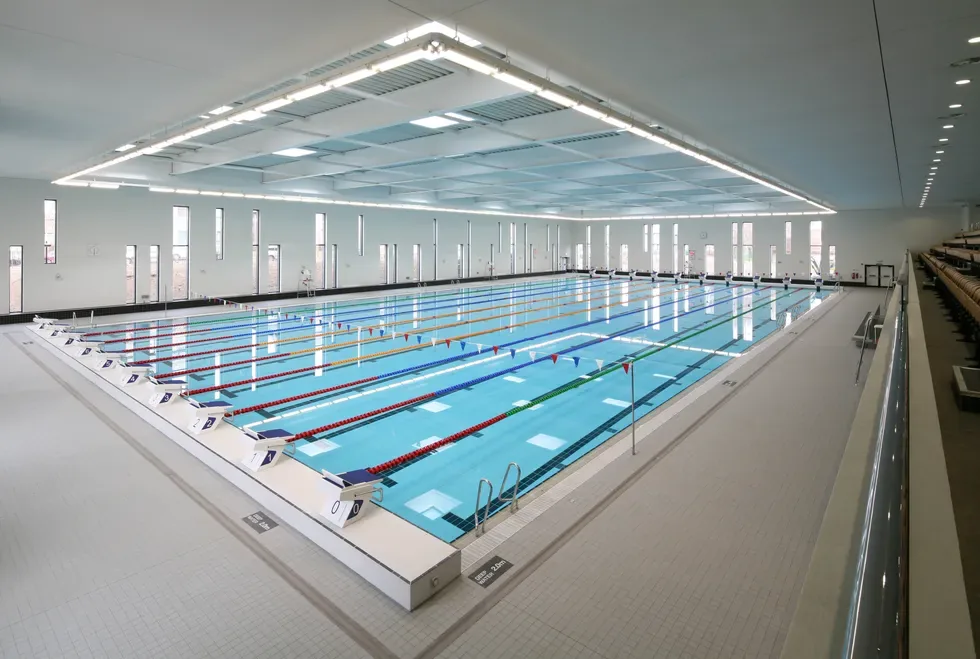
Aberdeen Aquatics Centre
Aberdeen · 50 m indoor pool
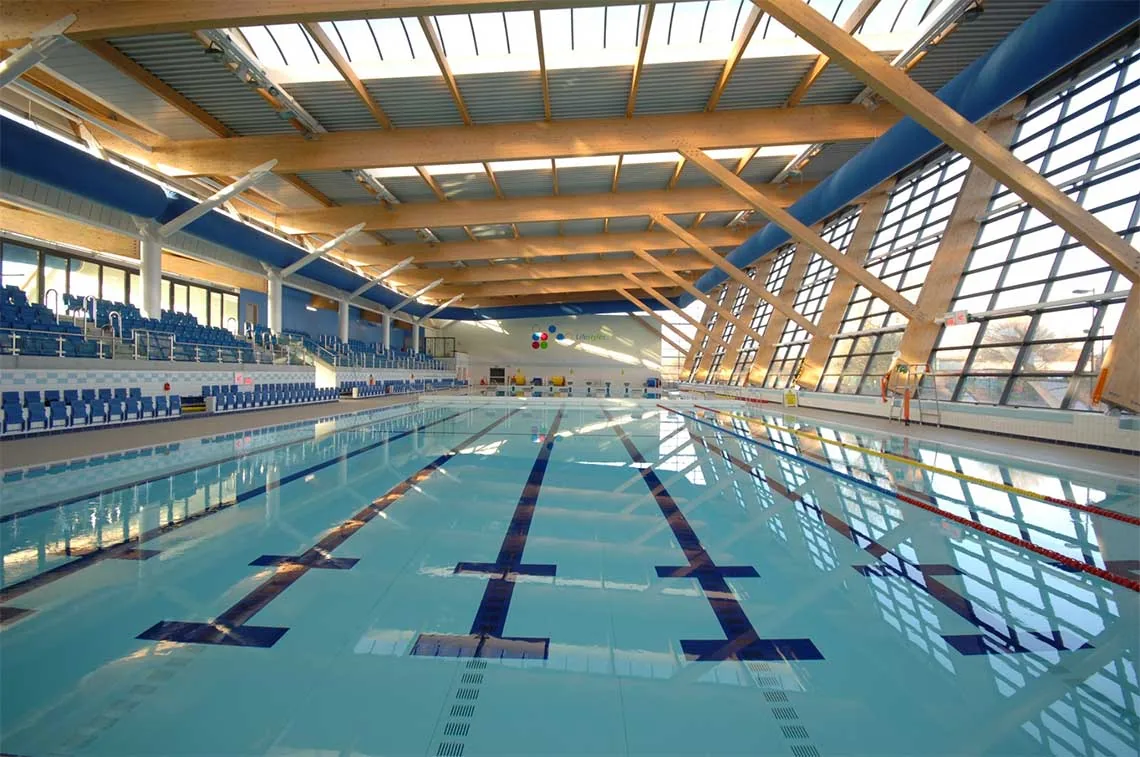
Liverpool Aquatics Centre
Liverpool · 50 m pool
When to go back
The NHS says most people start to feel better from a cold in about 1 to 2 weeks (NHS: common cold). After a fever or chesty illness, wait until you feel well and your temperature is normal before swimming again, then ease back in with a shorter, easier session than usual.
Stomach bugs need a longer break. The CDC advises staying out of the water when you have diarrhoea, and if you have had Cryptosporidium, waiting until two weeks after the diarrhoea has completely stopped. That is because a tiny amount of contamination can spread illness to other swimmers. Our guide to getting sick from a pool explains why.
When to see a doctor
The NHS advises seeing a GP if you have a high temperature for more than 3 days, cold symptoms that do not improve after 10 days, a cough for more than 3 weeks, or shortness of breath or chest pain. Chest pain or breathlessness while swimming means get out and get help straight away.
FAQ
Can swimming give you a cold?
Not on its own. Colds are caused by viruses, usually picked up from other people. Getting chilly after a swim does not cause a cold, though crowded changing rooms can help one spread.
Does chlorine kill cold germs?
Chlorine kills many germs in the pool water, but cold viruses mostly spread through the air and on hands and surfaces, which chlorine does not reach.
Is swimming good for a blocked nose?
Some people find warm, humid pool air helps for a while. Others find chlorine irritates their nose. If it makes you feel worse, rest instead.
Can I swim with a sore throat?
A mild sore throat on its own is usually fine for an easy swim. A sore throat with a fever is a reason to stay home.