How many calories does swimming burn?
 By the Find My Swimming Pool team·
Updated ·
4 min read
Fitness trackers give wildly different numbers for the same swim. The honest answer depends on your weight, your stroke and how hard you are working. Here are realistic figures from the standard research tables, and how to work out your own.
The short answer
A 75 kg adult burns roughly 200 to 230 calories in 30 minutes of easy front crawl or leisurely swimming, and about 370 calories in 30 minutes of fast, hard front crawl. Breaststroke and backstroke at a relaxed pace burn a little less; butterfly burns the most. Heavier swimmers burn more, lighter swimmers less. Treading water gently burns about half as much as steady lengths. These figures come from the 2024 Adult Compendium of Physical Activities and are averages, not exact readings for you.
Calories per 30 minutes by stroke
Researchers measure exercise intensity in METs. One MET is roughly what you burn sitting still. The Adult Compendium of Physical Activities lists swimming from 3.5 METs for gentle treading water to 13.8 METs for butterfly. Converted to calories for 30 minutes:
| Activity | METs | 60 kg | 75 kg | 90 kg |
|---|---|---|---|---|
| Treading water, moderate | 3.5 | 105 | 131 | 158 |
| Backstroke, recreational | 4.8 | 144 | 180 | 216 |
| Breaststroke, recreational | 5.3 | 159 | 199 | 239 |
| Front crawl, slow and easy | 5.8 | 174 | 218 | 261 |
| Leisurely swimming, not lengths | 6.0 | 180 | 225 | 270 |
| Open water swimming | 6.0 | 180 | 225 | 270 |
| Front crawl, fast and vigorous | 9.8 | 294 | 368 | 441 |
| Breaststroke, training pace | 10.3 | 309 | 386 | 464 |
| Butterfly | 13.8 | 414 | 518 | 621 |
Double the figures for an hour. For comparison, Harvard Health puts general swimming at 216 calories per 30 minutes for a 155 lb (70 kg) person, and vigorous lengths at 360. Those match the table closely.
Work out your own number
The formula used in the research is simple:
Calories = METs × your weight in kg × hours swimming
Say you weigh 82 kg and swim easy front crawl (5.8 METs) for 40 minutes. That is 5.8 × 82 × 0.67 = about 317 calories. If you weigh yourself in stone, multiply stones by 6.35 to get kilograms. In pounds, divide by 2.2.
Use the time you actually spend swimming. If you swim for 45 minutes but spend 15 of them resting at the wall, count 30.
For a quick feel by distance: an adult swimming easy front crawl in a 25 m pool usually covers a length in 35 to 50 seconds. At 75 kg, that works out at roughly 4 to 6 calories a length, or around 145 calories for 20 minutes of non-stop easy swimming. Breaststroke swimmers move more slowly, so they burn a similar amount per minute but cover fewer lengths.
Gross, not extra. MET figures include the calories you would have burned anyway just by being alive. The extra burn from your swim is roughly the figure minus one MET. For a 30-minute swim that is a difference of 30 to 45 calories for most adults.
Why your number may differ
- Technique. A beginner thrashing through a length works harder than a smooth swimmer covering the same distance. Better technique lets you swim further on the same effort, so calories per length fall even as calories per session may rise.
- Speed. The jump from slow front crawl (5.8) to fast front crawl (9.8) is large. Pace matters more than stroke choice.
- Water temperature. Your body works to keep warm in cool water, especially outdoors. Indoor pools are usually warm enough that this effect is small.
- Rest time. Long pauses at the wall drop your average a lot.
- Body size and fitness. Heavier swimmers burn more per minute. Fitter swimmers recover faster and can hold a higher pace.
Are swim watches accurate?
Swim watches count lengths and strokes well in a pool, but calorie numbers are estimates. Most watches use your heart rate, which is harder to read through a wet wrist, and their own formulas. Treat the number as a rough guide and compare one session with the next rather than trusting the exact figure. Different brands can give answers that are far apart for the same swim.
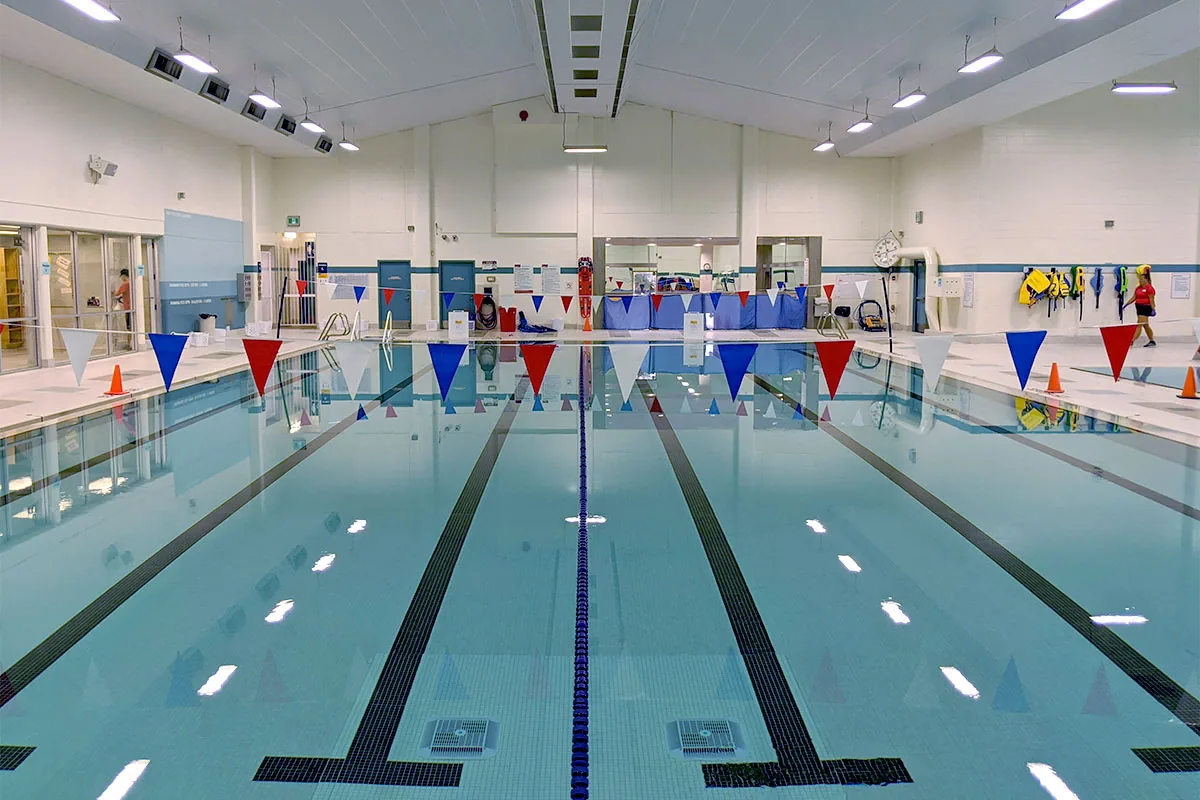
Glenmore Aquatic Centre
Calgary · 25 m lane pool
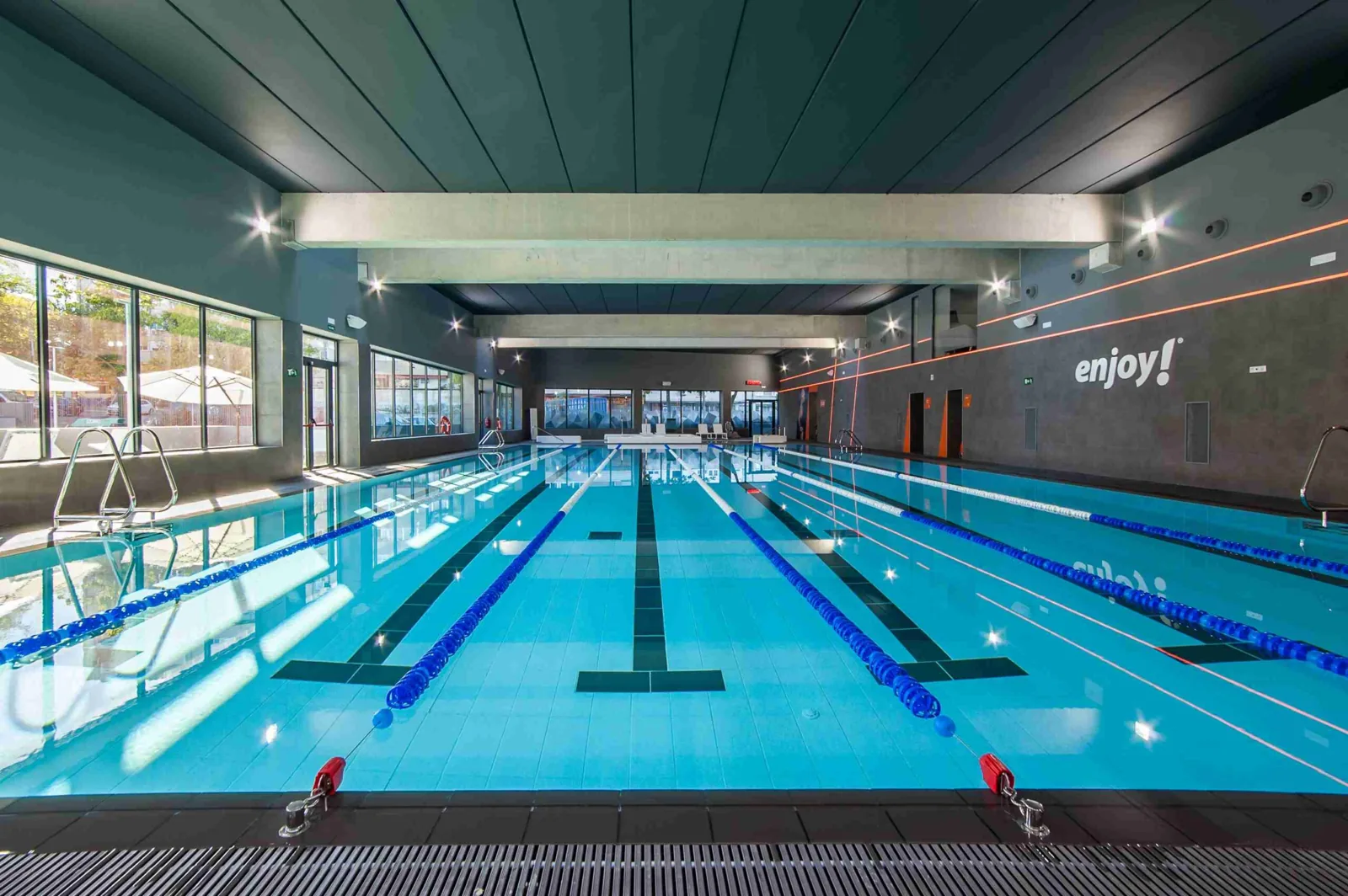
Enjoy! Altamira
Fuenlabrada · Heated lane pool
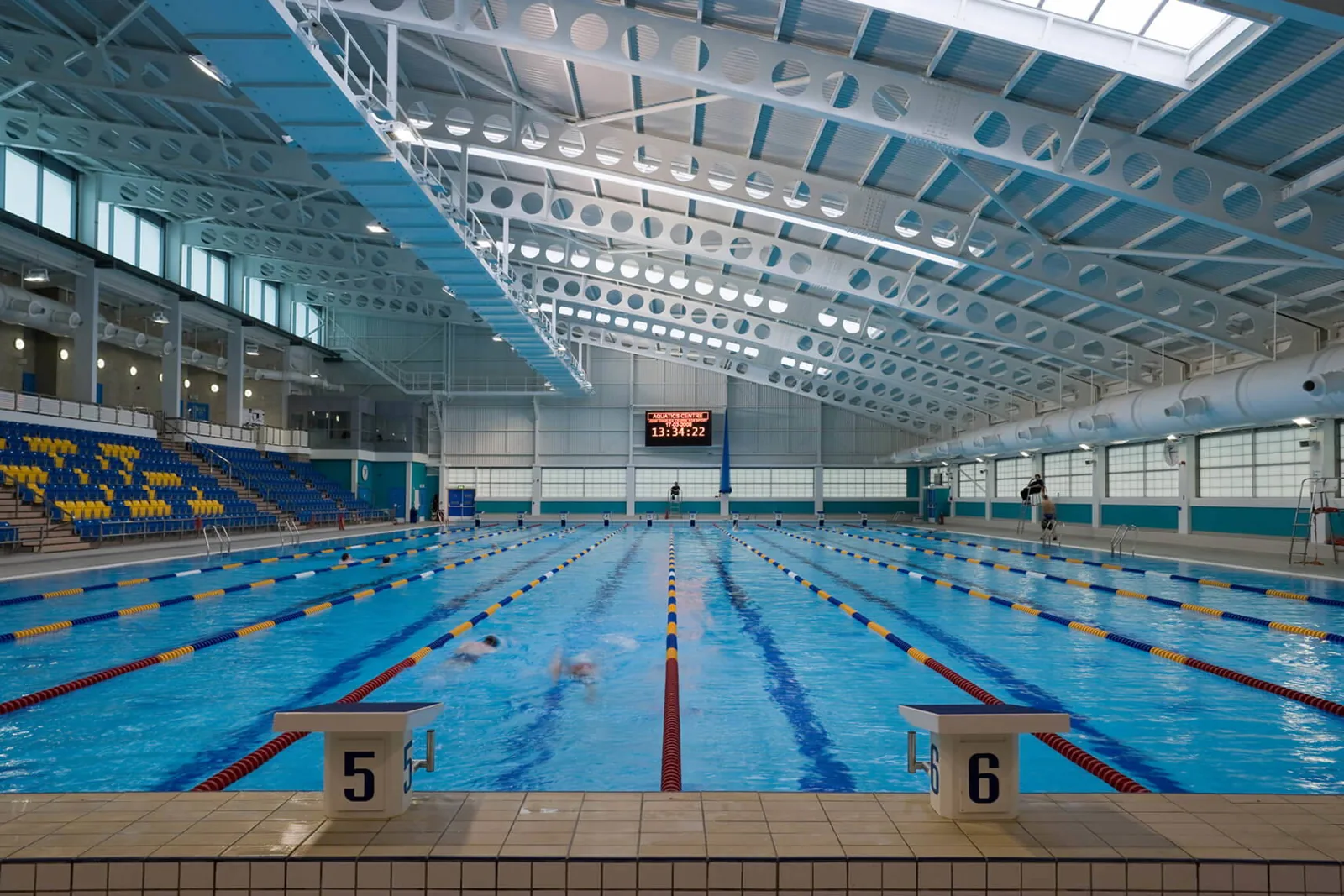
Aquatics Centre, John Charles Centre for Sport
Leeds · 50 m pool
How to burn more in the pool
- Add faster sets. After a warm-up, swim 4 to 8 lengths hard with 30 seconds rest between them.
- Cut the rests. Swim continuously for 10 minutes at a time, even if slowly.
- Swim further each week. Add a few lengths per session. Our guide to how many lengths make a mile helps you set a target.
- Use a kickboard. Leg-only lengths work large muscles and push your heart rate up.
- Go to a lane session. Swimming in a lane keeps you moving. Read lane swimming etiquette first.
If your goal is to lose weight, read swimming for weight loss, which covers appetite and diet as well as calories. Cities with the most lane swimming sessions in our directory:
FAQ
How many calories does swimming 1 km burn?
For a 75 kg adult swimming easy front crawl, 1 km takes around 25 to 35 minutes and burns roughly 180 to 250 calories. A faster swimmer covers it quicker, so the total per kilometre changes less than you might expect.
Does swimming burn more calories than running?
Not usually at the same effort. Running at 6 mph is 9.3 METs, close to fast front crawl at 9.8 METs. Easy swimming burns less than steady running. See our swimming vs running guide.
How many calories does 20 lengths burn?
In a 25 m pool, 20 lengths is 500 m. At an easy pace that takes most adults 12 to 18 minutes and burns roughly 90 to 130 calories for a 75 kg person.
Does treading water burn calories?
Yes, but gentle treading is only 3.5 METs, about 130 calories in 30 minutes for a 75 kg adult. Fast, hard treading reaches 9.8 METs.