Is swimming good for weight loss?
 By the Find My Swimming Pool team·
Updated ·
5 min read
Swimming can help you lose weight, and it suits people who find running or the gym hard on their joints. But the pool alone rarely shifts much weight. Here is what swimming can and cannot do, and how to set it up so it helps.
The short answer
Swimming is a good exercise for weight loss when you combine it with changes to what you eat. A 75 kg adult burns around 200 to 230 calories in 30 minutes of easy swimming and about 370 swimming hard. Three or four sessions a week adds up, and swimming is gentle on joints, so heavier people can keep it up. On its own, though, exercise rarely produces large weight loss, because it is easy to eat back what you burn. Diet does most of the work; swimming helps you keep weight off and get fitter.
How swimming helps
Weight loss comes down to using more energy than you take in over weeks and months. Swimming adds to the "using" side. Using figures from the 2024 Adult Compendium of Physical Activities, here is roughly what a 75 kg adult burns:
| Session | Calories (75 kg) |
|---|---|
| 30 minutes easy front crawl | about 218 |
| 30 minutes relaxed breaststroke | about 199 |
| 30 minutes fast front crawl | about 368 |
| 45 minutes mixed easy and hard | about 400 |
Heavier people burn more for the same session. Our guide to calories burned swimming has the full table and a formula for your own weight.
Swimming has three practical advantages for weight loss:
- Low impact. Water supports your weight, so knees, hips and back are spared. People who stop running because of sore joints can often swim for years.
- Whole body. Arms, back, core and legs all work, so you can keep going longer before one muscle group gives out.
- Easy to repeat. Muscles get less sore than after running, which makes four or five sessions a week realistic.
Why the pool alone often disappoints
Many people start swimming, get noticeably fitter, and find the scales barely move. There are a few reasons:
- The numbers are modest. Three 30-minute swims a week burn around 600 to 1,100 calories for a 75 kg adult. That is real, but one takeaway meal can cancel a week of it.
- Hunger. Many swimmers feel hungry after a session, especially in cooler water. A post-swim snack from the café machine can eat up most of the calories you just burned.
- Rest time. A 45-minute session with long chats at the wall may only include 20 minutes of actual swimming.
- Muscle and water. Early on you may gain a little muscle and hold more water in your muscles, which hides fat loss on the scales.
This does not mean swimming is a poor choice. It means the scales are the wrong measure on their own. Waist size, how your clothes fit and how far you can swim are better signs of progress in the first months.
A weekly swimming plan
The NHS guideline for adults is 150 minutes of moderate activity or 75 minutes of vigorous activity a week. For weight loss, aim at or above that. A plan that works for many people:
- Session 1, steady: 30 to 40 minutes of continuous easy swimming. Any stroke. Stop only to turn.
- Session 2, intervals: warm up for 5 minutes, then 8 lengths hard with 30 seconds rest between each, then 5 minutes easy.
- Session 3, steady: same as session 1, a few lengths further than last week.
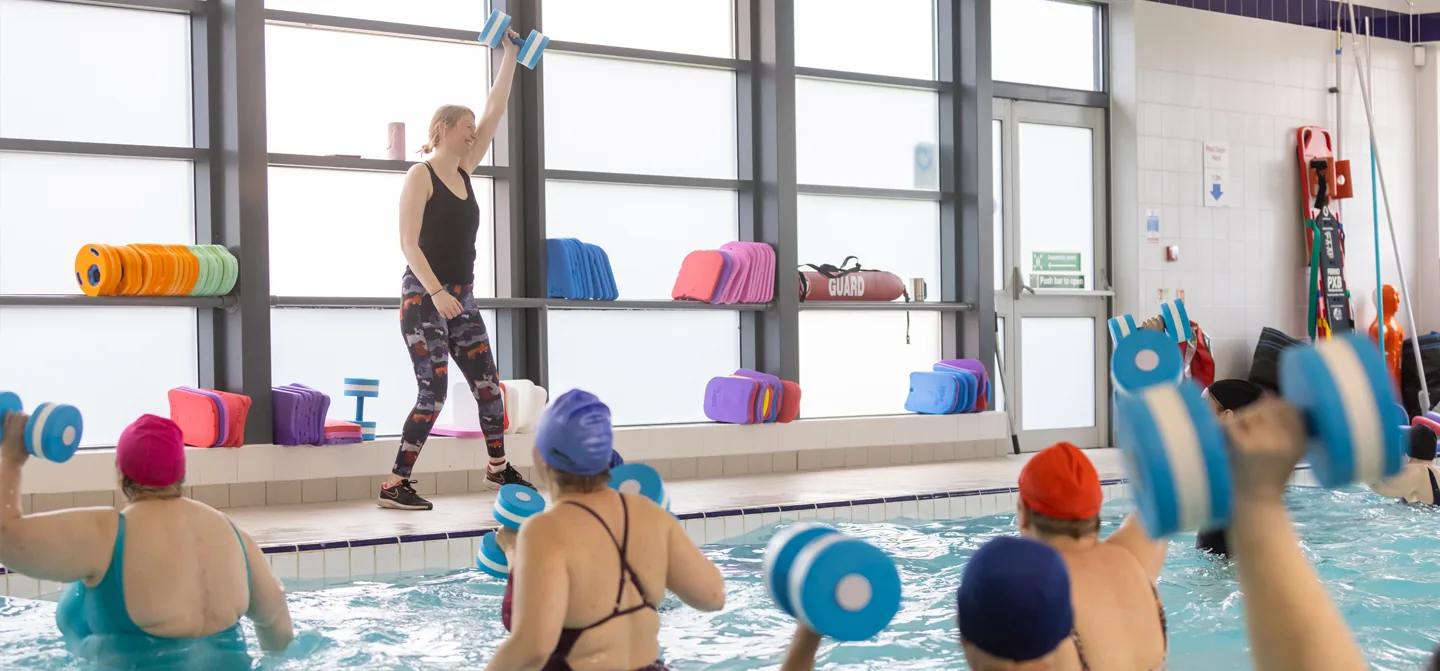
- Optional session 4: an aqua aerobics class, or a walk.
Add two short strength sessions on land if you can. Muscle work helps keep muscle while you lose fat, and it loads your bones, which swimming does not.
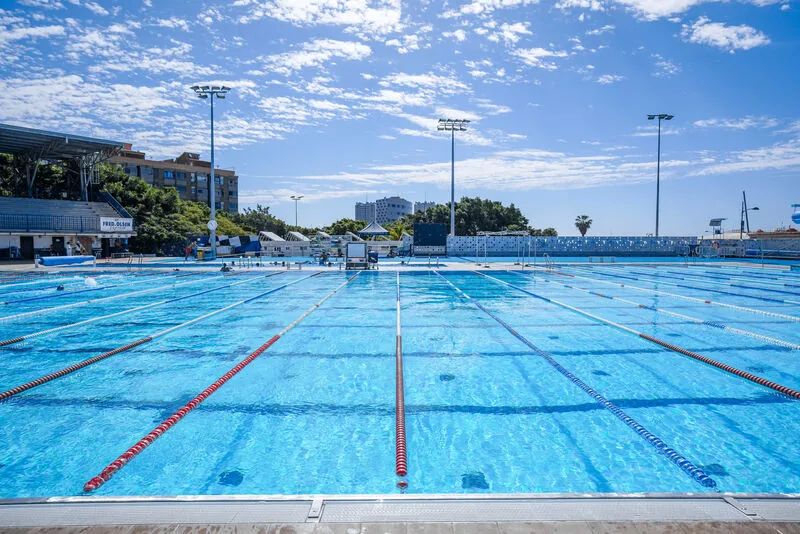
Piscina Municipal Acidalio Lorenzo
Santa Cruz de Tenerife · Outdoor lane pool
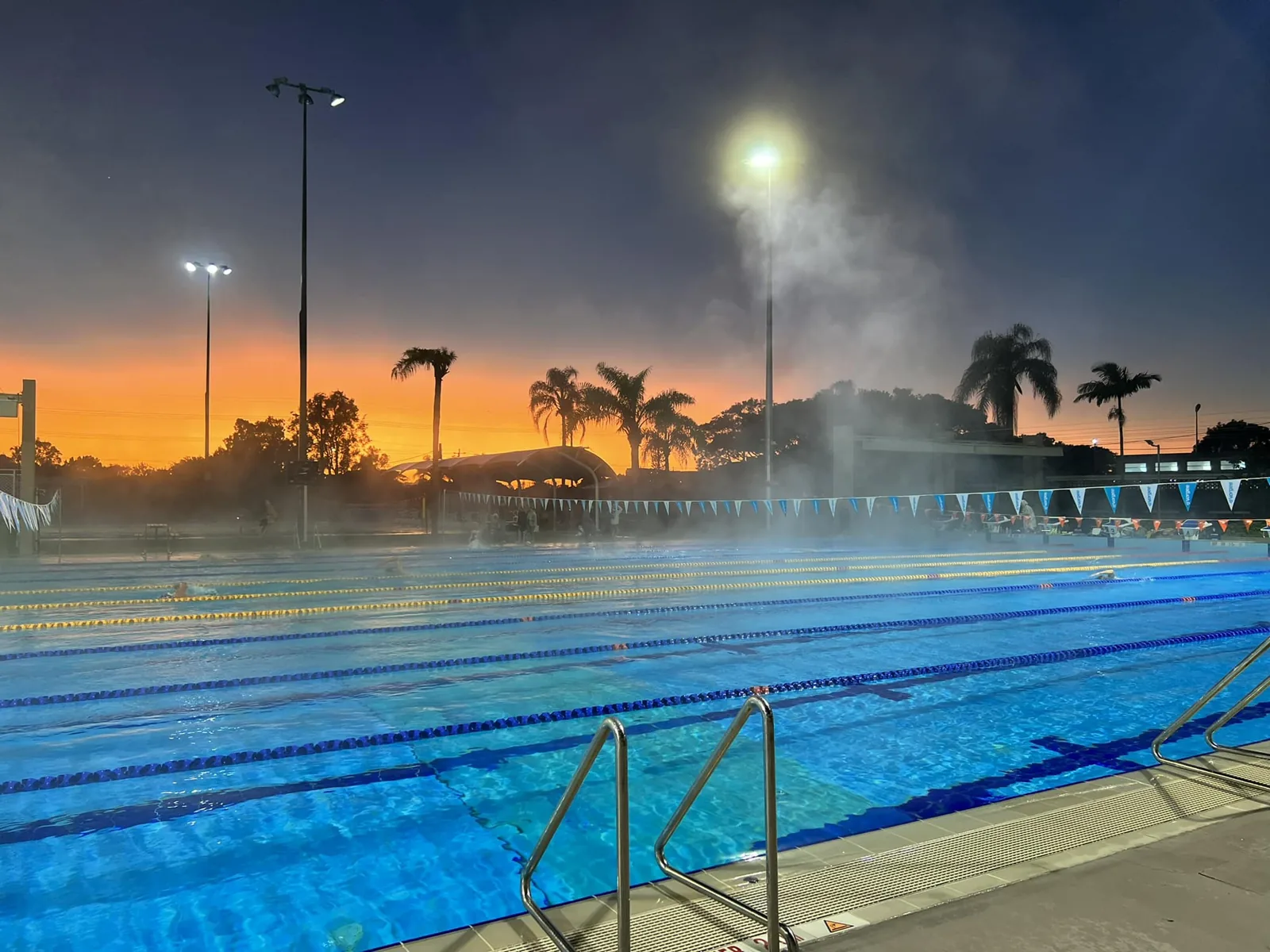
Miami Aquatic Centre
Gold Coast · Outdoor 50 m pool
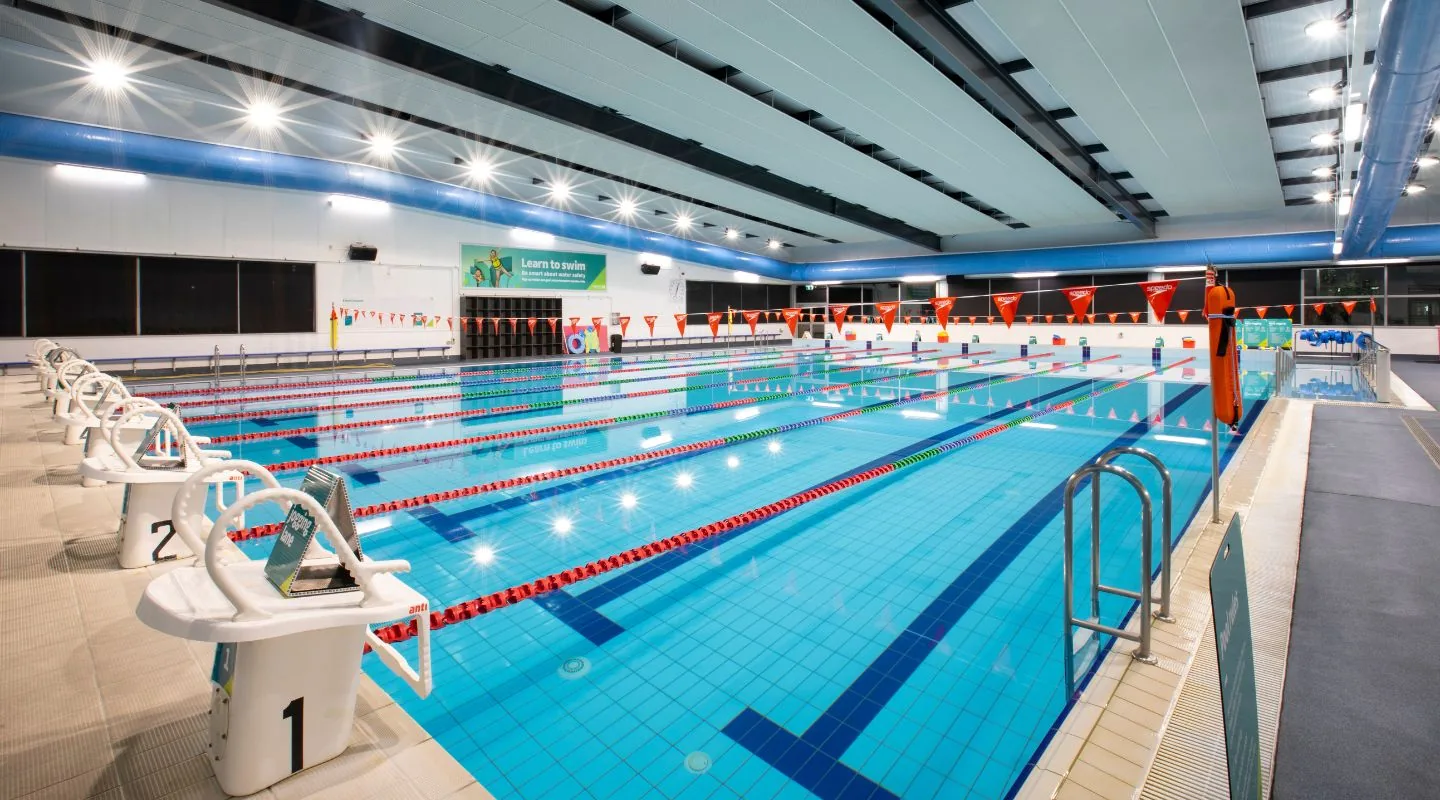
Graham Condon Recreation and Sport Centre
Christchurch · 25 m lane pool
Eating around your swims
- Before: you do not need a big meal. A light snack an hour or two before is plenty, and there is no need to wait a set time after eating (see swimming after eating).
- After: plan a normal meal rather than grabbing crisps or chocolate from the machine. If you swim before work, have breakfast after.
- Drinks: water is enough for sessions under an hour. Sports drinks add calories you probably do not need.
Talk to your GP first if you have a lot of weight to lose, diabetes, a heart condition or high blood pressure. They can check your plan and may refer you to a local weight management programme; some exercise referral schemes include reduced-price swimming.
Starting when you are heavier
Body size often matters more in the changing room than in the water. Some things that help:
- Go to quieter sessions. Early morning, mid-morning on weekdays or adult-only sessions are often calmer.
- Wear what you are comfortable in. Swim shorts, leggings-style swimwear and swim tops are fine at most public pools. See what to wear to a swimming pool.
- Use the steps rather than jumping in, and start in the slow lane.
- If you are not a confident swimmer, adult lessons will help you swim further and burn more. See learning to swim as an adult.
FAQ
Can you lose belly fat by swimming?
You cannot choose where you lose fat. Swimming, like other exercise, helps reduce body fat overall, and belly fat often goes down as part of that when you also eat less.
Is swimming or walking better for weight loss?
Swimming burns more per minute than walking at an ordinary pace. Walking is easier to fit into every day. Doing both is better than either one.
How long should I swim to lose weight?
Aim for at least 150 minutes a week of steady swimming, or 75 minutes of hard swimming, alongside changes to what you eat. More is fine if your shoulders cope.
Why am I so hungry after swimming?
You have used energy, and many swimmers say cool water leaves them hungrier than other exercise. Plan a proper meal after your swim so you are not reaching for snacks.